
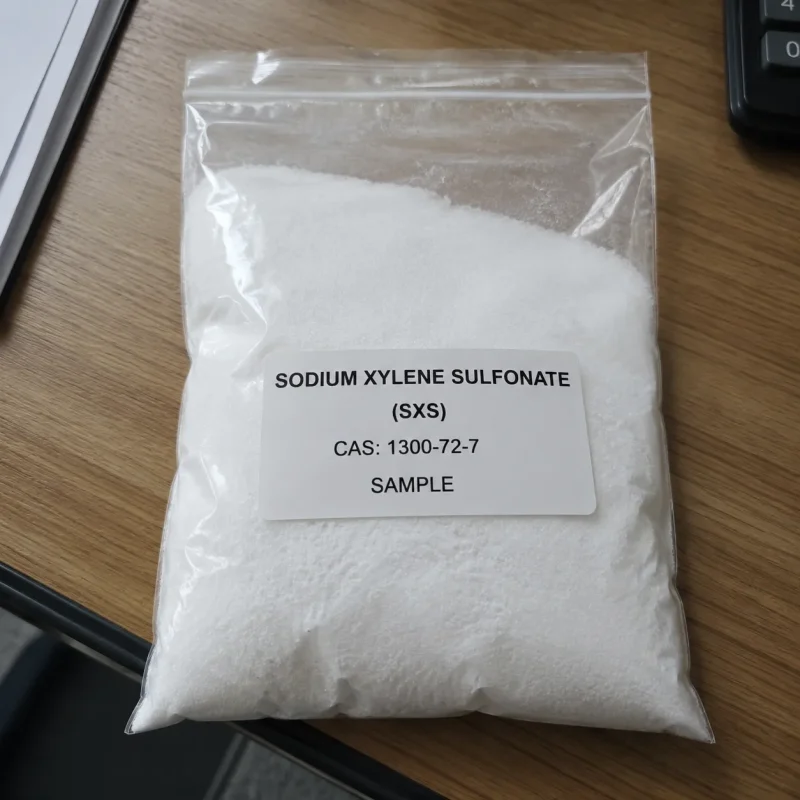
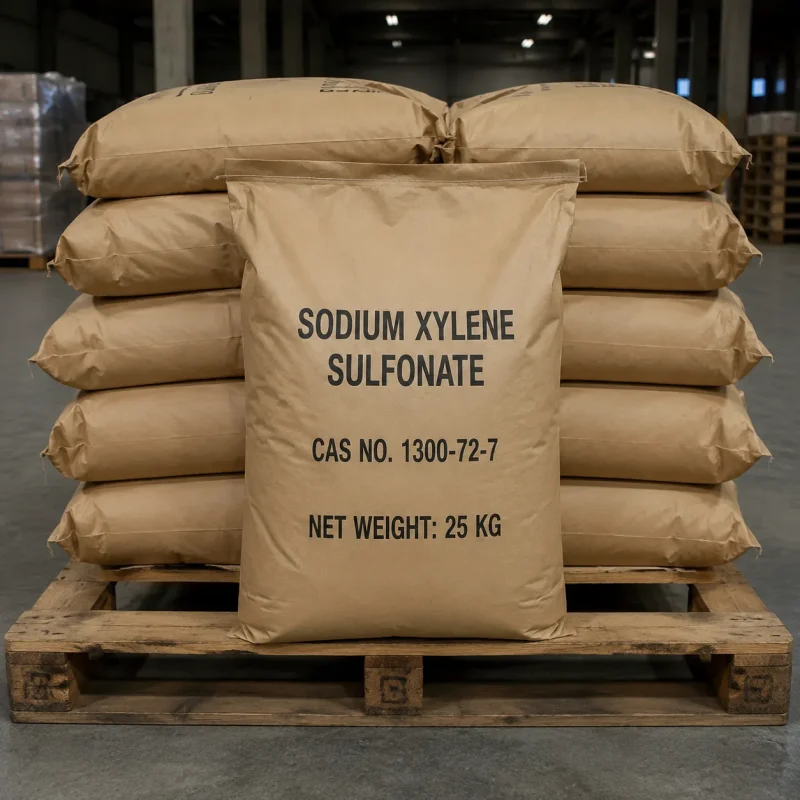
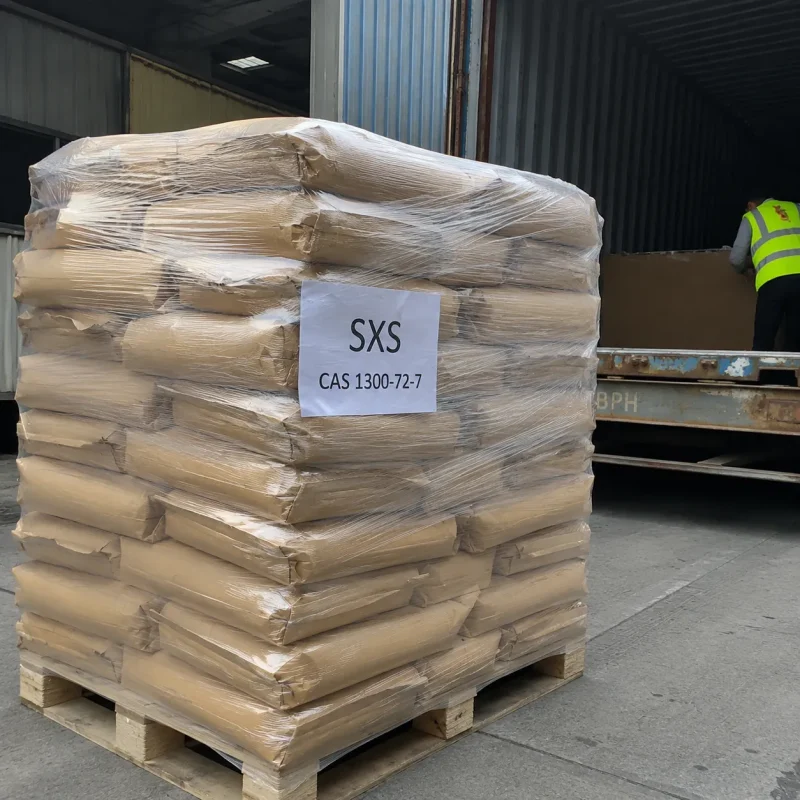
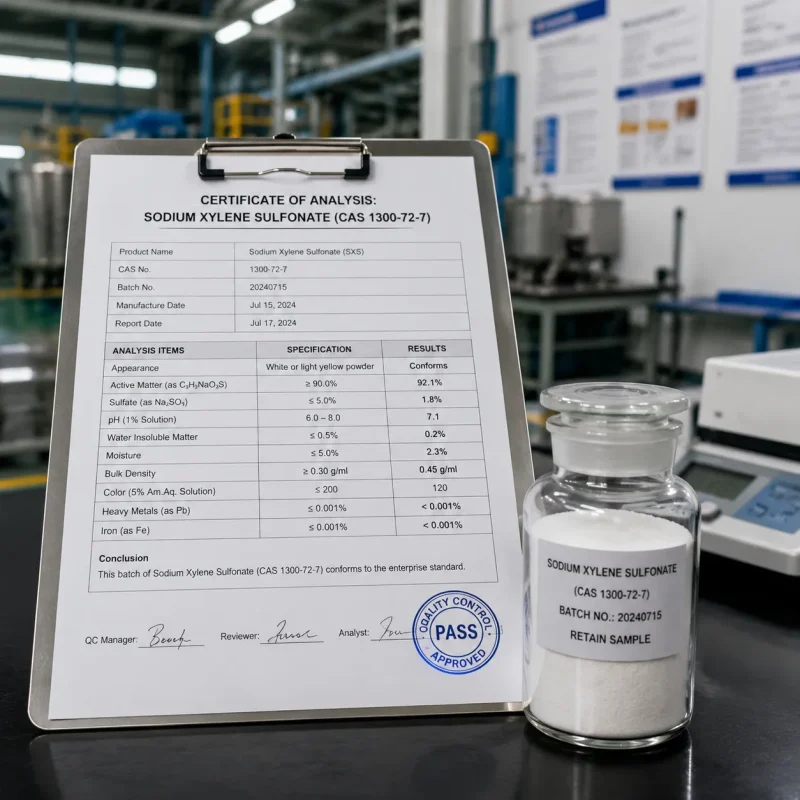
Sodium Xylene Sulfonate (SXS) CAS 1300-72-7
Sodium Xylene Sulfonate (SXS) is a high-efficiency aqueous hydrotrope typically supplied as a 40% active clear liquid. Its unique aromatic sulfonate structure prevents gelation and phase separation in high-concentration surfactant systems, making it the essential stabilizer for liquid detergents, agrochemical formulations, and industrial cleaners. Each shipment includes COA, TDS, and SDS.
- CAS No: 1300-72-7
- Synonyms: SXS, Xylenesulfonic acid sodium salt, Sodium dimethylbenzenesulfonate
- EC Number: 215-044-8
- Molecular Formula: C8H9NaO3S
- Molecular Weight: 208.21 g/mol
- Appearance: Colorless to pale yellow clear liquid (40% aqueous solution)
- Active Content: 39.0% – 41.0%
- Packaging: 200 kg (440 lb) HDPE drum; 1,000 kg (2,200 lb) IBC tote. Custom packaging available upon request.
- Main Applications: Liquid detergent hydrotrope, agrochemical solubilizer, industrial degreaser, textile auxiliary
Introduction to Sodium Xylene Sulfonate (SXS)
Sodium Xylene Sulfonate (SXS) is a powerful hydrotropic agent that disrupts the over-aggregation of surfactant micelles in aqueous solutions. Formulators of concentrated liquid detergents and agrochemicals rely on SXS to maintain optical clarity and prevent the formation of viscous gels or cloudy phase separations, especially when high levels of anionic surfactants (like LABSA/LAS or AES) and inorganic electrolytes are present.
The primary processing advantage is its ability to drastically lower the Krafft temperature of surfactant blends, ensuring products remain pourable and stable during winter transit. The critical storage risk is low-temperature crystallization and sensitivity to strong acids. If stored below 0 °C (32 °F), the 40% solution may precipitate white crystals. Store IBC totes in a frost-free warehouse; if crystallization occurs, gently warm the container to 30–40 °C (86–104 °F) and agitate to fully restore the liquid without performance loss.
Key Features of Sodium Xylene Sulfonate
- Superior hydrotropy and anti-gelation. Breaks down rigid surfactant micelle structures, preventing high-active liquid detergents from turning into unpourable gels or separating into cloudy layers at low temperatures.
- Viscosity reduction. Allows formulators to increase the active surfactant loading while maintaining a low, Newtonian viscosity, ensuring easy pumping, dosing, and consumer pouring.
- High electrolyte tolerance. Enables the incorporation of high levels of inorganic builders (like sodium chloride or sodium sulfate) into liquid formulations without causing salting-out or phase separation.
- Broad pH stability. Chemically stable in highly alkaline environments (pH > 12) typical of heavy-duty degreasers, though it will precipitate the free acid form if the pH drops below 2.0.
Sodium Xylene Sulfonate Chemical & Physical Properties
| Property | Value |
|---|---|
| Molecular Formula | C8H9NaO3S |
| Molecular Weight | 208.21 g/mol |
| Thermal Behaviour | Freezing/Crystallization point approx. -5 °C to 0 °C (23–32 °F) for 40% solution. Thermally stable up to 100 °C (212 °F) in aqueous media. |
| Density | Approx. 1.18 – 1.22 g/cm³ (9.8 – 10.2 lb/gal) at 20 °C (68 °F). |
| Solubility in Water | Fully miscible (as 40% liquid); the anhydrous salt is highly soluble (> 500 g/L). |
| pH (as supplied, 40% solution) | 7.0 – 9.0 |
| Active Content | 39.0% – 41.0% |
| Chloride (as NaCl) | ≤ 3.0% |
| Sulfate (as Na2SO4) | ≤ 2.0% |
Applications of Sodium Xylene Sulfonate
Concentrated liquid detergents: Dosed at 2.0–8.0% in heavy-duty laundry liquids and dishwashing gels. SXS solubilizes high concentrations of LABSA and AES, preventing low-temperature clouding and ensuring the product remains a clear, low-viscosity liquid down to 5 °C (41 °F).
Agrochemical formulations: Used as a solubilizer and coupling agent in Soluble Liquid (SL) and Aqueous Suspension (AS) pesticide concentrates. It prevents the crystallization of active ingredients and ensures uniform dispersion when diluted in hard water spray tanks.
Industrial and institutional (I&I) cleaners: Incorporated at 3.0–10.0% in highly alkaline hard-surface degreasers and metal cleaning baths. It stabilizes the blend of nonionic surfactants and caustic soda, improving wetting and soil penetration without causing phase separation.
Storage & Safety Precautions for Sodium Xylene Sulfonate
- Storage: Store in a frost-free warehouse above 5 °C (41 °F). While freezing does not chemically degrade SXS, the resulting crystallization requires energy-intensive thawing. Keep away from strong mineral acids (pH < 2), which will convert the salt into water-insoluble xylene sulfonic acid.
- Safety: Mild eye and skin irritant. Wear safety goggles and chemical-resistant gloves during transfer from IBC totes or drums. In case of eye contact, flush immediately with water for 15 minutes.
- Transport: Sodium Xylene Sulfonate (40% solution) is Non-DG under IATA/IMDG/ADR. Not a marine pollutant. Standard 200 kg (440 lb) drums or 1,000 kg (2,200 lb) IBC totes ship in standard dry containers. Use insulated containers or heated tanks for winter transit to cold climates.
- QC note: Verify active content via two-phase titration and check for visual clarity upon receipt. If the liquid arrives with white crystalline sludge, warm the sample to 40 °C (104 °F); if it clears completely, the lot is acceptable.
Sodium Xylene Sulfonate FAQ
Q: How does SXS compare to Sodium Toluene Sulfonate (SRS) or Sodium Cumene Sulfonate (SCS)?
A: Hydrotropic power generally follows the order: SCS > SXS > SRS. SXS offers the best balance of high solubilizing power, low odor, and cost-effectiveness for standard liquid detergents. SCS is reserved for extremely difficult-to-solubilize systems, while SRS is used when a milder hydrotrope is sufficient.
Q: My SXS drum arrived with a solid white mass at the bottom. Is the product ruined?
A: No. The 40% solution naturally crystallizes when exposed to freezing temperatures during winter transit. Simply move the drum to a warm room or apply gentle steam tracing to heat it to 30–40 °C (86–104 °F), then agitate. It will return to a clear liquid with zero loss in performance.
Q: Can I use SXS in highly acidic bathroom cleaners?
A: Not recommended. SXS is a salt of a weak organic acid. In highly acidic environments (pH < 2.0), it will convert back to xylene sulfonic acid, which has poor water solubility and will precipitate out of the formulation, causing cloudiness and loss of hydrotropic function.
Related products
Manufacturer & Exporter Since 2006
Get Tailored Chemical Raw Material Solutions — Reply Within 1 Hour
Factory-direct pricing, stable high-purity supply and complete compliance documentation for your industrial formulations.
- 1000+Products
- 200+QC Protocols
- 7–15Days Delivery
- Factory-Direct Pricing
- COA / TDS / SDS Included
- Free Samples for Testing
- 40+ Export Countries
Request a Free Quote
Our engineers reply within 1 hour during GMT+8 business hours.
Please include in your inquiry:
- Product name or CAS number
- Required quantity
- Destination country or port
- Preferred packaging