
Polyamide Epichlorohydrin Resin (PAE) CAS 63428-84-2
Polyamide Epichlorohydrin Resin (PAE) is a cationic, formaldehyde-free wet strength agent supplied as a clear, yellowish aqueous solution. It utilizes reactive azetidinium groups to form covalent bonds with cellulose fibers, delivering permanent wet tensile strength for tissue, towel, and food-contact papers. UETChem supplies PAE resin with consistent solid content and controlled viscosity for stable dosing and reliable wet strength performance. Each shipment includes COA, TDS, SDS.
- CAS No: 63428-84-2
- Synonyms: PAE resin; Polyamide polyamine-epichlorohydrin; Cationic wet strength agent
- Appearance: Clear yellowish to light amber liquid
- Solid Content: 12.5% ± 1.0%
- Viscosity (25 °C): ≤ 100 mPa·s
- pH (as supplied): 2.0 – 4.0
- Ionic Character: Cationic
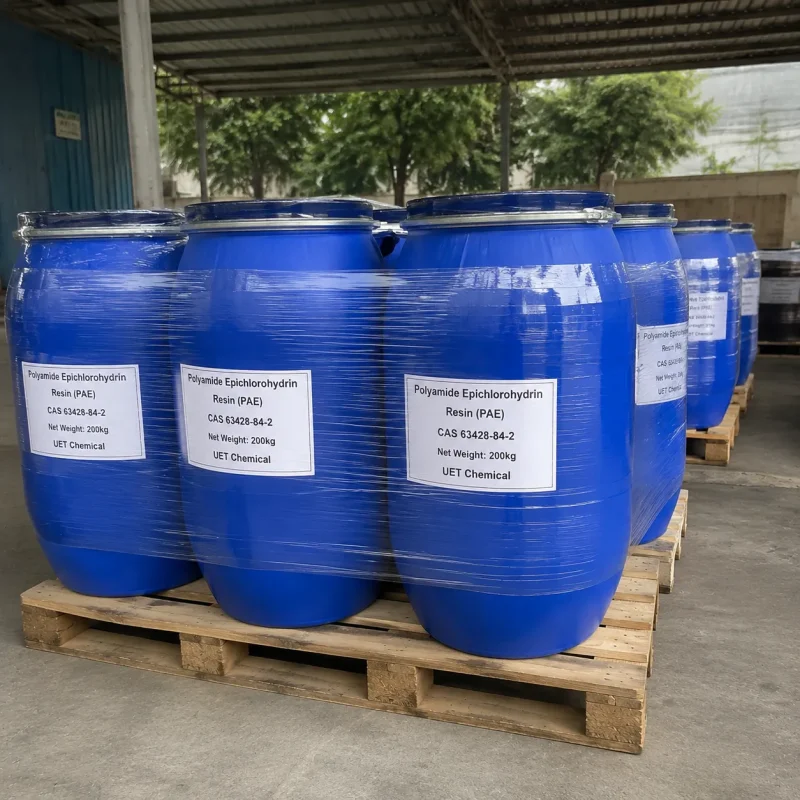
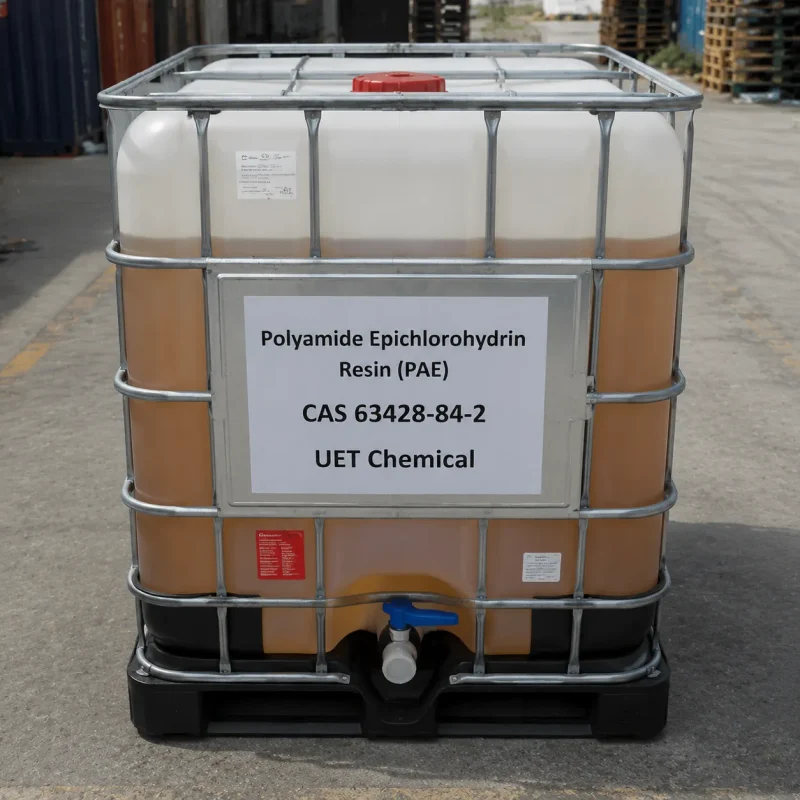
- Packaging: 200 kg HDPE drum, 1000 kg IBC tote. Custom packaging available upon request.
- Main Applications: Tissue & towel paper, food-grade packaging, filter paper, specialty board
Introduction to Polyamide Epichlorohydrin Resin
Polyamide Epichlorohydrin Resin (PAE) is a water-soluble, cationic thermosetting polymer widely used in the papermaking industry as a high-efficiency wet strength agent. The polymer backbone contains highly reactive azetidinium rings that open and form irreversible covalent ether bonds with hydroxyl groups on cellulose fibers as the web passes through the dryer section of the paper machine. It is extensively consumed by paper mills and tissue converters to produce sanitary papers, paper towels and food-contact packaging where traditional formaldehyde-based resins are strictly prohibited.
It features a dual mechanism of action: the strong cationic charge ensures rapid electrostatic attraction and high retention on anionic pulp fibers without the need for alum, while thermosetting crosslinking delivers exceptional wet-to-dry strength ratios. The primary storage risk is premature self-crosslinking (gelation). Exposure to high temperatures, prolonged storage or alkaline contamination triggers crosslinking within the tank, causing a rapid viscosity spike and irreversible solidification. Store IBC totes in a shaded, climate-controlled warehouse between 5 °C and 30 °C.
PAE Resin Chemical & Physical Properties
| Property | Value |
|---|---|
| Chemical Family | Polyamide-epichlorohydrin polyamine condensate |
| Appearance | Clear, yellowish to light amber aqueous liquid |
| Solid Content | 12.5% ± 1.0% |
| Viscosity (Brookfield, 25 °C) | ≤ 100 mPa·s |
| pH (as supplied) | 2.0 – 4.0 |
| Density (20 °C) | 1.03 – 1.06 g/cm³ |
| Ionic Character | Cationic |
| Solubility | Completely miscible in cold water |
| Freezing Point | Approx. -2 °C |
Applications of PAE Resin
Tissue and towel manufacturing: Dosed at 2–10 kg per ton of dry pulp in the thin stock. It provides the required wet rub resistance and structural integrity for facial tissues, toilet paper and kitchen towels, ensuring the sheet does not disintegrate when wet.
Food-contact and specialty packaging: Used in the production of tea bag paper, coffee filters and liquid packaging boards. Its formaldehyde-free nature ensures compliance with strict food-contact safety regulations.
Decorative and industrial laminates: Added to base papers used for melamine-faced chipboards and abrasive papers, providing the dimensional stability required during high-pressure, high-temperature resin impregnation processes.
Storage & Safety Precautions for PAE Resin
- Store in original HDPE drums or IBC totes between 5 °C and 30 °C. Do not freeze; freezing destroys emulsion stability and causes precipitation. Keep away from direct sunlight and heat sources. Avoid contact with alkaline materials (pH > 6), which will trigger rapid, irreversible gelation inside the storage tank.
- Mildly acidic and a mild skin/eye irritant. Wear chemical splash goggles, PVC gloves and an apron during pumping and dosing operations. In case of skin contact, wash immediately with soap and water.
- Ship in standard dry containers; during winter transit to cold climates, heated containers or thermal blankets are required to prevent freezing.
- Verify viscosity and pH upon receipt. If the liquid appears cloudy, contains gel particles, or shows a viscosity spike above 150 mPa·s, the batch has suffered thermal degradation or alkaline contamination during transit — reject the shipment.
PAE Resin FAQ
Q: How does PAE compare to traditional Urea-Formaldehyde (UF) wet strength agents?
A: PAE is entirely formaldehyde-free, making it safe for sanitary and food-contact papers, whereas UF resins release toxic formaldehyde. Additionally, PAE-cured broke is easily repulped under mild alkaline conditions, while UF-cured broke requires harsh chemical or mechanical treatment to break down.
Q: Why did the resin turn into a solid gel in my storage tank?
A: Gelation is caused by exposure to high temperatures (>35 °C) or accidental contamination with alkaline substances like caustic soda or ammonia, which raises the pH above 5.0 and triggers rapid self-crosslinking. Always use dedicated, acid-washed pumps and lines for PAE handling.
Q: What is the best addition point in the paper machine?
A: It is typically diluted to a 1% solution with fresh water and added to the thin stock line or directly at the fan pump. This ensures maximum contact time with the fibers and optimal cationic retention before the headbox.
Related products
Manufacturer & Exporter Since 2006
Get Tailored Chemical Raw Material Solutions — Reply Within 1 Hour
Factory-direct pricing, stable high-purity supply and complete compliance documentation for your industrial formulations.
- 1000+Products
- 200+QC Protocols
- 7–15Days Delivery
- Factory-Direct Pricing
- COA / TDS / SDS Included
- Free Samples for Testing
- 40+ Export Countries
Request a Free Quote
Our engineers reply within 1 hour during GMT+8 business hours.
Please include in your inquiry:
- Product name or CAS number
- Required quantity
- Destination country or port
- Preferred packaging