
Sodium Metasilicate (CAS 6834-92-0)
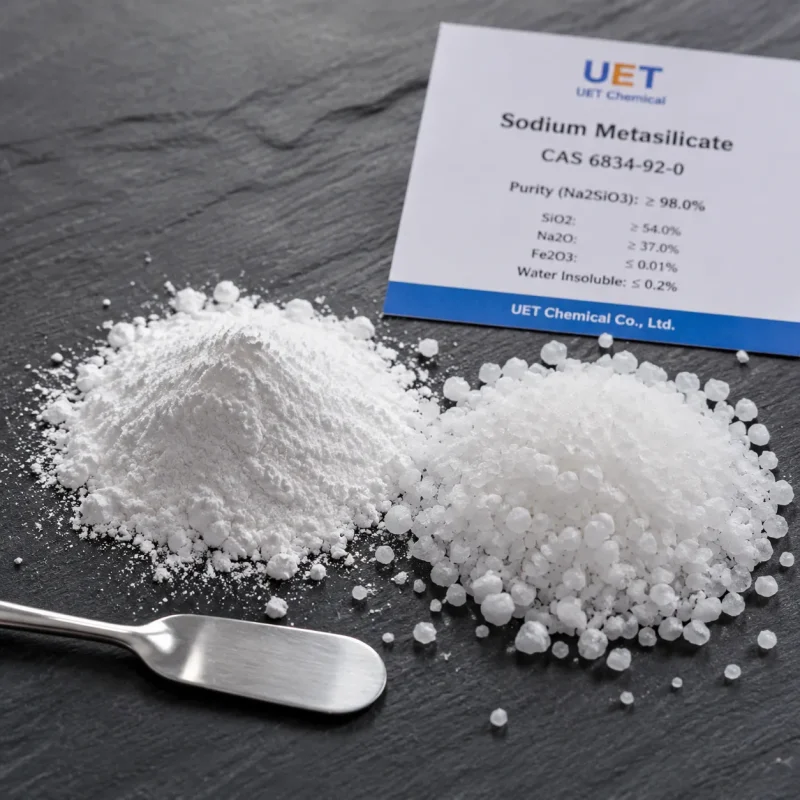
Sodium Metasilicate (Anhydrous) is a highly alkaline inorganic builder and saponifier supplied as white crystalline powder or granules. It delivers strong pH buffering, rapid solubility and effective corrosion inhibition for heavy-duty industrial detergents, metal surface treatment and boiler water systems. UETChem supplies high-purity anhydrous sodium metasilicate with consistent modulus and low insolubles for reliable processing performance. Each shipment includes COA, TDS, SDS.
- CAS No: 6834-92-0
- Synonyms: Anhydrous sodium metasilicate; Sodium silicate anhydrous; Na₂SiO₃
- EC Number: 229-912-9
- Molecular Formula: Na₂O₃Si
- Molecular Weight: 122.06 g/mol
- Appearance: White to off-white crystalline powder or granules
- Purity: ≥ 98.0% (Industrial Grade)
- pH (1% Solution): 12.0 – 13.0
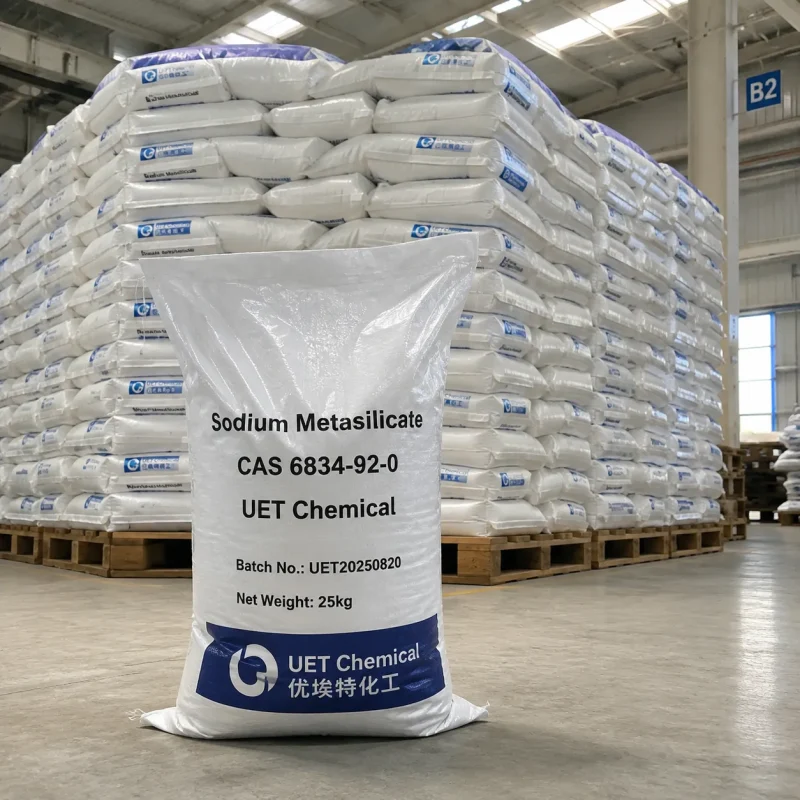
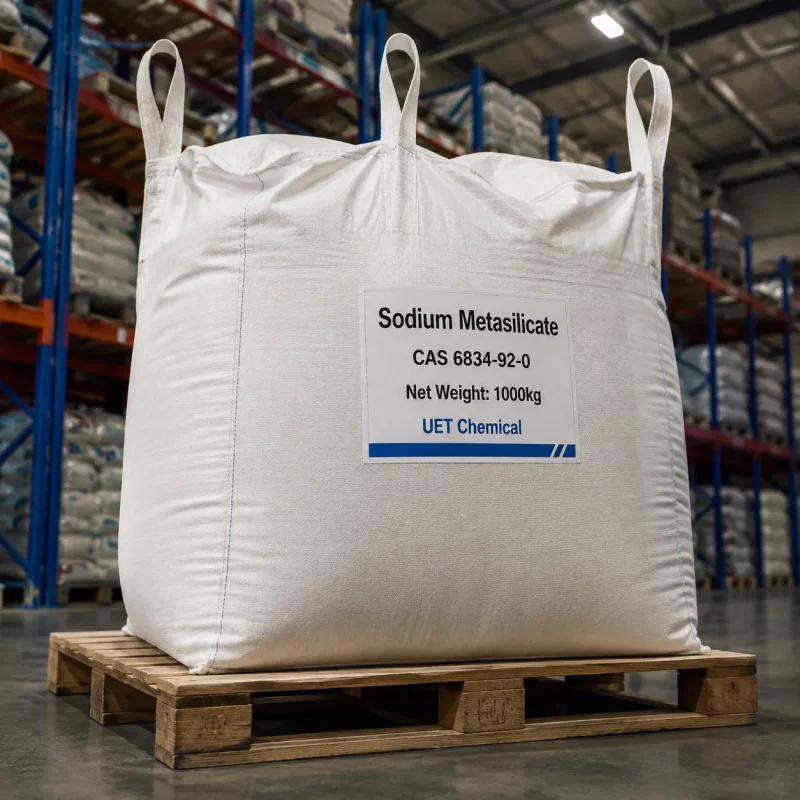
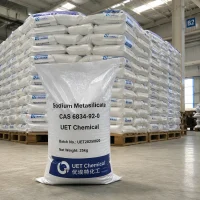
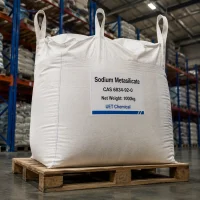
- Packaging: 25 kg PE-lined PP bag; 1000 kg jumbo bag. Custom packaging available.
- Main Applications: I&I cleaning detergents, metal degreasing, ceramic binders, boiler water treatment
Introduction to Sodium Metasilicate
Sodium Metasilicate (Anhydrous) is a powerful inorganic alkaline salt with a 1:1 molar ratio of Na₂O to SiO₂. In aqueous solution, it hydrolyzes rapidly to release hydroxide ions, delivering strong saponification of fats and oils, emulsification of greases and dispersion of solid soils. It is widely used in industrial cleaners and metalworking fluids to maintain high pH buffers and protect ferrous metals from flash rusting.
The anhydrous grade offers fast dissolution and high active content, making it suitable for dry-blended concentrated powders and low-moisture formulations where hydrated grades would introduce excess water. It is highly hygroscopic and prone to carbonation: exposure to humid air causes moisture absorption and reaction with CO₂, forming hard insoluble lumps and losing alkalinity. Store in a dry climate-controlled warehouse and reseal liners immediately after use.
Sodium Metasilicate Chemical & Physical Properties
| Property | Value |
|---|---|
| Molecular Formula | Na₂O₃Si |
| Molecular Weight | 122.06 g/mol |
| Melting Point | Approx. 1089 °C |
| Crystal Density | Approx. 2.40 g/cm³ |
| Water Solubility (20 °C) | Highly soluble; dissolves exothermically |
| pH (1% Aqueous Solution) | 12.0 – 13.0 (strongly alkaline) |
| SiO₂/Na₂O Ratio | ~0.95 – 1.05 |
| Iron (Fe) | ≤ 0.02% |
| Water Insoluble Matter | ≤ 0.10% |
Applications of Sodium Metasilicate
Industrial & institutional cleaning
Formulated into heavy-duty floor cleaners, engine degreasers and clean-in-place systems. It saponifies grease, suspends carbonized soils and maintains solution buffering capacity, supporting effective cleaning across full wash cycles.
Metal surface treatment
Used in alkaline soak cleaners and pre-treatment baths prior to plating or painting. It removes processing oils and shop dirt while passivating steel substrates to prevent flash rusting between operations.
Water treatment & boiler maintenance
Dosed into cooling water circuits and low-pressure boiler systems. It forms a protective silicate film on metal surfaces, inhibiting pitting corrosion and sequestering calcium and magnesium hardness ions.
Ceramics & refractories
Functions as a deflocculant and inorganic binder in clay bodies and refractory castables. It improves green strength of formed parts and reduces water demand for extrusion processing.
Storage & Safety Precautions for Sodium Metasilicate
- Store tightly sealed in a dry, well-ventilated warehouse below 30 °C. Keep on pallets away from exterior walls and concrete floors. Reseal PE liners immediately after scooping to prevent moisture ingress and caking.
- Corrosive to skin and eyes. Wear heavy-duty rubber gloves, chemical splash goggles and a dust respirator during handling. Flush affected areas immediately with plenty of water for at least 15 minutes and seek medical attention.
- Classified as corrosive solid for transport in most regions. Ensure packaging is moisture-proof and properly labeled with hazard markings.
- Verify total alkalinity and silica content upon receipt. Heavy clumping or chalky surface layers indicate moisture ingress during transit; evaluate suitability based on formulation tolerance.
Sodium Metasilicate FAQ
Q: How does anhydrous Sodium Metasilicate differ from the pentahydrate grade?
A: Anhydrous grade has ~98% active content and dissolves rapidly with exothermic heat, ideal for dry-blended powders. Pentahydrate has ~50% active material, dissolves slower without heat, and suits general-purpose liquid cleaners.
Q: My powder arrived in hard lumps. Is it still usable?
A: Lumping comes from moisture and CO₂ absorption forming carbonate and silica gel. Soft, easily crushed lumps work for heavy-duty degreasing. Rock-hard, insoluble masses have lost alkalinity and should be rejected.
Q: Can I use this to clean aluminum parts?
A: No. Its highly alkaline solutions aggressively attack amphoteric metals like aluminum, zinc and brass, causing pitting and discoloration. Use blends formulated specifically for multi-metal cleaning.
Related products
Manufacturer & Exporter Since 2006
Get Tailored Chemical Raw Material Solutions — Reply Within 1 Hour
Factory-direct pricing, stable high-purity supply and complete compliance documentation for your industrial formulations.
- 1000+Products
- 200+QC Protocols
- 7–15Days Delivery
- Factory-Direct Pricing
- COA / TDS / SDS Included
- Free Samples for Testing
- 40+ Export Countries
Request a Free Quote
Our engineers reply within 1 hour during GMT+8 business hours.
Please include in your inquiry:
- Product name or CAS number
- Required quantity
- Destination country or port
- Preferred packaging