
Basic Chromium Sulfate (CAS 39380-78-4) | Premium Chromium Powder
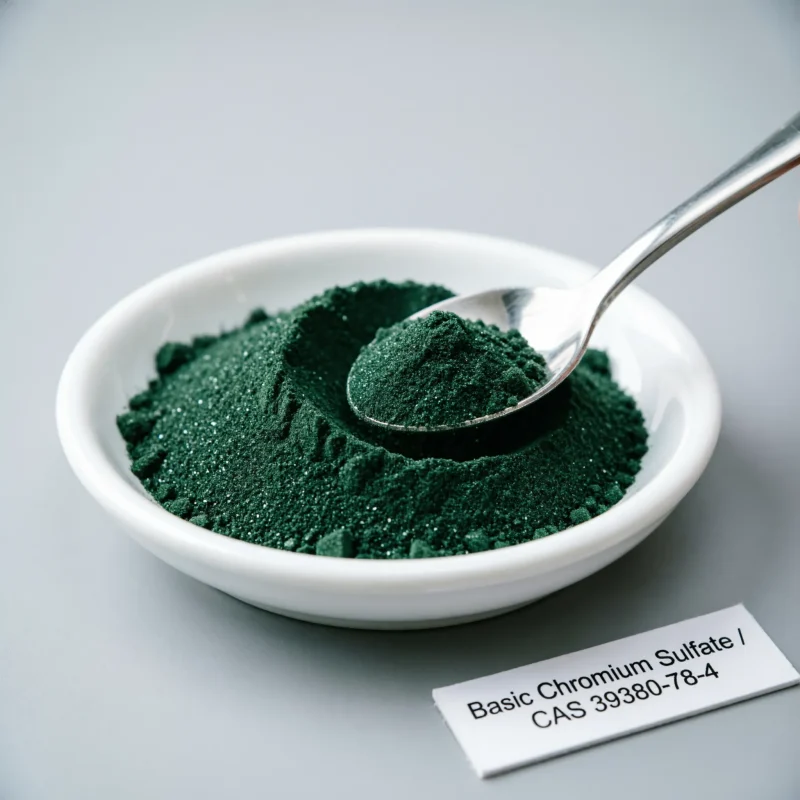
Basic Chromium Sulfate is a dark green, water-soluble trivalent chromium tanning powder used mainly for chrome tanning and retanning of hides. Its hydroxo-bridged Cr(III) sulfate structure and typical 33% basicity give stable acidic dissolution and direct coordination with collagen carboxyl groups. Each lot is supplied with COA, TDS and SDS.
- CAS No.: 39380-78-4
- Synonyms: Basic chromium sulfate, chromium(III) hydroxy sulfate, chrome tanning powder, premium chromium powder
- EINECS: 254-440-1
- Molecular Formula: Cr(OH)SO4 (empirical)
- Molecular Weight: 165.04 g/mol (empirical basis)
- Appearance: Dark green powder
- Purity: Cr2O3 24–26% typical; batch COA reports actual value
- Basicity: 33% typical
- pH (10% aq.): 2.5–3.5
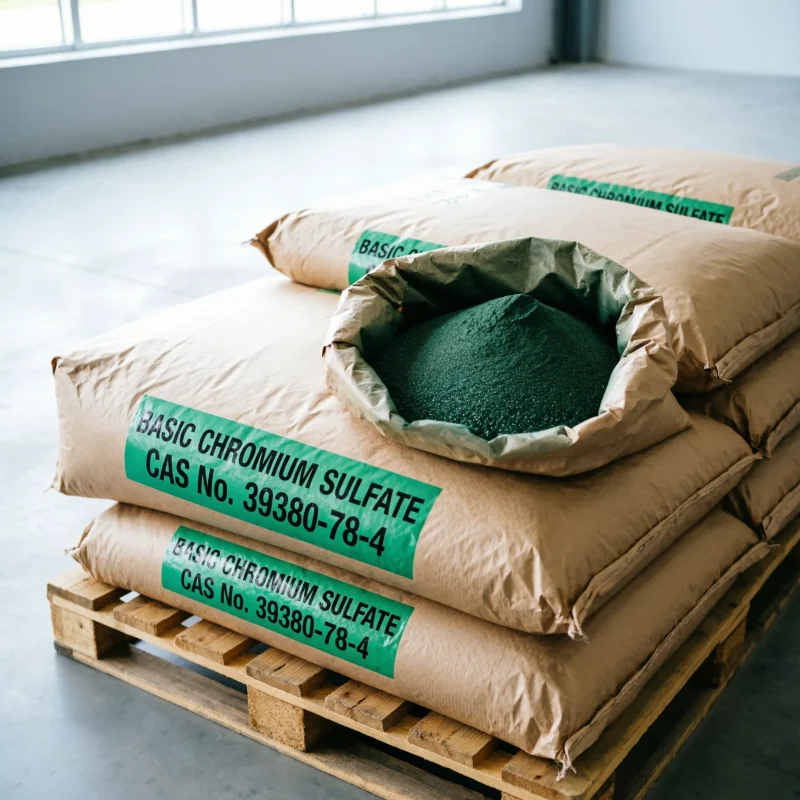
- Packaging: 25 kg (55 lb) woven bag with PE liner; jumbo bag optional. Custom packaging available upon request.
- Main Applications: Chrome tanning, retanning, chromium oxide pigment precursor, catalyst intermediate
Introduction to Basic Chromium Sulfate
Basic Chromium Sulfate is a dark green, water-soluble trivalent chromium tanning powder built from hydroxo-bridged Cr(III) sulfate complexes, usually supplied at about 33% basicity. The hydroxo ligands allow Cr(III) to coordinate collagen carboxyl sites, making it a common material for chrome tanning of bovine, goat and sheep hides; it also serves as a precursor for chromium oxide pigments and some catalyst intermediates.
Compared with non-basified chromium sulfate, this 33% basicity grade reduces free acid and can lift chrome exhaustion from about 60% to 75% or higher when basification and float control are correct. The practical risk is premature basification: damp storage or early alkali addition forms Cr(OH)3 sludge, lowers tanning power, creates uneven blue-green spots, and wastes chrome unless the powder stays sealed and pH is raised only after hide penetration.
Key Features of BCS
- Controlled basicity: About 33% basicity supplies hydroxo-bridged Cr(III) species that begin collagen fixation without requiring a separate initial basification step.
- Stable Cr(III) valence: The material is a trivalent chromium sulfate, not a chromate, and can be screened for Cr(VI) by diphenylcarbazide methods such as ISO 17075-1 when leather compliance is required.
- Workable pH window: A 10% aqueous solution normally reads pH 2.5–3.5, which matches pickled hide floats and allows controlled basification to 3.8–4.2.
- Assay-based dosing: Cr2O3 24–26% lets tanneries calculate offer by Cr2O3 on pelt weight instead of guessing from bag weight.
- Low insoluble residue: Properly stored powder dissolves to a dark green liquor with low undissolved specks, reducing surface spots on crust leather.
Basic Chromium Sulfate Chemical & Physical Properties
| Property | Value |
|---|---|
| Molecular Formula | Cr(OH)SO4 (empirical basis; commercial material contains hydroxo sulfate oligomers) |
| Molecular Weight | 165.04 g/mol (empirical basis) |
| Appearance | Dark green powder |
| Cr2O3 Content | 24.0–26.0% typical |
| Basicity | 33% typical for leather grade |
| pH | 2.5–3.5 (10% aqueous solution) |
| Boiling Point | Not applicable; inorganic solid decomposes before boiling |
| Density | Bulk density about 0.9–1.2 g/cm³ (56–75 lb/ft³) |
| Flash Point | Not applicable; non-flammable solid |
| Solubility | Soluble in water; insoluble in alcohols and most organic solvents |
| Chromium Valence | Cr(III); chromate is not an intended component |
Applications of Basic Chromium Sulfate
Chrome tanning of bovine, goat and sheep hides: The Cr(III) hydroxo complexes penetrate pickled hide at pH 2.6–3.0, then coordinate collagen carboxyl groups as pH rises. Typical offer is 4–8% of a 25% Cr2O3 powder on pelt weight, giving about 1.0–2.0% Cr2O3 on pelt. Basify slowly to 3.8–4.2 after penetration to avoid surface fixation.
Retanning and combination tannage: Basic chromium sulfate adds cationic chromium sites to vegetable or synthetic retannages, improving hydrothermal stability and dye fixation. Use 0.3–1.0% Cr2O3 on shaved weight, adjusted for softness and fullness.
High-exhaustion chrome systems: The hydroxo sulfate works with formate or dicarboxylate masking agents to delay fixation, then releases Cr(III) at higher pH. Typical target is 75%+ Cr2O3 fixation when float, temperature and basification are controlled.
Chromium oxide pigment and catalyst precursor: On controlled calcination, Cr(III) hydroxy sulfate converts toward chromium(III) oxide. Manufacturers dose it stoichiometrically for required Cr2O3 loading, often using aqueous slurries of 10–30% solids before drying and thermal conversion.
Storage & Safety Precautions for Basic Chromium Sulfate
Storage: Keep bags sealed on dry pallets at 5–35 °C (41–95 °F). Moisture is the main risk: damp powder cakes, consumes basicity and can precipitate Cr(OH)3 during later dissolution. Store away from chlorates, nitrates, peroxides and strong alkalis; oxidizing alkaline contact can convert Cr(III) toward chromate species. Avoid wet contact with carbon steel because acidic solution can corrode it. Do not use torn bags or place broken material on damp concrete; container sweat can ruin an entire pallet.
Safety: Typical GHS handling classification for technical dust is Skin Irrit. 2 and Eye Irrit. 2; some inventories also list Skin Sens. 1. Confirm the destination-country SDS. Wear nitrile gloves, goggles and a P2/N95 respirator when handling open bags. If powder spills, wet carefully with water mist, collect into a labeled drum and avoid dry sweeping. Wash skin with plenty of water; do not use oxidizing cleaners.
Transport: Non-DG for dry powder in sealed packaging. Verify local chromium-compound rules before export.
QC practice: Before loading, check a 10% solution for green clarity and pH 2.5–3.5, measured per ISO 10523. Cloudiness or a higher pH usually indicates moisture damage.
Basic Chromium Sulfate FAQ
Q: Is CAS 39380-78-4 Basic Chromium Sulfate suitable for high-exhaustion chrome tanning without extra basification?
A: Yes, if batch basicity is ~33% and pH stays low during penetration. Hydroxo Cr(III) complexes fix later at pH 3.8–4.2. Test 10% solution pH and Cr2O3 before bulk use.
Q: What is the process difference between 33% and 50% basicity Basic Chromium Sulfate?
A: 33% is safer and dissolves predictably. 50% fixes faster but risks Cr(OH)3 precipitation if pH jumps. Recalculate Cr2O3 offer, float and leather spec before switching.
Q: How should incoming Basic Chromium Sulfate be checked for Cr2O3 and Cr(VI)?
A: Check Cr2O3 by acid digestion plus ICP-OES or titration. Screen Cr(VI) with diphenylcarbazide; use ISO 17075-1 for leather. Keep samples dry and sealed.
Related products
Manufacturer & Exporter Since 2006
Get Tailored Chemical Raw Material Solutions — Reply Within 1 Hour
Factory-direct pricing, stable high-purity supply and complete compliance documentation for your industrial formulations.
- 1000+Products
- 200+QC Protocols
- 7–15Days Delivery
- Factory-Direct Pricing
- COA / TDS / SDS Included
- Free Samples for Testing
- 40+ Export Countries
Request a Free Quote
Our engineers reply within 1 hour during GMT+8 business hours.
Please include in your inquiry:
- Product name or CAS number
- Required quantity
- Destination country or port
- Preferred packaging