
Red Iron Oxide (Ferric Oxide / Pigment Red 101) CAS 1309-37-1
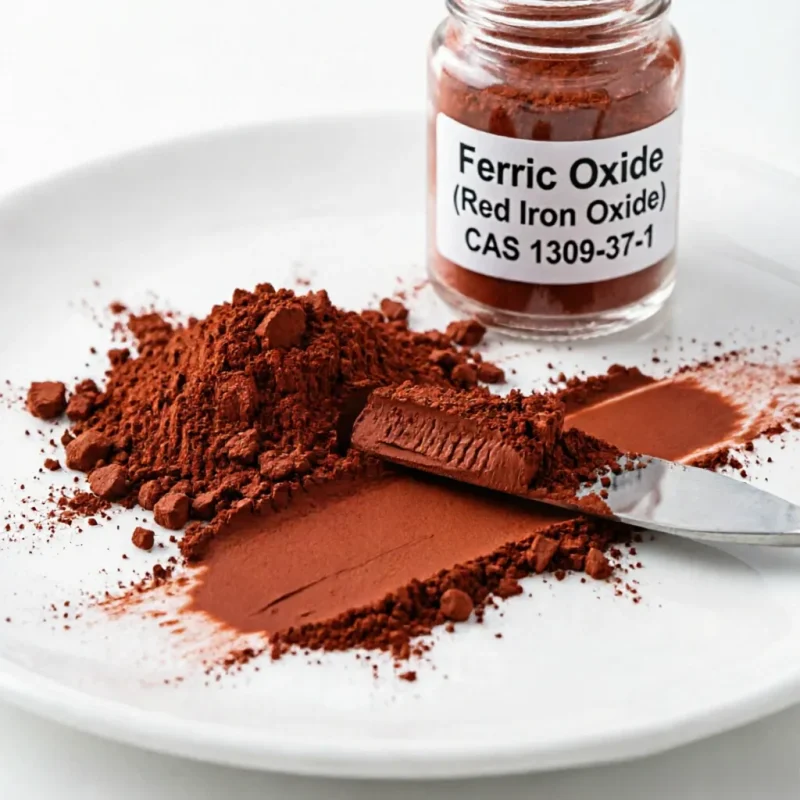
Red Iron Oxide (Pigment Red 101) is a high-purity synthetic inorganic pigment supplied as a fine red to reddish-brown powder. Based on the hematite (α-Fe2O3) crystal structure, it delivers exceptional tinting strength, opacity, and UV resistance for concrete coloration, industrial coatings, and plastic masterbatches. Each shipment includes COA, TDS, and SDS.
- CAS No: 1309-37-1
- Synonyms: Ferric Oxide, Hematite, Iron(III) oxide, CI 77491, Pigment Red 101
- EC Number: 215-168-2
- Molecular Formula: Fe2O3
- Molecular Weight: 159.69 g/mol
- Appearance: Red to reddish-brown odorless powder
- Fe2O3 Content: ≥ 95.0%
- Tinting Strength: 95 – 105% vs. international standard
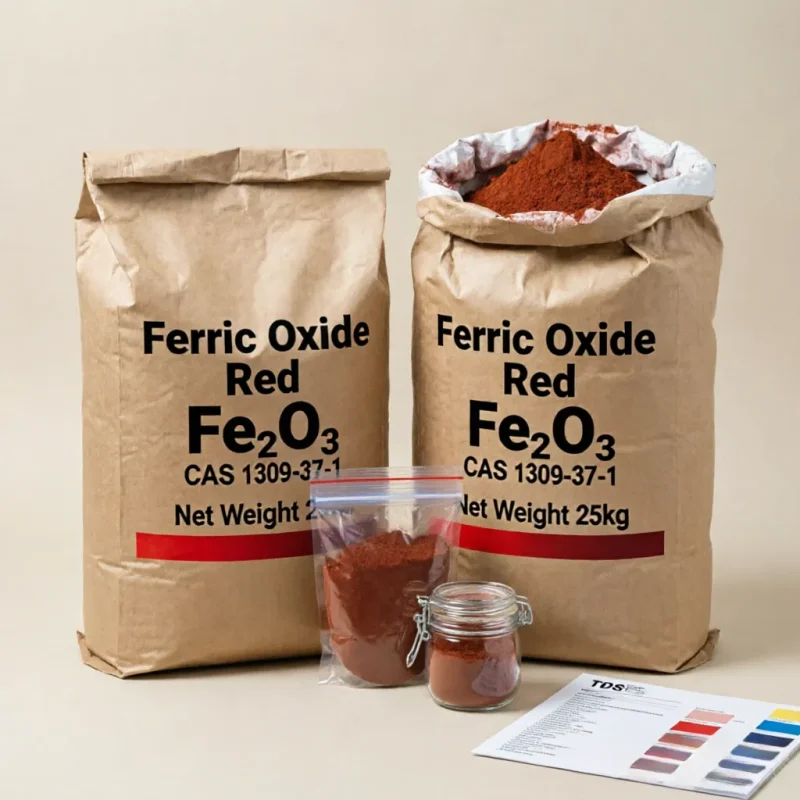
- Packaging: 25 kg (55 lb) multi-wall paper bag with PE liner; 1000 kg (2200 lb) woven PP jumbo bag. Custom packaging available upon request.
- Main Applications: Concrete pavers and blocks, anti-corrosive primers, plastic masterbatches, ceramic glazes
Introduction to Red Iron Oxide (Pigment Red 101)
Red Iron Oxide is a synthetic inorganic pigment produced by calcination or aqueous precipitation of iron salts, yielding a highly crystalline alpha-phase hematite structure. Unlike organic pigments, its color originates from electron transitions within the metal-oxide lattice, granting inherent immunity to UV degradation and chemical attack. Formulators in the construction and coatings industries rely on it to provide permanent, weather-fast red hues that survive decades of outdoor exposure.
The primary processing advantage is its extreme thermal stability and chemical inertness; it will not decompose, bleed, or migrate in aggressive solvent systems or high-temperature polymer extrusion. The critical handling risk is dust generation and moisture-related caking. Although chemically inert and only mildly hygroscopic, prolonged exposure to high humidity combined with stack compaction forms hard agglomerates that reduce dispersion efficiency. Store bags on pallets in dry, covered warehouses, and use local exhaust ventilation with particulate respirators during manual bag slitting and high-speed dispersion.
Key Features of Red Iron Oxide
- Superior weather and UV resistance. The inorganic hematite lattice does not absorb destructive UV radiation, ensuring zero fading, chalking, or gloss loss in exterior architectural coatings and concrete pavers exposed to direct sunlight.
- Extreme thermal stability. Withstands continuous temperatures up to 1000 °C (1832 °F) without color shift or structural decomposition, making it ideal for ceramic glazes, powder coatings, and high-heat silicone or PTFE plastics.
- High hiding power and tinting strength. The high refractive index (approx. 3.0) provides excellent opacity, reducing the overall pigment loading required to achieve full coverage in paints and plastics.
- Chemical inertness and alkali resistance. Completely unreactive in highly alkaline environments (pH 12–14), making it the standard pigment for Portland cement, concrete roofing tiles, and lime-based mortars where organic pigments would rapidly degrade.
- Low oil absorption and easy dispersion. Oil absorption of 15–25 g/100 g keeps formulation viscosity low, allowing high pigment loading in masterbatches and coatings without viscosity build-up, and deagglomerates readily in ball mills and high-speed dispersers.
Red Iron Oxide Chemical & Physical Properties
| Property | Value |
|---|---|
| Molecular Formula | Fe2O3 |
| Molecular Weight | 159.69 g/mol |
| Thermal Behaviour | Stable up to 1000 °C (1832 °F). No melting point; decomposes to Fe3O4 only under extreme reducing atmospheres above 1400 °C (2552 °F). |
| Density (Specific Gravity) | Approx. 5.0 – 5.2 g/cm³ (312 – 325 lb/ft³) |
| Oil Absorption | 15 – 25 g / 100 g (varies by particle size distribution) |
| pH (10% aqueous slurry) | 5.0 – 7.0 |
| Moisture Content | ≤ 1.0% (at 105 °C / 221 °F) |
| Sieve Residue (325 mesh / 45 µm) | ≤ 0.3% |
| Water Soluble Salts | ≤ 0.5% |
Applications of Red Iron Oxide
Concrete and building materials: Dosed at 3–8% by weight of cement in interlocking pavers, roofing tiles, and decorative blocks. Its alkali resistance ensures the red color remains vibrant despite the high pH (12+) of Portland cement and prolonged outdoor weathering.
Industrial and anti-corrosive coatings: Used at 15–25% pigment volume concentration (PVC) in epoxy primers, alkyd enamels, and marine paints. The dense, plate-like hematite particles create a tortuous path that physically blocks moisture and chloride ions from reaching the steel substrate.
Plastics and masterbatches: Incorporated at 20–50% loading in PE, PP, and PVC masterbatches. Withstands extrusion temperatures up to 300 °C (572 °F) without outgassing or plate-out, providing opaque, UV-stable coloration for agricultural films, pipes, and synthetic turf.
Ceramic glazes and engobes: Added at 5–12% to glaze frits and body stains for terracotta, roof tiles, and sanitary ware. Fired at 1000–1150 °C (1832–2102 °F), it develops stable red-to-maroon shades without blistering or pinholing, and is compatible with standard oxidation firing schedules.
Storage & Safety Precautions for Red Iron Oxide
- Storage: Keep tightly sealed in original multi-wall paper bags or jumbo bags on pallets in a dry, covered warehouse below 35 °C (95 °F). Protect from rain, container condensation, and direct contact with exterior walls. Prolonged high humidity (> 80% RH) combined with stack compaction causes hard caking; do not stack 25 kg bags more than 10 high or jumbo bags more than two high.
- Safety: Not classified as hazardous under GHS. The fine powder acts as a nuisance dust; wear N95/P2 particulate respirators and safety glasses during bag slitting, dumping, and high-speed dispersion to avoid respiratory irritation. In case of eye contact, flush with water for 15 minutes.
- Transport: Red Iron Oxide is Non-DG under IATA/IMDG/ADR. No UN number, no packing group. Standard dry cargo transport acceptable; use desiccant liners or container liners for ocean shipments to humid destinations.
- QC note: Verify Fe2O3 content (≥ 95.0%), sieve residue (≤ 0.3% at 325 mesh), and moisture (≤ 1.0%) upon receipt. Draw down against your standard shade card and confirm tinting strength (95–105%) before approving the lot for production.
Red Iron Oxide FAQ
Q: What is the difference between synthetic Red Iron Oxide (Pigment Red 101) and natural iron oxide red?
A: Synthetic grades contain ≥ 95% Fe2O3 with narrow particle size distribution, delivering 20–30% higher tinting strength, lower water-soluble salts, and consistent shade batch-to-batch. Natural grades carry silica and alumina impurities that cause shade drift, reduced color strength, and efflorescence risk in concrete.
Q: What is the recommended dosage in concrete, and does it affect compressive strength?
A: Dose at 3–8% by weight of cement (5% is typical for full shade). The pigment is chemically inert and does not participate in hydration, so compressive strength is unaffected. Loadings above 10% add no further color depth and may slightly increase water demand.
Q: My bags arrived caked after a long ocean shipment. Is the pigment degraded?
A: No. Caking from humidity and compaction is physical, not chemical. Break the agglomerates and pass through a 325 mesh (45 µm) sieve, or disperse directly in a ball mill / high-speed disperser—full tinting strength is recovered. For future shipments to humid regions, request container liners with desiccant.
Related products
Manufacturer & Exporter Since 2006
Get Tailored Chemical Raw Material Solutions — Reply Within 1 Hour
Factory-direct pricing, stable high-purity supply and complete compliance documentation for your industrial formulations.
- 1000+Products
- 200+QC Protocols
- 7–15Days Delivery
- Factory-Direct Pricing
- COA / TDS / SDS Included
- Free Samples for Testing
- 40+ Export Countries
Request a Free Quote
Our engineers reply within 1 hour during GMT+8 business hours.
Please include in your inquiry:
- Product name or CAS number
- Required quantity
- Destination country or port
- Preferred packaging