
Styrene-Acrylic Emulsion CAS 25085-34-1
Styrene-Acrylic Emulsion is a water-based copolymer dispersion synthesized from styrene and acrylic ester monomers. Supplied as a milky white liquid with a characteristic bluish tint (typically ~50% solid content), it delivers outstanding water resistance, alkali stability, and strong substrate adhesion. Formulators rely on this versatile binder for architectural wall paints, paper coatings, construction adhesives, and waterproofing systems. We supply multiple Tg grades tailored to your specific film-formation requirements; each shipment includes COA, TDS, and SDS.
- CAS No.: 25085-34-1
- Synonyms: Styrene-acrylic copolymer emulsion; Acrylic styrene latex; 苯丙乳液
- Appearance: Milky white liquid with bluish tint
- Solid Content: 48.0–52.0%
- pH Value: 7.5–9.0
- Viscosity: 500–3000 mPa·s
- Glass Transition Temp (Tg): 15–35 °C (customizable)
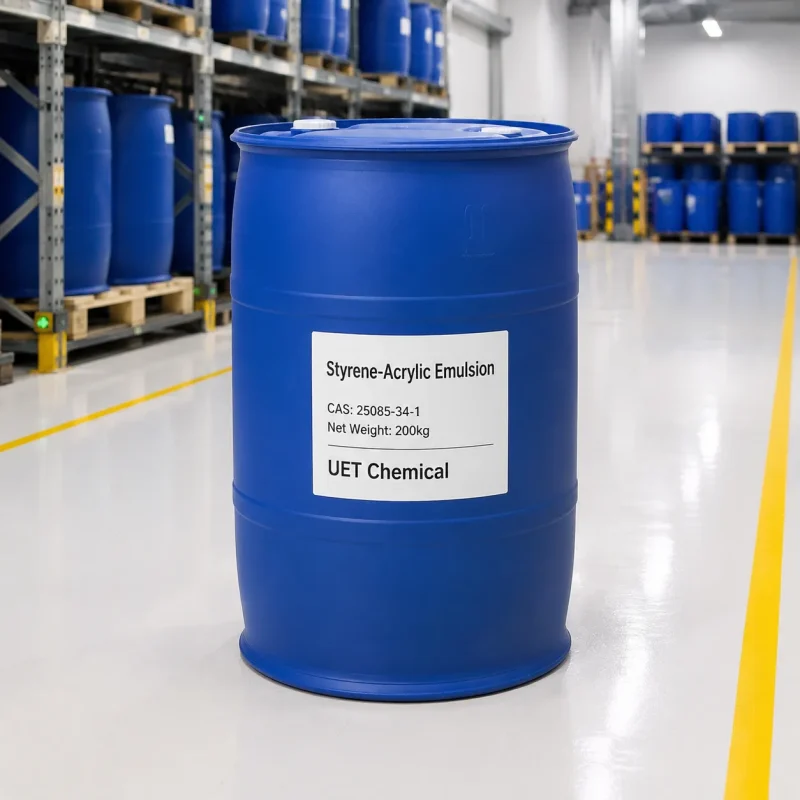
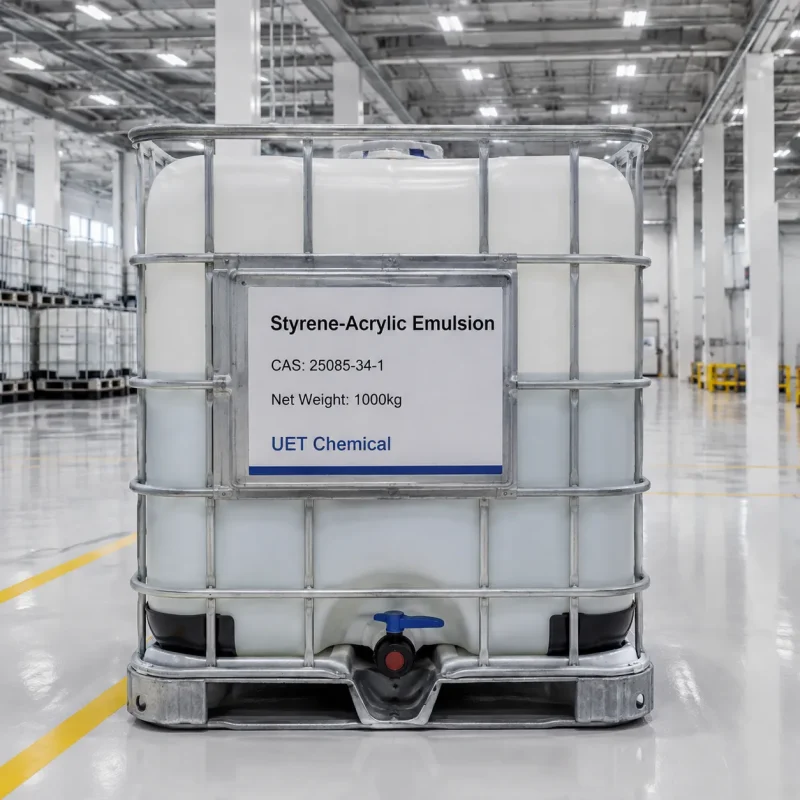
- Packaging: 200 kg HDPE drum / 1000 kg IBC tote
- Main Applications: Interior/exterior architectural paints; paper coating binders; construction adhesives; waterproofing mortars
Introduction to Styrene-Acrylic Emulsion
Styrene-Acrylic Emulsion is an aqueous copolymer dispersion produced via emulsion polymerization of styrene and various acrylic esters. The incorporation of styrene rings into the acrylic backbone significantly enhances hardness, water resistance, and alkali stability compared to pure acrylic emulsions, while maintaining excellent flexibility and adhesion. Paint manufacturers and formulators utilize this binder to produce high-performance, low-VOC interior and exterior wall paints, as well as heavy-duty construction adhesives and paper sizing agents.
One critical handling parameter involves temperature control: as a water-based dispersion, freezing causes irreversible coagulation and breaks the emulsion system. Storage and transit temperatures must remain strictly above 5 °C. Additionally, formulators should avoid adding high-valence metal ions or strong acids directly into the tank, which can destabilize the surfactant system and cause shock thickening or curdling.
Key Features of Styrene-Acrylic Emulsion
- Superior water and alkali resistance. The hydrophobic styrene segments shield the polymer matrix from moisture ingress and saponification, making it ideal for exterior masonry paints and cementitious waterproofing mortars.
- High pigment binding power. Excellent compatibility with titanium dioxide and inorganic fillers allows for high PVC (pigment volume concentration) formulations without sacrificing scrub resistance or binder integrity.
- Mechanical and chemical stability. Tolerates high-shear mixing during paint manufacturing and resists viscosity shock when blended with common coating additives, thickeners, and coalescing agents.
- Versatile film formation. Available in multiple Tg grades to suit different climate zones; low-Tg grades offer flexible films for elastomeric coatings, while high-Tg grades provide block-resistant, hard surfaces for interior paints.
- Eco-friendly profile. Water-based formulation with ultra-low VOC content, aligning with stringent global environmental regulations for architectural and industrial coatings.
Styrene-Acrylic Emulsion Chemical & Physical Properties
| Property | Value |
|---|---|
| Solid Content | 48.0–52.0% |
| pH Value | 7.5–9.0 |
| Viscosity (Brookfield, 25 °C) | 500–3000 mPa·s |
| Glass Transition Temp (Tg) | 15–35 °C |
| Minimum Film Formation Temp (MFFT) | 5–15 °C |
| Density | ~1.03–1.06 g/cm³ |
| Particle Size | 0.1–0.5 µm |
| Ionic Nature | Anionic / Non-ionic |
Applications of Styrene-Acrylic Emulsion
Architectural coatings: Used as the primary binder (20–40% in final paint) for interior flat/matte wall paints and exterior masonry coatings. Delivers excellent scrubability, color retention, and efflorescence resistance.
Construction and building materials: Blended into cementitious waterproofing slurries, tile adhesives, and crack-bridging mortars to improve flexural strength and substrate bonding.
Paper coating and sizing: Applied in paper manufacturing to enhance surface strength, gloss, and ink receptivity for high-quality printing papers.
Textile and non-woven treatments: Acts as a stiffening or softening binder (depending on Tg) for garment interlinings, carpet backing, and fiber bonding.
Industrial adhesives: Formulated into pressure-sensitive adhesives (PSAs) or laminating glues for foil and film bonding.
Storage & Safety Precautions for Styrene-Acrylic Emulsion
Storage conditions. Store in sealed HDPE drums or IBC totes at 5–35 °C. Protect from freezing. If the emulsion freezes, the polymer particles will irreversibly aggregate, ruining the batch. Keep away from direct sunlight and strong acids.
Safety and PPE. Non-hazardous and non-flammable. Wear standard safety glasses and gloves during drum transfers to prevent skin drying or eye splashes. Spills are extremely slippery; contain with sand or absorbent pads and wash down with copious water.
Transport classification. Non-DG. Not regulated under IMDG, IATA, or ADR. Ship as standard general cargo. Winter transit requires heated containers or thermal blankets to prevent freezing during ocean or rail freight.
Practitioner note: Before scaling up a paint formula, always run a compatibility drawdown test with your specific thickeners (HEUR/HASE) and coalescing solvents (e.g., Texanol). Adjust the pH to 8.0–8.5 using ammonia or AMP-95 to maximize thickener efficiency and storage stability.
Styrene-Acrylic Emulsion FAQ
Q: My emulsion arrived with lumps and a clear watery layer on top. Is it usable?
A: No. This indicates the emulsion experienced freezing temperatures during transit or was shocked by extreme pH/electrolyte imbalance. Once the polymer particles coagulate and separate from the aqueous phase, the system cannot be re-dispersed by stirring. Reject the batch and ensure winter shipments use thermal blankets or heated containers.
Q: How do I choose the right Tg grade for an exterior wall paint?
A: For exterior masonry exposed to wide temperature swings, select a lower Tg (15–20 °C) to ensure the film remains flexible and resists micro-cracking. For interior washable paints where dirt pick-up and blocking are concerns, choose a higher Tg (30–35 °C) for a harder, more durable surface.
Q: Can I mix this emulsion directly with cement powder?
A: Yes, Styrene-Acrylic Emulsion is highly alkali-resistant and widely used as a polymer modifier in cementitious waterproofing and tile adhesives. However, add the liquid emulsion to the mixing water first, then gradually incorporate the cement powder to ensure uniform dispersion and prevent localized shock-coagulation.
Related products
Manufacturer & Exporter Since 2006
Get Tailored Chemical Raw Material Solutions — Reply Within 1 Hour
Factory-direct pricing, stable high-purity supply and complete compliance documentation for your industrial formulations.
- 1000+Products
- 200+QC Protocols
- 7–15Days Delivery
- Factory-Direct Pricing
- COA / TDS / SDS Included
- Free Samples for Testing
- 40+ Export Countries
Request a Free Quote
Our engineers reply within 1 hour during GMT+8 business hours.
Please include in your inquiry:
- Product name or CAS number
- Required quantity
- Destination country or port
- Preferred packaging