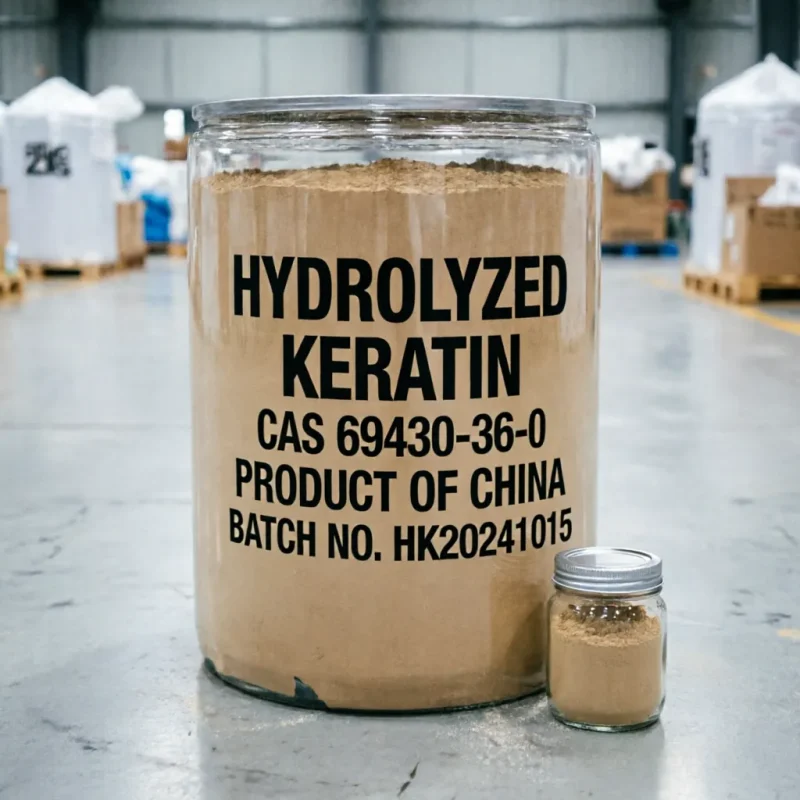
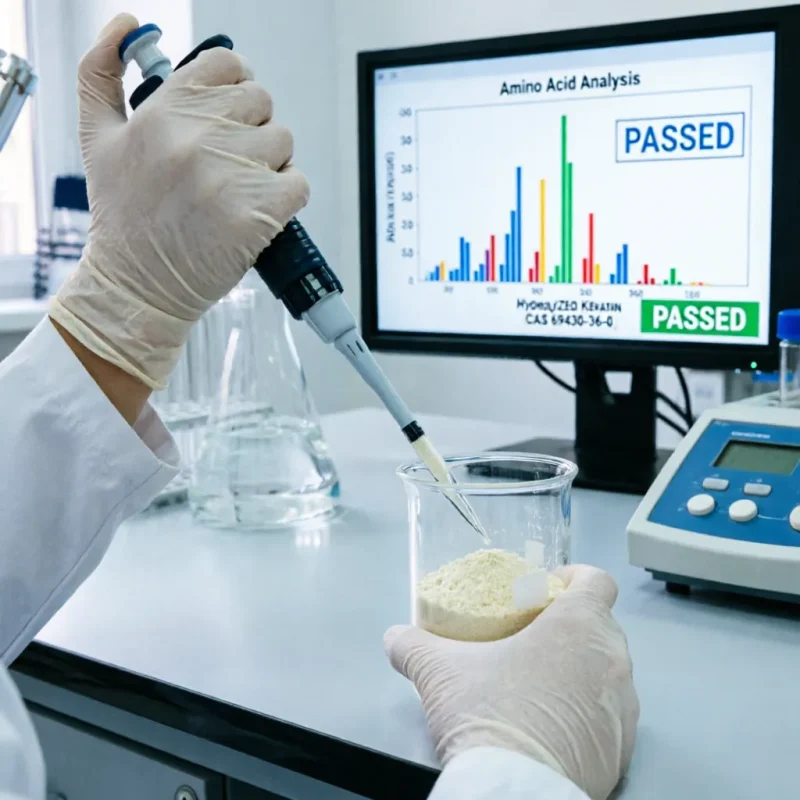
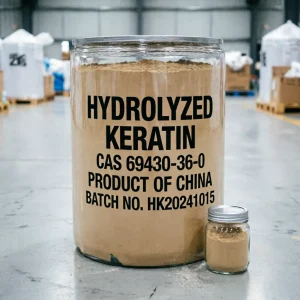
Hydrolyzed Keratin (CAS 69430-36-0) is a low-molecular-weight protein produced by enzymatic hydrolysis of keratin fibers from wool. With a molecular weight of 500–3,000 Da, it penetrates the hair cortex to replenish lost amino acids—particularly cysteine, which rebuilds the disulfide bonds responsible for hair strength. Unlike intact keratin (>50,000 Da), which only coats the surface, hydrolyzed keratin delivers structural repair from within.
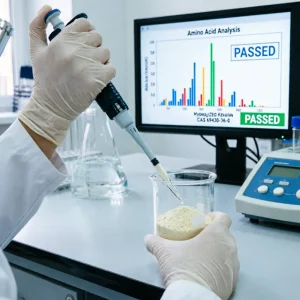
In cosmetic formulations, it functions as a conditioning agent, film-former, and moisture-binding protein. It is fully water-soluble, compatible with common surfactant systems (SLES, CAPB, amphoteric surfactants), and stable across pH 3.0–9.0. UET Chemical manufactures this ingredient under ISO 22716 GMP conditions with batch-to-batch consistency verified by in-house HPLC and Kjeldahl testing.
| Item | Details |
|---|---|
| CAS No. | 69430-36-0 |
| EINECS No. | 274-001-1 |
| INCI Name | Hydrolyzed Keratin |
| Chemical Nature | Polypeptide mixture (amino acid fragments) |
| Key Amino Acids | Cysteine, Glutamic Acid, Serine, Glycine |
| Molecular Weight | 500–3,000 Da |
| Source | Wool (primary) |
| Hydrolysis Method | Enzymatic |
| Regulatory Status | REACH Registered; EU CosIng listed |
Hydrolyzed Keratin Specifications
| Test Item | Specification |
|---|---|
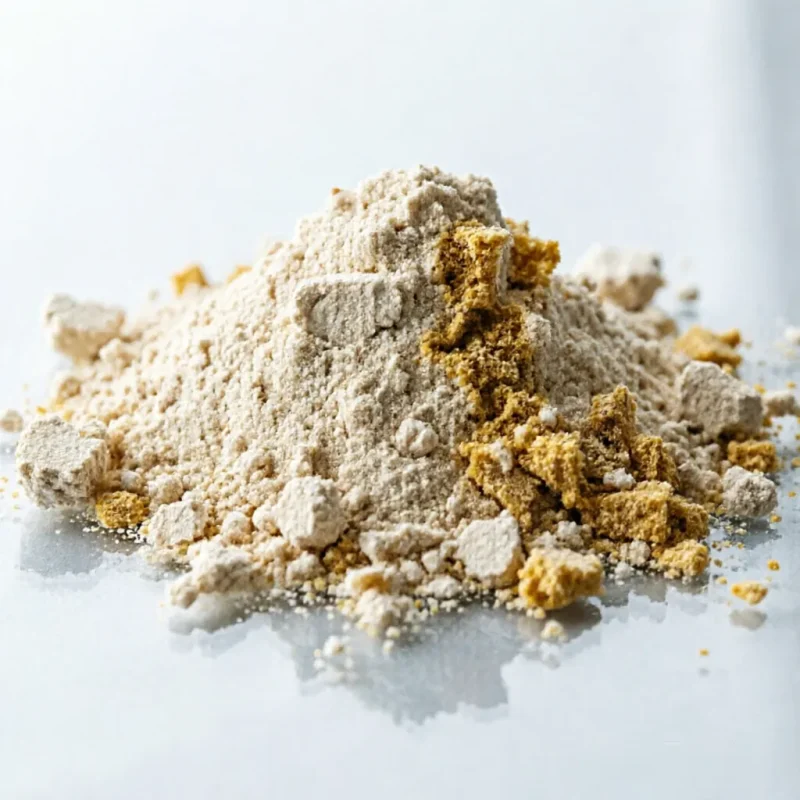
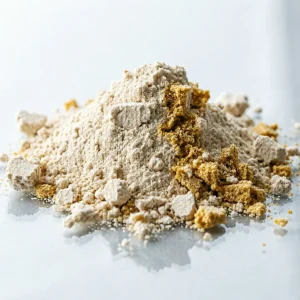
| Appearance | White to off-white fine powder |
| Protein Content (dry basis) | ≥90.0% |
| Molecular Weight | 500–3,000 Da (≥90% of peptides) |
| pH (1% solution) | 4.5–7.0 |
| Loss on Drying | ≤5.0% |
| Ash | ≤2.0% |
| Heavy Metals (as Pb) | ≤10 ppm |
| Arsenic (As) | ≤3 ppm |
| Total Plate Count | ≤1,000 CFU/g |
| Yeast & Mold | ≤100 CFU/g |
| E. coli / Salmonella | Absent |
Hydrolyzed Keratin Applications
| Application | Dosage | Function |
|---|---|---|
| Shampoos & Conditioners | 0.5%–3.0% | Repair, detangling, anti-static |
| Hair Masks & Treatments | 2.0%–5.0% | Deep repair, elasticity |
| Styling Products | 0.5%–2.0% | Film-forming, heat protection |
| Hair Coloring & Perming | 1.0%–3.0% | Damage reduction |
| Skin Care | 0.5%–2.0% | Moisturizing, barrier support |
Key Advantages
- Penetrative repair — Low MW (500–3,000 Da) allows cortex-level delivery, not just surface coating.
- Disulfide bond rebuilding — High cysteine content (10–18%) restores broken cross-links in damaged hair.
- Moisture retention — Hygroscopic peptides bind water to the hair shaft, reducing dryness between washes.
- Formulation-friendly — Water-soluble, pH-stable (3.0–9.0), compatible with anionic/cationic/amphoteric systems.
Hydrolyzed Keratin Storage and Stability
| Item | Guideline |
|---|---|
| Shelf Life | 24 months (unopened, from manufacture date) |
| Temperature | Below 25°C; avoid freezing |
| Humidity | RH < 60%; keep sealed |
| Light | Protect from direct sunlight |
Stability notes:
- In aqueous solution (pH 4.0–8.0), stable for ≥6 months at room temperature.
- Add during cool-down phase (<45°C) in formulation to preserve peptide integrity.
- Avoid prolonged heating above 80°C.
- Compatible with phenoxyethanol, sodium benzoate, potassium sorbate. Avoid high-concentration formaldehyde-releasing preservatives.
Hydrolyzed Keratin Usage Guide
Step 1 – Pre-dissolve: Disperse powder into deionized water at 20–25°C with gentle stirring. Allow 10–15 min for complete dissolution.
Step 2 – Add at cool-down: For emulsions (conditioners, masks), add below 45°C. For surfactant systems (shampoos), add directly at room temperature.
Step 3 – Adjust pH: Final product pH 4.5–6.5 optimizes keratin adsorption onto hair.
Step 4 – Preserve: As a protein substrate, adequate preservation is essential. Use a broad-spectrum preservative at recommended levels.
Compatibility
| ✅ Compatible | ⚠️ Caution | ❌ Incompatible |
|---|---|---|
| SLES, CAPB, Decyl Glucoside, Cetrimonium Chloride, Dimethicone, Panthenol, Glycerin | Alcohol >30%, strong oxidizers | Formaldehyde-releasing preservatives (>0.5%), tannic acid |
Why Source Hydrolyzed Keratin from UET Chemical
| Advantage | Details |
|---|---|
| GMP Manufacturing | ISO 22716 certified facility; dedicated protein hydrolysis lines |
| In-House QC | HPLC, Kjeldahl, ICP-MS, USP microbial testing on every batch |
| Full Documentation | COA, TDS, SDS, REACH certificate, allergen statement with every shipment |
| Batch Consistency | <5% variation in protein content and MW distribution between batches |
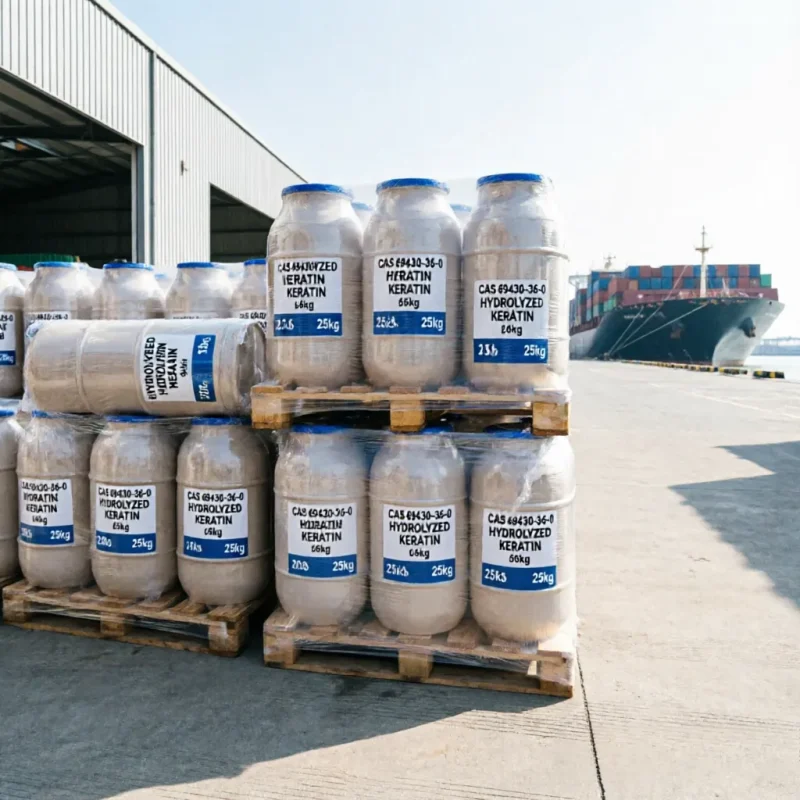
| Flexible MOQ | 1 kg sample; 25 kg bulk; OEM/private label from 100 kg |
| Technical Support | Free formulation consultation; reference formulas provided |
| Fast Response | Inquiry answered within 12 hours; sample ships in 1–3 days |
Hydrolyzed Keratin FAQ
Q1: What is the difference between hydrolyzed keratin and regular keratin?
Hydrolyzed keratin (500–3,000 Da) penetrates the hair cortex for internal repair. Regular keratin (>50,000 Da) cannot penetrate and only provides temporary surface coating. For lasting repair, the hydrolyzed form is essential.
Q2: Is hydrolyzed keratin vegan?
Our standard product is wool-derived (animal origin). Sheep are sheared, not harmed, so some cruelty-free brands accept it. For fully vegan alternatives, we supply hydrolyzed wheat protein and hydrolyzed soy protein.
Q3: What molecular weight is best for hair repair?
- 500–1,500 Da: Maximum penetration; best for intensive repair.
- 1,500–3,000 Da: Balanced penetration + surface film; ideal for daily care.
- 3,000–5,000 Da: Surface conditioning; suitable for styling/heat protection.
- Our standard is 500–3,000 Da. Custom ranges available on request.
Q4: Can I get a free sample?
Yes. We offer 100–500 g free samples. Buyer covers express shipping (~$30–60 via DHL/FedEx). Shipping cost is credited against your first bulk order (≥100 kg).
Q5: What is the lead time?
- In-stock specs: Ships in 5–7 business days after payment.
- Custom specs (MW, packaging, OEM): 10–15 business days production.
- Sea freight: 25–35 days (North America), 20–30 days (Europe), 7–15 days (SE Asia).