
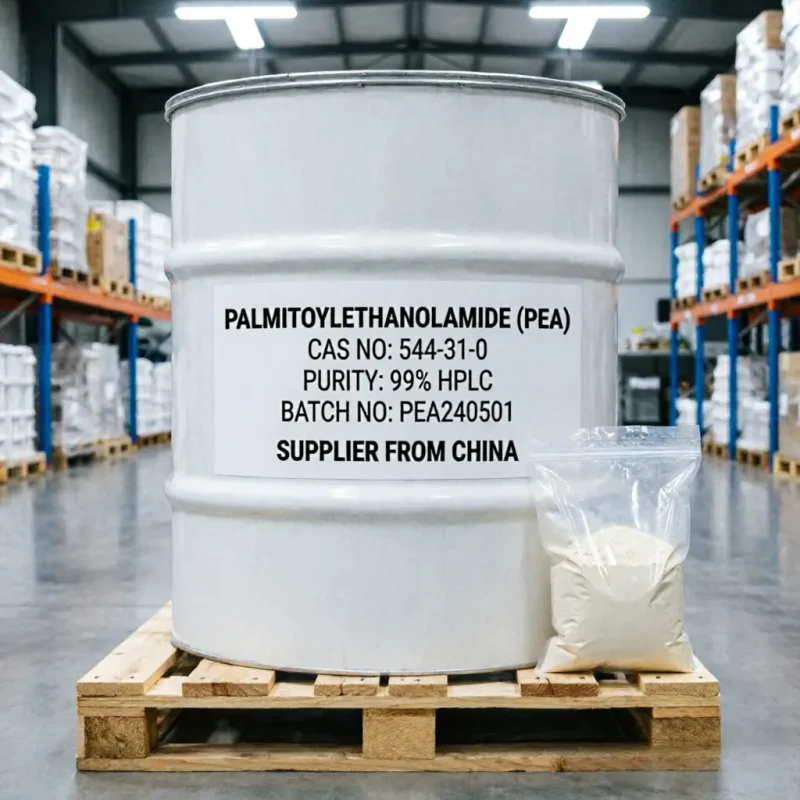
Palmitoylethanolamide PEA CAS 544-31-0
Palmitoylethanolamide (PEA) is a premium endogenous fatty acid amide supplied as a white to off-white crystalline powder. Operating via the ALIA mechanism (Autacoid Local Injury Antagonism) and PPAR-α receptor modulation, it provides potent neuroprotective, anti-inflammatory, and analgesic benefits without the side effects of traditional NSAIDs. Core uses include dietary supplements for nerve and joint support, soothing cosmetics, and veterinary health products. Each shipment includes COA, TDS, and SDS.
- CAS No: 544-31-0
- Synonyms: N-Palmitoylethanolamine, Palmidrol, Hydroxyethylpalmitamide, N-(2-Hydroxyethyl)hexadecanamide
- EC Number: 208-865-8
- Molecular Formula: C18H37NO2
- Molecular Weight: 299.49 g/mol
- Appearance: White to off-white crystalline powder
- Purity (HPLC): ≥ 98.0%
- Packaging: 25 kg (55 lb) multi-wall kraft paper bag with PE liner; 25 kg (55 lb) fiber drum with PE liner. Custom packaging available upon request.
- Main Applications: Dietary supplements (neuropathy/joint support), anti-redness skincare, pet care cognitive/joint supplements, pharmaceutical intermediates
Introduction to Palmitoylethanolamide (PEA)
Palmitoylethanolamide (PEA) is a naturally occurring N-acylethanolamine (fatty acid amide) synthesized in the human body and various organisms to combat inflammation and pain. Unlike conventional pharmaceuticals, PEA acts as a lipid mediator that restores cellular homeostasis. It primarily targets the PPAR-α (peroxisome proliferator-activated receptor alpha) nuclear receptor and stabilizes mast cells via the ALIA mechanism, effectively down-regulating neuroinflammation and chronic pain signaling pathways.
As a raw material for the nutraceutical and cosmetic industries, PEA is highly valued for its exceptional safety profile, endogenous nature, and lack of drug-drug interactions. The primary formulation challenge is its high lipophilicity and poor aqueous solubility. Formulators typically utilize lipid-based delivery systems, emulsifiers, or downstream micronization processes to maximize oral bioavailability in capsules and tablets. Store in a cool, dry warehouse below 25 °C (77 °F) to prevent caking, as the powder has a relatively low melting point.
Key Features of Palmitoylethanolamide (PEA)
- Endogenous and exceptionally safe. As a lipid naturally produced by the human body, PEA boasts a superior safety profile with no known severe adverse effects, making it ideal for long-term daily supplementation and earning GRAS/Novel Food approvals in multiple global markets.
- Multi-target anti-inflammatory action. Modulates PPAR-α receptors and inhibits mast cell degranulation, providing broad-spectrum relief for neuroinflammation, joint discomfort, and skin erythema without suppressing the overall immune response.
- The “Entourage Effect” synergist. Clinically proven to enhance the bioavailability and efficacy of co-administered polyphenols (such as Luteolin, Quercetin, and Rutin), making it a highly sought-after base ingredient for advanced synergistic supplement blends.
- High lipophilicity for topical penetration. Readily integrates into the skin’s lipid bilayer and cell membranes, making it an excellent active ingredient for barrier-repair and anti-redness cosmetic emulsions.
- 100% Vegan and sustainable. Commercially synthesized from plant-derived palmitic acid and ethanolamine, ensuring full compliance with Vegan, Halal, and Kosher certification requirements (free from animal-derived bovine/porcine sources).
Palmitoylethanolamide Chemical & Physical Properties
| Property | Value |
|---|---|
| Molecular Formula | C18H37NO2 |
| Molecular Weight | 299.49 g/mol |
| Melting Point | 93 – 98 °C (199 – 208 °F) |
| Density | Approx. 0.92 g/cm³ (57.4 lb/ft³) |
| Solubility | Insoluble in water; highly soluble in ethanol, DMSO, chloroform, and lipid/oil phases. |
| Loss on Drying | ≤ 0.5% |
| Heavy Metals (as Pb) | ≤ 10 mg/kg |
| Residual Solvents | Meets ICH Q3C guidelines for pharmaceutical/nutraceutical excipients |
| Thermal Stability | Stable at room temperature; avoid prolonged exposure above 80 °C (176 °F) in dry blends to prevent localized melting and caking. |
Applications of Palmitoylethanolamide (PEA)
Dietary supplements (Nerve & Joint Support): Encapsulate or tablet at 300–600 mg per serving to support nerve health, manage neuropathic discomfort, and promote joint mobility. Due to its hydrophobic nature, it is often formulated with lipid carriers (e.g., MCT oil, olive oil) or subjected to downstream micronization to enhance gastrointestinal absorption.
Cosmetics & Skincare (Barrier Repair & Anti-Redness): Incorporate at 0.1–1.0% into the oil phase of creams, lotions, and serums. It soothes sensitive and reactive skin, reduces UV-induced erythema, and supports the natural ceramide/lipid barrier of the stratum corneum.
Pet care and veterinary supplements: Blend into soft chews or lipid-based liquids for aging dogs and cats. PEA supports cognitive function, reduces age-related joint stiffness, and manages chronic inflammatory conditions in companion animals without the gastrointestinal risks of veterinary NSAIDs.
Storage & Safety Precautions for Palmitoylethanolamide
- Storage: Keep tightly sealed in original kraft bags or fiber drums at 15–25 °C (59–77 °F), relative humidity below 60%. Because PEA has a melting point around 93 °C (199 °F), exposure to high summer transit temperatures or proximity to heat sources can cause the powder to fuse and cake. If caking occurs, it can be gently milled without losing chemical efficacy.
- Safety: Not classified as hazardous under GHS. Non-toxic and non-irritating. As a fine organic powder, avoid dust generation. Wear a standard N95/P2 dust mask, safety goggles, and nitrile gloves during bulk weighing and blending to prevent mechanical respiratory and eye irritation.
- Transport: Palmitoylethanolamide is Non-DG under IATA/IMDG/ADR. No UN number, no packing group. Ship in standard dry containers. During summer months, consider thermal blankets or reefer containers for long-distance ocean freight to prevent heat-induced caking inside the container.
- QC note: Verify lot identity on receipt by checking the melting point (93–98 °C / 199–208 °F) and assay via HPLC (≥ 98.0%). A significant drop in melting point or presence of dark specks indicates thermal degradation or cross-contamination—reject the lot.
Palmitoylethanolamide FAQ
Q: What is the difference between standard PEA and “Micronized” PEA?
A: We supply standard, high-purity PEA raw powder. Standard PEA has large particle sizes and poor water solubility, leading to slow oral absorption. “Micronized” or “Ultra-micronized” PEA undergoes a specialized mechanical milling process post-synthesis to reduce particle size to < 5 µm, vastly increasing surface area and bioavailability. Supplement manufacturers often purchase our standard powder and contract a third-party micronization facility, or use advanced lipid-delivery systems in their softgels.
Q: Can PEA be dissolved in water to make a clear liquid supplement or gummy?
A: No. PEA is highly lipophilic (fat-soluble) and practically insoluble in water. Attempting to mix it directly into aqueous liquids will result in rapid sedimentation. For liquid or gummy formulations, formulators must use nano-emulsification, liposomal encapsulation, or cyclodextrin complexation to keep the PEA suspended and bioavailable.
Q: Is this PEA derived from animal or plant sources?
A: Our PEA is 100% plant-derived and synthetic. It is manufactured via the condensation of plant-sourced palmitic acid and ethanolamine. It contains no animal by-products, making it fully compliant with Vegan, Halal, and Kosher dietary requirements.
Related products
Manufacturer & Exporter Since 2006
Get Tailored Chemical Raw Material Solutions — Reply Within 1 Hour
Factory-direct pricing, stable high-purity supply and complete compliance documentation for your industrial formulations.
- 1000+Products
- 200+QC Protocols
- 7–15Days Delivery
- Factory-Direct Pricing
- COA / TDS / SDS Included
- Free Samples for Testing
- 40+ Export Countries
Request a Free Quote
Our engineers reply within 1 hour during GMT+8 business hours.
Please include in your inquiry:
- Product name or CAS number
- Required quantity
- Destination country or port
- Preferred packaging