
Gellan Gum (Low Acyl & High Acyl) CAS 71010-52-1
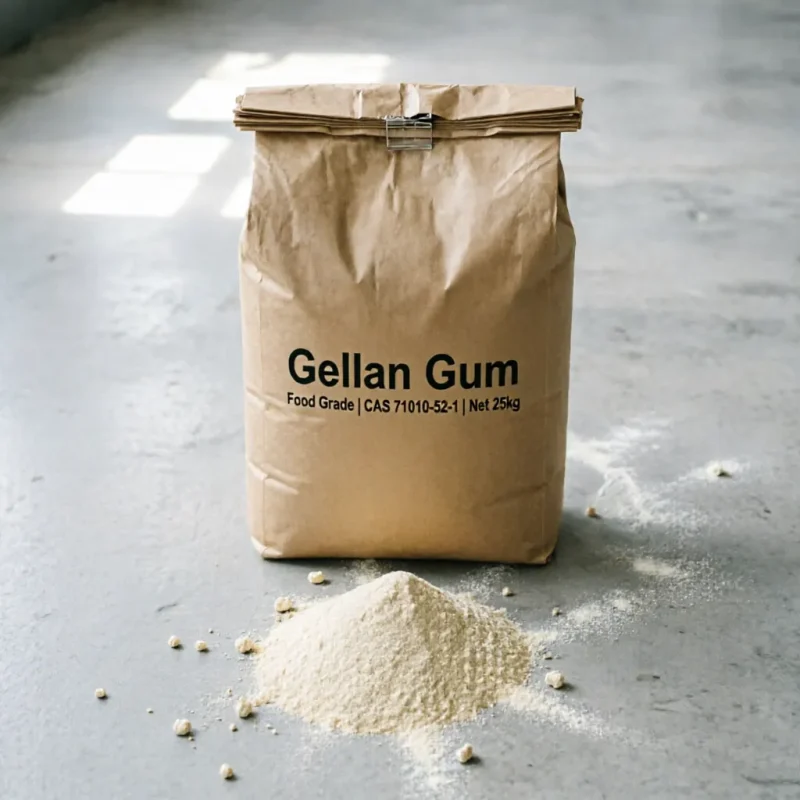
Gellan Gum is a high-performance microbial polysaccharide hydrocolloid supplied as an off-white fine powder. Available in Low Acyl (LA) and High Acyl (HA) grades, it provides versatile gelling, suspending, and stabilizing properties across a wide pH and temperature range. Core uses include beverage suspension, plant tissue culture, dairy alternatives, and confectionery gels. Each shipment includes COA, TDS, and SDS.
- CAS No: 71010-52-1
- Synonyms: Gelrite, Phytagel, Polysaccharide S-60, E418, Deacetylated gellan gum (LA grade)
- EC Number: 275-118-0
- Molecular Formula: (C33H52O22)n (Repeating tetrasaccharide unit)
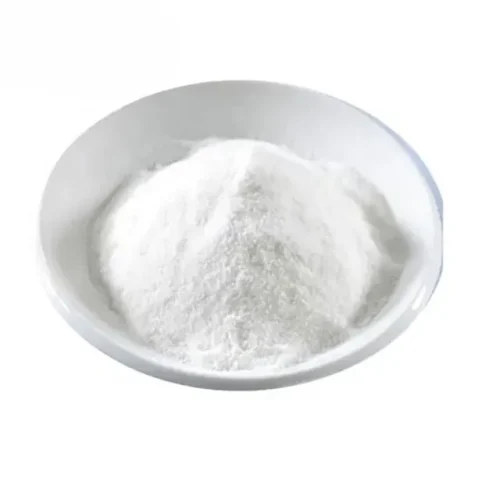
- Appearance: Off-white to light yellow fine powder
- Grades Available: Low Acyl (LA – firm/brittle gels); High Acyl (HA – soft/elastic gels)
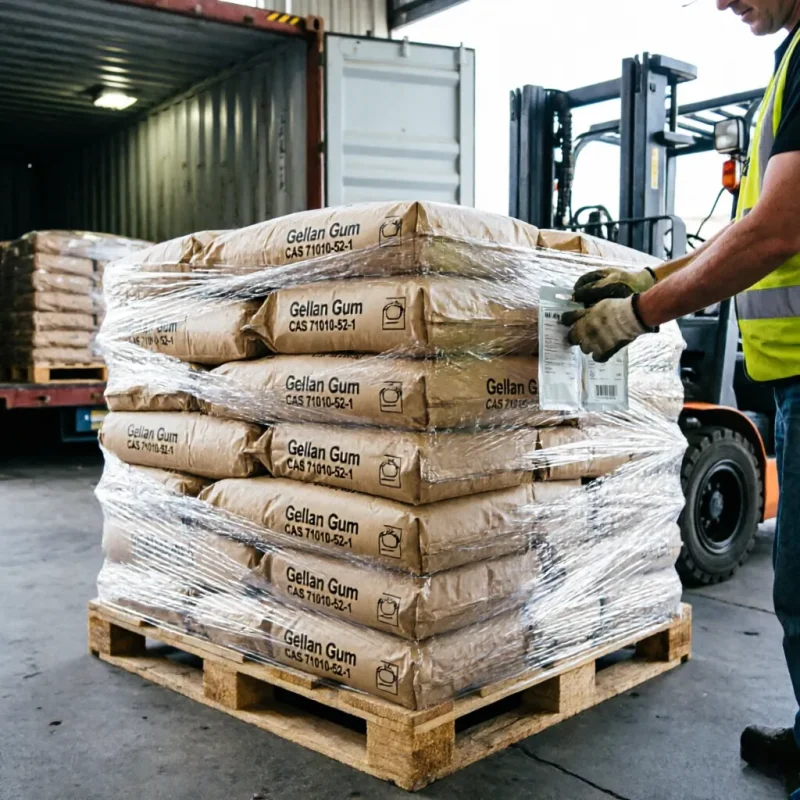
- Packaging: 25 kg (55 lb) multi-wall kraft paper bag with PE liner; 25 kg (55 lb) fiber drum with PE liner. Custom packaging available upon request.
- Main Applications: Beverage particle suspension, plant tissue culture media, dairy & plant-based milk stabilization, water desserts, sauces & dressings
Introduction to Gellan Gum
Gellan Gum is a high-molecular-weight extracellular polysaccharide produced by the aerobic fermentation of Sphingomonas elodea. Its backbone consists of repeating tetrasaccharide units (glucose, rhamnose, and glucuronic acid). The functional properties are strictly dictated by the acyl content: Low Acyl (LA) gellan forms hard, brittle, and thermally irreversible gels in the presence of cations (Ca²⁺, Mg²⁺, Na⁺), while High Acyl (HA) gellan forms soft, elastic, and thermally reversible gels without requiring high cation concentrations. By blending LA and HA grades, formulators can engineer precise, custom texture profiles ranging from rigid jellies to fluid pourable suspensions.
The primary handling advantage is its extreme efficiency; typical use levels are exceptionally low (0.01% to 0.2% w/w), making it highly cost-effective despite a higher upfront price per kilogram compared to carrageenan or xanthan gum. Storage risk is moisture uptake: the powder hydrates rapidly in humid environments, leading to lumping. Store in a dry, climate-controlled warehouse below 25 °C (77 °F) and 60% RH.
Key Features of Gellan Gum
- Ultra-low dosage requirement. Achieves full fluid gel suspension or firm gelation at 0.01%–0.2% (w/w), significantly reducing formulation costs and avoiding the gummy mouthfeel associated with high-load hydrocolloids.
- Fluid gel suspension (beverage grade). Creates a yield-stress “fluid gel” network that keeps insoluble particles (calcium, fruit pulp, cocoa, herbal extracts) uniformly suspended in low-viscosity beverages without imparting a thick, syrupy texture.
- Dual-texture engineering via blending. LA provides heat-stable brittleness; HA provides heat-reversible elasticity. Blending the two allows precise tuning of gel strength, melt-in-mouth properties, and syneresis control.
- Excellent flavor release. Unlike starch or pectin, gellan gum gels melt sharply in the mouth or break cleanly under shear, providing a clean, unmasked flavor release profile ideal for premium desserts and beverage applications.
- Plant tissue culture standard (Gelrite/Phytagel). High-purity LA grades serve as a transparent, inert, and non-nutritive solidifying agent for plant micropropagation, offering superior optical clarity and stability compared to agar.
Gellan Gum Chemical & Physical Properties
| Property | Low Acyl (LA) Grade | High Acyl (HA) Grade |
|---|---|---|
| Chemical Nature | Microbial polysaccharide (tetrasaccharide repeating unit) | |
| Acyl Content | < 1% (Deacetylated) | Native (High glyceryl and acetyl content) |
| Gel Texture | Hard, brittle, non-elastic | Soft, elastic, cohesive |
| Thermal Reversibility | Thermally irreversible (heat stable) | Thermally reversible (melts on heating) |
| Cation Requirement | Requires divalent (Ca²⁺, Mg²⁺) or monovalent (Na⁺, K⁺) cations | Gels upon cooling, minimal cation requirement |
| Solubility | Requires heating to 85–95 °C (185–203 °F) to fully hydrate | Hydrates at lower temperatures (75–85 °C / 167–185 °F) |
| Particle Size | 95% through 60 mesh (250 µm) | |
| Loss on Drying | ≤ 12.0% | |
| pH (1% aqueous solution) | 5.5 – 7.5 | 6.0 – 8.0 |
Applications of Gellan Gum
Ready-to-drink (RTD) beverages and nutritional shakes: Use HA or LA fluid gels at 0.01–0.05% to suspend calcium carbonate, fruit pulp, or protein aggregates. Provides “water-thin” pourability with zero sedimentation over a 12-month shelf life.
Plant-based milks and dairy alternatives: Incorporate at 0.02–0.1% in almond, soy, or oat milks to prevent phase separation and protein precipitation during UHT processing and ambient storage, replacing carrageenan in “clean label” formulations.
Plant tissue culture (Gelrite equivalent): Use high-purity LA grade at 0.2–0.4% (w/v) in MS media. Autoclave at 121 °C (250 °F) for 15 minutes. Provides a crystal-clear, chemically inert matrix that withstands prolonged incubation at 25–30 °C (77–86 °F) without liquefying or degrading.
Water desserts, jellies, and confectionery: Blend LA and HA grades (typically 0.1–0.3% total) with citric acid and calcium salts to create heat-stable dessert jellies that do not melt in tropical climates, offering superior syneresis control compared to gelatin or agar.
Storage & Safety Precautions for Gellan Gum
- Storage: Keep tightly sealed in original multi-wall kraft bags or fiber drums at 10–25 °C (50–77 °F), relative humidity strictly below 60%. The powder is highly hygroscopic; moisture ingress causes irreversible micro-gelation (lumping) that cannot be resolved by sieving. Do not store near steam lines or open warehouse doors.
- Safety: Not classified as hazardous under GHS. Food-grade (E418) and GRAS. Non-toxic and non-irritating. As a fine powder, avoid dust generation during bulk scooping. Wear a standard N95/P2 dust mask and safety goggles during manual weighing to prevent mechanical eye/respiratory irritation.
- Transport: Gellan Gum is Non-DG under IATA/IMDG/ADR. No UN number, no packing group. Ship in standard dry containers. Ensure container floors are dry and pallets are shrink-wrapped to protect against ocean freight condensation (“container rain”).
- QC note: Verify lot identity on receipt by checking hydration temperature and gel strength. LA grade must form a firm gel upon cooling with added calcium; HA grade must form a soft gel without added cations. Reject if severe caking or off-odors (sour/fermented) are present, indicating microbial contamination due to moisture ingress.
Gellan Gum FAQ
Q: What is the main difference between Low Acyl (LA) and High Acyl (HA) Gellan Gum?
A: LA gellan forms hard, brittle gels that do not melt when heated (thermally irreversible) and requires cations (calcium/sodium) to set. HA gellan forms soft, elastic gels that melt upon reheating (thermally reversible) and sets simply by cooling. Formulators often blend the two to achieve intermediate textures.
Q: Can Gellan Gum replace Carrageenan in plant-based milks?
A: Yes. Gellan gum (specifically fluid gel systems) is the premier “clean label” alternative to carrageenan for suspending calcium and proteins in almond, soy, and oat milks. It provides excellent suspension without the digestive concerns or regulatory scrutiny associated with carrageenan.
Q: Why did my Gellan Gum solution form lumps (“fish-eyes”) during mixing?
A: Gellan gum hydrates rapidly upon contact with water, causing the outer layer of the powder particle to gel and block water from reaching the dry core. To prevent this, disperse the powder into cold water under high shear, or pre-blend it with other dry ingredients (like sugar or salt) before adding to the liquid phase, then heat to 85–90 °C (185–194 °F) to fully activate.
Related products
Manufacturer & Exporter Since 2006
Get Tailored Chemical Raw Material Solutions — Reply Within 1 Hour
Factory-direct pricing, stable high-purity supply and complete compliance documentation for your industrial formulations.
- 1000+Products
- 200+QC Protocols
- 7–15Days Delivery
- Factory-Direct Pricing
- COA / TDS / SDS Included
- Free Samples for Testing
- 40+ Export Countries
Request a Free Quote
Our engineers reply within 1 hour during GMT+8 business hours.
Please include in your inquiry:
- Product name or CAS number
- Required quantity
- Destination country or port
- Preferred packaging