
Trifluoromethanesulfonic Acid (Triflic Acid) CAS 1493-13-6
Trifluoromethanesulfonic Acid (Triflic Acid) is a high-strength Brønsted superacid supplied as a colorless, highly corrosive fuming liquid. Its non-nucleophilic triflate anion delivers extreme proton-donating power without oxidation or unwanted sulfonation side reactions, serving as a premium catalyst for cationic polymerization, pharmaceutical synthesis and specialty organic transformations. UETChem supplies high-purity triflic acid with strict moisture control for reliable catalytic performance. Each shipment includes COA, TDS, SDS.
- CAS No: 1493-13-6
- Synonyms: Triflic acid; TFMSA; Trifluoromethanesulfonic acid
- EC Number: 216-081-1
- Molecular Formula: CF₃SO₃H
- Molecular Weight: 150.07 g/mol
- Appearance: Colorless to pale yellow fuming liquid
- Purity: ≥ 99.0%
- Water Content: ≤ 0.05%
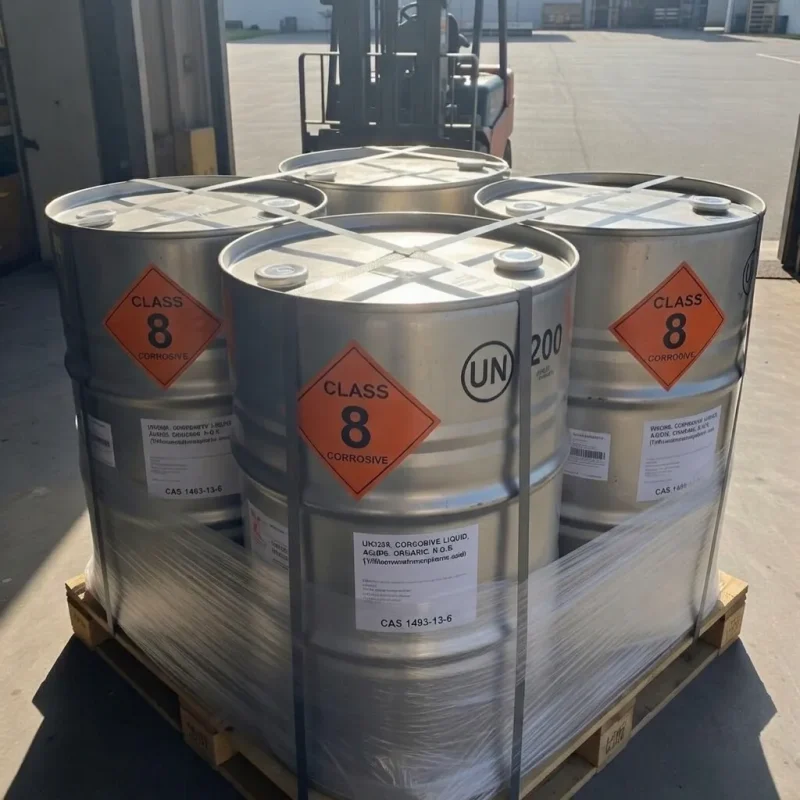
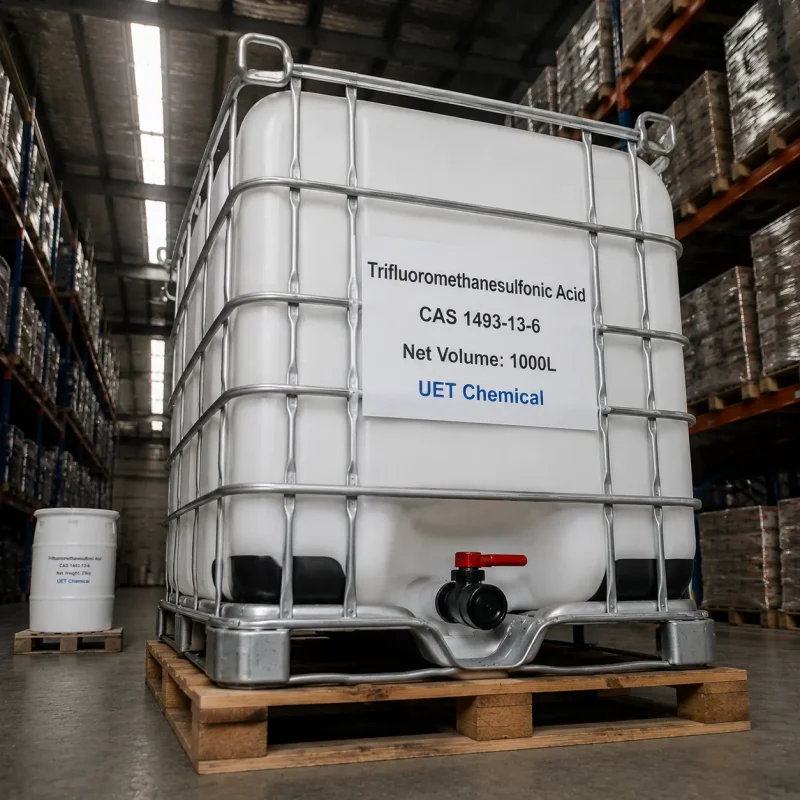
- Packaging: 25 kg / 250 kg HDPE drum. Custom packaging available upon request.
- Main Applications: Cationic polymerization, pharmaceutical synthesis, esterification, fuel cell membrane catalysts
Introduction to Trifluoromethanesulfonic Acid
Trifluoromethanesulfonic Acid (Triflic Acid) is one of the strongest available Brønsted acids. The triflate group stabilizes its conjugate base, allowing the acid to protonate very weak bases and drive demanding organic transformations without acting as an oxidizing agent. It is widely dosed at low loadings to catalyze esterifications, Friedel-Crafts alkylations and ring-opening polymerizations.
Its key advantage is the non-nucleophilic nature of the triflate anion, which eliminates substitution and elimination side reactions common with conventional mineral acids. Contact with moisture causes violent exothermic hydration and corrosive mists. Always handle with PTFE-lined or HDPE equipment, store under dry nitrogen, and avoid glass or standard stainless steel components.
Trifluoromethanesulfonic Acid Chemical & Physical Properties
| Property | Value |
|---|---|
| Molecular Formula | CF₃SO₃H |
| Molecular Weight | 150.07 g/mol |
| Boiling Point | 162 °C at 1 atm |
| Density (25 °C) | 1.69 g/cm³ |
| Freezing Point | -40 °C |
| Water Solubility | Highly soluble (violent exotherm) |
| Water Content | ≤ 0.05% |
| Flash Point | Not applicable (non-combustible) |
Applications of Trifluoromethanesulfonic Acid
Cationic polymerization
Initiates rapid ring-opening polymerization in epoxy and tetrahydrofuran systems. The non-coordinating triflate anion supports high-molecular-weight polyether formation without chain-transfer termination.
Pharmaceutical intermediate synthesis
Catalyzes Friedel-Crafts alkylation and acylation reactions. Its non-oxidizing character improves API purity and reduces downstream purification costs by minimizing side product formation.
Esterification & transesterification
Replaces sulfuric acid in sensitive fragrance and lipid synthesis. The mild conjugate base prevents dehydration of fragile alcohol substrates and reduces product degradation.
Fuel cell proton exchange membranes
Acts as a catalyst and dopant in sulfonated poly(ether ether ketone) polymer synthesis, delivering high proton conductivity for hydrogen fuel cell applications.
Storage & Safety Precautions for Trifluoromethanesulfonic Acid
- Store in tightly sealed original HDPE drums at 15–25 °C under dry nitrogen blanket. Keep away from bases, amines and reactive metals. The acid aggressively absorbs atmospheric moisture, generating heat and corrosive fumes.
- Causes severe skin burns and eye damage. Wear acid-resistant aprons, heavy-duty neoprene gloves and full-face shields during handling. Neutralize spills with sodium bicarbonate; never add water directly to concentrated pools.
- Classified as Class 8 corrosive liquid for transport. Ship in UN-certified HDPE drums with secure vented caps to prevent pressure buildup from trace outgassing.
- Verify assay and water content upon receipt. Yellow-brown discoloration or elevated water content indicates seal failure during transit.
Trifluoromethanesulfonic Acid FAQ
Q: How does Triflic Acid differ from concentrated sulfuric acid in esterification?
A: Triflic Acid is a stronger, non-oxidizing and non-nucleophilic acid. It avoids charring, dehydration and sulfonation side reactions common with sulfuric acid, yielding cleaner products and simpler purification.
Q: Can I use stainless steel or glass equipment for Triflic Acid?
A: No. It corrodes standard metals and attacks glass over time, especially with trace moisture. Use PTFE, PFA or thick-walled HDPE equipment, and ensure all lines are fully dry before use.
Q: What is the safe way to quench a Triflic Acid catalyzed reaction?
A: Never add water directly to concentrated acid. Slowly pour the reaction mixture into vigorously stirred, ice-cold aqueous sodium bicarbonate or dilute ammonia to control exotherms and prevent corrosive mist.
Related products

Manufacturer & Exporter Since 2006
Get Tailored Chemical Raw Material Solutions — Reply Within 1 Hour
Factory-direct pricing, stable high-purity supply and complete compliance documentation for your industrial formulations.
- 1000+Products
- 200+QC Protocols
- 7–15Days Delivery
- Factory-Direct Pricing
- COA / TDS / SDS Included
- Free Samples for Testing
- 40+ Export Countries
Request a Free Quote
Our engineers reply within 1 hour during GMT+8 business hours.
Please include in your inquiry:
- Product name or CAS number
- Required quantity
- Destination country or port
- Preferred packaging