
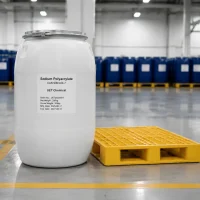
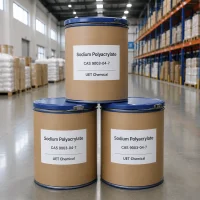
Sodium Polyacrylate CAS 9003-04-7
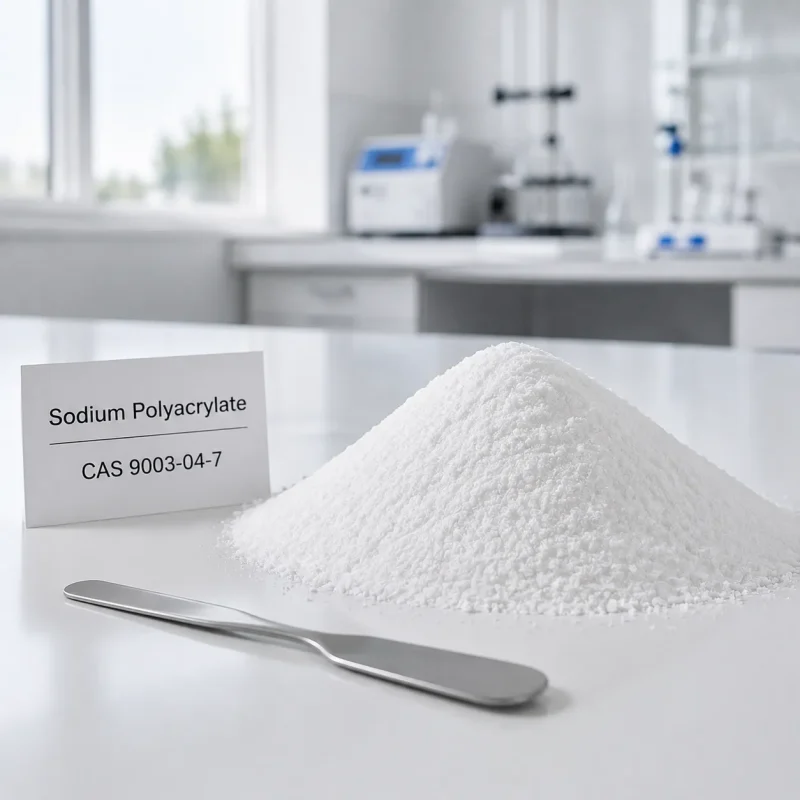
Sodium Polyacrylate (SPA) is a polyelectrolyte superabsorbent polymer featuring a long carbon backbone with pendant sodium carboxylate groups. Supplied as a free-flowing white powder, it solves formulation challenges related to water retention, scale inhibition, and viscosity building. Industrial compounders rely on it for water treatment dispersants, hygiene absorbents, and detergent builders. UETChem supplies this polymer with tight molecular weight control and low residual monomer levels to guarantee consistent swelling and dispersion. Each shipment includes COA, TDS, SDS.
- CAS No: 9003-04-7
- Synonyms: SPA; Polyacrylic acid sodium salt; Poly(sodium acrylate)
- EINECS: 618-347-7
- Molecular Formula: (C3H3NaO2)n
- Molecular Weight: 1,000 – 50,000,000 g/mol (varies by grade)
- Appearance: White granular or fine powder
- pH (0.5% aqueous): 8.0 – 10.0
- Residual Monomer: 0.1% max
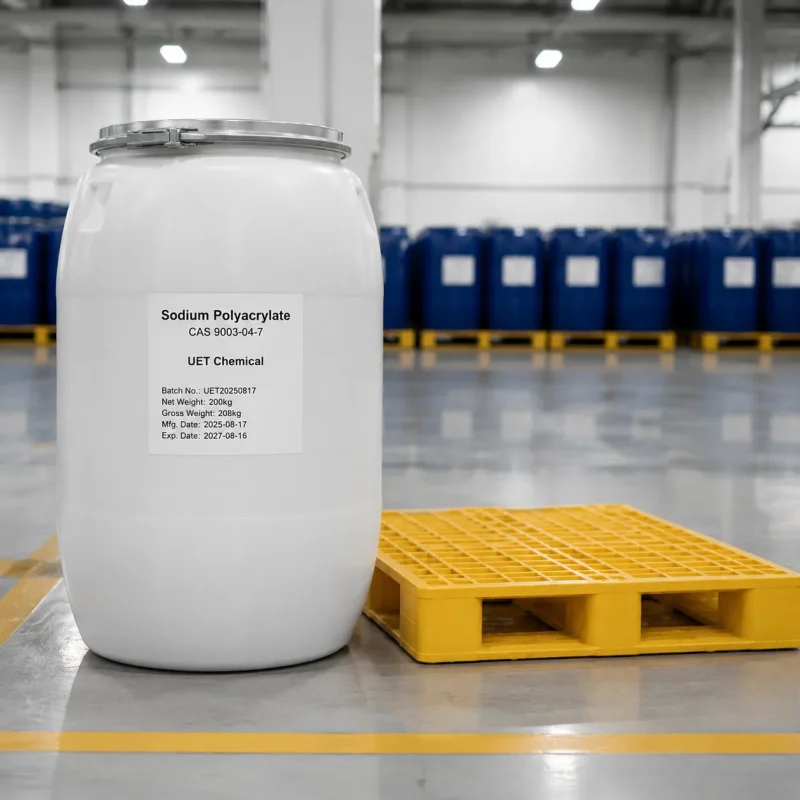
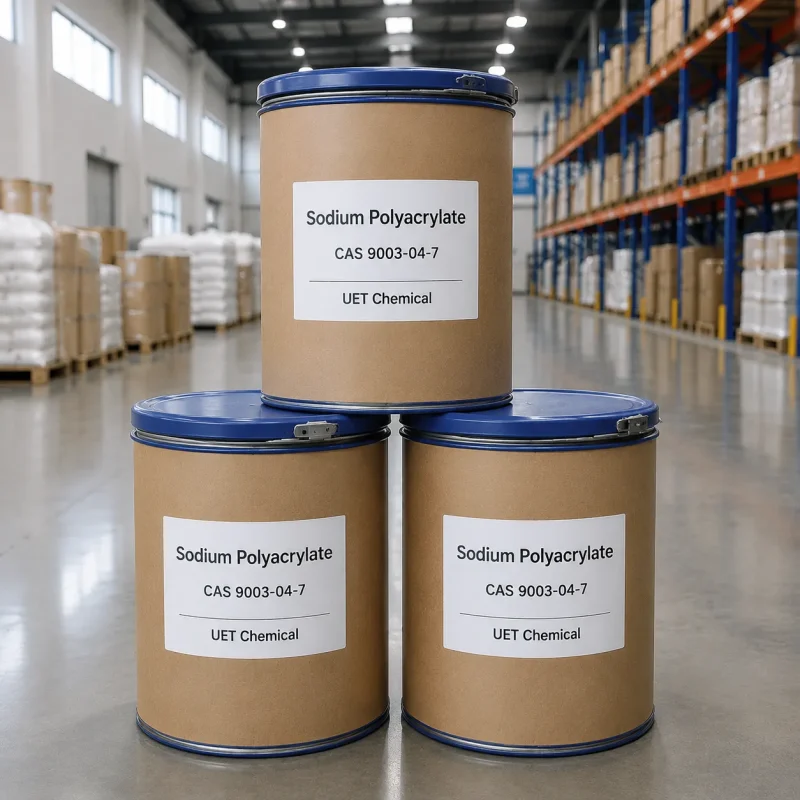
- Packaging: 25 kg (55 lb) bag, 800 kg (1764 lb) jumbo bag. Custom packaging available upon request.
- Main Applications: Cooling water scale inhibitor, superabsorbent polymers (SAP), detergent builders, ceramic binders
Introduction to Sodium Polyacrylate
Sodium Polyacrylate is a water-soluble anionic polymer built from acrylic acid monomers neutralized with sodium hydroxide. The dense network of negative carboxylate charges repels itself, forcing the polymer chains to uncoil and absorb hundreds of times their weight in water.
Industrial formulators use SPA to sequester hardness ions, suspend soil particles, and thicken aqueous systems. The biggest processing advantage is rapid hydration without the need for heat or high pH adjustment. The main handling risk is dust generation and premature gelation. If fine powder contacts a puddle of water, it instantly forms a slippery, impermeable gel skin that traps dry material inside. Always use high-shear mixers and add the powder slowly to the vortex.
Key Features of SPA
- Anionic charge density: The carboxylate groups strongly bind calcium and magnesium ions, keeping them in solution and preventing scale deposition on heat exchangers.
- Osmotic swelling pressure: Crosslinked grades absorb up to 300 times their weight in pure water, locking moisture inside hygiene products and agricultural hydrogels.
- Steric hindrance: Long polymer chains wrap around soil particles and micro-crystals, preventing agglomeration and keeping them suspended in detergent and cooling water systems.
- Low residual acrylic acid: Strict monomer control below 0.1% ensures the final product remains non-irritating for sensitive skin contact applications.
SPA Chemical & Physical Properties
| Property | Value |
|---|---|
| Molecular Formula | (C3H3NaO2)n |
| Appearance | White granular or fine powder |
| pH (0.5% solution) | 8.0 – 10.0 |
| Viscosity (Brookfield, 0.2% aq, 25 °C) | 200 – 2000 mPa·s (varies by MW) |
| Solubility | Highly soluble in water; insoluble in organic solvents |
| Residual Monomer | 0.1% max |
| Bulk Density | 0.5 – 0.8 g/cm³ |
Applications of SPA
Cooling water scale inhibitor: Dosed at 10–50 ppm in open recirculating systems. The polymer chains adsorb onto calcium carbonate micro-crystals, distorting their lattice and preventing scale buildup. For high-stress environments, operators blend SPA with Polyepoxysuccinic Acid (PESA) to broaden the dispersion window and improve high-temperature stability.
Superabsorbent polymers (SAP): Crosslinked grades act as the core absorbent in baby diapers and sanitary products. The network swells under pressure, locking away fluids. Formulators sometimes introduce trace amounts of Sodium Tetraborate Decahydrate during synthesis to adjust crosslink density and optimize absorption under load (AUL).
Detergent builders and thickeners: Replaces phosphates in laundry powders at 2–5% loading. It sequesters hard water ions and keeps dirt suspended during the wash cycle, preventing soil redeposition on fabrics.
Storage & Safety Precautions for SPA
- Moisture and gelation control: Store bags in a dry warehouse below 35 °C (95 °F). SPA powder is highly hygroscopic. Moisture ingress causes surface particles to swell and fuse, forming hard, un-dissolvable lumps inside the bag. Facilities often run Calcium Chloride Anhydrous in adjacent drying rooms to maintain low ambient humidity.
- Dust and slip hazards: The fine powder creates a severe slip hazard when spilled on wet floors. Sweep dry spills immediately with a stiff broom. Never use water to wash away dry powder, as it will instantly turn into a slippery, ice-like gel.
- Handling and PPE: Wear N95 dust masks and safety goggles during manual bag slitting to avoid eye irritation and inhalation of fine particulates.
- Field note: When dissolving SPA into a mixing tank, never dump the powder directly into still water. Create a strong vortex with the agitator and sift the powder slowly into the eye of the vortex to prevent “fish-eye” gel lumps.
SPA FAQ
Q: Why does Sodium Polyacrylate lose absorption in hard water?
A: Hard water contains calcium and magnesium ions that crosslink the carboxylate groups on the SPA chain, collapsing the polymer network. To maintain high swelling capacity, formulators must add chelating agents like Sodium Gluconate or use water softeners before introducing SPA.
Q: How does SPA work as a scale inhibitor in cooling towers?
A: Sodium Polyacrylate adsorbs onto calcium carbonate micro-crystals, stopping them from growing on heat exchangers. It works best at 10-50 ppm. For severe scaling, operators blend SPA with PESA to broaden the dispersion window and improve high-temperature stability in cooling systems.
Q: What causes Sodium Polyacrylate powder to form lumps during dissolution?
A: SPA powder forms a sticky gel layer upon contact with water, trapping dry powder inside. To prevent this “fish-eye” effect, disperse Sodium Polyacrylate slowly into a high-shear vortex, or pre-mix the powder with a non-solvent like ethanol before adding it to the aqueous phase.
Related products
Manufacturer & Exporter Since 2006
Get Tailored Chemical Raw Material Solutions — Reply Within 1 Hour
Factory-direct pricing, stable high-purity supply and complete compliance documentation for your industrial formulations.
- 1000+Products
- 200+QC Protocols
- 7–15Days Delivery
- Factory-Direct Pricing
- COA / TDS / SDS Included
- Free Samples for Testing
- 40+ Export Countries
Request a Free Quote
Our engineers reply within 1 hour during GMT+8 business hours.
Please include in your inquiry:
- Product name or CAS number
- Required quantity
- Destination country or port
- Preferred packaging