
Sodium Lauroyl Methyl Isethionate CAS 928663-45-0
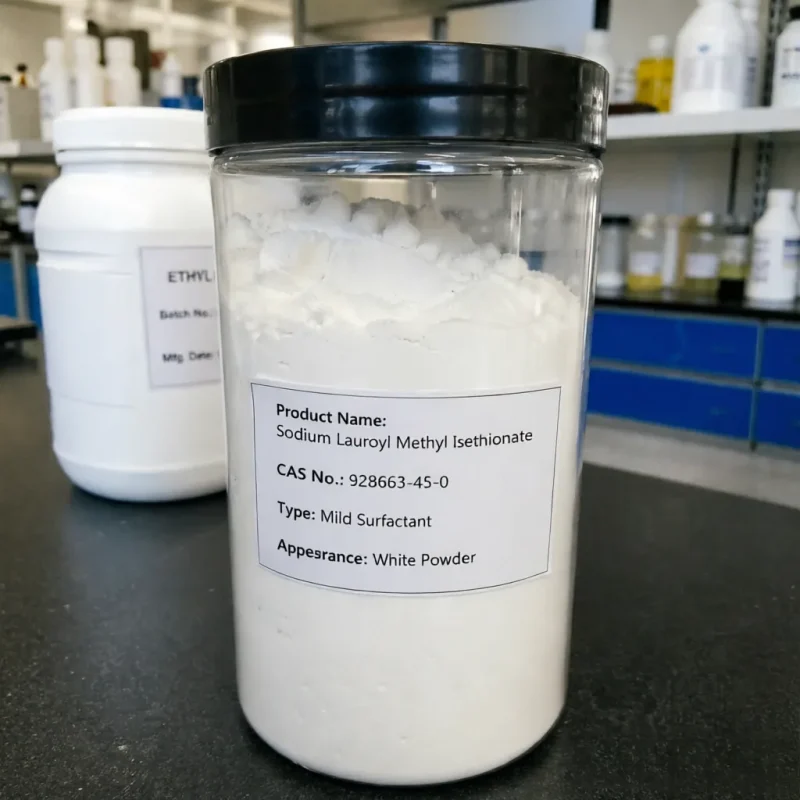
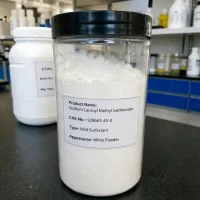
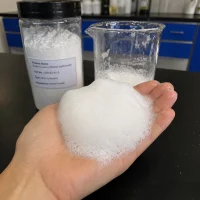
Sodium Lauroyl Methyl Isethionate is an ultra-mild anionic acyl isethionate surfactant supplied as white to off-white powder or flakes. The lauroyl (C12) chain delivers moderate cleansing while the methyl isethionate head group keeps irritation potential extremely low, producing dense creamy foam even in hard water. Core uses include sulfate-free facial cleansers, baby wash, shampoo bars, and syndet solid bars. Each shipment includes COA, TDS, and SDS.
- CAS No: 928663-45-0
- Synonyms: SLMI, Sodium N-lauroyl methyl isethionate, Lauroyl methyl isethionate sodium salt
- EC Number: 296-836-2
- Molecular Formula: C14H25NaO5S
- Molecular Weight: 332.39 g/mol
- Appearance: White to off-white free-flowing powder, flakes, or granules
- Active Matter: ≥ 90.0%
- pH (10% aqueous): 5.0 – 7.5
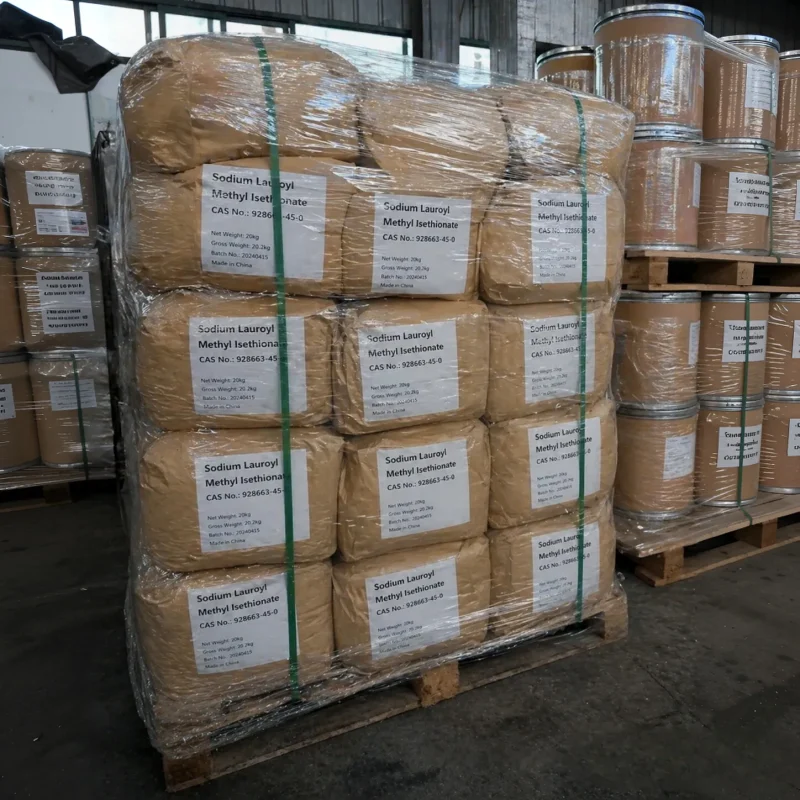
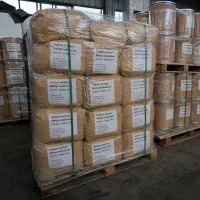
- Packaging: 25 kg (55 lb) PE-lined fiber drum; 500 kg (1,100 lb) jumbo bag with PE liner. Custom packaging available upon request.
- Main Applications: Sulfate-free cleansers, baby wash, shampoo bars, syndet bars, shaving cream
Introduction to Sodium Lauroyl Methyl Isethionate
Sodium Lauroyl Methyl Isethionate is a white, low-odour acyl isethionate surfactant built on a C12 lauroyl tail esterified to a methyl isethionate sulfonate head. The ester linkage hydrolyses very slowly at skin pH, so the molecule stays intact during cleansing and rinses clean without leaving a soapy residue. Personal care formulators use most global output, dosing 5–25% in sulfate-free facial washes, baby shampoos, and compressed solid cleansing bars.
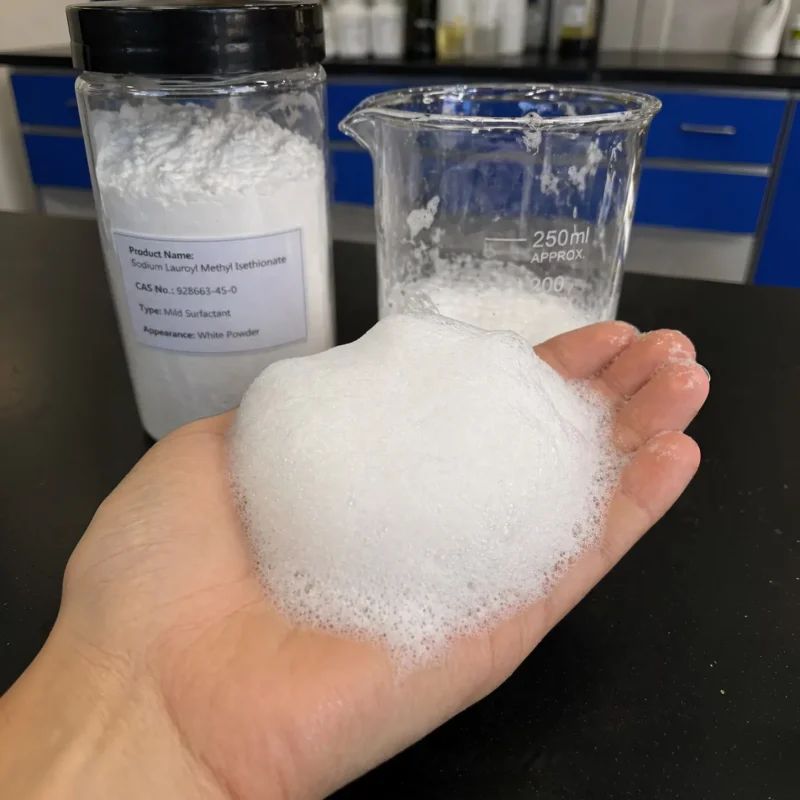
The main formulation advantage is dense, creamy lather generation at low active concentrations—3% SLMI produces foam volume comparable to 8% SLES in standard foam-height tests. The critical handling risk is moisture uptake. SLMI powder is hygroscopic; an opened drum left above 60% RH will cake within 72 hours. Reseal the PE liner immediately after scooping and store below 30 °C (86 °F).
Key Features of Sodium Lauroyl Methyl Isethionate
- Ultra-low irritation profile. The methyl isethionate head group carries a bulky sulfonate that prevents deep penetration into stratum corneum lipids, keeping transepidermal water loss below 5% in patch tests versus 12–18% for SLS at equivalent concentrations.
- Dense creamy foam in hard water. The sulfonate head resists calcium and magnesium precipitation, so foam height at 250 ppm CaCO3 hardness drops less than 10% compared with soft water—critical for markets with high water hardness.
- Sulfate-free and mild-surfactant compatible. SLMI blends synergistically with cocamidopropyl betaine, decyl glucoside, and amino acid surfactants without viscosity collapse, supporting “no SLS/SLES” marketing claims.
- Biodegradable ester backbone. The ester bond cleaves readily in activated sludge, achieving >60% biodegradation within 28 days per OECD 301B, meeting EU Ecolabel and COSMOS criteria.
- Excellent for solid bar formats. Low water solubility at 25 °C (77 °F) allows direct compression into syndet bars without hot-melt processing, reducing energy cost versus traditional hot-process soap.
Sodium Lauroyl Methyl Isethionate Chemical & Physical Properties
| Property | Value |
|---|---|
| Molecular Formula | C14H25NaO5S |
| Molecular Weight | 332.39 g/mol |
| Melting Point / Thermal Behaviour | Softens above 200 °C (392 °F); no sharp melting point. Avoid prolonged heating above 120 °C (248 °F) to prevent ester hydrolysis and free lauric acid release. |
| Density | Bulk powder density approx. 0.45–0.55 g/cm³ (28–34 lb/ft³). |
| Solubility in Water | Sparingly soluble at 25 °C (77 °F), approx. 1–2 g/L; readily soluble above 60 °C (140 °F), forming clear to slightly opalescent solutions. |
| pH (10% aqueous solution) | 5.0 – 7.5 |
| Active Matter | ≥ 90.0% (two-phase titration per ISO 2271) |
| Free Fatty Acid (as lauric acid) | ≤ 2.0% |
| Sodium Chloride | ≤ 3.0% |
Applications of Sodium Lauroyl Methyl Isethionate
Sulfate-free facial cleansers and gel washes: Dosed at 8–15% active in rinse-off gels, SLMI generates a dense, low-bubble cream that rinses without tight or squeaky feel. The mild head group preserves the skin acid mantle at pH 5.5, supporting “no stripping” positioning. Combine with 2–4% cocamidopropyl betaine for foam boost.
Baby shampoo and head-to-toe wash: At 5–10% active, SLMI meets the no-more-tears threshold (in-vitro HET-CAM score < 1.0 per INVITTOX protocol). The low irritation profile allows preservative reduction in baby formulations. Typical final viscosity 3,000–6,000 mPa·s with NaCl thickening.
Shampoo bars and solid syndet bars: Compressed at 40–60% in solid bar blends with stearic acid, cetearyl alcohol, and SCI (sodium cocoyl isethionate). Low water solubility prevents bar mushiness. Bars maintain structural integrity through 200+ uses without cracking. No hot-melt step required—cold-press at 40–50 °C (104–122 °F).
Shaving cream and foam cleansers: At 3–8% in aerosol or pump foams, SLMI stabilises micro-bubbles and reduces razor drag. The creamy lather provides lubricity without requiring added mineral oil or silicone.
Industrial and institutional mild detergents: In low-irritation hand-wash concentrates for food-processing plants and laboratories, 10–15% SLMI replaces harsher alkyl sulfates while maintaining adequate grease removal on mineral-oil soils.
Storage & Safety Precautions for Sodium Lauroyl Methyl Isethionate
- Storage: Keep sealed in PE-lined drums at 5–30 °C (41–86 °F), relative humidity below 60%. SLMI is hygroscopic; an opened drum exposed to 60% RH will absorb moisture and cake within 72 hours. Store away from strong acids (pH < 3 accelerates ester hydrolysis, releasing lauric acid odour) and strong oxidisers.
- Safety: Not classified as hazardous under GHS. Mild eye irritant (Category 2B); avoid direct contact. Wear safety glasses and standard dust mask when handling powder grades to prevent inhalation of fine particles. Wash skin with water after contact.
- Transport: Sodium Lauroyl Methyl Isethionate is Non-DG under IATA/IMDG/ADR. Not a marine pollutant. Standard 25 kg (55 lb) drums or 500 kg (1,100 lb) jumbo bags ship in dry containers.
- QC note: Verify active matter by two-phase titration (ISO 2271 or equivalent). A fresh lot is white and free-flowing; yellowing or a rancid lauric odour indicates ester hydrolysis from heat or moisture exposure during transit. Reject lots with free fatty acid above 3.0% or active matter below 88%.
Sodium Lauroyl Methyl Isethionate FAQ
Q: Why does my SLMI powder (CAS 928663-45-0) turn into a hard cake inside the drum?
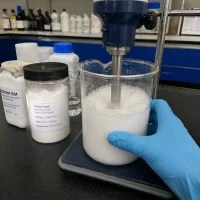
A: Moisture uptake. SLMI is hygroscopic; once the PE liner is breached or left open above 60% RH, powder absorbs water and cements into a block. Chemistry is unchanged—break the cake and dissolve at 70 °C (158 °F). Prevent by resealing immediately and storing below 30 °C (86 °F).
Q: Can I use SLMI as the sole surfactant in a sulfate-free shampoo?
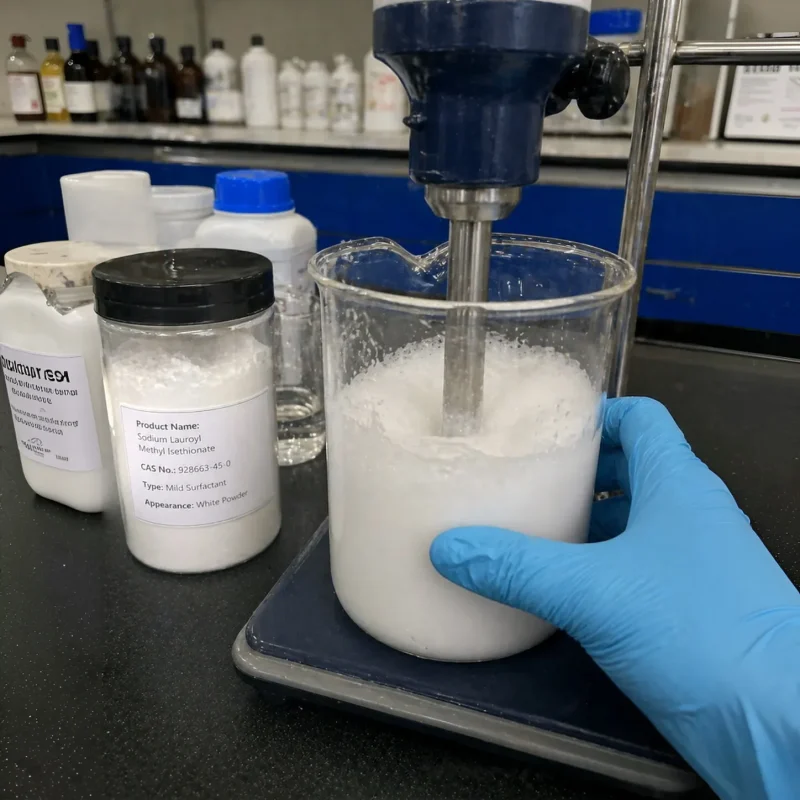
A: Possible but not ideal alone. SLMI at 10–15% gives mild cleansing but limited viscosity. Add 2–3% cocamidopropyl betaine or decyl glucoside for foam volume and salt-thickening response. Final pH 5.0–5.5 keeps ester bond stable.
Q: My SLMI solution smells faintly of lauric acid. Is the lot bad?
A: Slight ester hydrolysis from heat or moisture exposure. Check free fatty acid by titration. If ≤ 2.0%, the lot is usable with minor foam reduction. Above 3.0%, reject. Store below 30 °C (86 °F) and avoid acidic co-ingredients below pH 4.
Related products
Manufacturer & Exporter Since 2006
Get Tailored Chemical Raw Material Solutions — Reply Within 1 Hour
Factory-direct pricing, stable high-purity supply and complete compliance documentation for your industrial formulations.
- 1000+Products
- 200+QC Protocols
- 7–15Days Delivery
- Factory-Direct Pricing
- COA / TDS / SDS Included
- Free Samples for Testing
- 40+ Export Countries
Request a Free Quote
Our engineers reply within 1 hour during GMT+8 business hours.
Please include in your inquiry:
- Product name or CAS number
- Required quantity
- Destination country or port
- Preferred packaging