
Carbon Black (CAS 1333-86-4)
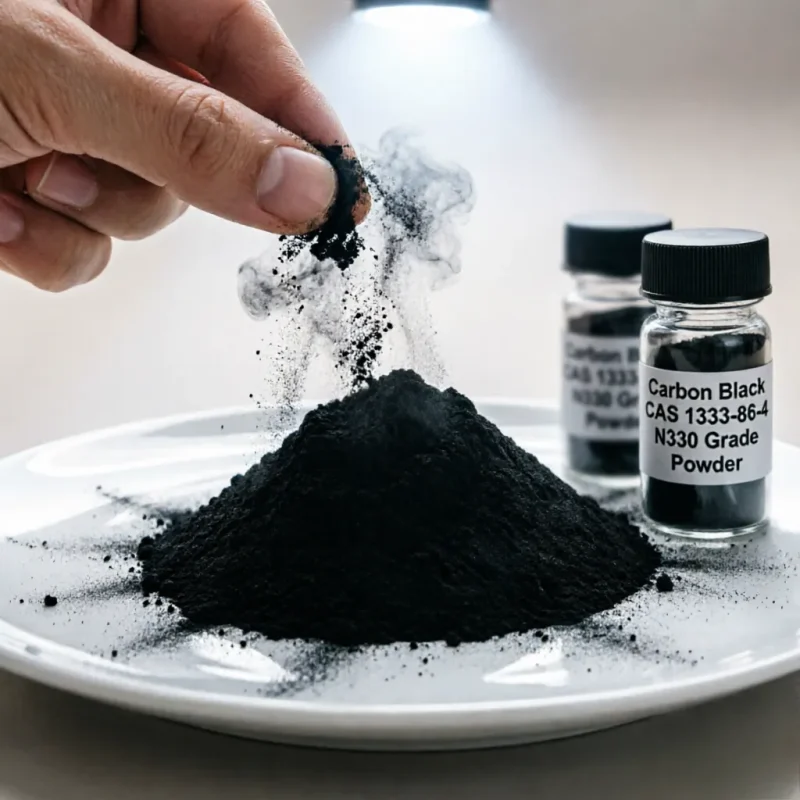
Carbon Black is an elemental carbon pigment of fused primary particles forming branched aggregates. It appears as black powder or pellets. Main uses are rubber reinforcement and UV screening/pigmentation. Aggregate structure and surface area control modulus, abrasion resistance, conductivity, and blackness. We supply COA, TDS, and SDS.
- CAS No: 1333-86-4
- Synonyms: Carbon black, furnace black, lampblack, channel black
- EINECS: 215-609-9
- Molecular Formula: C
- Molecular Weight: 12.011
- Appearance: Black powder or pellets
- Purity: Carbon content ≥97% (dry basis, typical)
- Iodine Number: Grade-dependent; N330 ~75 g/kg
- DBP Absorption: Grade-dependent; N330 ~102 mL/100 g
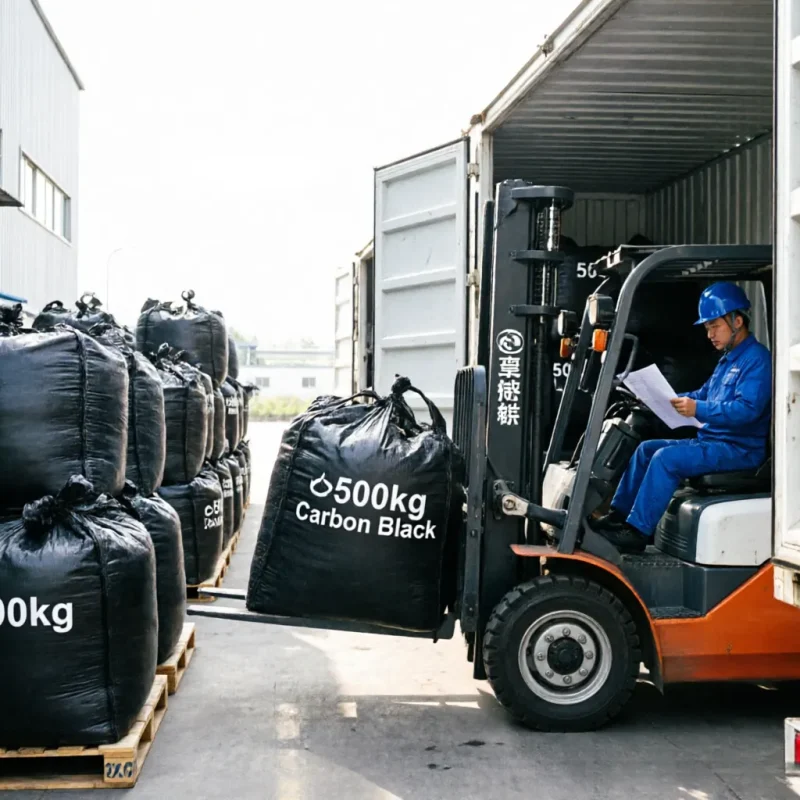
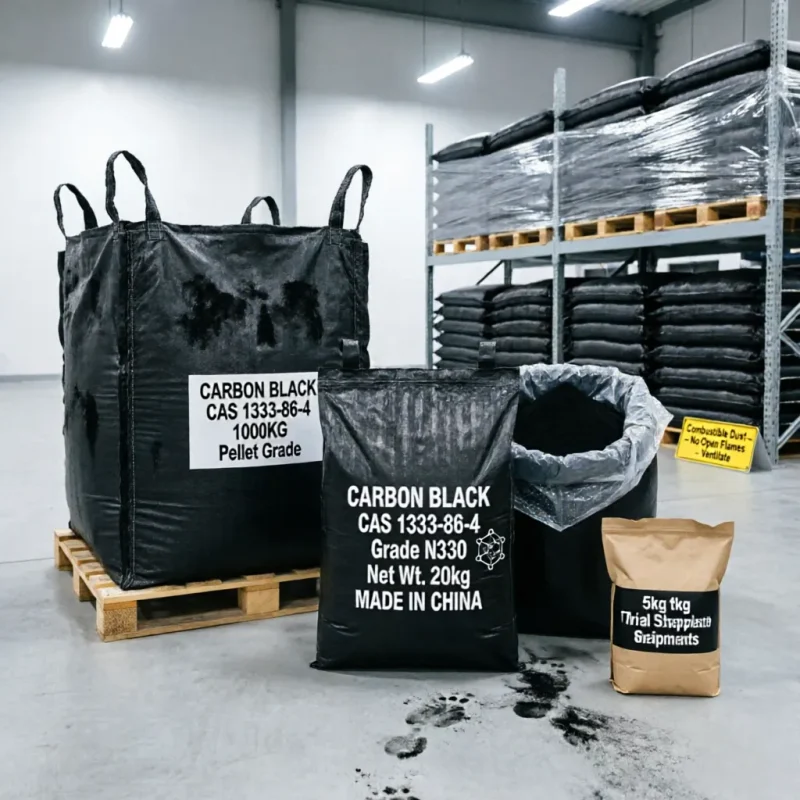
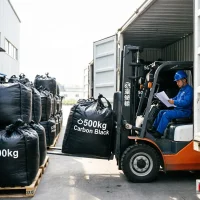
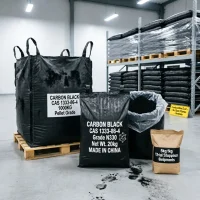
- Packaging: 20 kg (44 lb) bag with PE liner, 500 kg (1102 lb) jumbo; Custom packaging available upon request.
- Main Applications: Rubber, plastics, coatings, inks, conductive compounds
Introduction to Carbon Black
Carbon Black is a black, elemental carbon material made of primary particles fused into branched aggregates. These aggregates create high surface area and high structure. They reinforce rubber, absorb UV and visible light, and provide deep black color. The largest uses are tire/rubber compounds and outdoor plastics.
In SBR lab compounds, a standard N330 furnace black at about 50 phr can reach roughly 18–22 MPa tensile strength, depending on polymer, oil, and cure system. High structure can also support modulus and electrical percolation. The main practical risk is dust and pellet damage. Open bags, pneumatic transfer, or dropping pellets creates fines that charge statically, clog filters, and reduce dispersion. Check bags and sieve pellet samples before production and record sieve results.
Key Features of Carbon Black
- Aggregate structure: Fused primary particles form branches that trap polymer chains, increasing modulus, tear strength, and abrasion resistance.
- Surface-area control: Iodine adsorption or nitrogen surface area predicts reinforcement; higher-area grades such as N220 generally improve wear resistance.
- DBP absorption: DBP value measures void volume between aggregates; high-structure grades raise viscosity and can form conductive networks at lower loadings.
- Broadband light absorption: Carbon black converts UV and visible energy into heat, reducing photo-oxidation in PE, PP, and rubber.
- Low soluble fraction: It is insoluble in water and common solvents, so color and UV screening remain in the matrix if dispersion is stable.
Carbon Black Chemical & Physical Properties
| Property | Value |
|---|---|
| Molecular Formula | C |
| Molecular Weight | 12.011 g/mol (12.011 lb/lbmol) |
| Thermal Behavior | Does not distill; sublimes above about 3500 °C (6332 °F) in inert atmosphere |
| Density | True density ~1.8 g/cm³ (112 lb/ft³); bulk density 0.03–0.50 g/cm³ (1.9–31 lb/ft³) |
| Combustibility | Airborne dust can ignite; no flash point as a solid |
| Solubility | Insoluble in water and organic solvents |
| Carbon Content | ≥97% typical for furnace black, dry basis |
| Particle Size | Primary particles ~10–100 nm (0.01–0.10 µm); pellets typically 0.3–1.5 mm (0.012–0.059 in) |
| Recommended Storage Temperature | 5–40 °C (41–104 °F) |
| Nitrogen Surface Area | Grade-dependent; N330 ~75 m²/g, ASTM D6556 |
| Iodine Adsorption Number | Grade-dependent; N330 ~75 g/kg (75 mg/g), ASTM D1510 |
| DBP Absorption | Grade-dependent; N330 ~102 mL/100 g (102 cm³/100 g), ASTM D2414 |
| pH | Usually 7–9, grade and surface oxidation dependent |
| Ignition Loss | ≤1.0% typical for rubber grades; higher for oxidized pigment grades |
Applications of Carbon Black
Tire and rubber reinforcement: Carbon Black aggregates adsorb and physically bind SBR, BR, and NR chains, forming bound rubber. This network raises modulus and tear strength. Tread compounds commonly run 30–60 phr N220/N330; carcass and belt layers use 40–60 phr N550/N660 for lower heat buildup. phr means parts per hundred rubber.
Outdoor plastics UV protection: Carbon black absorbs UV and visible light and converts the energy to heat, limiting chain scission in PE and PP. Use 2.0–2.5% by mass (2.0–2.5 lb per 100 lb resin) in PE pipe and geomembranes; use 0.5–2.0% (0.5–2.0 lb per 100 lb resin) in films where mechanical properties allow. Dispersion is critical; agglomerates leave weak spots.
Coatings and inks: The pigment absorbs light across the visible range, giving opacity and jetness. Surface oxygen groups and aggregate structure affect binder wetting, gloss, and viscosity. Loadings of 2–10% of binder (2–10 lb per 100 lb binder) are common, but high-structure grades require more dispersant and longer milling.
Conductive and antistatic compounds: High-structure aggregates touch or nearly touch to form an electron-percolation network. Electron hopping occurs across narrow gaps. Typical loadings are 10–30 phr in rubber and 5–20 wt% in plastics (5–20 lb per 100 lb polymer), depending on target surface resistivity and polymer viscosity.
Storage & Safety Precautions for Carbon Black
- Storage: Keep closed bags or jumbo bags at 5–40 °C (41–104 °F) in a dry warehouse. Moisture can form agglomerates and cause dispersion defects.
- Handling: Avoid pellet breakage, high drops, and ungrounded pneumatic transfer. Sieve pellet samples before loading; fines create dust, clog filters, and cause black specks.
- Safety: Airborne dust can ignite; EU CLP may classify inhalable dust as Carc. 2 (H351). Use ventilation, grounded equipment, gloves, goggles, and a P2/FFP2 respirator when dust escapes.
- Transport: Generally shipped as Non-DG in closed bags or jumbo bags.
Carbon Black FAQ
Q: Is CAS 1333-86-4 Carbon Black the same as graphite or activated carbon?
A: No. CAS 1333-86-4 covers carbon black made of fused primary particles. Graphite has larger crystalline layers and lubricates. Activated carbon is porous and adsorbs molecules. Carbon black reinforces rubber, provides black color, and screens UV. Check iodine number, DBP absorption, and particle size before substitution. Do not select by carbon content alone; dispersion and grade control final performance. Request COA before use.
Q: Which Carbon Black grade reduces tire tread abrasion without making mixing too stiff?
A: Start with N330. Iodine ~75 g/kg and DBP ~102 mL/100 g balance reinforcement and processability. N220 improves abrasion but raises viscosity and heat buildup. N550/N660 process easier but wear less. If stiffness is high, use lower-DBP black, add plasticizer, or reserve N330 for tread. Confirm each lot by COA and test Mooney, tensile, and ISO 4649 abrasion before release. Batch iodine can drift.
Q: How much Carbon Black does PE need for outdoor UV resistance?
A: For long-term outdoor PE, use 2.0–2.5% by mass, or 2.0–2.5 lb per 100 lb resin. Below 1.0% may not block enough UV. Above 3.0% adds cost and viscosity without much gain. Carbon black absorbs UV and converts it to heat. Dispersion matters more than color alone; filter the melt and check content by ash or TGA. Agglomerates create weak spots.
Related products
Manufacturer & Exporter Since 2006
Get Tailored Chemical Raw Material Solutions — Reply Within 1 Hour
Factory-direct pricing, stable high-purity supply and complete compliance documentation for your industrial formulations.
- 1000+Products
- 200+QC Protocols
- 7–15Days Delivery
- Factory-Direct Pricing
- COA / TDS / SDS Included
- Free Samples for Testing
- 40+ Export Countries
Request a Free Quote
Our engineers reply within 1 hour during GMT+8 business hours.
Please include in your inquiry:
- Product name or CAS number
- Required quantity
- Destination country or port
- Preferred packaging