
Acetyl Glucosamine NAG CAS 7512-17-6
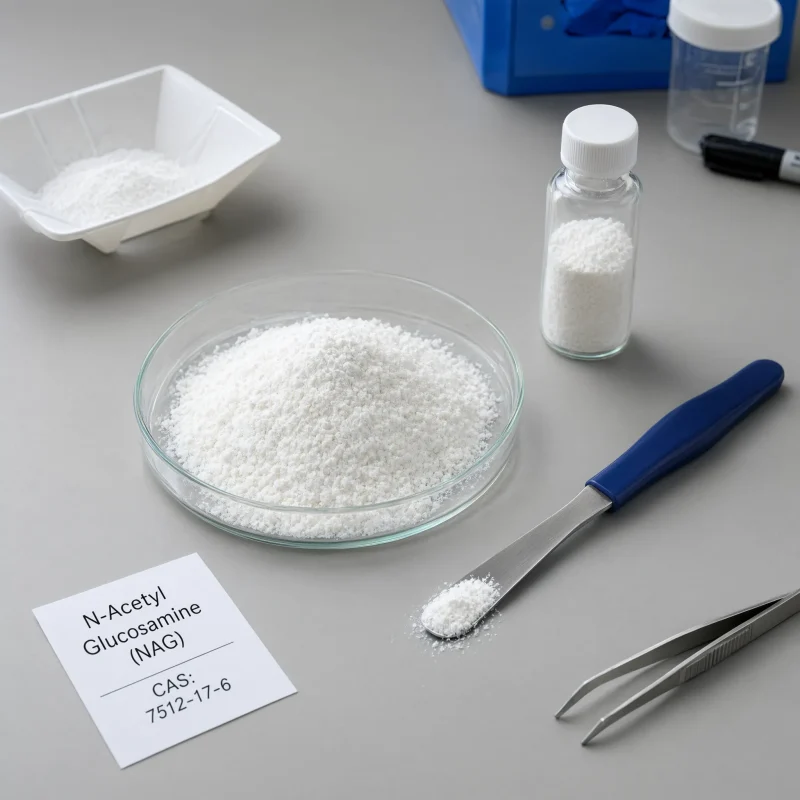
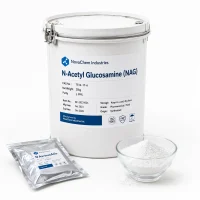
N-Acetyl-D-Glucosamine (NAG) is a bioactive amino monosaccharide supplied as white to off-white crystalline powder. As the essential building block of hyaluronic acid, glycosaminoglycans, and chitin, it serves as a critical raw material for joint health supplements, cosmetic moisturizing actives, and gut health formulations. Core uses include nutraceutical cartilage support, skincare hydration, and IBD/IBS nutritional intervention. Each shipment includes COA, TDS, and SDS.
- CAS No: 7512-17-6
- Synonyms: NAG, N-Acetyl-D-Glucosamine, 2-Acetamido-2-deoxy-D-glucose, Chitin monomer, Acetylglucosamine
- EC Number: 221-310-4
- Molecular Formula: C8H15NO6
- Molecular Weight: 221.21 g/mol
- Appearance: White to off-white crystalline powder
- Purity (HPLC): ≥ 98.0%
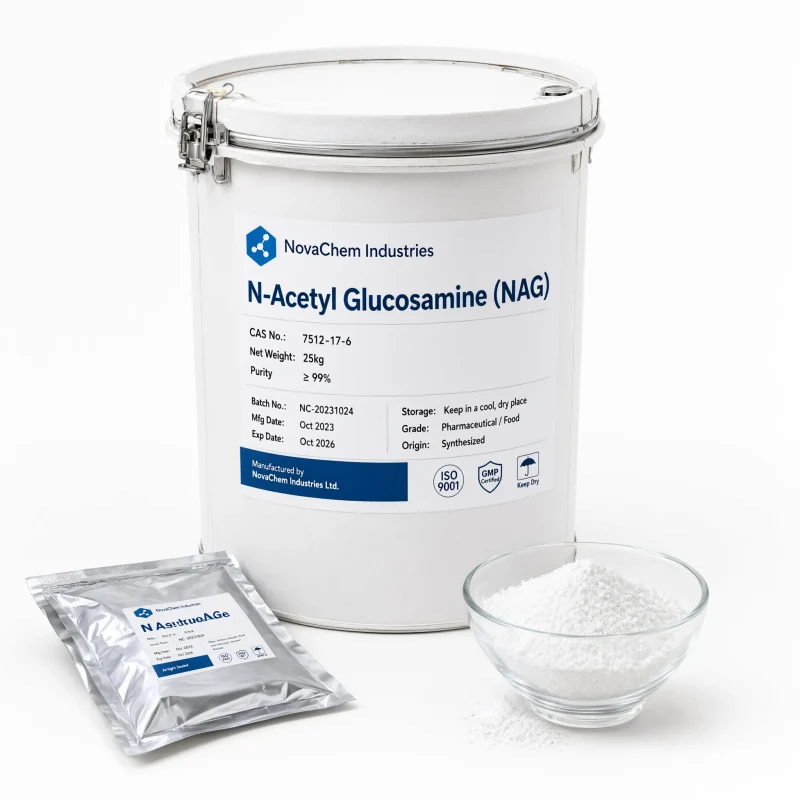
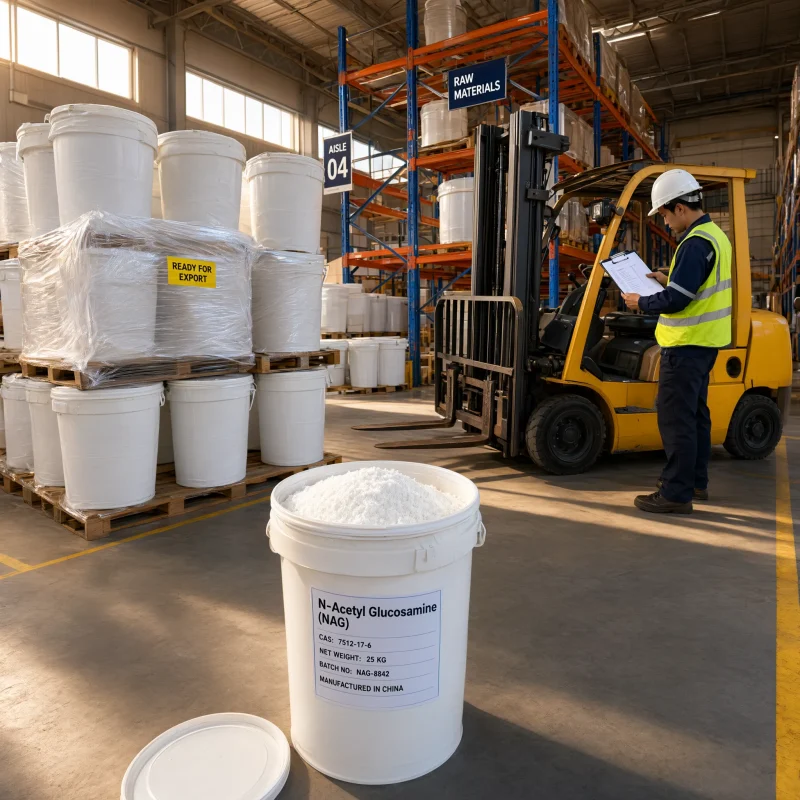
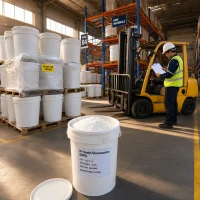
- Packaging: 1 kg (2.2 lb) aluminum foil bag with PE liner; 5 kg (11 lb) aluminum foil bag with PE liner; 25 kg (55 lb) fiber drum with PE liner. Custom packaging available upon request.
- Main Applications: Joint health supplements, cosmetic moisturizing and anti-aging actives, gut health formulations (IBD/IBS), hyaluronic acid precursor, glycosaminoglycan research
Introduction to N-Acetyl-D-Glucosamine (NAG)
N-Acetyl-D-Glucosamine (NAG) is a naturally occurring amino monosaccharide derived from the enzymatic or acid hydrolysis of chitin and chitosan, or produced via microbial fermentation. It is the fundamental monomeric unit of glycosaminoglycans (GAGs) including hyaluronic acid, chondroitin sulfate, and keratan sulfate—all critical structural components of cartilage, synovial fluid, skin dermis, and intestinal mucosa. Unlike glucosamine hydrochloride or sulfate, NAG carries an acetyl group at the C-2 amino position, making it the direct biosynthetic precursor for GAG chain elongation without requiring further acetylation in vivo.
NAG is highly hygroscopic and sensitive to prolonged heat exposure above 60 °C (140 °F), which accelerates Maillard-type browning with residual amino acids. Store in sealed aluminum foil bags with desiccant below 25 °C (77 °F) to maintain crystalline integrity and prevent caking. In aqueous solution at pH 6–8, NAG remains stable for 7 days at 4 °C (39 °F); avoid autoclaving as temperatures above 100 °C (212 °F) cause partial deacetylation and ring-opening degradation.
Key Features of N-Acetyl-D-Glucosamine (NAG)
- Direct GAG biosynthesis precursor. NAG is incorporated directly into growing glycosaminoglycan chains by glycosyltransferases without intracellular acetylation, bypassing the rate-limiting step required by glucosamine HCl/sulfate. This results in more efficient hyaluronic acid and chondroitin sulfate production in chondrocytes and fibroblasts.
- Superior gastrointestinal tolerance. Clinical data show NAG does not irritate the gastric mucosa unlike glucosamine sulfate (which carries sulfate-driven acidity). Ideal for patients with IBD, IBS, or gastritis who require long-term cartilage support without GI side effects.
- High water solubility for formulation flexibility. Solubility exceeds 500 g/L at 25 °C (77 °F), enabling clear liquid capsules, effervescent tablets, and topical aqueous serums without solubilizers or cloudiness.
- ≥ 98.0% HPLC purity with low endotoxin. Microbial fermentation-derived grades maintain endotoxin below 0.5 EU/mg and residual protein below 0.1%, suitable for injectable-grade hyaluronic acid production and cell culture media supplementation.
- Synergistic with collagen peptides and MSM. In joint health formulations, NAG combined with hydrolyzed collagen (5–10 g) and methylsulfonylmethane (MSM, 1–2 g) shows additive effects on cartilage matrix synthesis and joint comfort scores versus single-ingredient approaches.
N-Acetyl-D-Glucosamine Chemical & Physical Properties
| Property | Value |
|---|---|
| Molecular Formula | C8H15NO6 |
| Molecular Weight | 221.21 g/mol |
| Melting Point | 201 – 205 °C (394 – 401 °F) with decomposition |
| Density | Crystal density approx. 1.55 g/cm³ (96.8 lb/ft³); bulk powder density 0.60–0.80 g/cm³ (37.5–50.0 lb/ft³). |
| Solubility in Water | ≥ 500 g/L at 25 °C (77 °F); slightly soluble in ethanol; insoluble in dichloromethane and ethyl acetate. |
| pH (5% aqueous solution) | 6.5 – 7.5 |
| Specific Rotation | [α]²⁰_D = +42.0° to +46.0° (c = 4.0, H₂O) |
| Loss on Drying | ≤ 1.0% |
| Ash Content | ≤ 0.5% |
| Heavy Metals (as Pb) | ≤ 5 ppm |
Applications of N-Acetyl-D-Glucosamine (NAG)
Joint health and cartilage support supplements: Formulated at 500–1,500 mg per serving in capsules or tablets for osteoarthritis and joint maintenance. NAG stimulates chondrocyte GAG synthesis and inhibits lysosomal enzyme release that degrades cartilage. Blend with microcrystalline cellulose or silicon dioxide to counteract hygroscopicity during capsule filling. Shelf-life testing per ICH Q1A at 25 °C (77 °F) / 60% RH shows less than 3% degradation over 24 months in sealed foil pouches.
Cosmetic moisturizing and anti-aging actives: Incorporated at 0.5–2.0% w/w in serums, creams, and sheet masks. NAG upregulates hyaluronic acid synthase (HAS2) in keratinocytes and dermal fibroblasts, increasing skin hydration and reducing fine-line depth. Compatible with niacinamide, hyaluronic acid, and peptide actives at pH 4.5–7.0. Avoid combining with strong acids (pH < 3.5) which promote deacetylation.
Gut health and IBD/IBS nutritional intervention: Clinical studies demonstrate NAG at 3–6 g/day supports intestinal mucosal integrity by fueling GAG synthesis in the gut epithelium. Formulated into powder sachets or flavored chewable tablets for inflammatory bowel disease (Crohn’s, ulcerative colitis) adjunct nutrition. Stable in aqueous suspension at 4 °C (39 °F) for 48 hours.
Hyaluronic acid production feedstock: Used as a carbon/nitrogen source and pathway intermediate in microbial fermentation (Streptococcus zooepidemicus or Bacillus subtilis strains) for commercial hyaluronic acid production. Typical feed concentration 5–20 g/L in defined fermentation media. NAG purity ≥ 98.0% is critical to minimize downstream purification burden.
Storage & Safety Precautions for N-Acetyl-D-Glucosamine (NAG)
- Storage: Keep sealed in original aluminum foil bags with desiccant packs at 2–25 °C (36–77 °F), away from direct sunlight and moisture. NAG is highly hygroscopic; exposure to ambient humidity above 60% RH causes surface caking within hours. Once opened, use within 30 days or re-seal with nitrogen flush. Avoid storage above 30 °C (86 °F) to prevent Maillard browning.
- Safety: Non-toxic and non-hazardous. GRAS status for dietary supplement use. Avoid inhalation of fine powder during large-scale weighing; use local exhaust ventilation or N95 dust mask. In case of eye contact, rinse with water for 10 minutes. No skin sensitization reported.
- Transport: N-Acetyl-D-Glucosamine is Non-DG under IATA/IMDG/ADR. No UN number, no packing group. Ship in insulated cartons with desiccant if transit exceeds 7 days or ambient temperature may exceed 30 °C (86 °F). Cold-chain shipping (2–8 °C / 36–46 °F) recommended for orders above 25 kg (55 lb) to preserve long-term potency.
- QC note: On receipt, verify identity by HPLC retention time match and specific rotation ([α]D +42° to +46°). Confirm purity ≥ 98.0% by area normalization. Check water content by Karl Fischer (≤ 1.0%). A yellowish tint or water content above 2.0% indicates moisture uptake during transit—request replacement if outside specification.
N-Acetyl-D-Glucosamine (NAG) FAQ
Q: How does NAG (CAS 7512-17-6) differ from Glucosamine HCl/Sulfate for joint health?
A: Glucosamine HCl and sulfate require intracellular acetylation before incorporation into GAG chains, adding a metabolic step. NAG is already acetylated and enters GAG biosynthesis directly, resulting in faster chondrocyte uptake. Clinically, NAG shows equivalent or superior joint comfort outcomes at lower doses (500–1,000 mg vs 1,500 mg glucosamine sulfate) with significantly lower GI irritation, making it preferred for sensitive patients.
Q: My NAG powder has turned slightly yellow. Is it still usable?
A: Mild yellowing indicates early Maillard reaction between NAG and trace residual amino compounds from hydrolysis, accelerated by moisture and heat. Run HPLC purity check; if purity remains above 95.0% and loss on drying is below 2.0%, the material is acceptable for industrial fermentation feedstock but not for premium supplement or cosmetic grades. Prevent recurrence by storing at 2–8 °C (36–46 °F) with desiccant in sealed foil bags.
Q: Can NAG be autoclaved for sterile solution preparation in cell culture?
A: No. Autoclaving at 121 °C (250 °F) for 15–20 min causes partial deacetylation (converting NAG to glucosamine) and ring-opening degradation. Use 0.22 µm membrane filtration for sterilization. Prepare solutions in a laminar flow hood and store at 2–8 °C (36–46 °F) for up to 7 days.
Related products
Manufacturer & Exporter Since 2006
Get Tailored Chemical Raw Material Solutions — Reply Within 1 Hour
Factory-direct pricing, stable high-purity supply and complete compliance documentation for your industrial formulations.
- 1000+Products
- 200+QC Protocols
- 7–15Days Delivery
- Factory-Direct Pricing
- COA / TDS / SDS Included
- Free Samples for Testing
- 40+ Export Countries
Request a Free Quote
Our engineers reply within 1 hour during GMT+8 business hours.
Please include in your inquiry:
- Product name or CAS number
- Required quantity
- Destination country or port
- Preferred packaging