
Dexpanthenol (D-Panthenol / Vitamin B5) CAS 81-13-0
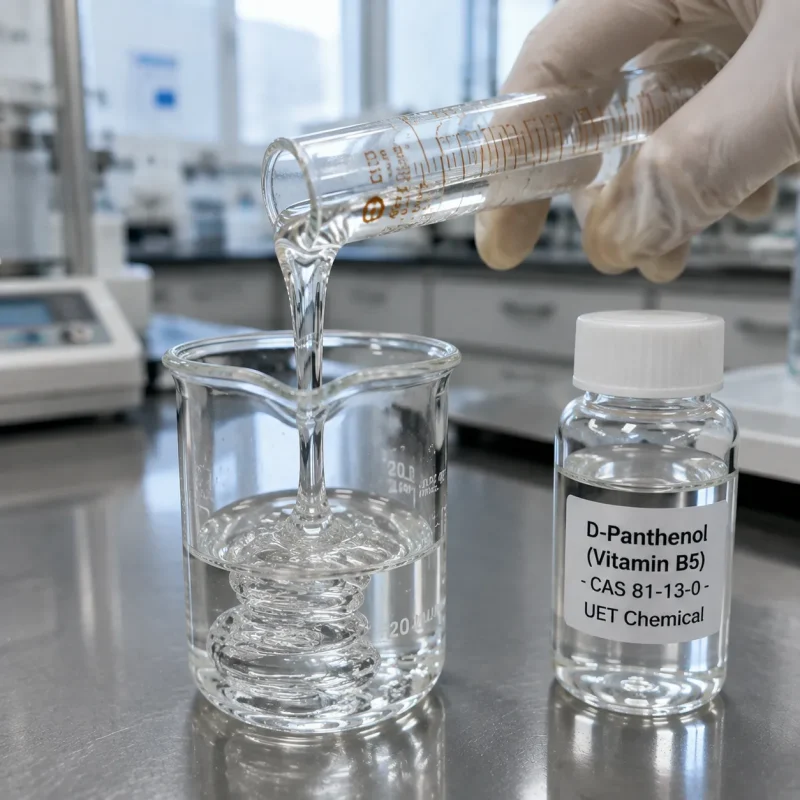
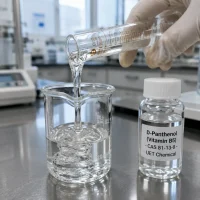
Dexpanthenol is the D-enantiomer of pantothenyl alcohol, a provitamin B5 featuring a chiral C2 center and three hydroxyl groups. Supplied as a colorless to pale-yellow viscous liquid (≥99.0% purity), it acts as a deep-tissue humectant and epithelial repair agent in dermal cosmetics, wound-care ointments, and hair conditioners. Unlike racemic DL-Panthenol, the pure D-isomer delivers 100% biological activity. Each shipment includes COA, TDS, and SDS.
- CAS No.: 81-13-0
- Synonyms: D-Panthenol; Provitamin B5; Dexpanthenol; D-Pantothenyl alcohol
- EINECS: 201-326-8
- Molecular Formula: C₉H₁₉NO₄
- Molecular Weight: 205.25 g/mol
- Appearance: Colorless to slightly yellow viscous liquid (may crystallize below 20 °C)
- Assay (HPLC): ≥99.0%
- Specific Rotation [α]D20: +29.0° to +31.5°
- 3-Aminopropanol: ≤1.0%
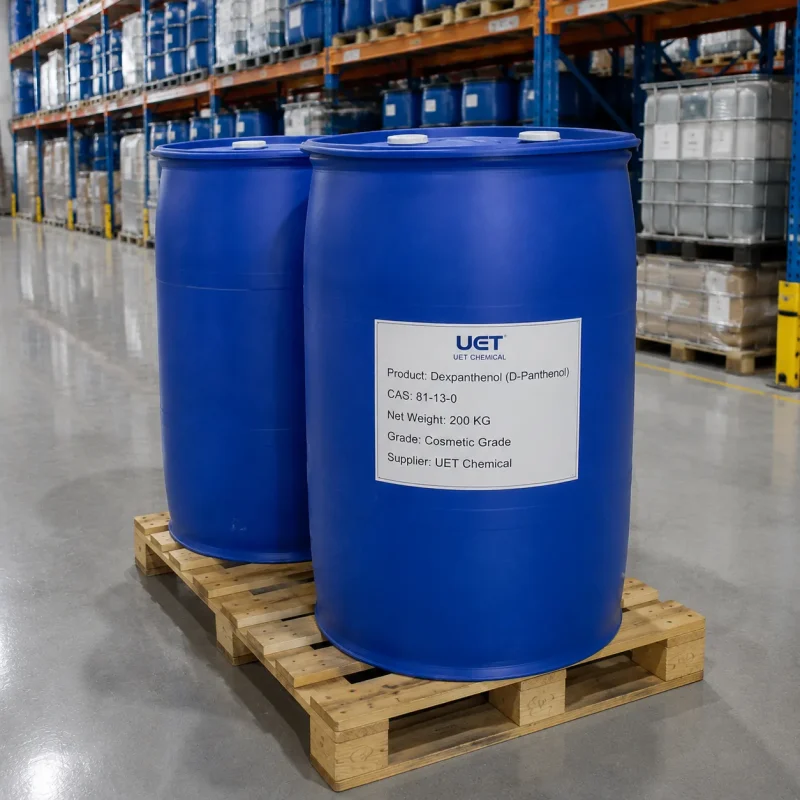
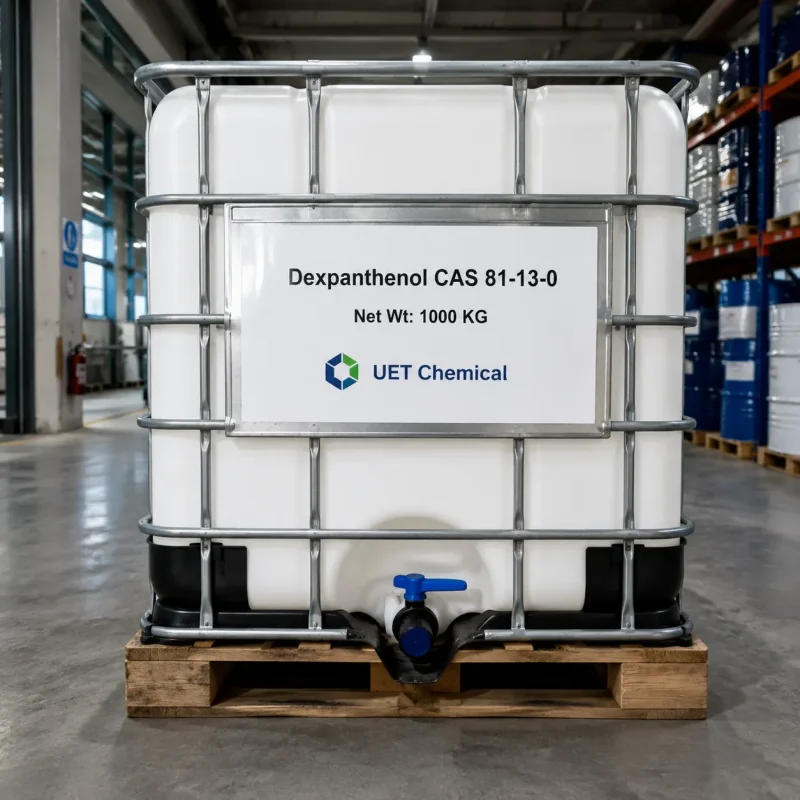
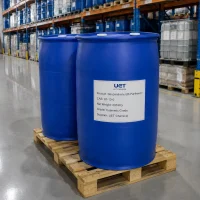
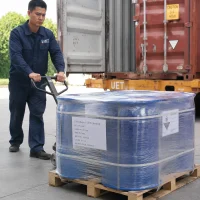
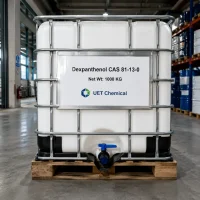
- Packaging: 25 kg HDPE drum / 200 kg HDPE drum. Custom packaging available upon request.
- Main Applications: Skin barrier creams; hair repair masks; wound-healing ointments; eye & nasal drops
Introduction to Dexpanthenol
Dexpanthenol is a colorless to slightly yellow viscous liquid at room temperature, though it readily crystallizes below 20 °C. Chemically, it is the D-enantiomer of pantothenyl alcohol, featuring a chiral center at the C2 position and three hydroxyl groups that drive intense water binding. In biological systems, enzymes oxidise the primary alcohol to yield pantothenic acid (Vitamin B5). Formulators use it as a deep-tissue humectant and epithelial repair agent in dermal cosmetics, wound-care ointments, and hair conditioners.
Compared to racemic DL-Panthenol, pure Dexpanthenol delivers 100% vitamin activity; the L-isomer in DL-mixtures is biologically inactive and merely adds bulk. One operational caution: the three hydroxyl groups make Dexpanthenol fiercely hygroscopic. Once a drum is opened in high-humidity environments (>60% RH), it rapidly absorbs atmospheric moisture, diluting the active concentration and complicating precise dosing. Always reseal immediately and store with desiccants.
Key Features of Dexpanthenol
- 100% biological conversion. The D-chiral configuration allows specific kinases to oxidise it into pantothenic acid. L-panthenol cannot undergo this enzymatic conversion, making the pure D-isomer twice as potent as DL-panthenol by weight.
- Triple-hydroxyl humectancy. Three hydroxyl groups per molecule form dense hydrogen-bond networks with water and keratin. This reduces transepidermal water loss (TEWL) far more effectively than single-OH humectants like glycerol.
- Epithelial proliferation stimulus. Dexpanthenol upregulates lipid synthesis in the stratum corneum and accelerates fibroblast proliferation, cutting wound-healing time in clinical dermal patches by up to 30%.
- High formulation compatibility. The neutral, non-ionic structure remains stable across pH 4–9. It does not salt out in high-electrolyte serums or interact with anionic thickeners like carbomers.
Dexpanthenol Chemical & Physical Properties
| Property | Value |
|---|---|
| Molecular Formula | C₉H₁₉NO₄ |
| Molecular Weight | 205.25 g/mol |
| Melting Point | 65–69 °C (crystalline form); supercooled liquid at RT |
| Specific Rotation [α]D20 | +29.0° to +31.5° (Ph. Eur. 2.2.7) |
| Density (25 °C, liquid) | ~1.20 g/cm³ |
| Solubility | Miscible with water, ethanol; soluble in chloroform |
| Water Content | ≤1.0% (Karl Fischer) |
| 3-Aminopropanol | ≤1.0% (GC) |
| Heavy Metals | ≤10 ppm |
Applications of Dexpanthenol
Dermal moisturisers and barrier creams: Acts as a pro-vitamin at 1–5%. Skin esterases convert it to pantothenic acid, boosting ceramide synthesis and reinforcing the lipid bilayer without leaving a greasy film. Typical final pH: 5.0–6.5.
Hair conditioners and repair masks: Penetrates the hair shaft at 0.5–2%. The triple-hydroxyl structure binds water inside the cortex, increasing hair diameter by up to 10% and reducing breakage during mechanical combing.
Wound-healing ointments and baby rash creams: Used at 2–5%. Stimulates fibroblast proliferation and accelerates re-epithelialisation in minor burns, cuts, and diaper dermatitis. Often paired with zinc oxide or panax ginseng extracts.
Eye drops and nasal sprays: Formulated at 0.5–2% in aqueous isotonic solutions. It hydrates the corneal epithelium and nasal mucosa, promoting tissue repair without the stinging associated with high-concentration glycerol.
Storage & Safety Precautions for Dexpanthenol
Storage conditions. Store in tightly sealed drums at 15–25 °C, protected from light. Dexpanthenol is fiercely hygroscopic. If a drum is opened in an environment with >60% relative humidity, it will absorb atmospheric water, dropping the assay and altering rheology. Always reseal immediately after dispensing. If the liquid crystallises during cold transit, do not force-melt it with direct high heat.
Safety and PPE. Non-hazardous under GHS. No specific occupational exposure limits. Wear standard nitrile gloves and safety glasses to prevent sticky residue on skin and minor eye irritation. Spills are non-toxic but extremely tacky; clean with warm water and mild detergent. Do not use solvents for cleanup.
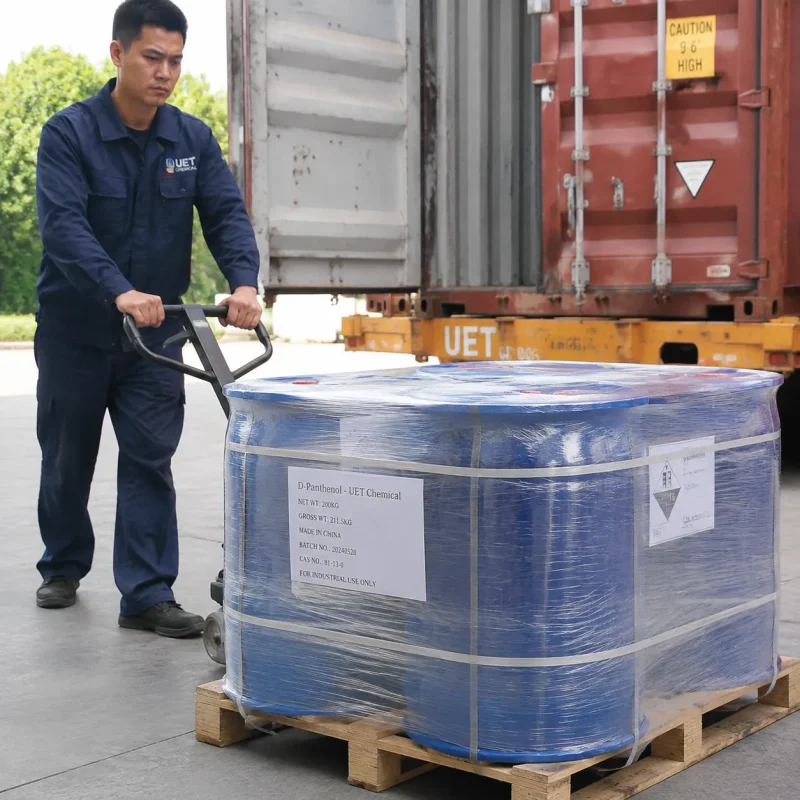
Transport classification. Non-DG. Not regulated under IMDG, IATA, or ADR. Ship as standard general cargo. Ensure drum bungs are sealed with PTFE-lined caps to prevent moisture ingress during ocean freight.
Practitioner note: When weighing Dexpanthenol for QC assay, keep the balance room humidity below 50% RH. At 70% RH, a 10-gram sample can gain 0.1–0.2 grams of water in just five minutes, skewing your HPLC purity results low. Weigh rapidly or use a closed weighing vessel.
Dexpanthenol FAQ
Q: How do I confirm the D-isomer purity of Dexpanthenol (CAS 81-13-0) versus DL-Panthenol?
A: Check the specific rotation [α]D20 on the COA. Pure Dexpanthenol reads +29.0° to +31.5°. DL-Panthenol reads near 0° because the D and L enantiomers cancel each other out. Polarimetry is the definitive test. If the rotation is below +28°, the batch is adulterated with the cheaper DL-racemate.
Q: My Dexpanthenol arrived as a solid white block instead of a liquid. Is it degraded?
A: No. Pure Dexpanthenol easily supercools into a viscous liquid at room temperature but crystallises if exposed to cold (<15 °C) during transit. Gently warm the drum to 30–40 °C in a water bath until it melts back into a clear liquid. Avoid direct high heat, which causes localised thermal degradation and yellowing.
Q: Why does my carbomer gel lose viscosity when I add Dexpanthenol?
A: Its high hygroscopicity can pull free water away from the polymer network if added neat. Always pre-dilute Dexpanthenol 1:1 with deionised water before adding it to the carbomer dispersion. Also, ensure the final formula pH is neutralised to 6.0–7.0. Adding it at low pH prevents the carbomer from swelling.
Related products
Manufacturer & Exporter Since 2006
Get Tailored Chemical Raw Material Solutions — Reply Within 1 Hour
Factory-direct pricing, stable high-purity supply and complete compliance documentation for your industrial formulations.
- 1000+Products
- 200+QC Protocols
- 7–15Days Delivery
- Factory-Direct Pricing
- COA / TDS / SDS Included
- Free Samples for Testing
- 40+ Export Countries
Request a Free Quote
Our engineers reply within 1 hour during GMT+8 business hours.
Please include in your inquiry:
- Product name or CAS number
- Required quantity
- Destination country or port
- Preferred packaging