
Squalane CAS 111-01-3
Squalane is a fully saturated hydrocarbon that solves skin dryness, formulation oxidation, and poor absorption challenges in personal care and pharmaceutical formulations. Cosmetic and pharmaceutical manufacturers rely on it for premium skincare serums, hair care oils, and ointment bases. UETChem supplies this product with strict control over purity, color, and odor, ensuring exceptional oxidative stability and a lightweight, non-greasy skin feel. Each shipment includes COA, TDS, SDS.
- CAS No: 111-01-3
- Synonyms: Hydrogenated squalene; 2,6,10,15,19,23-Hexamethyltetracosane
- EINECS: 203-826-6
- Molecular Formula: C30H62
- Molecular Weight: 422.82 g/mol
- Appearance: Colorless, odorless, transparent liquid
- Purity: 99.0% min (GC)
- Color (Pt-Co): 10 max
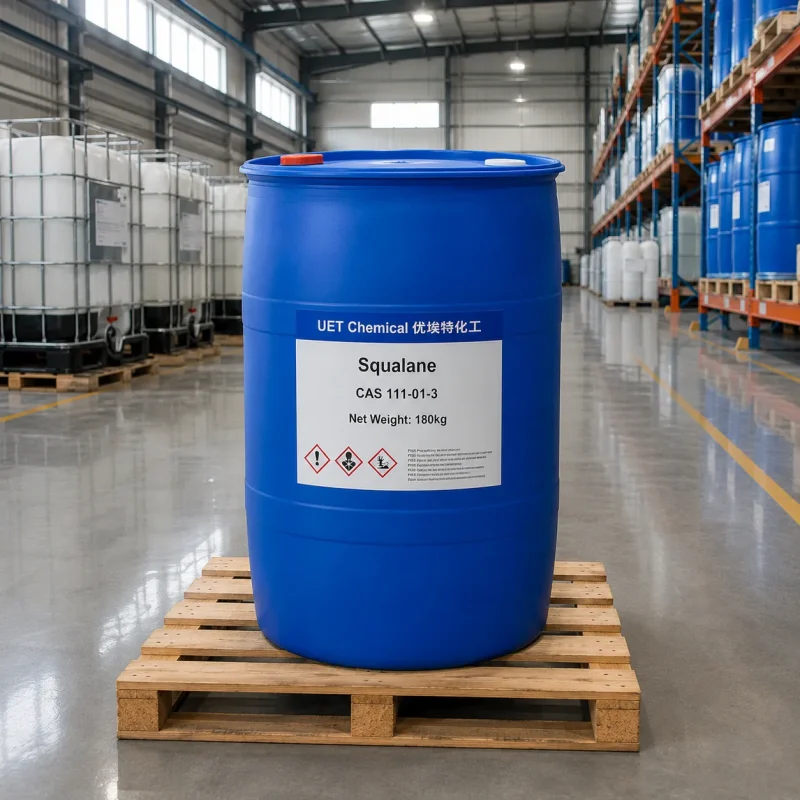
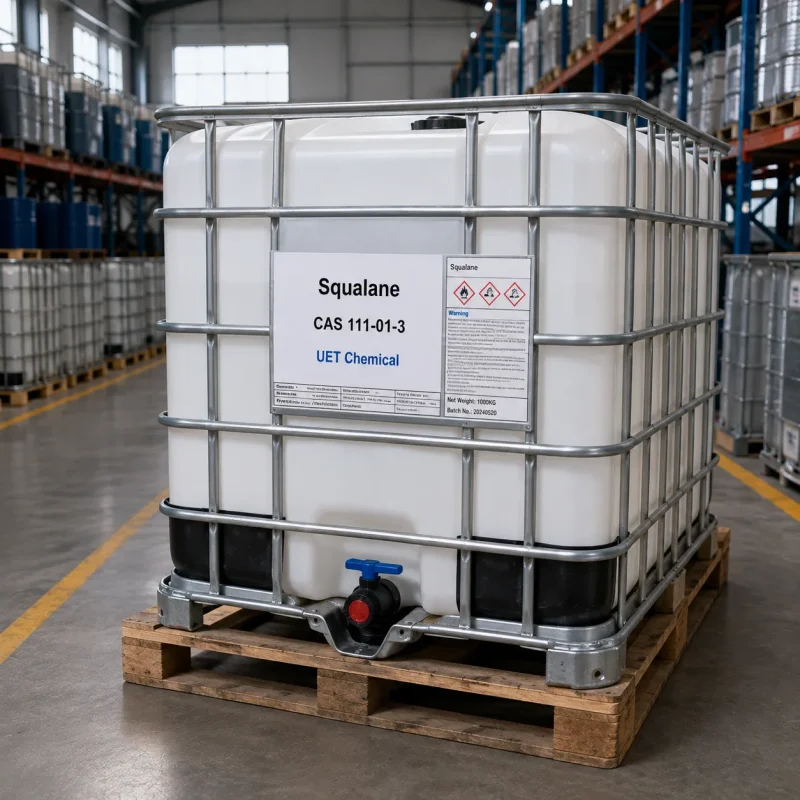
- Packaging: 180 kg (397 lb) steel drum, 1000 kg (2205 lb) IBC. Custom packaging available upon request.
- Main Applications: Skincare emollients, hair care products, pharmaceutical ointments, cosmetic intermediates
Introduction to Squalane
Squalane is a fully saturated, straight-chain hydrocarbon derived from the catalytic hydrogenation of squalene. The molecular structure consists of 30 carbon atoms with multiple methyl branches, resulting in a highly stable, non-polar compound. At room temperature, the material presents as a colorless, odorless, and transparent liquid. It is insoluble in water but completely miscible with most organic solvents, vegetable oils, and synthetic esters.
The compound exhibits exceptional chemical stability due to the absence of double bonds, making it highly resistant to oxidation and rancidity. Industrial processing facilities utilize this inert lipid to modify the rheology of cosmetic formulations, enhance the spreadability of topical products, and serve as a stable carrier for active pharmaceutical ingredients.
Key Features of Squalane
- Saturated hydrocarbon structure: Provides superior oxidative stability and a long shelf life without the need for additional antioxidants.
- High skin compatibility: Mimics the composition of natural human sebum, allowing for rapid absorption without clogging pores.
- Low viscosity: Imparts a lightweight, silky texture to formulations, eliminating the heavy or greasy feel associated with traditional mineral oils.
Squalane Chemical & Physical Properties
| Property | Value |
|---|---|
| Molecular Formula | C30H62 |
| Molecular Weight | 422.82 g/mol |
| Appearance | Colorless, odorless transparent liquid |
| Density | 0.81 – 0.82 g/cm³ at 20 °C |
| Refractive Index | 1.451 – 1.453 at 20 °C |
| Solubility | Insoluble in water; miscible with organic solvents and oils |
| Flash Point | > 110 °C (closed cup) |
Applications of Squalane
Skincare and cosmetics: Incorporated at 1-10% in serums, moisturizers, and facial oils. The emollient forms a protective barrier to prevent transepidermal water loss. Formulators frequently blend this lipid with macromolecular hydrators like Sodium Hyaluronate to create multi-layered moisture networks that reinforce the skin barrier.
Hair care products: Added to hair oils and conditioners to improve shine and reduce frizz. The low molecular weight and low viscosity allow the oil to penetrate the hair cuticle without weighing down fine hair strands.
Pharmaceutical ointments: Serves as an inert, non-reactive carrier and base for topical medications. The chemical stability ensures that active pharmaceutical ingredients remain effective without undergoing oxidative degradation during storage.
Storage & Safety Precautions for Squalane
- Storage conditions: Store in tightly sealed containers in a cool, dry, and well-ventilated warehouse. Protect from direct sunlight and extreme heat to maintain optimal clarity and prevent any potential thermal degradation.
- Handling and PPE: Although generally recognized as safe, wear chemical splash goggles and nitrile gloves during bulk transfer to prevent slip hazards from spilled liquid on factory floors.
- Field note: When formulating oil-in-water emulsions, add Squalane during the oil phase heating stage (around 70-75 °C) to ensure complete homogenization with other lipophilic ingredients before emulsification.
Squalane FAQ
Q: How does Squalane function in skincare formulations?
A: Squalane acts as an exceptional emollient that mimics the skin’s natural sebum. It forms a protective barrier to prevent transepidermal water loss, delivering deep hydration without leaving a greasy residue or clogging pores.
Q: Is Squalane stable against oxidation?
A: Yes, Squalane is a fully saturated hydrocarbon, making it highly resistant to oxidation and rancidity. This stability ensures a long shelf life for cosmetic and pharmaceutical formulations compared to unsaturated oils.
Q: Can Squalane be blended with other cosmetic ingredients?
A: Absolutely. Squalane exhibits excellent compatibility with a wide range of oils, esters, and active ingredients. It is frequently blended with humectants like Dexpanthenol to enhance overall formulation efficacy.
Related products
Manufacturer & Exporter Since 2006
Get Tailored Chemical Raw Material Solutions — Reply Within 1 Hour
Factory-direct pricing, stable high-purity supply and complete compliance documentation for your industrial formulations.
- 1000+Products
- 200+QC Protocols
- 7–15Days Delivery
- Factory-Direct Pricing
- COA / TDS / SDS Included
- Free Samples for Testing
- 40+ Export Countries
Request a Free Quote
Our engineers reply within 1 hour during GMT+8 business hours.
Please include in your inquiry:
- Product name or CAS number
- Required quantity
- Destination country or port
- Preferred packaging