
Ambroxane CAS 6790-58-5
Ambroxane ((−)-ambroxide) is the key odorant of natural ambergris, produced as a tricyclic sesquiterpene ether via a sclareol-based route. White crystalline granules, ≥99.0% GC purity, optical rotation −24° to −32°. At a sub-ppb odour threshold it delivers a dry, mineral, woody-amber note with 8–12 h skin tenacity in fine fragrances, cosmetics, and fabric care. We supply (−)-ambroxide with full batch traceability; each shipment includes COA, TDS, and SDS.
- CAS No.: 6790-58-5
- Synonyms: Ambroxan; Ambroxide; Ambrox; (−)-Ambroxide
- EINECS: 229-861-2
- Molecular Formula: C₁₆H₂₈O
- Molecular Weight: 236.39 g/mol
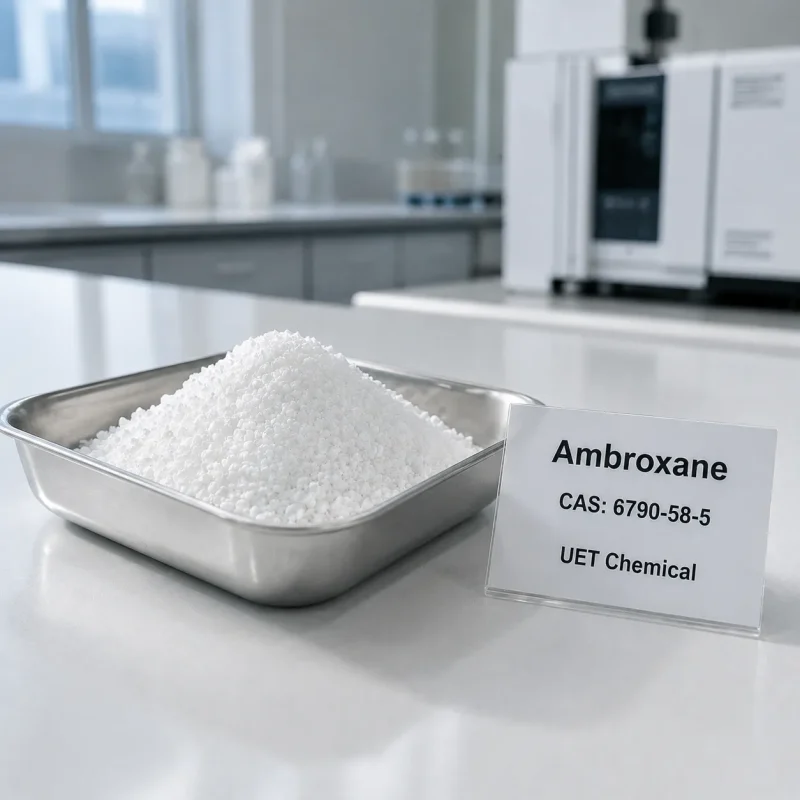
- Appearance: White crystalline granules
- Purity (GC): ≥99.0%
- Optical Rotation [α]D20: −24° to −32° (c = 1, toluene)
- Melting Point: 74–76 °C
- Odour Threshold: ~0.3 ppb
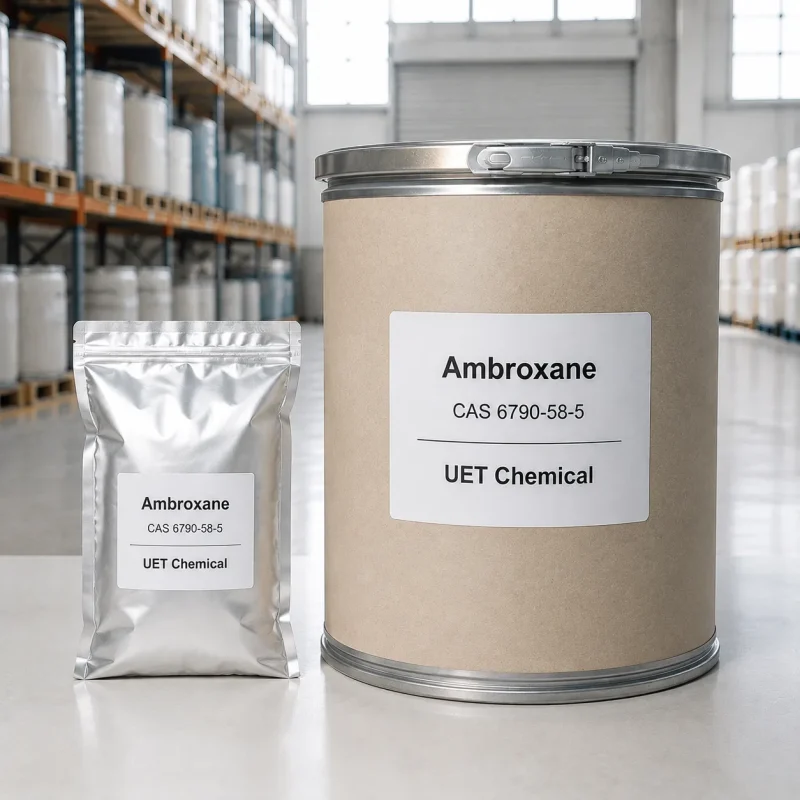
- Packaging: 1 kg aluminium foil bag / 25 kg fibre drum. Custom packaging available upon request.
- Main Applications: Fine fragrances; cosmetics; fabric care; candles & home care
Introduction to Ambroxane
Ambroxane is a white crystalline granule, the (−)-enantiomer of ambroxide and the key odorant of natural ambergris, produced semi-synthetically from clary-sage sclareol. The tricyclic ether skeleton carries a dry, mineral, woody-amber odour with a warm skin-musk undertone; the odour threshold sits near 0.3 ppb, a 10% blotter holds over 400 h, and skin tenacity runs 8–12 h. Perfumers use it as the modern ambergris equivalent in woody-amber fine fragrances, cosmetic bases, and fabric-care perfumes.
Solubility is the main handling variable: roughly 10–15% in ethanol at room temperature, and DPG needs warming to 40–50 °C. In high-alcohol concentrates, high doses or cold storage can throw crystals; pre-dissolve at 40–50 °C, hold the stock warm, and judge blotters at 24 h because the odour develops slowly on the dry-down.
Key Features of Ambroxane
- Ambergris-equivalent odour. Dry, mineral, woody-amber with a warm musky skin note—the classic replacement for natural ambergris at a fraction of the cost.
- Sub-ppb threshold, extreme tenacity. ~0.3 ppb detection threshold; 8–12 h on skin and over a month on blotters, so trace doses give marked projection and longevity.
- Fixative and radiance boost. As a base-note fixative it slows evaporation of the whole accord while adding the diffusive “radiance” lift modern amber fragrances are built on.
- Excellent stability. The ether skeleton carries no hydrolysable ester bond; stable in alkaline detergent bases and wax melts with no discoloration and no odour shift.
- Optical purity. The (−)-enantiomer at ≥99% enantiomeric purity delivers the valued odour quality; optical rotation −24° to −32° serves as the incoming acceptance check versus weaker racemates.
Ambroxane Chemical & Physical Properties
| Property | Value |
|---|---|
| Molecular Formula | C₁₆H₂₈O |
| Molecular Weight | 236.39 g/mol |
| Appearance | White crystalline granules |
| Melting Point | 74–76 °C |
| Boiling Point | ~274 °C (760 mmHg) |
| Flash Point | ~105 °C (closed cup) |
| Density | 0.939 g/cm³ |
| Optical Rotation [α]D20 | −24° to −32° (c = 1, toluene) |
| Purity (GC) | ≥99.0% |
| Odour Threshold | ~0.3 ppb |
| Solubility | Insoluble in water; freely soluble in ethanol, warm DPG, IPM, and fragrance esters |
Applications of Ambroxane
Fine fragrances (EDP/EDT): Used at 0.2–5% as a base-note fixative and radiance booster. Trace doses already add projection; at 2–5% it defines the dry woody-amber backbone of modern amber fragrances.
Cosmetics and personal care: Dosed at 0.05–0.5% in creams, lotions, and deodorant sticks. Imparts a warm amber base with long skin residency without discolouring emulsions.
Fabric care and laundry products: Used at 0.1–0.5%. Deposits on fibre to leave a persistent dry-amber scent after drying, and stays stable in alkaline detergent bases.
Candles and home care: Formulated at 0.5–3%. Stable at wax melt temperatures with no discoloration, giving candles and diffusers a long, steady amber throw.
Storage & Safety Precautions for Ambroxane
Storage conditions. Store sealed at below 25 °C, protected from light. The crystals sublime slowly and will cross-contaminate neighbouring materials with odour—reseal foil bags and drum liners immediately after sampling. Keep away from strong oxidisers.
Safety and PPE. GHS: Not classified as hazardous. Mild irritant. Wear an N95 dust mask and safety glasses during dispensing to avoid dust inhalation. Spills: sweep up dry and recover the crystals.
Transport classification. Non-DG. Flash point ~105 °C places it outside Class 3; not regulated under IMDG, IATA, or ADR. Ship as standard general cargo.
Practitioner note: For incoming QC, combine GC purity (≥99%), melting point (74–76 °C), and optical rotation (−24° to −32°, c = 1 in toluene). Prepare a 10% ethanol dilution and read the blotter at 24 h for odour evaluation—the odour develops slowly, and reading too early underestimates tenacity.
Ambroxane FAQ
Q: Are Ambroxane, Ambroxide, and Cetalox the same material?
A: Same molecule. Ambroxane/Ambroxide are the INCI and trade names; Cetalox is one manufacturer’s brand. The material supplied here is the (−)-enantiomer, optical rotation −24° to −32°, whose odour quality is superior to racemic material.
Q: Why do crystals appear in my finished perfume?
A: Solubility ceiling. Ethanol holds roughly 10–15% at room temperature, and DPG or low-alcohol systems hold less. Pre-dissolve at 40–50 °C as a 10% stock, dose from the stock, and avoid cold storage of the concentrate; if crystals appear, warm to re-dissolve.
Q: How do I set the dose?
A: With a ~0.3 ppb threshold, start low and build: 0.2–5% in fine fragrance, 0.05–0.5% in cosmetics, 0.1–0.5% in fabric care. Overdosing lets the woody facet dominate the accord, so evaluate blotters at 24 h before scaling up.
Related products
Manufacturer & Exporter Since 2006
Get Tailored Chemical Raw Material Solutions — Reply Within 1 Hour
Factory-direct pricing, stable high-purity supply and complete compliance documentation for your industrial formulations.
- 1000+Products
- 200+QC Protocols
- 7–15Days Delivery
- Factory-Direct Pricing
- COA / TDS / SDS Included
- Free Samples for Testing
- 40+ Export Countries
Request a Free Quote
Our engineers reply within 1 hour during GMT+8 business hours.
Please include in your inquiry:
- Product name or CAS number
- Required quantity
- Destination country or port
- Preferred packaging