
Tripropylene Glycol CAS 24800-44-0
Tripropylene Glycol (TPG) is a linear polyether diol built from three propylene oxide units capped by two terminal hydroxyl groups. Colorless, low-odor viscous liquid, ≥99.0% GC purity. Serves as a slow-evaporating humectant, polyol flexibilizer, and lubricity carrier in polyurethane systems, metalworking fluids, and cosmetic bases. The all-ether backbone resists hydrolysis from pH 3–11 where ester polyols saponify. Each shipment includes COA, TDS, and SDS.
- CAS No.: 24800-44-0
- Synonyms: Tripropylene glycol; TPG; Tri(propylene glycol)
- EINECS: 246-496-4
- Molecular Formula: C₉H₂₀O₄
- Molecular Weight: 192.25 g/mol
- Appearance: Colorless transparent viscous liquid
- Purity (GC): ≥99.0%
- Hydroxyl Value: 575–595 mg KOH/g
- Water Content (KF): ≤0.1%
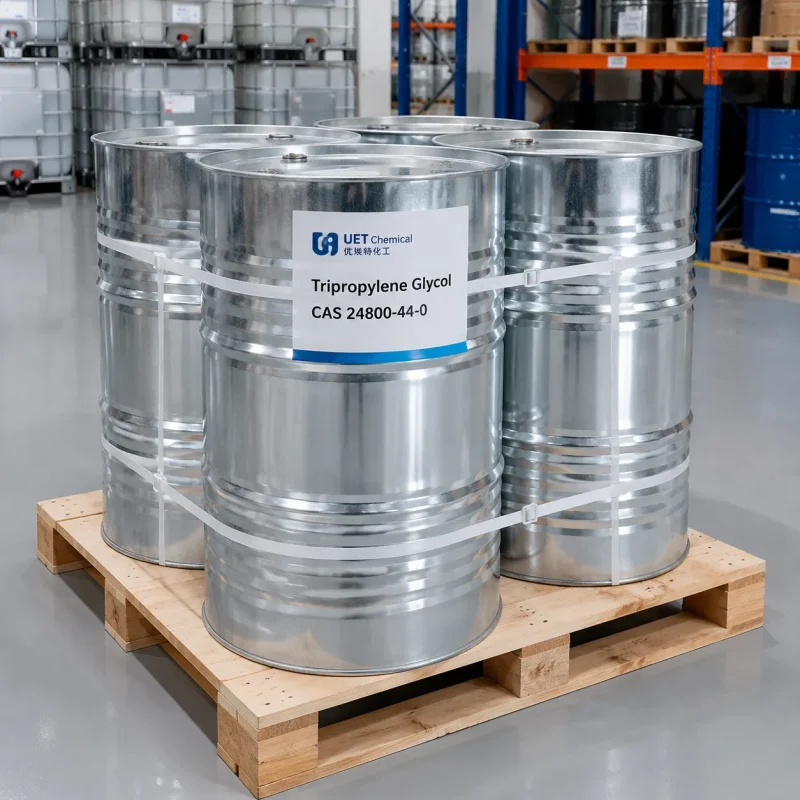
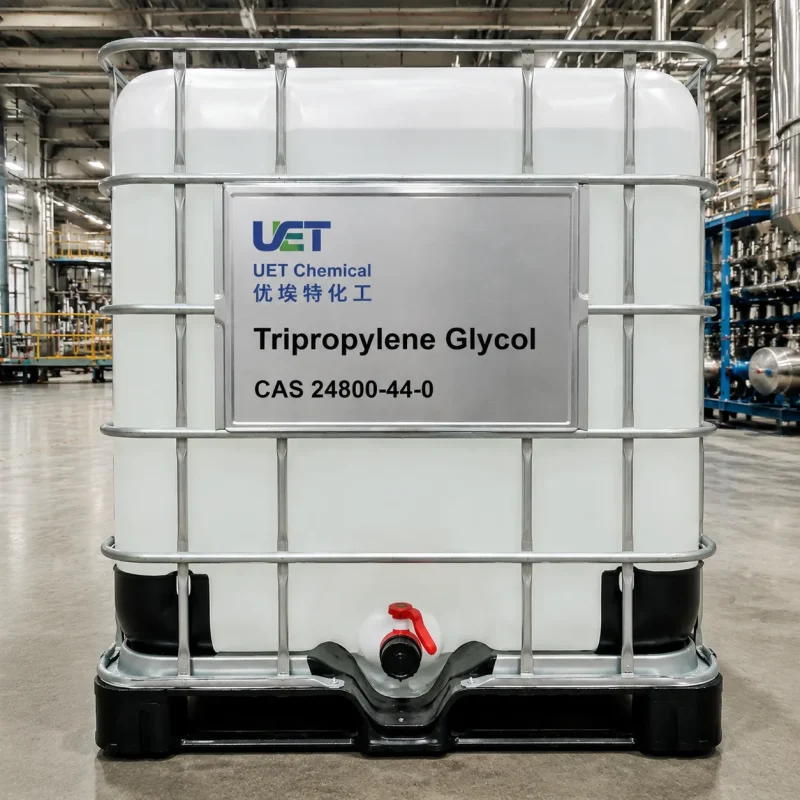
- Packaging: 200 kg steel drum / 1000 kg IBC tote. Custom packaging available upon request.
- Main Applications: PU polyol flexibilizer; metalworking fluids; cosmetic humectant; ink & coating humectant
Introduction to Tripropylene Glycol
Tripropylene Glycol is a colorless, mildly viscous liquid, a linear polyether diol formed by three propylene oxide units with a hydroxyl group at each end. The C9 backbone carries three internal ether oxygens, giving a hydroxyl value near 584 mg KOH/g and a boiling range of 265–275 °C. Formulators use it as a flexibilizing polyol in polyurethane and polyester systems, and as a slow-evaporating humectant and lubricity carrier in metalworking fluids and cosmetic bases.
The all-ether backbone stays intact at pH 3–11 and remains flexible at −40 °C, where ester polyols stiffen and saponify. One practical caution: TPG is hygroscopic, and every 0.1% of absorbed water consumes roughly 0.6% of the isocyanate budget in PU reactions, generating CO₂ bubbles in cast elastomers. Keep drums sealed and verify water by Karl Fischer (≤0.1%) before charging into NCO-containing systems.
Key Features of Tripropylene Glycol
- Triple-ether hydrolysis resistance. With no ester bond to saponify, the backbone survives pH 3–11 at 80 °C, extending service life of PU parts in humid and alkaline service.
- Low-temperature flexibility. Free-rotating ether linkages keep TPG-modified polyurethane crack-resistant at −40 °C (freezing point −45 °C, supercools on storage).
- High boiling, slow evaporation. A 265–275 °C boiling range and low vapour pressure hold coatings and inks open longer, preventing nozzle skinning and acting as a slow coalescent.
- Diol functionality at ~584 mg KOH/g. Two hydroxyls incorporate into PU and polyester networks as a flexible chain extender, lowering crosslink density in a controlled, predictable way.
- Mild, low-odor profile. Negligible odour and low volatility suit cosmetic humectant use and fragrance-sensitive formulations where shorter glycols smell too strong.
Tripropylene Glycol Chemical & Physical Properties
| Property | Value |
|---|---|
| Molecular Formula | C₉H₂₀O₄ |
| Molecular Weight | 192.25 g/mol |
| Boiling Range | 265–275 °C (1013 hPa) |
| Density (20 °C) | 1.018–1.023 g/cm³ (ASTM D4052) |
| Viscosity (25 °C) | ~57 mPa·s |
| Flash Point | ~141–145 °C (closed cup) |
| Hydroxyl Value | 575–595 mg KOH/g |
| Water Content | ≤0.1% (Karl Fischer) |
| Solubility | Miscible with water, alcohols, esters; limited in aliphatic hydrocarbons |
Applications of Tripropylene Glycol
PU elastomers and flexible foams: Charged at 5–20% of the polyol blend. Ether segments lower the soft-segment Tg and improve low-temperature flexibility, while the ~584 mg KOH/g hydroxyl value slots into standard isocyanate index calculations without re-tooling the formulation.
Metalworking and textile lubricants: Used at 2–10%. Ether oxygens adsorb onto metal and fibre surfaces, providing boundary lubricity and humectancy; full water miscibility allows semi-synthetic fluid concentrates that dilute clear.
Cosmetic humectant and solvent: Dosed at 1–5%. One extra propylene oxide unit versus DPG cuts volatility, so skin moisturisation persists longer and active ingredients (salicylic acid, botanical extracts) stay solvised without ethanol.
Inks, coatings, and cleaners: Added at 1–5% as a slow humectant and coalescent. The 265–275 °C boiling range keeps printheads and nozzle tips from skinning over during shutdowns, and extends open time of waterborne coatings.
Heat-transfer and hydraulic fluids: Blended at 20–60% with corrosion inhibitors. High boiling point, −45 °C freezing point, and stable viscosity-temperature curve hold performance from −30 °C to 150 °C in closed loops.
Storage & Safety Precautions for Tripropylene Glycol
Storage conditions. Store in sealed steel or HDPE drums at 5–35 °C, in a dry area. TPG is hygroscopic and will pull atmospheric water through any leak path, pushing KF water above 0.1% and spoiling NCO-sensitive chemistry. Keep away from strong oxidisers and isolate from isocyanate storage bays.
Safety and PPE. GHS: Not classified as hazardous. Mild eye irritant. Wear standard nitrile gloves and safety goggles during drum transfers. Spills are non-toxic but slippery; contain with inert absorbent and wash with water.
Transport classification. Non-DG. Flash point ~141–145 °C places it outside Class 3; not regulated under IMDG, IATA, or ADR. Ship as standard general cargo.
Practitioner note: For incoming QC, verify hydroxyl value by phthalic anhydride esterification per ASTM E222 (target 575–595 mg KOH/g) and water by Karl Fischer. Isomer ratio from propylene oxide addition drifts slightly between batches, so viscosity may wander ±10% around 57 mPa·s—this is cosmetic and does not shift hydroxyl value or reactivity.
Tripropylene Glycol FAQ
Q: Can Tripropylene Glycol (CAS 24800-44-0) be charged directly into NCO-containing PU systems?
A: Yes, but only after a Karl Fischer check. TPG is hygroscopic; each 0.1% of absorbed water consumes ~0.6% of the isocyanate budget and releases CO₂, leaving bubbles in cast elastomers. Require KF ≤0.1% on the COA, re-test opened drums, and use the measured hydroxyl value (575–595 mg KOH/g) in your index calculation.
Q: Why did my TPG-based coating stay tacky for hours?
A: The 265–275 °C boiling range means TPG evaporates very slowly. Above 3–5% in a film former, it acts as a permanent plasticiser and delays tack-free time. Cut the dose to 1–3%, or blend with a faster glycol ether for the first hour of drying. In inks, keep it at 1–2% and reserve higher loads for printhead humectancy.
Q: How does TPG differ from dipropylene glycol in humectancy and drying?
A: TPG carries one extra propylene oxide unit: higher boiling (265–275 °C vs ~230 °C), lower volatility, and slightly higher viscosity (~57 vs ~40 mPa·s at 25 °C). Choose TPG when you need longer open time, slower skin drying, or lower odour; choose DPG when faster evaporation and lower cost matter, as in fragrance carriers.
Related products
Manufacturer & Exporter Since 2006
Get Tailored Chemical Raw Material Solutions — Reply Within 1 Hour
Factory-direct pricing, stable high-purity supply and complete compliance documentation for your industrial formulations.
- 1000+Products
- 200+QC Protocols
- 7–15Days Delivery
- Factory-Direct Pricing
- COA / TDS / SDS Included
- Free Samples for Testing
- 40+ Export Countries
Request a Free Quote
Our engineers reply within 1 hour during GMT+8 business hours.
Please include in your inquiry:
- Product name or CAS number
- Required quantity
- Destination country or port
- Preferred packaging