
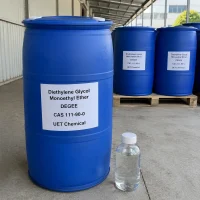
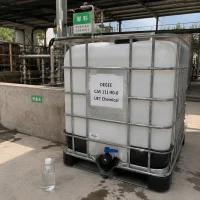
Diethylene Glycol Monoethyl Ether (DEGEE) CAS 111-90-0
Diethylene Glycol Monoethyl Ether (DEGEE) is a highly versatile glycol ether solvent that solves resin incompatibility, high VOC emissions, and phase separation challenges in complex chemical formulations. Coating, cosmetic, and cleaning product manufacturers rely on it for waterborne paints, fragrance solubilization, and heavy-duty degreasers. UETChem supplies this product with strict control over moisture, peroxide formation, and color, ensuring exceptional coupling efficiency and a mild odor profile. Each shipment includes COA, TDS, SDS.
- CAS No: 111-90-0
- Synonyms: DEGEE; Carbitol; 2-(2-Ethoxyethoxy)ethanol; Ethyl carbitol
- EINECS: 203-921-8
- Molecular Formula: C₆H₁₄O₃
- Molecular Weight: 134.17 g/mol
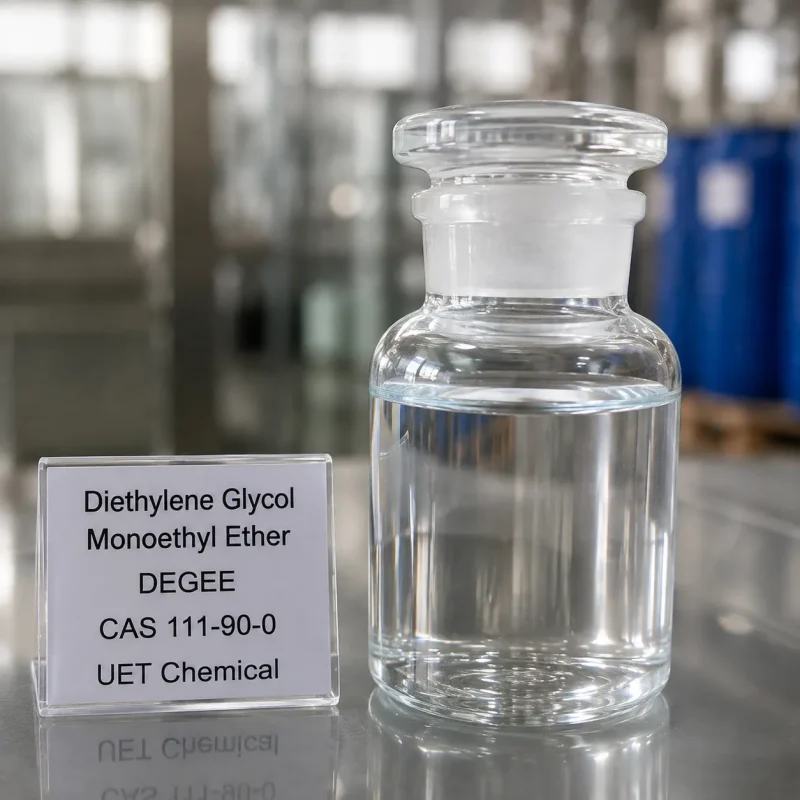
- Appearance: Colorless transparent liquid
- Purity: 99.0% min
- Moisture: 0.1% max
- Flash Point (Closed Cup): 96 °C
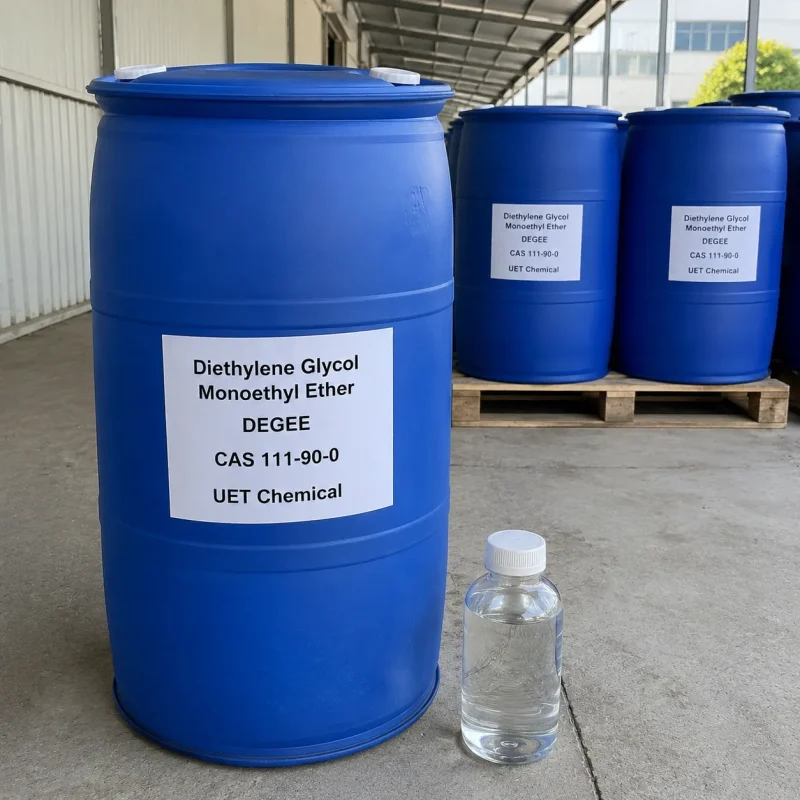
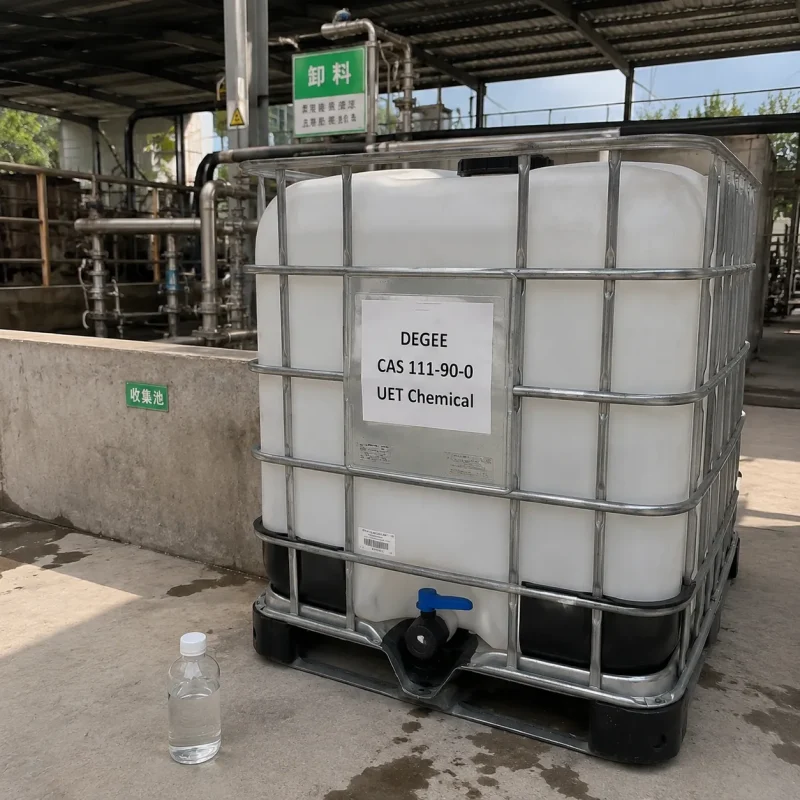
- Packaging: 200 kg HDPE drum, 1000 kg IBC. Custom packaging available upon request.
- Main Applications: Waterborne coatings, printing inks, cosmetic solvents, industrial cleaners, textile auxiliaries
Introduction to Diethylene Glycol Monoethyl Ether
Diethylene Glycol Monoethyl Ether is an aliphatic glycol ether consisting of a diethylene glycol backbone capped with an ethyl group at one end and a free hydroxyl group at the other. Its molecular architecture provides a balanced hydrophilic-lipophilic profile, allowing the liquid to bridge polar and non-polar phases. At room temperature, the compound appears as a colorless, transparent liquid with a mild, characteristic ether odor. It is completely miscible with water and dissolves readily in most organic solvents, oils, and resins.
The amphiphilic structure delivers lipophilic solvency for oils and resins via the ethyl chain, while ether linkages and the terminal hydroxyl group ensure complete water miscibility. Its high boiling point provides a slow, controlled evaporation rate that keeps coating films open for optimal leveling, and it functions as an effective hydrotrope to prevent phase separation in surfactant systems.
DEGEE Chemical & Physical Properties
| Property | Value |
|---|---|
| Molecular Formula | C₆H₁₄O₃ |
| Molecular Weight | 134.17 g/mol |
| Appearance | Colorless transparent liquid |
| Boiling Point | 202 °C |
| Density (20 °C) | 0.99 g/cm³ |
| Flash Point (Closed Cup) | 96 °C |
| Solubility | Completely miscible with water and most organic solvents |
| Purity | 99.0% min |
Applications of Diethylene Glycol Monoethyl Ether
Waterborne coatings and printing inks: Dosed at 2–10% as a co-solvent and coalescing agent in acrylic and polyurethane dispersions. Its slow evaporation rate facilitates polymer particle deformation and film formation at ambient temperatures, improving pigment wetting and eliminating surface defects like craters and orange peel in architectural paints and flexographic inks.
Cosmetics and personal care: Functions as a primary solvent and coupling agent in perfumes, deodorants and hair care products. It dissolves hydrophobic fragrance oils and active ingredients, integrating them seamlessly into aqueous bases without causing cloudiness or precipitation.
Industrial and household cleaners: Incorporated into heavy-duty degreasers and glass cleaners to dissolve greasy soils and resinous deposits. The solvent penetrates the soil matrix, loosening the bond to the substrate while allowing the formulation to be easily rinsed away with water.
Textile and leather auxiliaries: Used as a carrier solvent for dye pastes and finishing agents. It ensures uniform penetration of colorants into natural and synthetic fibers during padding and printing processes.
Storage & Safety Precautions for DEGEE
- Store in tightly sealed HDPE or stainless steel drums away from direct sunlight and heat. Prolonged exposure to air and light can cause slow formation of explosive peroxides. Periodically test older inventory for peroxide levels before distillation or high-heat processing.
- Wear chemical splash goggles and nitrile gloves during drum decanting and bulk transfer operations. The liquid is a mild eye irritant and can cause defatting of the skin upon prolonged contact.
- When blending into highly concentrated surfactant systems, add the solvent slowly under moderate agitation. Rapid dumping can cause localized phase inversion or temporary gelation, requiring extended mixing times to restore the desired liquid viscosity.
DEGEE FAQ
Q: How does Diethylene Glycol Monoethyl Ether improve waterborne coatings?
A: It acts as a coalescing agent and co-solvent in waterborne paints. Its slow evaporation rate keeps the wet film open, allowing polymer particles to fuse properly at room temperature. This ensures a smooth, defect-free finish with excellent leveling.
Q: Why is DEGEE widely used in cosmetic formulations?
A: It possesses a balanced amphiphilic structure that dissolves both hydrophobic fragrance oils and water-soluble active ingredients. It acts as a coupling agent, preventing phase separation and maintaining the crystal-clear appearance of aqueous perfumes, deodorants and hair care products.
Q: What storage precautions are necessary for DEGEE?
A: It can slowly form peroxides when exposed to air and light over extended periods. Store the liquid in tightly sealed, opaque drums in a cool warehouse. Regular peroxide testing is mandatory before subjecting the solvent to high-heat distillation or thermal processing.
Related products
Manufacturer & Exporter Since 2006
Get Tailored Chemical Raw Material Solutions — Reply Within 1 Hour
Factory-direct pricing, stable high-purity supply and complete compliance documentation for your industrial formulations.
- 1000+Products
- 200+QC Protocols
- 7–15Days Delivery
- Factory-Direct Pricing
- COA / TDS / SDS Included
- Free Samples for Testing
- 40+ Export Countries
Request a Free Quote
Our engineers reply within 1 hour during GMT+8 business hours.
Please include in your inquiry:
- Product name or CAS number
- Required quantity
- Destination country or port
- Preferred packaging