
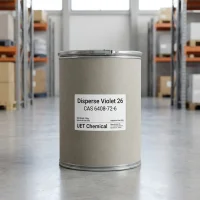
Disperse Violet 26 CAS 6408-72-6
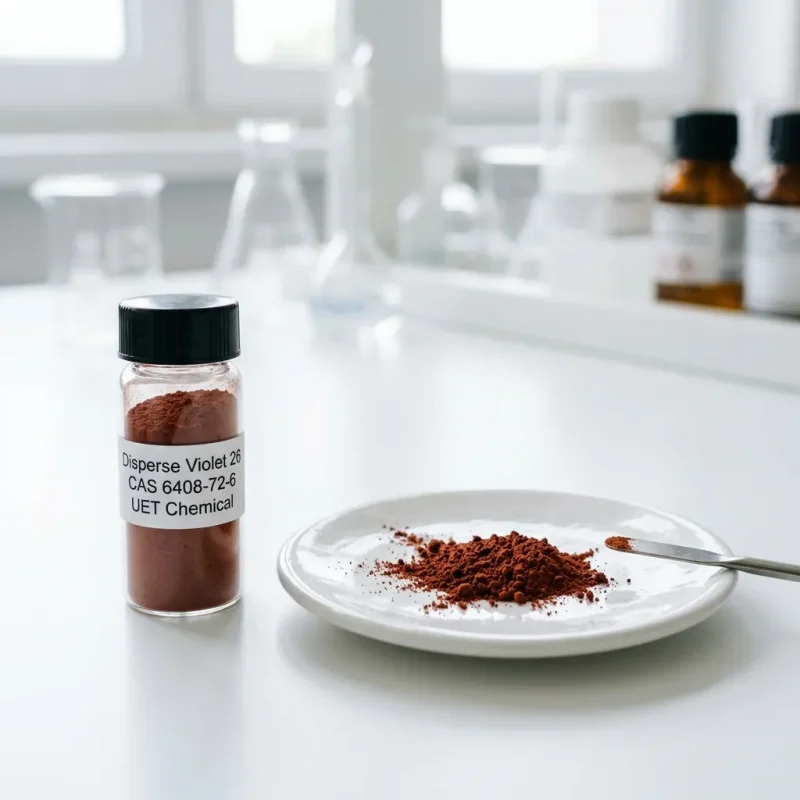
Disperse Violet 26 (C.I. 62025) is an anthraquinone-based disperse dye featuring a 1,4-diamino-2,3-diphenoxyanthraquinone core. Supplied as a bright reddish-violet powder (≥100% strength), it delivers exceptional thermal stability and lightfastness for polyester textile dyeing and engineering plastic coloration. We supply high-purity, low-dust material with full batch traceability; each shipment includes COA, TDS, and SDS.
- CAS No.: 6408-72-6
- Synonyms: C.I. Disperse Violet 26; Disperse Violet FBL; Solvent Violet 59; 1,4-Diamino-2,3-diphenoxyanthraquinone
- EINECS: 229-066-0
- Molecular Formula: C₂₆H₁₈N₂O₄
- Molecular Weight: 422.43 g/mol
- Appearance: Bright reddish-violet powder
- Color Index: C.I. 62025
- Strength: 100% / 150% (High Concentration)
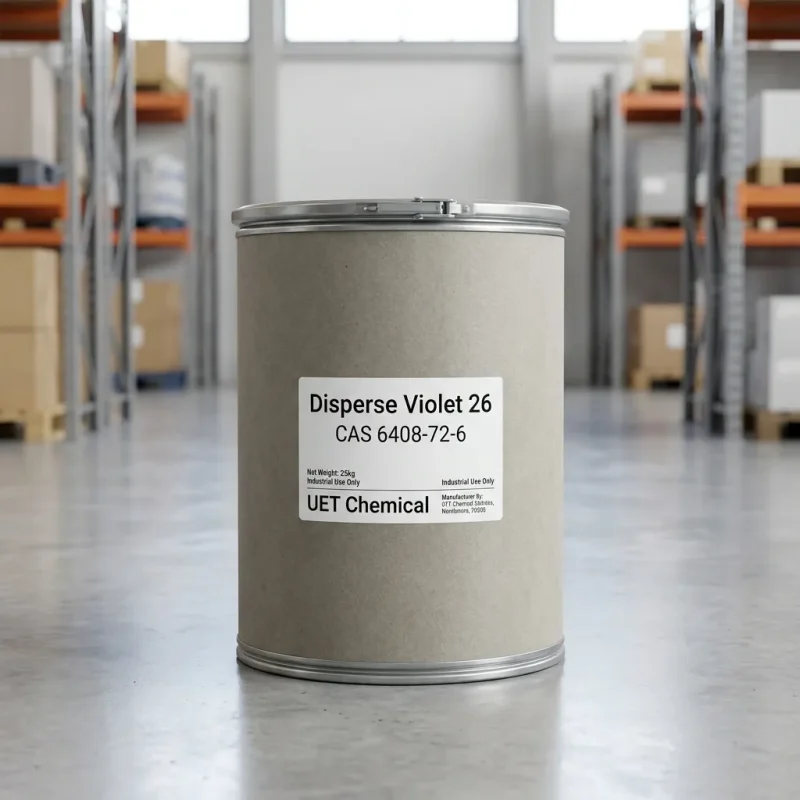
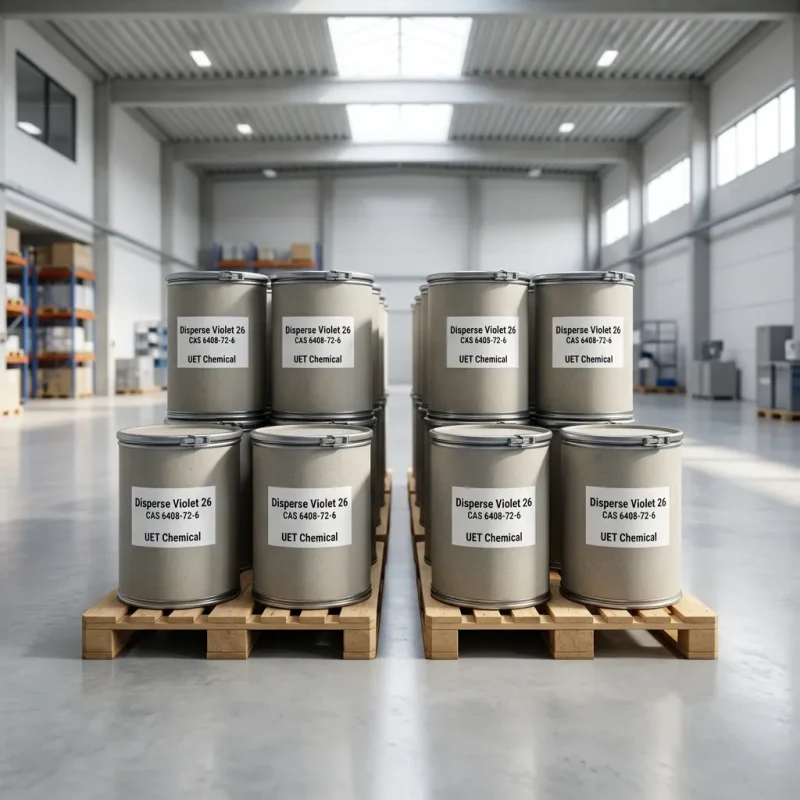
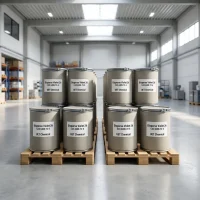
- Packaging: 25 kg kraft bag / fibre drum with PE liner. Custom packaging available upon request.
- Main Applications: Polyester HTHP dyeing; thermosol printing; plastic masterbatches; solvent inks
Introduction to Disperse Violet 26
Disperse Violet 26 is a bright reddish-violet powder, an anthraquinone-type disperse dye where the 1,4-diamino positions are substituted with phenoxy groups. This rigid, planar structure grants the molecule outstanding affinity for hydrophobic substrates like polyester and synthetic polymers. Textile mills use it for high-temperature high-pressure (HTHP) exhaust dyeing and thermosol pad-dry-cure processes, while plastic compounders value it (often listed as Solvent Violet 59) for high-heat engineering resins.
The anthraquinone backbone ensures the dye survives extreme processing conditions without shifting hue. One practical caution: as a disperse dye, it is virtually insoluble in water and must be applied as a fine aqueous dispersion or dissolved in specific organic carriers for solvent-based inks and plastics. Inadequate milling during dispersion preparation leads to specks, uneven dyeing, and poor rub fastness on polyester fabrics.
Key Features of Disperse Violet 26
- Anthraquinone thermal resilience. Withstands processing temperatures exceeding 260–280 °C, making it ideal for PET, PC, and ABS injection moulding and extrusion where standard azo dyes would decompose and cause filter clogging.
- Superior lightfastness. Achieves ISO lightfastness ratings of 6–7 on polyester and plastics, ensuring long-term colour retention in outdoor automotive textiles and durable plastic goods.
- Excellent sublimation fastness. The high molecular weight (422 g/mol) and bulky phenoxy groups prevent the dye from migrating or sublimating during high-heat thermosol fixation or hot ironing.
- Bright reddish-violet shade. Provides a clean, fluorescent-leaning violet hue that is difficult to achieve with standard azo violet dispersions; frequently used as a shading component for deep blacks and navies.
- Versatile solubility profile. Insoluble in water but readily soluble in DMF, chlorobenzene, and specific glycol ethers, facilitating its use in solvent-based gravure inks and plasticiser pastes.
Disperse Violet 26 Chemical & Physical Properties
| Property | Value |
|---|---|
| Molecular Formula | C₂₆H₁₈N₂O₄ |
| Molecular Weight | 422.43 g/mol |
| Appearance | Bright reddish-violet powder |
| Melting Point | ~186–195 °C (stable >260 °C) |
| Solubility (Water) | Insoluble |
| Solubility (Organic) | Soluble in DMF, DMSO, chlorobenzene; slightly soluble in ethanol |
| Color Index | C.I. 62025 |
| Light Fastness (Polyester) | 6–7 (ISO 105-B02) |
| Sublimation Fastness | 4–5 (at 210 °C) |
| pH Stability | Stable in weak acid/neutral; sensitive to strong reducing agents |
Applications of Disperse Violet 26
Polyester textile dyeing (HTHP & Thermosol): Dosed at 0.5–3.0% owf. Applied at 130 °C in jet dyebaths or via pad-dry-cure thermosol at 200–220 °C. Delivers level, speck-free violet shades with excellent wash and rub fastness.
Engineering plastics and masterbatches: Used at 0.01–0.5% loading in PET, ABS, and polycarbonate. The >280 °C heat stability prevents colour degradation and gas generation during twin-screw extrusion and injection moulding.
Solvent-based inks and coatings: Formulated into gravure and flexographic inks for metallised films and flexible packaging. The dye dissolves cleanly in ketone/ester solvent blends, providing high tinctorial strength and transparency.
Shading and optical brightener correction: Added in trace amounts (ppm levels) to neutralise yellow undertones in white polyester fibres and optical brightener formulations.
Storage & Safety Precautions for Disperse Violet 26
Storage conditions. Store in sealed, PE-lined bags or drums at 5–35 °C, in a dry, well-ventilated warehouse. Keep away from strong oxidising agents and direct sunlight to preserve the anthraquinone chromophore. Reseal opened containers immediately to prevent moisture uptake, which can cause agglomeration in the dry powder.
Safety and PPE. GHS: Not classified as highly hazardous, but fine dye dust is a nuisance irritant and strong colourant. Wear an N95 dust mask, safety glasses, and nitrile gloves during dispensing to prevent skin staining and inhalation. Spills: sweep up dry carefully to avoid dusting, then wipe with a solvent-dampened cloth.
Transport classification. Non-DG. Not regulated under IMDG, IATA, or ADR. Ship as standard general cargo. Ensure packaging is robust to prevent powder leaks during ocean freight.
Practitioner note: When preparing aqueous dispersions for textile dyeing, use high-shear milling or bead milling with anionic dispersants (e.g., lignosulfonates or naphthalene sulfonate formaldehyde condensates) to achieve a particle size D90 < 1 µm. Coarse particles will cause “bronzing” and poor rub fastness on the final fabric.
Disperse Violet 26 FAQ
Q: Can Disperse Violet 26 (CAS 6408-72-6) be used for melt-spinning polyester fibres?
A: Yes. Its anthraquinone structure provides thermal stability well above the 280–290 °C melt-spinning temperatures of PET. Unlike many azo dyes that break down and cause filter clogging in spinnerets, Disperse Violet 26 (listed as Solvent Violet 59 in plastics) maintains its chromophore integrity and delivers consistent shade batch-to-batch.
Q: Why did my violet shade turn dull and brownish after thermosol curing?
A: This usually indicates reduction damage. Disperse dyes containing amino/hydroxy groups are sensitive to reducing environments at high temperatures (e.g., from residual sizing agents or burnt lubricants on the fabric). Ensure the fabric is thoroughly scoured before dyeing, and consider adding a mild oxidising agent or specific anti-reducing agent to the pad bath to protect the chromophore during the 210 °C cure.
Q: How do I dissolve this dye for solvent-based ink formulations?
A: Disperse Violet 26 is insoluble in water and aliphatic hydrocarbons but dissolves readily in polar aprotic solvents like DMF, cyclohexanone, or specific glycol ethers. Pre-dissolve the powder in a warm solvent carrier (40–50 °C) before letting it down into the final resin/solvent ink vehicle to ensure complete transparency and avoid grit in the print.
Related products
Manufacturer & Exporter Since 2006
Get Tailored Chemical Raw Material Solutions — Reply Within 1 Hour
Factory-direct pricing, stable high-purity supply and complete compliance documentation for your industrial formulations.
- 1000+Products
- 200+QC Protocols
- 7–15Days Delivery
- Factory-Direct Pricing
- COA / TDS / SDS Included
- Free Samples for Testing
- 40+ Export Countries
Request a Free Quote
Our engineers reply within 1 hour during GMT+8 business hours.
Please include in your inquiry:
- Product name or CAS number
- Required quantity
- Destination country or port
- Preferred packaging