
L-Tartrate CAS 36687-82-8
L-Tartrate (L-Tartaric Acid) is the naturally occurring (2R,3R)-(+) isomer of 2,3-dihydroxybutanedioic acid, carrying two carboxyl and two hydroxyl groups on a four-carbon chain. White crystalline powder, ≥99.0% purity, meeting E334 / USP / FCC specifications. Functions as a sharp clean acidulant, a fast-acting leavening acid, and an α-hydroxy chelator in food & beverage, bakery, cosmetic, and metal-finishing formulations. We supply food-grade and technical-grade material with full batch traceability; each shipment includes COA, TDS, and SDS.
- CAS No.: 36687-82-8
- Synonyms: L-Tartaric acid; L-(+)-Tartaric acid; (2R,3R)-2,3-Dihydroxybutanedioic acid; E334
- EINECS: 201-766-0
- Molecular Formula: C₄H₆O₆
- Molecular Weight: 150.09 g/mol
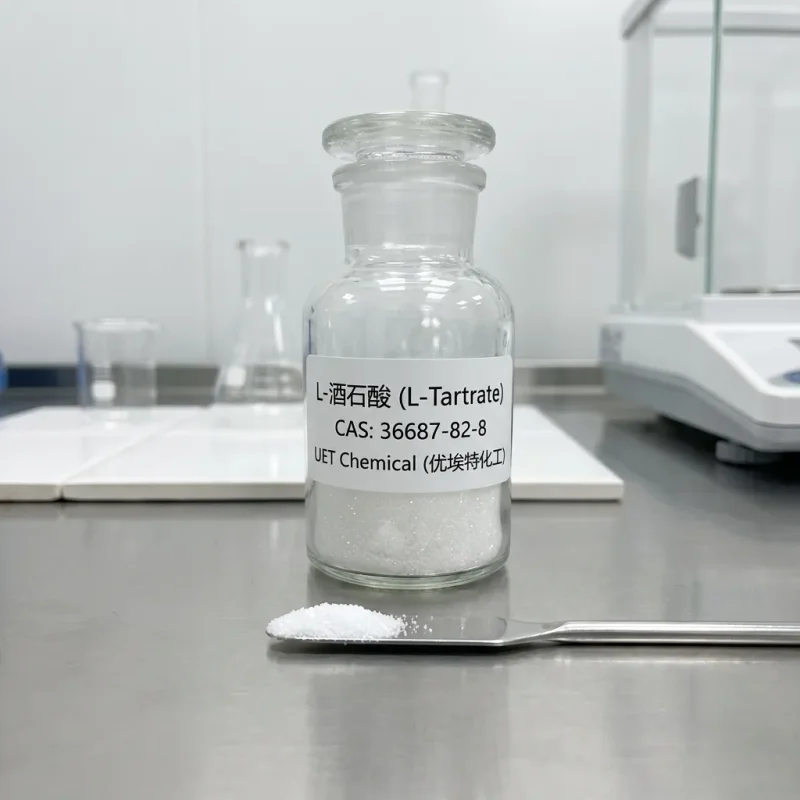
- Appearance: White crystalline powder or colorless crystals
- Assay: ≥99.0% (dry basis)
- Specific Rotation [α]D20: +12.0° to +13.0° (c = 20, water)
- Melting Point: 169–172 °C
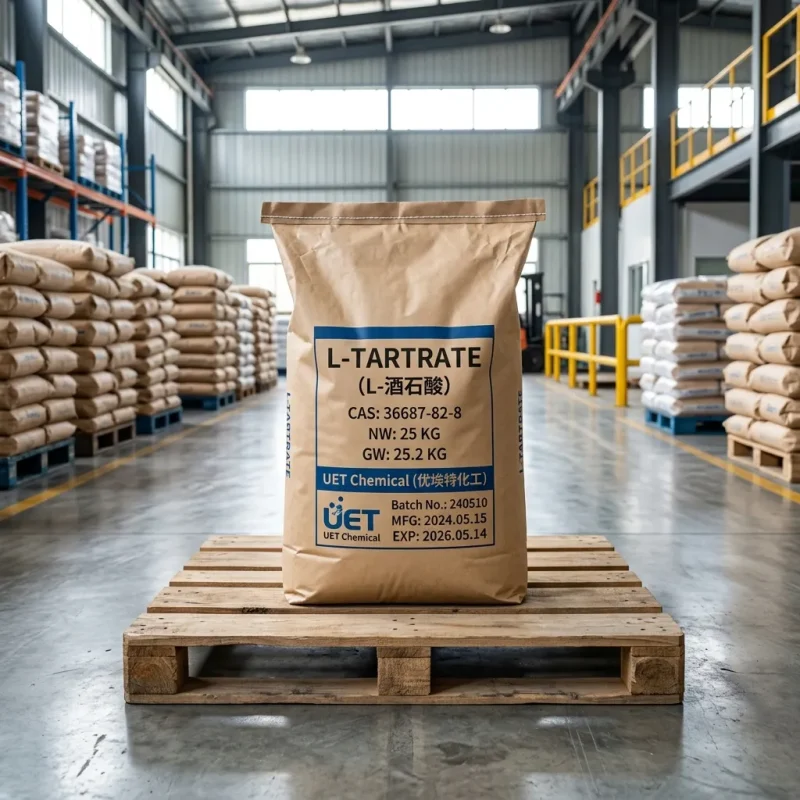
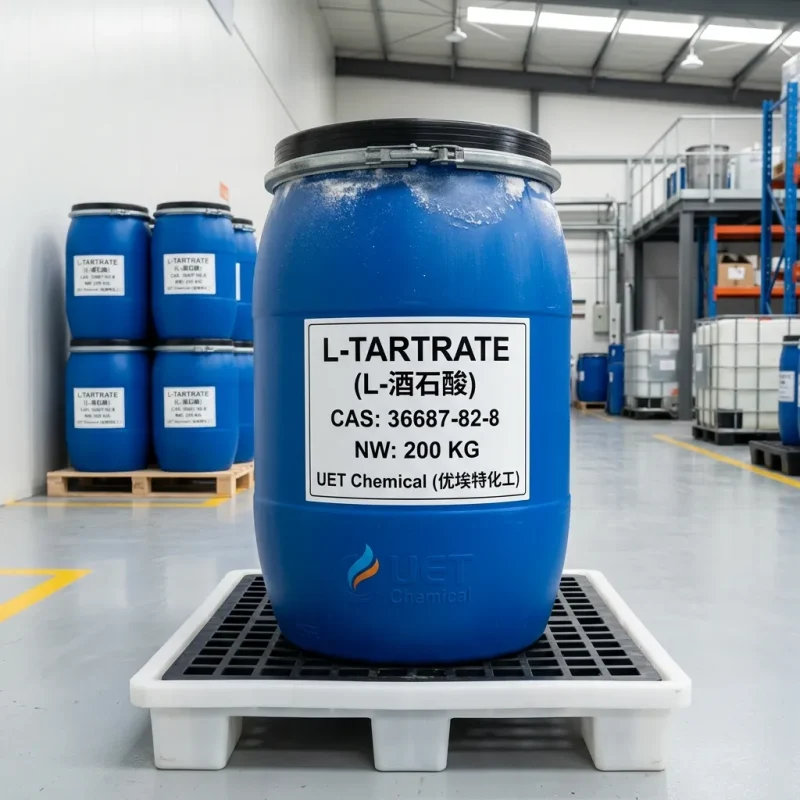
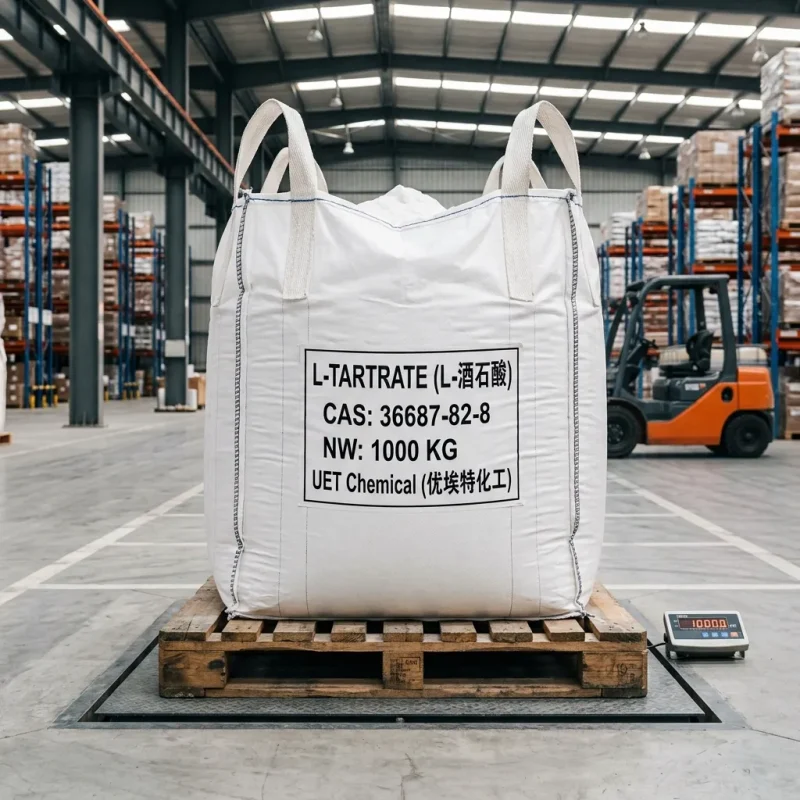
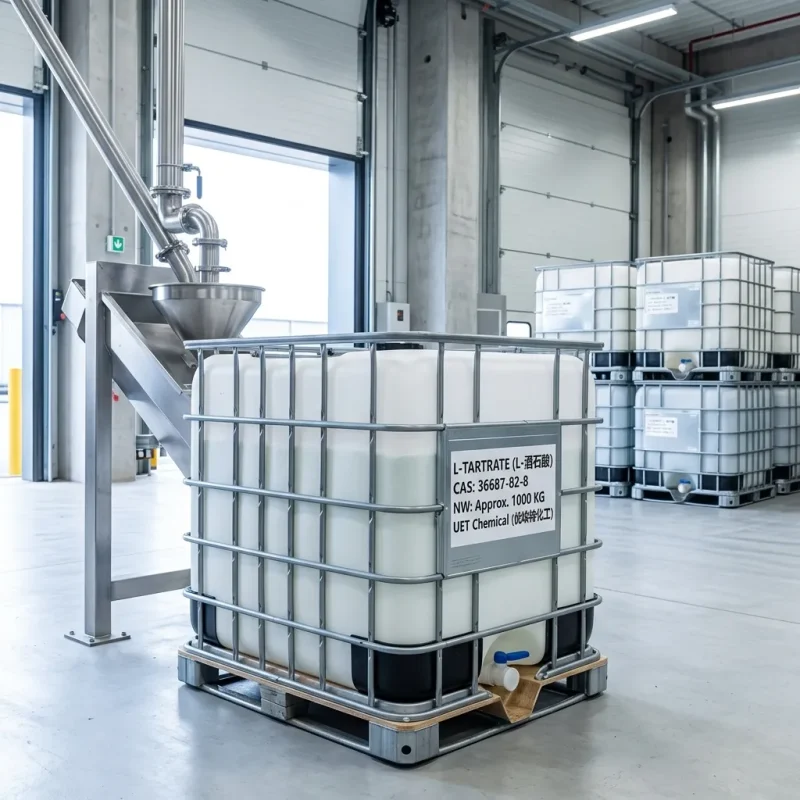
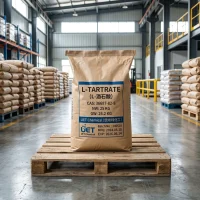
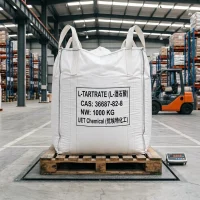
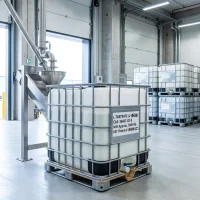
- Packaging: 25 kg kraft bag with PE liner / 1000 kg FIBC bulk bag. Custom packaging available upon request.
- Main Applications: Food acidulant (E334); bakery & effervescent systems; wine & beverage pH control; cosmetic AHA formulas; electroplating chelation
Introduction to L-Tartrate
L-Tartrate is a white crystalline powder, the natural (+)-isomer of tartaric acid traditionally recovered from wine-making by-products. Water solubility reaches ~139 g/100 mL at 20 °C—roughly seven times that of the DL racemate—making it the tartaric form of choice wherever fast cold-water dissolution matters. It is the only tartaric acid form authorised as a food additive in the EU (E334) and is listed in USP/FCC; food formulators run it as an acidulant and flavour enhancer, bakers pair it with bicarbonate as a fast leavening acid, and technical users exploit its α-hydroxy-carboxyl chelation.
The optical rotation of +12.0° to +13.0° doubles as a built-in identity test that separates it from the racemate in minutes. One practical caution: L-tartaric acid is a fast-acting leavening acid—it reacts with sodium bicarbonate almost immediately on wetting, so it suits batters that go straight to the oven but is the wrong choice for refrigerated or frozen doughs, where a slow acid such as SAPP should carry the oven spring. As a reducing organic acid, keep dry blends away from strong oxidisers.
Key Features of L-Tartrate
- Natural food-grade isomer. E334/USP/FCC compliant and the only tartaric form authorised for EU food use; recovered from wine by-products, supporting clean-label claims.
- Optically active QC marker. [α]D +12.0° to +13.0°; a polarimeter reading near 0° flags DL-racemate admixture within two minutes of sampling.
- High solubility, fast dissolution. ~139 g/100 mL at 20 °C versus ~20.6 g/100 mL for the DL form—charges directly into cold process water with no pre-heat and no undissolved residue.
- α-hydroxy-carboxyl chelation. Adjacent -OH/-COOH pairs lock Cu²⁺, Fe³⁺, and Sb³⁺ into five-membered rings—the basis of its use in electroplating baths, Tollens mirror silvering, and metal polishing.
- Sharp, clean sourness. Rapid-onset tartness that dissipates quickly, lifting fruit notes without a lingering aftertaste and synergising with both sweeteners and high-intensity sweetener blends.
- Fast-acting leavening. Releases the majority of CO₂ at the bowl stage, the classic choice for muffins, cakes, and ready-to-bake mixes that are baked immediately after mixing.
L-Tartrate Chemical & Physical Properties
| Property | Value |
|---|---|
| Molecular Formula | C₄H₆O₆ |
| Molecular Weight | 150.09 g/mol |
| Appearance | White crystalline powder or colorless crystals |
| Melting Point | 169–172 °C |
| Density (solid, 20 °C) | 1.76 g/cm³ |
| Solubility in Water | ~139 g/100 mL (20 °C) |
| Solubility (Other) | Soluble in ethanol and glycerol; practically insoluble in ether |
| Specific Rotation [α]D20 | +12.0° to +13.0° (c = 20, water) |
| pH (10% aq. solution) | ~2.2 |
| pKa (25 °C) | 2.98 / 4.34 |
| Loss on Drying | ≤0.5% (105 °C) |
Applications of L-Tartrate
Food and beverage acidulant (E334): Dosed at 0.1–0.5%. Sets pH below 4.6 for microbial stability in soft drinks, candies, jams, and wine-based products while sharpening fruit flavour; synergistic with ascorbic acid and sweetener systems.
Bakery leavening and effervescent systems: Blended with sodium bicarbonate as the fast-acting acid fraction; in effervescent tablets and powders at 1:1 to 1:2 molar ratio, where its high solubility drives rapid, complete CO₂ release on hydration.
Wine and beverage stabilisation: Adjusts titratable acidity and tartrate balance in wine and grape-based drinks; controlled tartrate addition reduces the risk of potassium bitartrate crystal deposition during cold storage.
Cosmetics and AHA formulations: Used at 0.1–0.5% to buffer peels and exfoliants to pH 3.5–5.5 and as a mild keratolytic α-hydroxy acid in leave-on and rinse-off skin care.
Metal finishing and chelation: Dosed at 5–20 g/L in electroplating and mirror-silvering baths; the α-hydroxy-carboxyl pair complexes copper, iron, and antimony at alkaline pH, refining deposit grain and preventing hydroxide sludge.
Storage & Safety Precautions for L-Tartrate
Storage conditions. Store in sealed, PE-lined kraft bags or FIBC on pallets at 5–30 °C, in a dry warehouse. The powder cakes slowly above 70% RH—cosmetic, not a purity loss. Keep away from strong oxidisers (peroxides, nitrates, chlorates): tartaric acid is a reducing organic acid and dry blends with oxidisers can react exothermically. Separate from alkalis and ammonia.
Safety and PPE. GHS: Skin Irrit. 2 (H315); Eye Irrit. 2 (H319). Wear an N95 dust mask, chemical-splash goggles, and nitrile gloves during bag emptying. Spills are non-toxic but acidic; sweep up dry, then wash the floor with water and neutralise traces with sodium bicarbonate.
Transport classification. Non-DG. Not regulated under IMDG, IATA, or ADR. Ship as standard general cargo. Ensure container liners are intact to prevent moisture ingress during ocean freight.
Practitioner note: For incoming QC, confirm identity by polarimetry (+12.0° to +13.0°, c = 20, water) plus melting point 169–172 °C; a rotation near 0° means the lot is DL racemate mislabelled as L. Cross-check assay by NaOH titration against the theoretical acid value of 748 mg KOH/g, and sample from the bag core.
L-Tartrate FAQ
Q: How do I confirm a delivered lot is the L-form (CAS 36687-82-8) and not the DL racemate?
A: Run polarimetry first: the L-form reads +12.0° to +13.0° (c = 20, water) while the DL racemate reads 0°. Cross-check melting point—L melts at 169–172 °C versus 206–212 °C for DL—and cold-water solubility (~139 versus ~20.6 g/100 mL at 20 °C). Two minutes on the polarimeter catches any mislabelled lot.
Q: Which leavening applications suit L-Tartaric Acid, and which do not?
A: It is a fast (nearly immediate) leavening acid: ideal for batters baked right after mixing and for effervescent systems needing instant CO₂. For refrigerated biscuits, frozen doughs, or batters with long holding times it releases gas too early—switch to a slow SAPP grade or an encapsulated acid for the oven spring.
Q: Is L-Tartrate approved for food use in the EU and US?
A: Yes. The L(+)-form is the tartaric acid authorised as food additive E334 in the EU and is monographed in USP/FCC; the DL racemate is not authorised for EU food use. Specify L-grade for any food, beverage, or pharma application and verify the rotation window on the COA.
Related products
Manufacturer & Exporter Since 2006
Get Tailored Chemical Raw Material Solutions — Reply Within 1 Hour
Factory-direct pricing, stable high-purity supply and complete compliance documentation for your industrial formulations.
- 1000+Products
- 200+QC Protocols
- 7–15Days Delivery
- Factory-Direct Pricing
- COA / TDS / SDS Included
- Free Samples for Testing
- 40+ Export Countries
Request a Free Quote
Our engineers reply within 1 hour during GMT+8 business hours.
Please include in your inquiry:
- Product name or CAS number
- Required quantity
- Destination country or port
- Preferred packaging