
Calcium Glycerophosphate CAS 27214-00-2
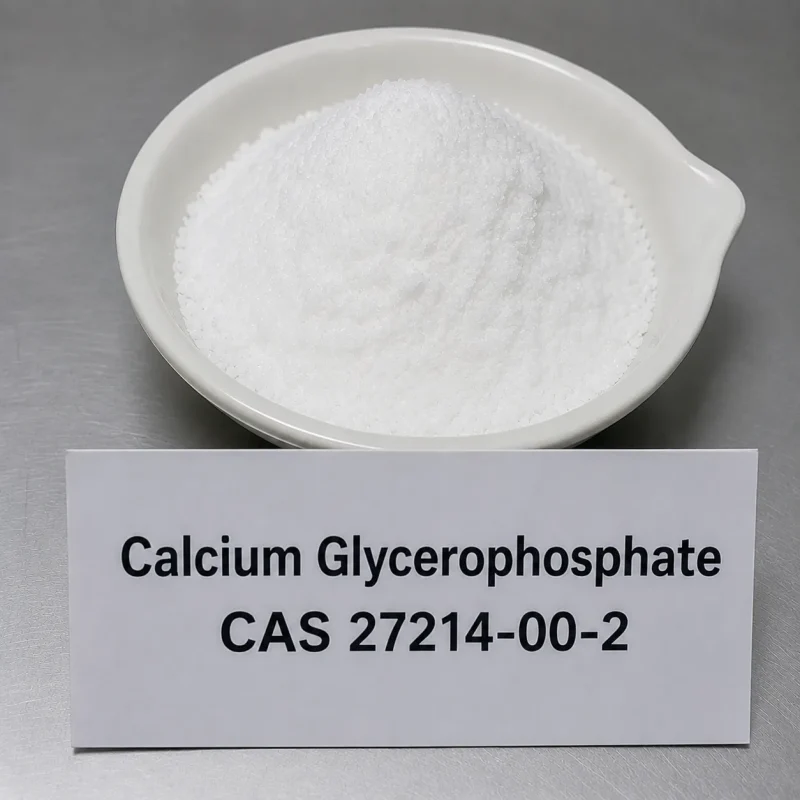
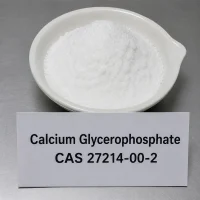
Calcium Glycerophosphate is the organic calcium salt of glycerophosphoric acid—one Ca²⁺ bound to a glycerol-phosphate ester. White crystalline powder, ≥98.0% purity. Supplies bioavailable calcium plus organic phosphorus in food fortification, dietary supplements, and remineralizing toothpastes; a permitted calcium source under EU Directive 2002/46/EC. Each shipment includes COA, TDS, and SDS.
- CAS No.: 27214-00-2
- Synonyms: Calcium glycerophosphate; Glycerophosphoric acid calcium salt
- EINECS: 248-306-5
- Molecular Formula: C₃H₇CaO₆P
- Molecular Weight: 210.14 g/mol
- Appearance: White crystalline powder
- Purity: ≥98.0%
- Calcium Content: 18.5–19.5%
- Phosphorus Content: 14.5–15.5%
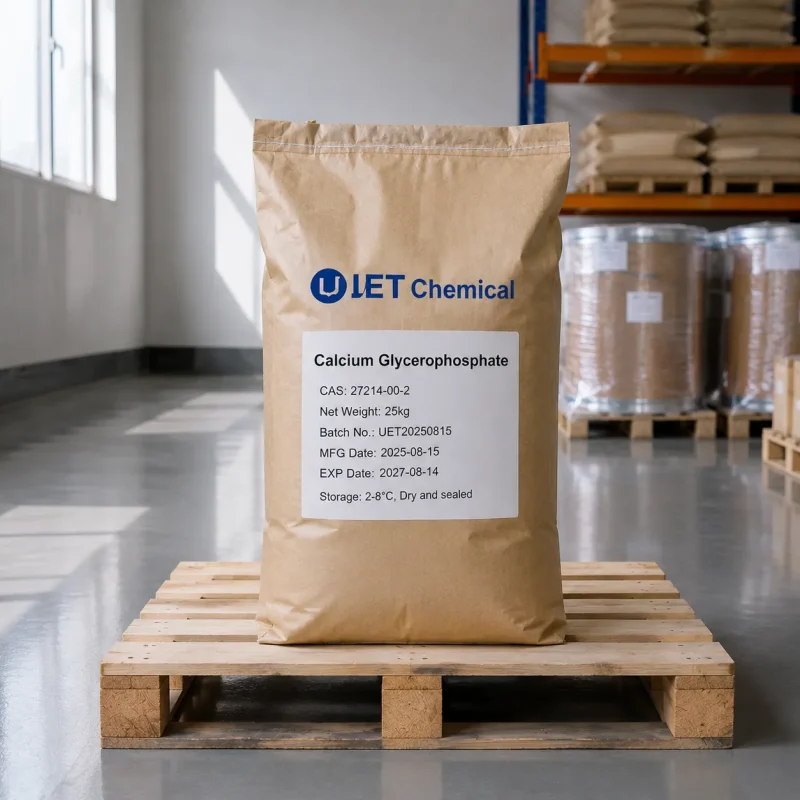
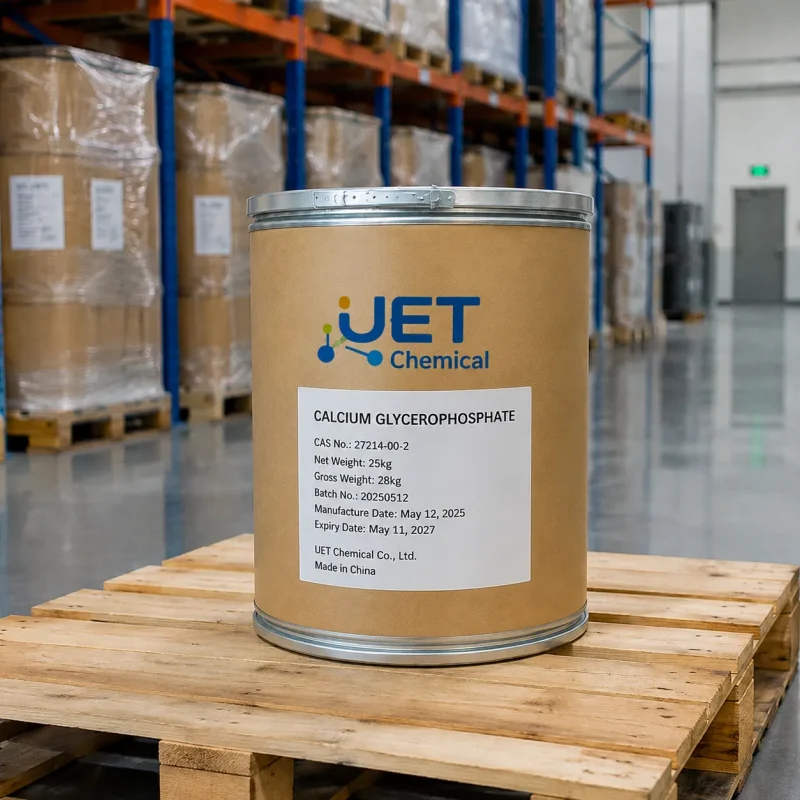
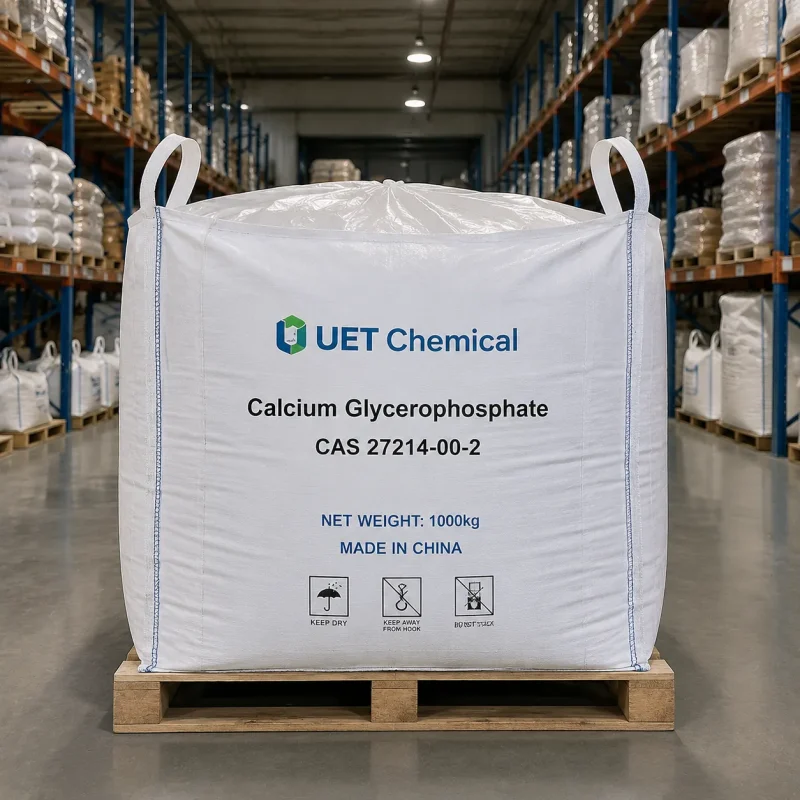
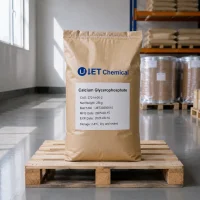
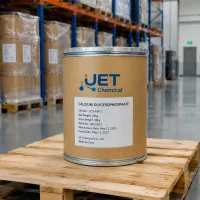
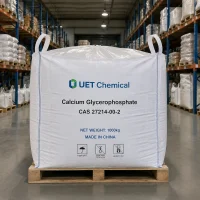
- Packaging: 25 kg kraft bag with PE liner / 1000 kg FIBC bulk bag. Custom packaging available upon request.
- Main Applications: Food fortification; dietary supplements; remineralizing toothpaste; feed additive
Introduction to Calcium Glycerophosphate
Calcium Glycerophosphate is a white crystalline powder, the calcium salt of glycerophosphoric acid in which Ca²⁺ pairs with a glycerol-bound phosphate ester (α- and β-isomer mixture). The ester-linked organic phosphate delivers calcium and phosphorus in one molecule, with water solubility of ~1.5–3 g/100 mL at 20 °C—enough to fortify beverages and dairy without gritty sediment. Food technologists use it as a calcium fortificant and firming agent; oral-care formulators use it as a remineralizing active in toothpaste.
Because the phosphate is ester-bonded to glycerol, the salt releases Ca²⁺ gradually and does not cross-link casein in UHT milk the way orthophosphates do. One practical caution: the C–O–P ester bond hydrolyses under prolonged strong acid (pH <3) or strong alkali (pH >10) above 80 °C, liberating free glycerol and orthophosphate; keep fortified acidic drinks below 60 °C during pasteurisation, or dose after cooling.
Key Features of Calcium Glycerophosphate
- Dual calcium + organic phosphorus delivery. One molecule supplies ~19% Ca and ~15% P; the glycerophosphate anion is absorbed through the organic-phosphate pathway, supporting bone mineralisation without the insolubility of tricalcium phosphate.
- Neutral sensory profile. Unlike calcium chloride (bitter) or calcium carbonate (chalky, CO₂ gassing in acid), it adds no off-taste and no gas, leaving beverage flavour and carbonation intact.
- Protein-compatible fortification. The ester-bound phosphate does not cross-link casein at neutral pH, avoiding the coagulation and sediment orthophosphate salts cause in UHT and ESL milk.
- Enamel remineralisation active. At 1–5% in toothpaste, Ca²⁺ and glycerophosphate ions redeposit into hydroxyapatite-deficient enamel lesions, reducing dentine sensitivity over 2–4 weeks of brushing.
- Free-flowing, low-hygroscopicity powder. It stays free-flowing at 60% RH, simplifying dry-blend sachets, tableting, and capsule filling versus hydrate-forming calcium salts.
Calcium Glycerophosphate Chemical & Physical Properties
| Property | Value |
|---|---|
| Molecular Formula | C₃H₇CaO₆P |
| Molecular Weight | 210.14 g/mol |
| Appearance | White crystalline powder |
| Calcium Content | 18.5–19.5% (dry basis) |
| Phosphorus Content | 14.5–15.5% (dry basis) |
| Solubility in Water | ~1.5–3 g/100 mL (20 °C); soluble in dilute acids |
| pH (5% aq. dispersion) | 7.5–9.5 |
| Loss on Drying | ≤12.0% (105 °C) |
| Heavy Metals (as Pb) | ≤10 ppm |
Applications of Calcium Glycerophosphate
Food fortification (dairy, beverages, infant nutrition): Dosed to deliver 100–300 mg Ca per serving (0.5–2 g per 100 g). The organic phosphate stays dispersed in neutral protein systems, and the neutral taste avoids the chalky note of insoluble calcium phosphates in UHT milk and ready-to-drink beverages.
Dietary supplements (tablets, capsules, sachets): Used at 250–1000 mg per dose. The powder blends freely in dry mixes, and—unlike calcium carbonate—releases no CO₂ in acidic sachet formulas, preventing pack swelling and burst seams.
Remineralizing toothpaste and mouthwash: Formulated at 1–5%. Ca²⁺ and glycerophosphate ions redeposit into early enamel lesions as calcium phosphate phases. In fluoride-free systems it runs alone; in fluoridated formulas, stabilise the phase split to avoid CaF₂ precipitation on storage.
Feed and pet nutrition: Added at 5–10 kg per tonne of feed as a combined Ca/P source. The organic phosphorus fraction reduces reliance on inorganic rock phosphate, lowering total phosphorus excretion in manure.
Storage & Safety Precautions for Calcium Glycerophosphate
Storage conditions. Store in sealed, PE-lined kraft bags or fibre drums at 5–25 °C, dry and away from direct sun; pharma-grade lots follow the 2–8 °C label instruction for long-term hold. Keep away from strong mineral acids and strong alkalis, which cleave the phosphate ester bond at elevated temperature. Reseal opened bags immediately—moisture uptake cakes the powder over weeks at >70% RH.
Safety and PPE. GHS: Not classified as hazardous. Non-toxic and non-irritating. Wear an N95 dust mask and safety glasses during bag emptying to avoid nuisance dust inhalation. Spills: sweep up dry, then wash the floor with water.
Transport classification. Non-DG. Not regulated under IMDG, IATA, or ADR. Ship as standard general cargo. Ensure container liners are intact to prevent moisture ingress during ocean freight.
Practitioner note: For incoming QC, titrate calcium with 0.05 M EDTA at pH ≥12 using calcon-carboxylic acid indicator (18.5–19.5% Ca), and determine phosphorus by molybdenum-blue spectrophotometry at 820 nm after perchloric digestion (14.5–15.5% P). A Ca:P mass ratio near 1.27 confirms salt integrity; a lower ratio flags free-orthophosphate adulteration. The α:β isomer ratio drifts between batches without affecting Ca/P values.
Calcium Glycerophosphate FAQ
Q: How do I verify the calcium and phosphorus content of Calcium Glycerophosphate (CAS 27214-00-2)?
A: Run two assays. Calcium: EDTA titration at pH ≥12 with calcon-carboxylic acid indicator, target 18.5–19.5%. Phosphorus: molybdenum-blue at 820 nm after perchloric digestion, target 14.5–15.5%. Check the Ca:P mass ratio (~1.27) to confirm the ester salt is intact, and cap free glycerol at ≤1% by periodate titration to detect hydrolysis.
Q: Why choose it over tricalcium phosphate in beverages?
A: Solubility and taste. Tricalcium phosphate dissolves at ~0.002 g/100 mL and settles into a hard sediment; calcium glycerophosphate dissolves at 1.5–3 g/100 mL and stays dispersed. It also carries no chalky mouthfeel and releases no CO₂ in acidic systems, so flavour, carbonation, and pack integrity stay intact. Shake-stable dosing: 0.5–1.5 g/L.
Q: Will it coagulate UHT milk like orthophosphate salts do?
A: No. Orthophosphates cross-link casein micelles and cause age gelation; the phosphate here is ester-bonded to glycerol, so free PO₄³⁻ stays negligible. At 0.05–0.15% fortification levels, 30-day shelf tests at 25 °C show no coagulation or sediment. Confirm with a pilot UHT run and a 4-week stability check before scaling.
Related products
Manufacturer & Exporter Since 2006
Get Tailored Chemical Raw Material Solutions — Reply Within 1 Hour
Factory-direct pricing, stable high-purity supply and complete compliance documentation for your industrial formulations.
- 1000+Products
- 200+QC Protocols
- 7–15Days Delivery
- Factory-Direct Pricing
- COA / TDS / SDS Included
- Free Samples for Testing
- 40+ Export Countries
Request a Free Quote
Our engineers reply within 1 hour during GMT+8 business hours.
Please include in your inquiry:
- Product name or CAS number
- Required quantity
- Destination country or port
- Preferred packaging