
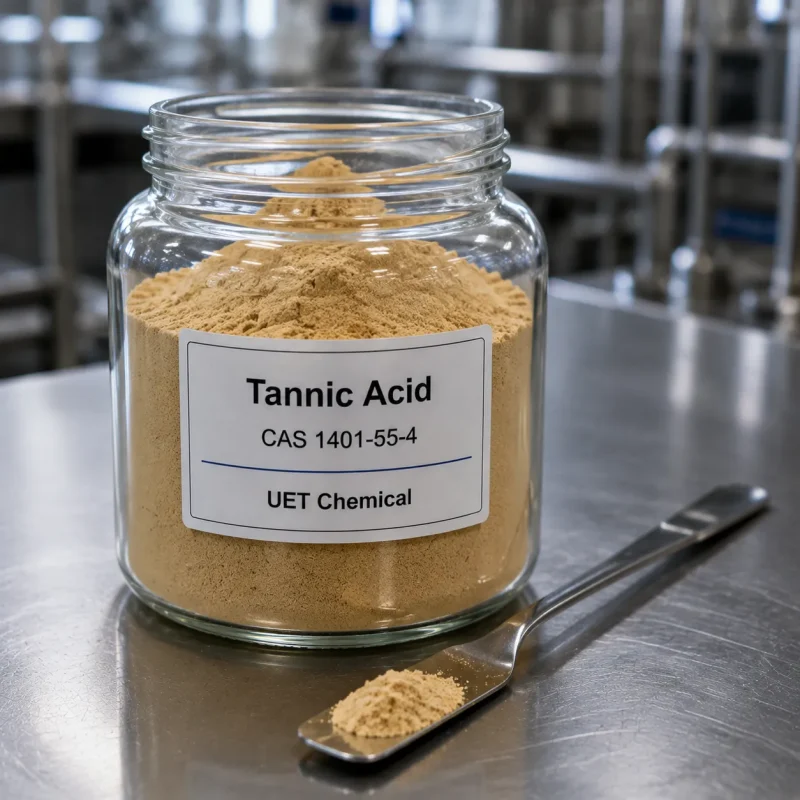
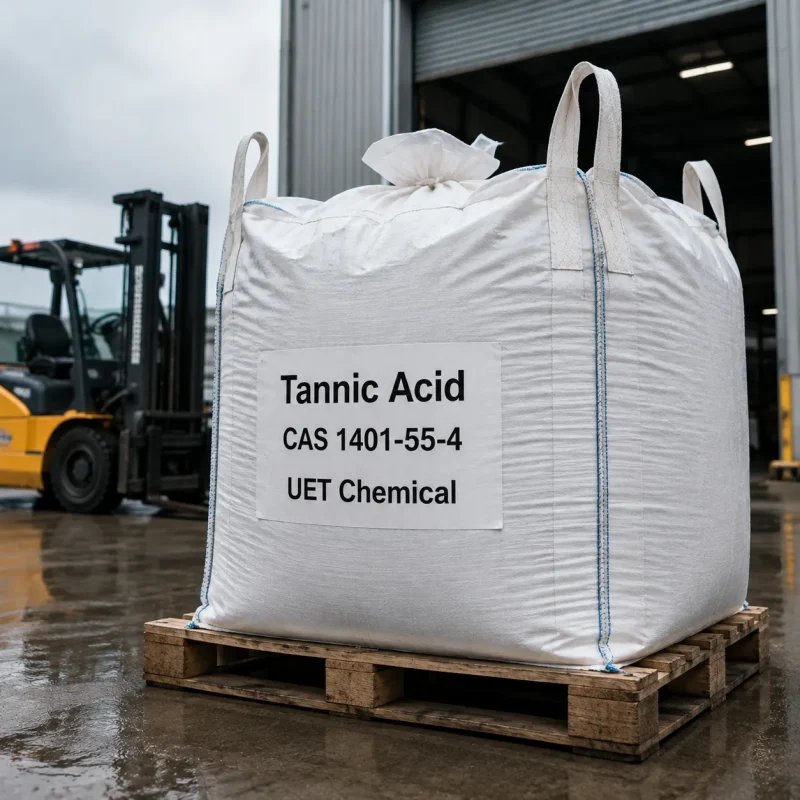
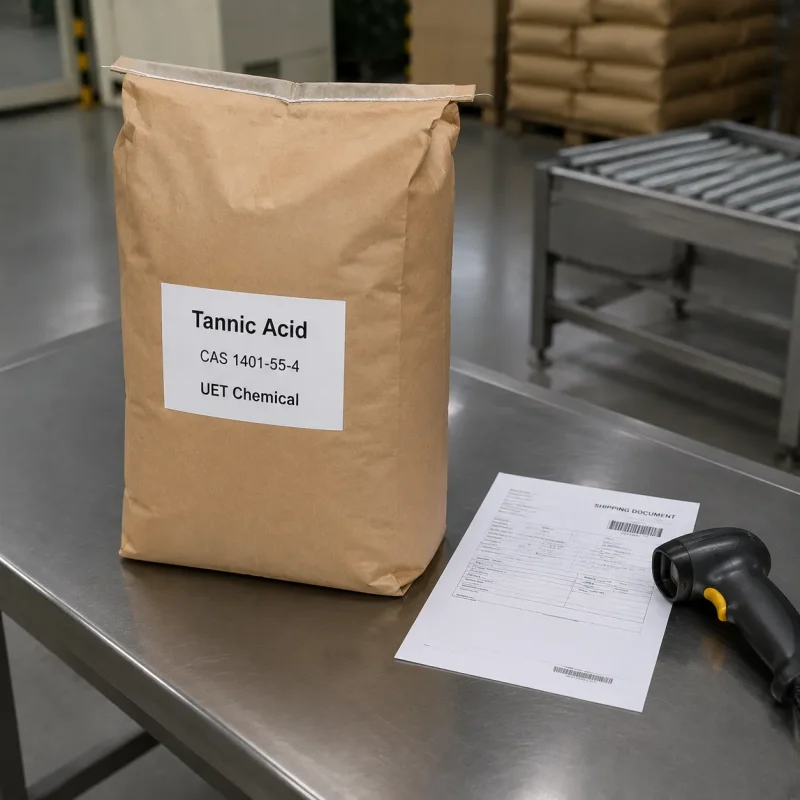
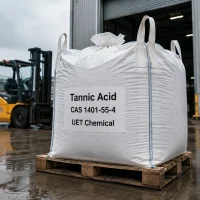
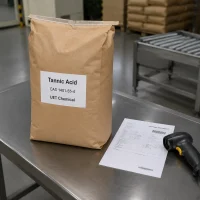
Tannic Acid CAS 1401-55-4
Tannic Acid is a complex polyphenolic compound that solves protein haze, metal-catalyzed oxidation, and collagen stabilization challenges in beverage, leather, and water treatment industries. Formulators rely on it for beer and wine clarification, vegetable leather tanning, and boiler scale inhibition. UETChem supplies this product with strict control over tannin content, moisture, and insolubles, ensuring maximum precipitation efficiency and brilliant solubility. Each shipment includes COA, TDS, SDS.
- CAS No: 1401-55-4
- Synonyms: Tannin; Gallotannic acid; Digallic acid
- EINECS: 215-753-2
- Molecular Formula: C76H52O46
- Molecular Weight: 1701.20 g/mol
- Appearance: Light yellow to brownish amorphous powder
- Tannin Content: 95.0% min
- Moisture: 5.0% max
- Insolubles: 0.5% max
- Packaging: 25 kg (55 lb) kraft bag, 200 kg (441 lb) fiber drum. Custom packaging available upon request.
- Main Applications: Beverage clarification, leather tanning, boiler water treatment, pharmaceutical astringents, ink manufacturing
Introduction to Tannic Acid
Tannic Acid is a naturally occurring polyphenol consisting of a central glucose molecule esterified with multiple gallic acid units. The molecular architecture provides a dense array of ortho-phenolic hydroxyl groups, endowing the material with powerful hydrogen-bonding capabilities and metal-chelating properties. At room temperature, the compound presents as a light yellow to brownish amorphous powder with a faint, characteristic odor and a highly astringent taste.
The material dissolves readily in water, ethanol, and acetone, forming slightly acidic solutions. Industrial processing facilities consume this intermediate to precipitate unwanted proteins, crosslink collagen matrices, and scavenge dissolved oxygen in high-pressure systems. The powder maintains chemical stability in dry, opaque environments but undergoes gradual darkening when exposed to light, oxygen, or alkaline conditions.
Key Features of Tannic Acid
- Polyphenolic architecture: The abundant phenolic hydroxyl groups form robust hydrogen bond networks with proteins, alkaloids, and heavy metal ions.
- Metal chelation: Adjacent ortho-hydroxyl configurations strongly bind transition metals like iron and copper, interrupting free-radical chain reactions.
- Astringency: Rapidly precipitates mucosal surface proteins, producing a distinct puckering sensation utilized in pharmaceutical and cosmetic formulations.
Tannic Acid Chemical & Physical Properties
| Property | Value |
|---|---|
| Molecular Formula | C76H52O46 |
| Molecular Weight | 1701.20 g/mol |
| Appearance | Light yellow to brownish amorphous powder |
| Solubility | Highly soluble in water, ethanol, acetone |
| pH (1% aqueous) | 3.0 – 4.0 |
| Loss on Drying | 5.0% max |
| Ash Content | 0.5% max |
Applications of Tannic Acid
Beverage clarification: Dosed in trace amounts into beer, wine, and fruit juices to precipitate haze-forming proteins and polyphenols. The resulting insoluble complexes are easily filtered out, leaving a brilliantly clear liquid. Beverage engineers often adjust the mash pH using Citric Acid to optimize the precipitation kinetics and prevent over-fining.
Leather tanning: Penetrates raw animal hides to form stable crosslinks with collagen fibers. This vegetable tanning process transforms perishable skin into durable, rot-resistant leather. Tanners frequently combine the polyphenol with Basic Chromium Sulfate in combination tanning protocols to enhance the softness and thermal stability of the finished hide.
Boiler water treatment: Functions as an oxygen scavenger and anti-scalant in high-pressure industrial boilers. The molecule reduces dissolved oxygen while sequestering hardness ions. Plant operators blend it with synthetic polymers like Polyepoxysuccinic Acid (PESA) to prevent calcium carbonate and sulfate scale deposition on heat exchange surfaces.
Cosmetics and pharmaceuticals: Incorporated into topical creams and mouthwashes as a natural astringent and antioxidant. Formulators pair the extract with macromolecular hydrators like Sodium Hyaluronate to balance the tightening effect while maintaining deep epidermal hydration.
Storage & Safety Precautions for Tannic Acid
- Light and oxidation control: Store in tightly sealed, opaque fiber drums or foil-lined bags away from direct sunlight. The phenolic structure is highly susceptible to photo-oxidation, which permanently darkens the powder and reduces its active tannin content.
- Moisture management: The powder is highly hygroscopic. Facilities run industrial dehumidifiers in the warehouse to maintain low ambient humidity, preventing the material from caking into un-millable blocks.
- Handling and PPE: The fine dust is a respiratory and mucosal irritant. Wear N95 respirators, safety goggles, and nitrile gloves during dry blending and reactor charging operations.
- Field note: When preparing aqueous stock solutions, dissolve the powder in warm water (40 °C / 104 °F) under moderate agitation. Dumping the powder into cold, stagnant water creates sticky, gelatinous lumps that take hours to disperse completely.
Tannic Acid FAQ
Q: How does Tannic Acid clarify beer and wine?
A: Tannic Acid acts as a fining agent by forming strong hydrogen bonds with haze-forming proteins in beer and wine. This interaction causes the proteins to precipitate out of the suspension, allowing them to be filtered away, resulting in a brilliantly clear and stable final beverage.
Q: Why is Tannic Acid used in leather tanning?
A: Tannic Acid penetrates raw animal hides and forms stable crosslinks with collagen fibers through multiple hydrogen bonds. This vegetable tanning process transforms perishable skin into durable, flexible, and rot-resistant leather, often combined with mineral tanning agents for enhanced softness.
Q: Does Tannic Acid act as an antioxidant in formulations?
A: Yes, Tannic Acid is a potent polyphenolic antioxidant. Its numerous adjacent phenolic hydroxyl groups readily donate hydrogen atoms to neutralize free radicals and chelate pro-oxidant transition metals like iron and copper, protecting sensitive active ingredients from oxidative degradation.
Related products
Manufacturer & Exporter Since 2006
Get Tailored Chemical Raw Material Solutions — Reply Within 1 Hour
Factory-direct pricing, stable high-purity supply and complete compliance documentation for your industrial formulations.
- 1000+Products
- 200+QC Protocols
- 7–15Days Delivery
- Factory-Direct Pricing
- COA / TDS / SDS Included
- Free Samples for Testing
- 40+ Export Countries
Request a Free Quote
Our engineers reply within 1 hour during GMT+8 business hours.
Please include in your inquiry:
- Product name or CAS number
- Required quantity
- Destination country or port
- Preferred packaging