
Fungal Alpha-Amylase CAS 9001-19-8
Fungal Alpha-Amylase is a fungal-derived endo-carbohydrase that catalyzes hydrolysis of α-1,4 glucosidic bonds in starch. It is widely applied in baking, starch saccharification, brewing and food processing to improve conversion efficiency, optimize product texture and boost process yield. UETChem supplies food-grade fungal α-amylase with standardized enzyme activity for stable processing performance. Each shipment includes COA, TDS, SDS.
- CAS No: 9001-19-8
- Synonyms: Fungal α-Amylase; 1,4-α-D-Glucan glucanohydrolase; Alpha-amylase from Aspergillus oryzae; Fungal diastase
- EINECS: 232-565-6
- Production Source: Submerged fermentation of Aspergillus oryzae
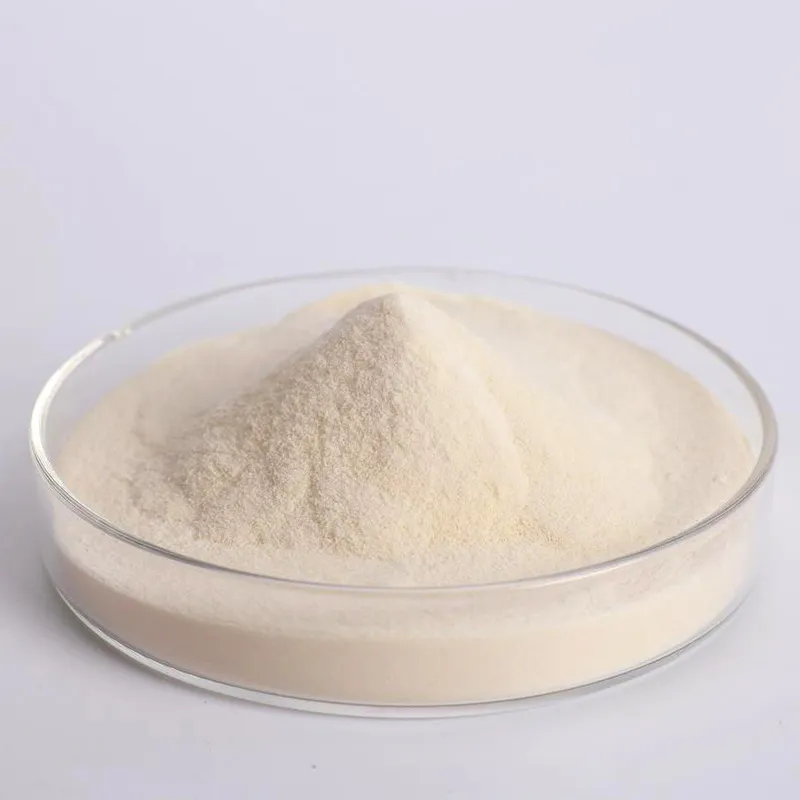
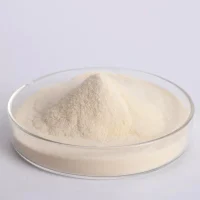
- Appearance: Light yellow to tan powder / light brown liquid
- Enzyme Activity: 2,000 – 100,000 U/g (customizable)
- Loss on Drying: 8.0% max (powder grade)
- Optimum pH: 4.5 – 6.5
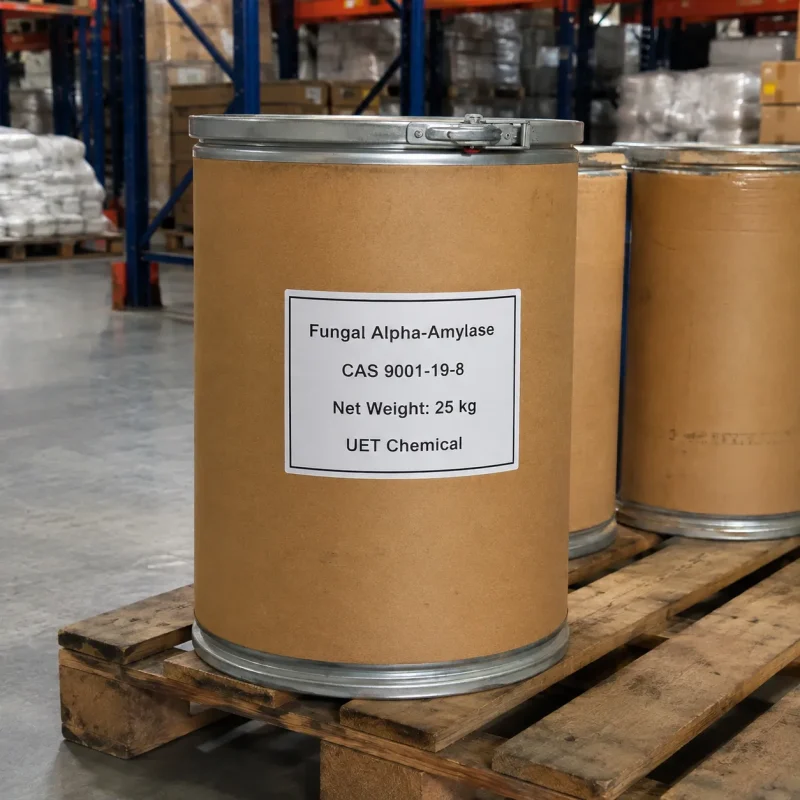
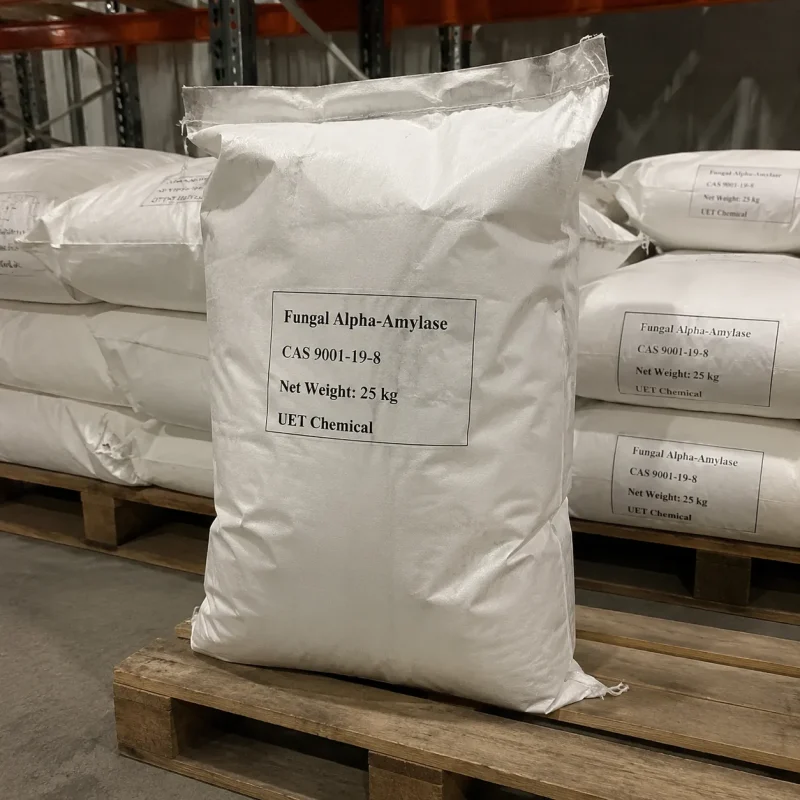
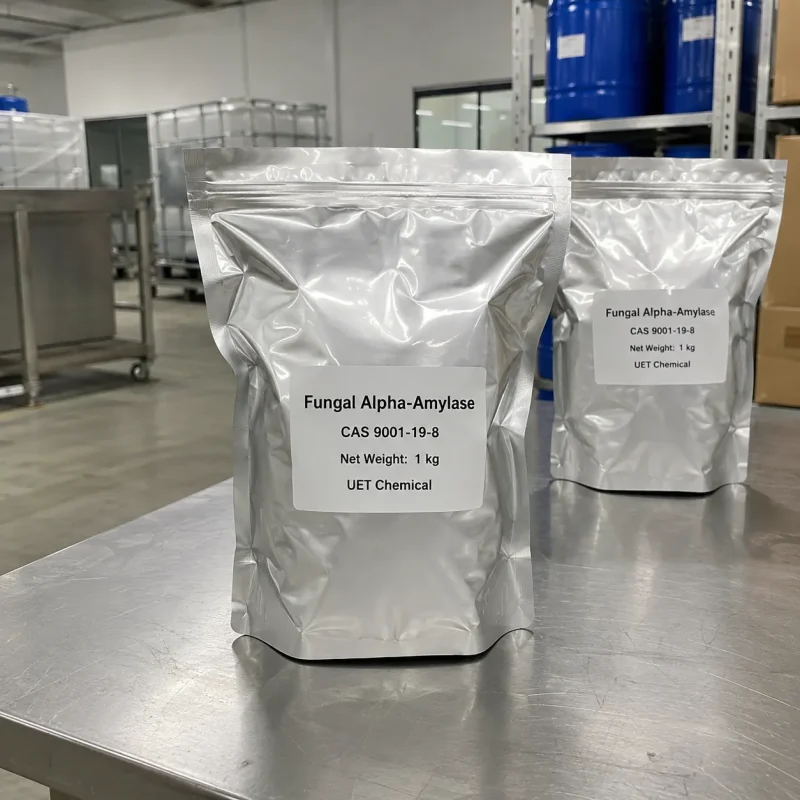
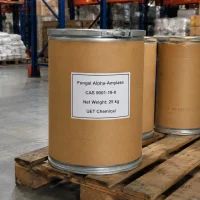
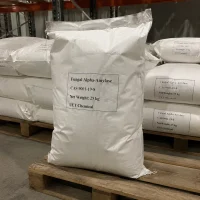
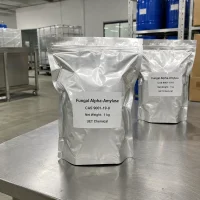
- Packaging: 1 kg foil bag, 25 kg fiber drum. Custom packaging available upon request.
- Main Applications: Baking improvers, starch saccharification, brewing fermentation, food texture modification
Introduction to Fungal Alpha-Amylase
Fungal Alpha-Amylase is an endo-acting amylase produced via controlled submerged fermentation of selected Aspergillus oryzae strains. It specifically cleaves internal α-1,4 glucosidic linkages in amylose and amylopectin chains, generating a mixture of dextrins, maltose and small amounts of glucose. The enzyme delivers high catalytic efficiency under mildly acidic and moderate temperature conditions, matching most food and industrial starch processing workflows.
Powder grades are formulated with food-grade carriers for good flowability and storage stability. Liquid grades are stabilized with glycerol and mild preservatives for accurate dosing and direct addition to process streams. Both forms comply with food additive purity standards for direct use in edible product manufacturing.
Fungal Alpha-Amylase Chemical & Physical Properties
| Property | Value |
|---|---|
| Enzyme Class | Hydrolase (α-1,4 glucan glucanohydrolase) |
| Production Source | Aspergillus oryzae fermentation |
| Appearance | Light yellow to tan powder / light brown liquid |
| Optimum Temperature | 50 – 60 °C |
| Optimum pH Range | 4.5 – 6.5 |
| Enzyme Activity | 2,000 – 100,000 U/g (customizable) |
| Loss on Drying (Powder) | 8.0% max |
| Solubility | Freely soluble in water; insoluble in organic solvents |
Applications of Fungal Alpha-Amylase
Baking and flour improvers: Added to bread and pastry doughs to break down starch granules, reducing dough viscosity and improving gas retention during proofing. This results in increased loaf volume, softer crumb structure, more uniform browning and extended shelf life by slowing starch retrogradation.
Starch saccharification and syrup production: Used in the primary hydrolysis stage to break down gelatinized starch into maltodextrins and maltose. It works sequentially with glucoamylases to produce high-glucose syrups, malt syrups and starch sweeteners for beverage, confectionery and dairy industries.
Brewing and alcohol fermentation: Added to grain mashing processes to convert starch into fermentable sugars. It increases sugar yield, accelerates fermentation rate and improves alcohol production efficiency in beer, distilled spirit and fuel ethanol manufacturing.
Other food and industrial uses: Applied in fruit juice processing to reduce starch-induced haze, in cereal processing to modify texture, and in textile desizing to remove starch sizing from fabrics under mild low-temperature conditions.
Storage & Safety Precautions for Fungal Alpha-Amylase
- Store in tightly sealed containers in a cool, dry warehouse below 25 °C. Keep away from direct sunlight, high humidity and heat sources to prevent enzyme denaturation and activity loss. Refrigeration is recommended for long-term storage of liquid grades.
- Wear dust masks, safety goggles and nitrile gloves during bulk powder handling. Avoid inhalation of enzyme dust, which may cause respiratory irritation or allergic reactions in sensitive individuals. Wash hands thoroughly after handling.
- Keep separated from strong acids, strong bases and oxidizing agents. Extended exposure to temperatures above 70 °C causes irreversible protein denaturation and permanent loss of catalytic activity.
Fungal Alpha-Amylase FAQ
Q: How does Fungal Alpha-Amylase work in starch processing?
A: It acts as an endo-enzyme that cleaves internal α-1,4 glucosidic bonds in starch molecules, breaking long chains into dextrins, maltose and small amounts of glucose to reduce viscosity and increase fermentable sugar content.
Q: What benefits does it bring to baking applications?
A: It hydrolyzes starch in flour to soften dough and improve gas retention during proofing, delivering larger loaf volume, softer crumb, even browning and extended freshness by slowing starch retrogradation.
Q: What is the proper way to store Fungal Alpha-Amylase?
A: Store sealed in a cool, dry place below 25 °C, away from heat and sunlight. Powder grades stay stable for 12 months; liquid grades should be refrigerated for maximum activity retention.
Related products
Manufacturer & Exporter Since 2006
Get Tailored Chemical Raw Material Solutions — Reply Within 1 Hour
Factory-direct pricing, stable high-purity supply and complete compliance documentation for your industrial formulations.
- 1000+Products
- 200+QC Protocols
- 7–15Days Delivery
- Factory-Direct Pricing
- COA / TDS / SDS Included
- Free Samples for Testing
- 40+ Export Countries
Request a Free Quote
Our engineers reply within 1 hour during GMT+8 business hours.
Please include in your inquiry:
- Product name or CAS number
- Required quantity
- Destination country or port
- Preferred packaging