
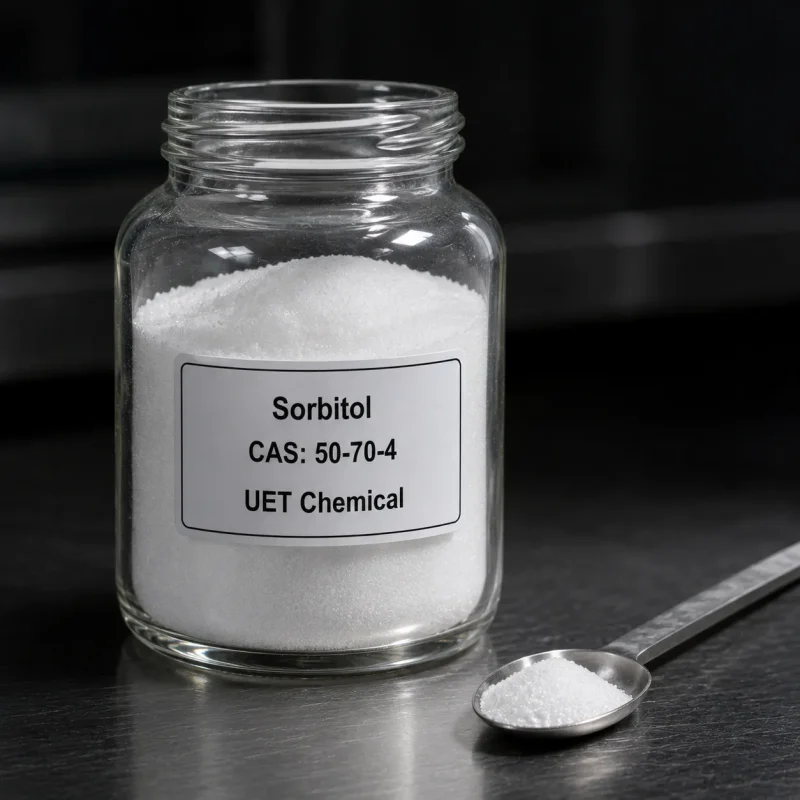
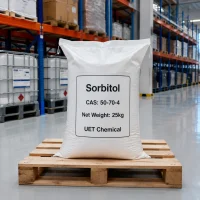
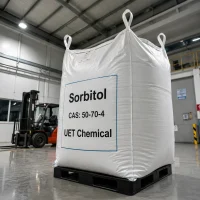
Sorbitol CAS 50-70-4
Sorbitol is a six-carbon sugar alcohol (polyol) that solves moisture retention, crystallization control, and non-enzymatic browning challenges in food, cosmetic, and pharmaceutical formulations. Formulators rely on it for sugar-free confectionery, toothpaste humectants, and Vitamin C synthesis. UETChem supplies this product with strict control over reducing sugars, heavy metals, and clarity, ensuring excellent solubility, a distinct cooling mouthfeel, and zero Maillard browning during high-heat processing. Each shipment includes COA, TDS, SDS.
- CAS No: 50-70-4
- Synonyms: D-Glucitol; D-Sorbitol; Hexahydric alcohol
- EINECS: 200-061-5
- Molecular Formula: C6H14O6
- Molecular Weight: 182.17 g/mol
- Appearance: White crystalline powder or 70% clear viscous syrup
- Assay (Dry basis): 98.0% min (Powder) / 70.0% min (Syrup)
- Reducing Sugars: 0.2% max
- Heavy Metals (Pb): 1 ppm max
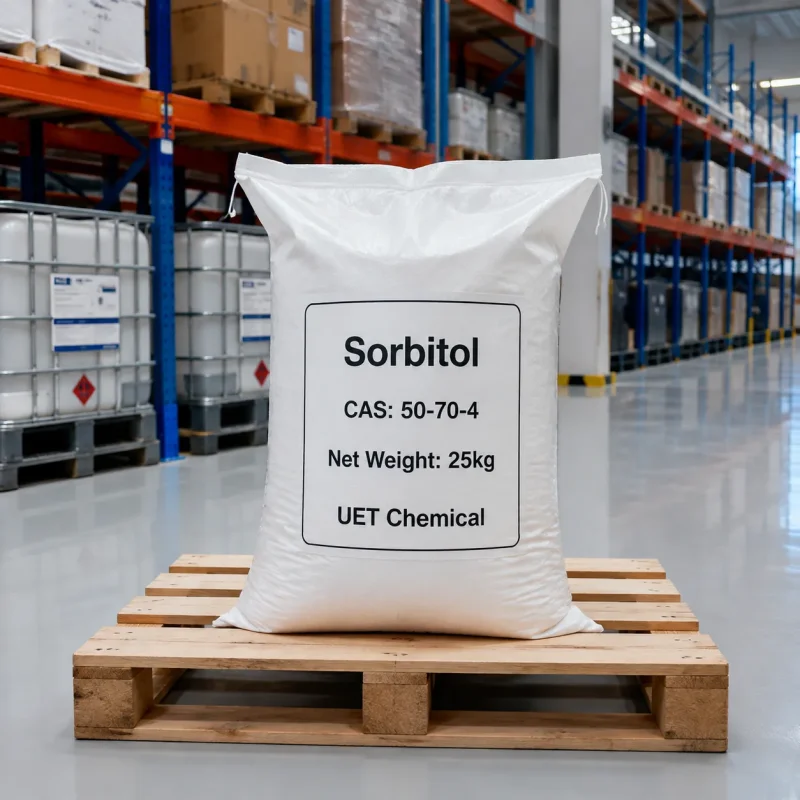
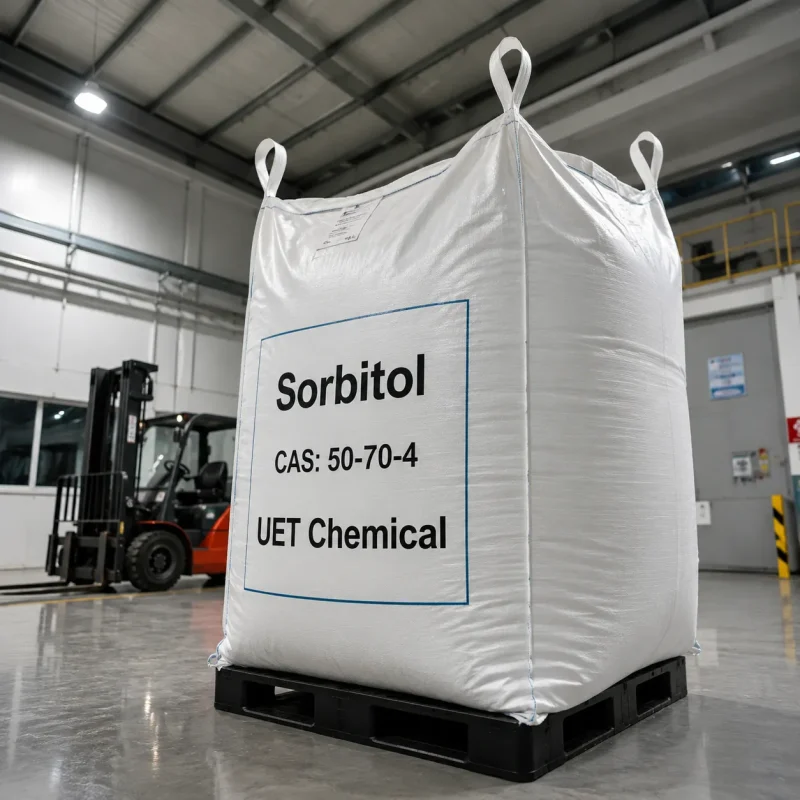
- Packaging: 25 kg (55 lb) kraft bag, 1000 kg (2205 lb) jumbo bag, or 200 kg HDPE drum (syrup). Custom packaging available upon request.
- Main Applications: Sugar-free foods, cosmetic humectants, pharmaceutical excipients, ascorbic acid precursor, surfactant intermediates
Introduction to Sorbitol
Sorbitol is a six-carbon sugar alcohol synthesized via the catalytic hydrogenation of glucose. The molecular structure features a linear aliphatic chain with six hydroxyl groups attached to the carbon backbone. This dense arrangement of hydroxyl functionalities dictates the material’s physical behavior, granting it exceptional water-binding capacity and high solubility in aqueous systems.
The compound is commercially available as a white, odorless crystalline powder or a clear, viscous 70% aqueous syrup. It dissolves readily in water, absorbing heat during the dissolution process to create a distinct endothermic cooling sensation. Industrial facilities consume this polyol to modify the rheology of food matrices, retain moisture in topical formulations, and serve as a foundational chemical building block. The material remains chemically stable under standard processing temperatures and resists Maillard browning reactions when heated with amino acids.
Key Features of Sorbitol
- Polyhydroxy architecture: The six hydroxyl groups provide extensive hydrogen bonding sites, enabling deep moisture retention and preventing transepidermal water loss in cosmetics.
- Non-reducing nature: Lacks a free aldehyde or ketone group, preventing unwanted Maillard browning reactions when exposed to heat and proteins in baked goods.
- Endothermic dissolution: Absorbs thermal energy when dissolving in water, producing a distinct, refreshing cooling effect on the tongue in mint confections and toothpastes.
Sorbitol Chemical & Physical Properties
| Property | Value |
|---|---|
| Molecular Formula | C6H14O6 |
| Molecular Weight | 182.17 g/mol |
| Appearance | White crystalline powder or 70% clear syrup |
| Melting Point | 88 – 102 °C (190 – 216 °F) (Powder) |
| Solubility | Highly soluble in water; slightly soluble in ethanol |
| Reducing Sugars | 0.2% max |
| pH (10% aqueous) | 5.0 – 7.0 |
Applications of Sorbitol
Food and confectionery: Dosed at 5-20% in sugar-free gums, mints, and diabetic baked goods. The polyol provides bulk and a mild cooling sweetness without elevating blood glucose levels. Formulators often blend the powder with acidulants like Citric Acid to balance the flavor profile and mask the slight cooling aftertaste.
Personal care and cosmetics: Incorporated at 2-10% in toothpastes, mouthwashes, and hydrating serums. The humectant prevents the product from drying out in the tube while delivering moisture to the skin. Cosmetic chemists frequently combine the polyol with macromolecular hydrators like Sodium Hyaluronate to create multi-layered moisture networks that protect the skin barrier.
Chemical intermediates: Serves as the primary precursor for the industrial synthesis of ascorbic acid (Vitamin C). The material also undergoes esterification with fatty acids. Reacting the polyol with Stearic Acid yields sorbitan esters, which are foundational nonionic surfactants used in emulsifiers and defoamers across the agricultural and petroleum sectors.
Storage & Safety Precautions for Sorbitol
- Moisture and caking control: Store powder drums and bags in a dry, climate-controlled warehouse below 25 °C (77 °F). The crystalline powder is extremely hygroscopic. Moisture ingress causes the particles to fuse into solid, un-millable blocks.
- Dust management: The fine powder poses a nuisance dust hazard. Use local exhaust ventilation and wear N95 respirators during bag slitting and dry blending.
- Handling and PPE: Sorbitol is non-hazardous and generally recognized as safe (GRAS). Standard chemical splash goggles and nitrile gloves are recommended during bulk transfer to maintain hygiene and prevent slip hazards from spilled syrup.
- Field note: When preparing aqueous syrups from the powder, add the solid to warm water (40 °C / 104 °F) under moderate agitation. Dumping the powder into cold, stagnant water creates sticky, hard-to-dissolve lumps that delay the batch cycle.
Sorbitol FAQ
Q: How does Sorbitol act as a humectant in cosmetics?
A: Sorbitol contains multiple hydroxyl groups that form strong hydrogen bonds with water molecules. This mechanism draws moisture from the environment into the stratum corneum, preventing transepidermal water loss and keeping skin care formulations hydrated without leaving a greasy residue.
Q: Why is Sorbitol preferred in sugar-free confectionery?
A: Sorbitol provides a mild, cooling sweetness without triggering an insulin response, making it ideal for diabetic-friendly foods. The crystalline structure also retains moisture in baked goods and chewy candies, preventing them from drying out and extending the overall shelf life significantly.
Q: Does Sorbitol powder absorb moisture from the air?
A: Sorbitol powder is highly hygroscopic and rapidly absorbs ambient humidity, leading to severe clumping. Manufacturers must store it in tightly sealed drums in dry warehouses. Facilities often use desiccants in the storage area to maintain low moisture levels and preserve the free-flowing state.
Related products
Manufacturer & Exporter Since 2006
Get Tailored Chemical Raw Material Solutions — Reply Within 1 Hour
Factory-direct pricing, stable high-purity supply and complete compliance documentation for your industrial formulations.
- 1000+Products
- 200+QC Protocols
- 7–15Days Delivery
- Factory-Direct Pricing
- COA / TDS / SDS Included
- Free Samples for Testing
- 40+ Export Countries
Request a Free Quote
Our engineers reply within 1 hour during GMT+8 business hours.
Please include in your inquiry:
- Product name or CAS number
- Required quantity
- Destination country or port
- Preferred packaging