
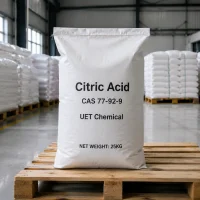
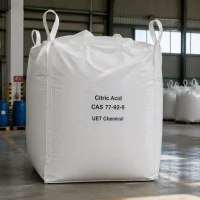
Citric Acid CAS 77-92-9
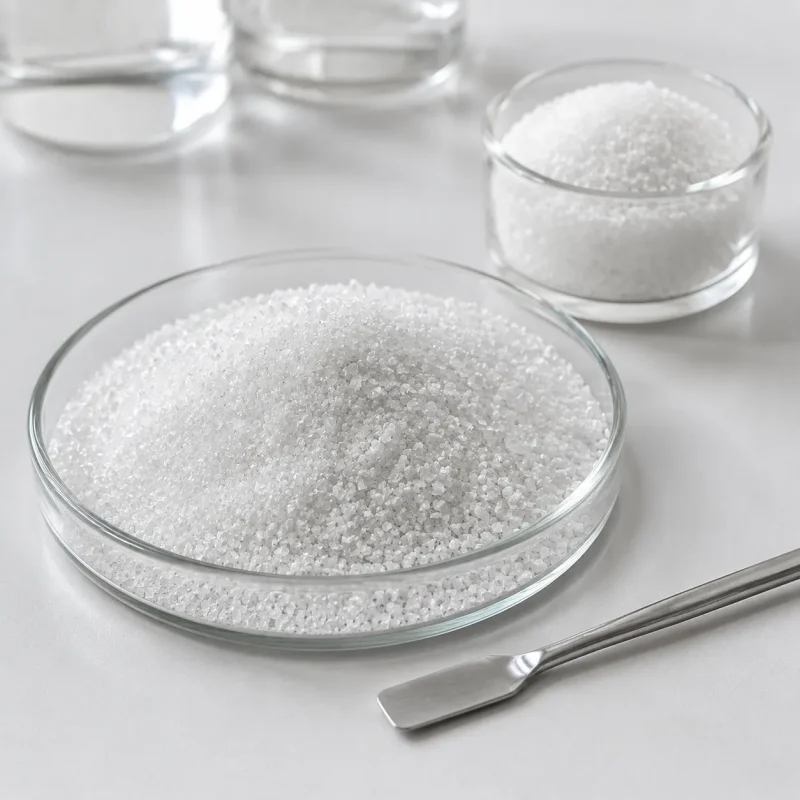
Citric Acid is a weak organic tricarboxylic acid featuring three carboxyl groups and one hydroxyl group on a propyl backbone. Supplied as a white crystalline powder (≥99.5% purity), it acts as a primary acidulant, pH buffer, and metal chelator in food & beverage formulations, pharmaceutical syrups, and industrial descalers. The strict fermentation and crystallisation process ensures ultra-low sulfate and chloride residues. Each shipment includes COA, TDS, and SDS.
- CAS No.: 77-92-9
- Synonyms: 2-Hydroxypropane-1,2,3-tricarboxylic acid; Anhydrous Citric Acid
- EINECS: 201-069-1
- Molecular Formula: C₆H₈O₇
- Molecular Weight: 192.12 g/mol
- Appearance: White crystalline powder or colorless crystals
- Assay: 99.5–100.5% (Anhydrous basis)
- Mesh Size: 30–100 mesh (custom cuts available)
- Sulfate (SO₄): ≤150 ppm
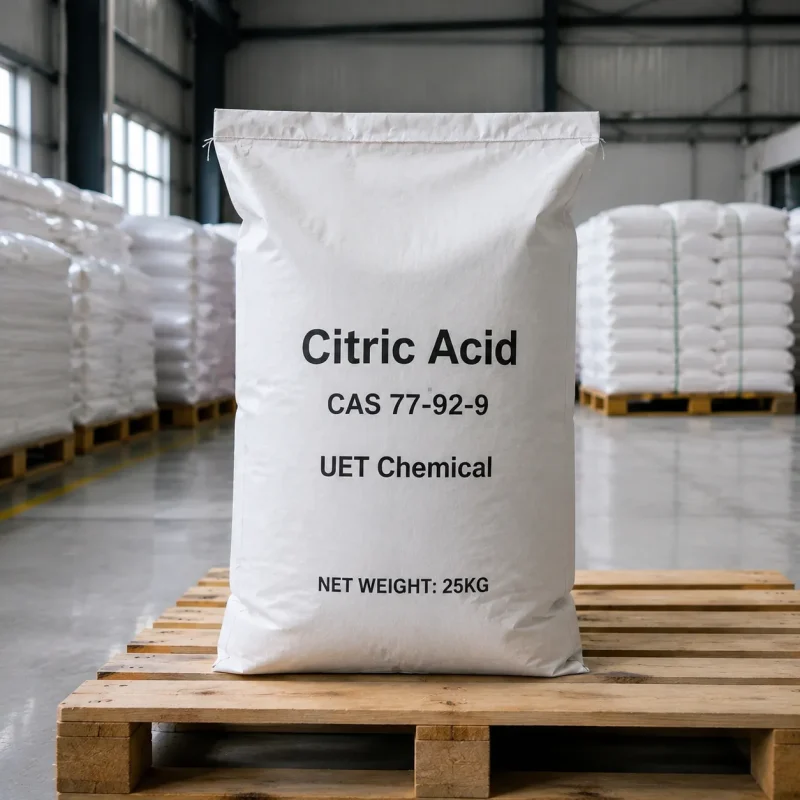
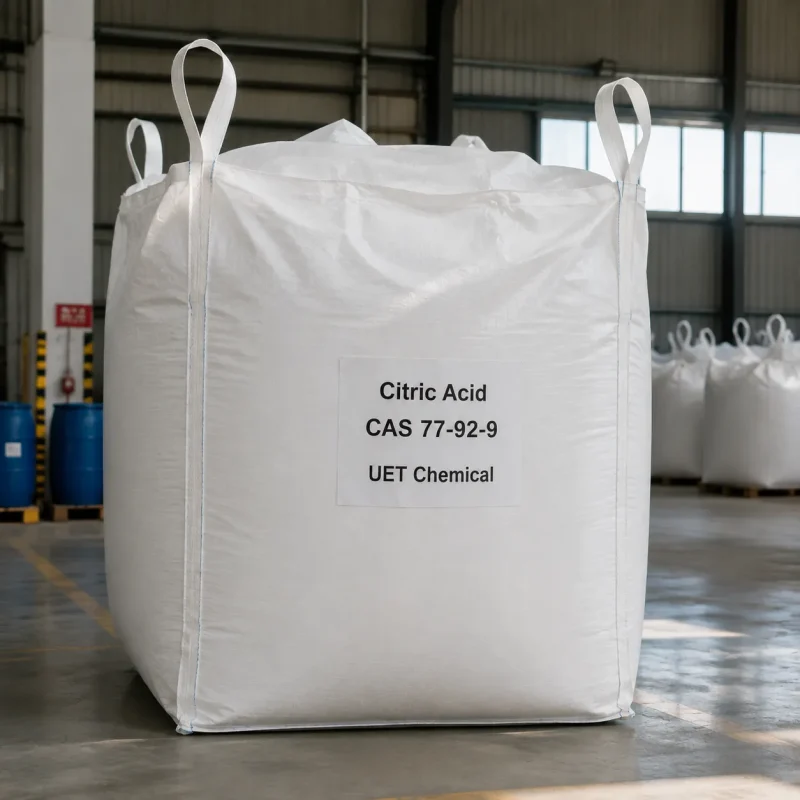
- Packaging: 25 kg multi-wall paper bag / 1000 kg bulk bag. Custom packaging available upon request.
- Main Applications: Food & beverage acidulant; pharmaceutical buffering; industrial descaling; cosmetic pH control
Introduction to Citric Acid
Citric Acid is a white crystalline powder, a weak organic tricarboxylic acid containing three carboxyl groups and one tertiary hydroxyl group. Produced via Aspergillus niger fermentation of molasses, it functions as a primary acidulant, pH regulator, and heavy-metal chelator in food and beverage processing, pharmaceutical compounding, and industrial cleaning.
The molecule delivers a sharp, clean sour taste profile with high water solubility (~59% w/w at 20 °C), avoiding the metallic aftertaste associated with harsh inorganic acids. One practical caution: the three carboxyl groups aggressively chelate transition metals like iron and copper. Formulators must use stainless steel (SS316) or glass-lined reactors; carbon steel contact will leach iron ions, turning the aqueous solution dark brown and ruining batch clarity.
Key Features of Citric Acid
- Triple-carboxyl chelation. The three -COOH groups and the central -OH group form stable five- and six-membered rings with Ca²⁺, Mg²⁺, and Fe³⁺ ions, preventing oxidative rancidity in lipid-rich foods and scaling in hard-water systems.
- Clean sourness profile. Provides a rapid, sharp tartness that dissipates quickly on the palate, making it the gold standard acidulant for fruit-flavoured beverages and confectionery.
- Fermentation-derived purity. Microbial synthesis avoids the petrochemical impurities found in synthetic routes. Residual oxalic acid is strictly controlled below 100 ppm to meet USP and FCC food-grade safety limits.
- Thermal decomposition. Melts with decomposition at 153 °C rather than boiling, making it ideal for dry-blend effervescent tablets where moisture-triggered CO₂ release must be avoided until the consumer adds water.
Citric Acid Chemical & Physical Properties
| Property | Value |
|---|---|
| Molecular Formula | C₆H₈O₇ |
| Molecular Weight | 192.12 g/mol |
| Melting Point | 153 °C (decomposes) |
| Density (solid, 20 °C) | ~1.54 g/cm³ |
| Solubility in Water | ~590 g/L at 20 °C |
| pH (1% aq. solution) | ~2.2 |
| Sulfate (SO₄) | ≤150 ppm |
| Chloride (Cl) | ≤50 ppm |
| Heavy Metals (as Pb) | ≤5 ppm |
| Oxalic Acid | ≤100 ppm |
Applications of Citric Acid
Food and beverage acidulant: Dosed at 0.1–0.5% in soft drinks, jams, and canned fruits. Lowers pH below 4.6 to inhibit Clostridium botulinum growth while providing the target tartness without masking underlying flavour notes.
Effervescent tablets and powders: Blended with sodium bicarbonate at a 1:1 to 1:2 molar ratio. The dry acid-base mixture remains stable until hydrated, releasing CO₂ gas to dissolve active pharmaceutical ingredients (APIs) and vitamins rapidly.
Industrial descaling and rust removal: Formulated at 5–15% in aqueous solutions. Chelates iron oxide (rust) and calcium carbonate (limescale) into water-soluble complexes, offering a non-toxic, biodegradable alternative to hydrochloric acid for boiler and CIP (Clean-In-Place) cleaning.
Cosmetic pH buffering: Added at 0.1–0.5% to adjust alpha-hydroxy acid (AHA) peels and shampoos to a target pH of 3.5–5.5, neutralising alkaline residues without stripping the skin barrier.
Storage & Safety Precautions for Citric Acid
Storage conditions. Store in sealed, moisture-barrier bags on pallets at 10–30 °C, in a strictly dry warehouse. Citric Acid is highly hygroscopic. If relative humidity exceeds 65%, the powder absorbs atmospheric moisture and fuses into rock-hard clumps. Keep away from alkaline dusts and strong oxidisers.
Safety and PPE. GHS: Eye Dam. 1 (H318). Causes serious eye irritation. Wear an N95 dust mask, chemical-splash goggles, and nitrile gloves during bag emptying. Spills are non-toxic but slippery when wet; sweep dry and rinse with water.
Transport classification. Non-DG. Not regulated under IMDG, IATA, or ADR. Ship as standard general cargo. Ensure container liners are intact to prevent ocean moisture ingress.
Practitioner note: When verifying incoming QC via titration, ensure the sample is fully dissolved in boiled, CO₂-free distilled water. Dissolving it in cold tap water introduces dissolved carbonates and bicarbonates, which will consume the NaOH titrant and yield a falsely high assay result (e.g., 101.5% instead of 99.8%).
Citric Acid FAQ
Q: How do I prevent Citric Acid (CAS 77-92-9) from turning my liquid supplement brown?
A: Trace iron or copper ions in your water or mixing tank react with the carboxyl groups to form dark metal-citrate complexes. Use deionised water and SS316 or glass-lined equipment. If discoloration occurs, add a trace amount of EDTA to sequester the metals, though prevention via proper reactor metallurgy is the only reliable fix.
Q: What is the difference between Anhydrous and Monohydrate Citric Acid for dry blends?
A: Anhydrous contains ≤0.5% water, while Monohydrate contains ~8% crystallisation water. For effervescent tablets or moisture-sensitive dry powders, always specify Anhydrous. The bound water in Monohydrate will prematurely react with sodium bicarbonate during warehouse storage, causing the tablets to swell, crack, and lose their fizz.
Q: Why did my 50% citric acid solution crystallise in the winter?
A: Solubility drops sharply at low temperatures. A 50% w/w solution remains stable at 20 °C but will precipitate needle-like crystals below 10 °C. Gently warm the IBC tote to 30–40 °C and agitate to re-dissolve. For cold-climate storage, dilute the stock solution to 30% or add a co-solvent like glycerol to depress the freezing point.
Related products
Manufacturer & Exporter Since 2006
Get Tailored Chemical Raw Material Solutions — Reply Within 1 Hour
Factory-direct pricing, stable high-purity supply and complete compliance documentation for your industrial formulations.
- 1000+Products
- 200+QC Protocols
- 7–15Days Delivery
- Factory-Direct Pricing
- COA / TDS / SDS Included
- Free Samples for Testing
- 40+ Export Countries
Request a Free Quote
Our engineers reply within 1 hour during GMT+8 business hours.
Please include in your inquiry:
- Product name or CAS number
- Required quantity
- Destination country or port
- Preferred packaging