
Benzoic Acid CAS 65-85-0
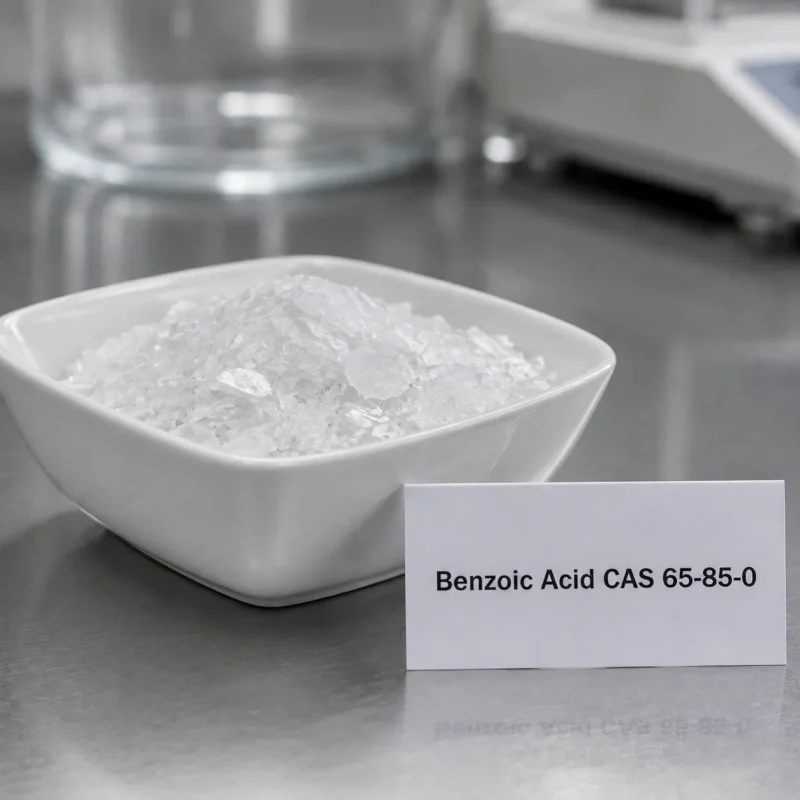
Benzoic Acid is the simplest aromatic carboxylic acid—a single carboxyl group bonded directly to a benzene ring. White crystalline flakes, ≥99.5% purity. Functions as a pH-dependent preservative in acidic foods and as an intermediate for benzoate plasticizers, alkyd resins, and benzoyl chloride. Antimicrobial action comes from the undissociated molecule (pKa 4.20) below pH 4.5. Each shipment includes COA, TDS, and SDS.
- CAS No.: 65-85-0
- Synonyms: Benzenecarboxylic acid; Phenylformic acid; Carboxybenzene
- EINECS: 200-618-2
- Molecular Formula: C₇H₆O₂
- Molecular Weight: 122.12 g/mol
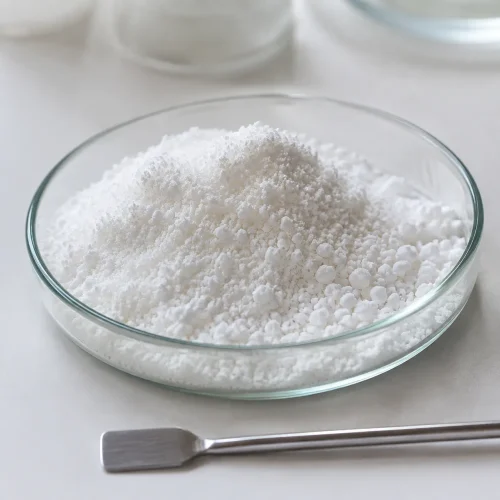
- Appearance: White crystalline flakes or needles
- Purity: ≥99.5% (industrial); ≥99.8% (food grade)
- Melting Point: 121–122 °C
- pKa: 4.20 (25 °C)
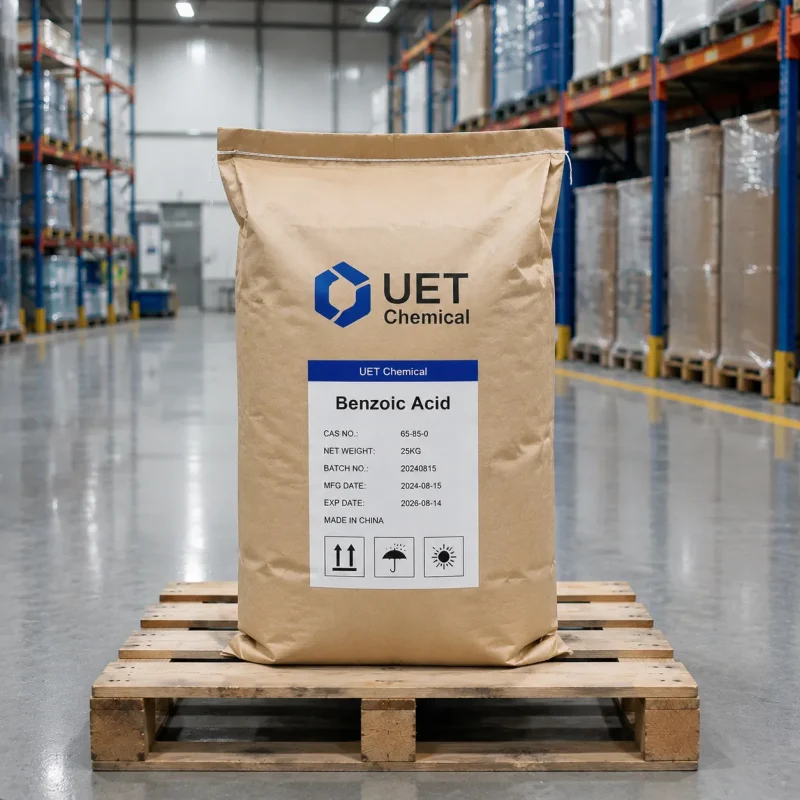
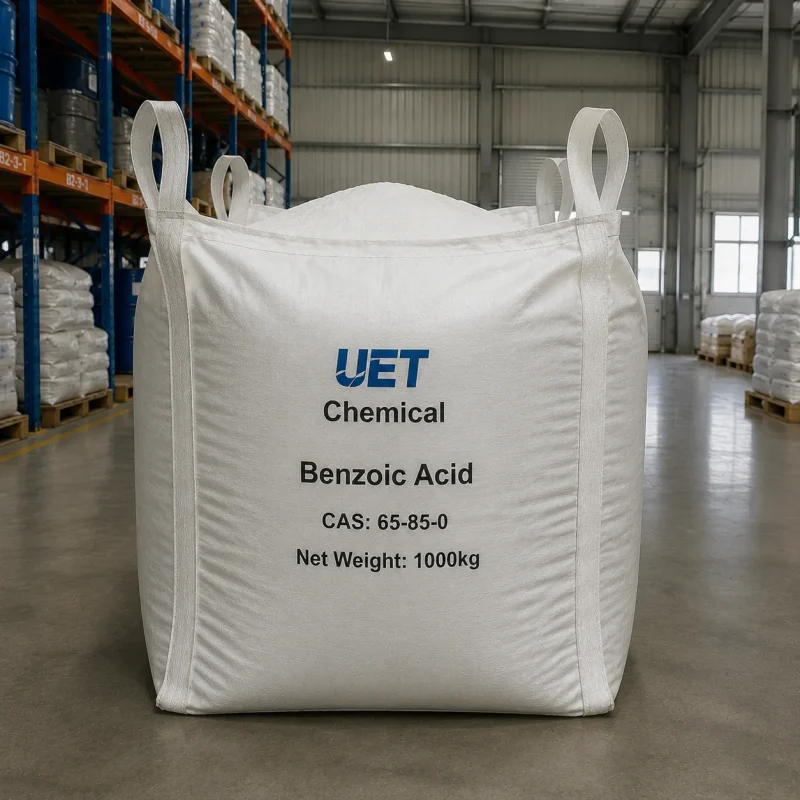
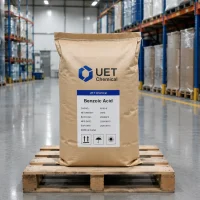
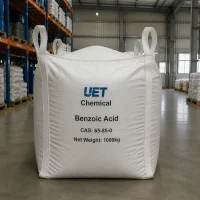
- Packaging: 25 kg kraft bag with PE liner / 1000 kg FIBC bulk bag. Custom packaging available upon request.
- Main Applications: Food preservative; benzoate plasticizers; alkyd resins; pharmaceutical intermediates
Introduction to Benzoic Acid
Benzoic Acid is a white crystalline flake or needle, the simplest aromatic carboxylic acid with one carboxyl group attached directly to the benzene ring. Water solubility is low at 25 °C (3.4 g/L) but rises roughly twenty-fold in boiling water, and the solid sublimes above 100 °C. Industry uses it as the reference pH-dependent preservative in acidic foods and beverages, and as the feedstock for benzoyl chloride, benzoate esters, and alkyd resin modifiers.
The 4.20 pKa sets the working window: below pH 4.5 more than 60% of the acid stays undissociated and crosses microbial membranes; above pH 5 the dissociated benzoate loses practically all antimicrobial effect. One practical caution: benzoic acid sublimes slowly even at ambient temperature. Sealed bags develop fine crystals on the inner liner and flakes cake at the bag walls—cosmetic, not a purity loss, but crush before dosing and expect slight dust on opening.
Key Features of Benzoic Acid
- pH-gated antimicrobial action. At pKa 4.20 the undissociated molecule penetrates yeast and mould cell membranes and collapses intracellular pH; effective at 0.05–0.1% in systems buffered below pH 4.5.
- Sublimation behaviour. The solid volatilises with steam and sublimes above 100 °C, allowing purification by sublimation but demanding sealed packaging to stop crystal migration during storage.
- Aromatic ring chemistry. The ring supports esterification to benzoate plasticizers (DPGDB, DINB), chlorination to benzoyl chloride, and amidation—making it a versatile organic synthon.
- Steep solubility curve. 3.4 g/L at 25 °C versus ~60 g/L in boiling water; hot-water recrystallisation is the standard purification and assay-preparation step.
- Alkyd chain capping. As a monofunctional acid replacing part of the phthalic anhydride charge, benzoic acid terminates polyester chain growth, lowering resin viscosity while raising gloss and hardness.
Benzoic Acid Chemical & Physical Properties
| Property | Value |
|---|---|
| Molecular Formula | C₇H₆O₂ |
| Molecular Weight | 122.12 g/mol |
| Appearance | White crystalline flakes or needles |
| Melting Point | 121–122 °C |
| Boiling Point | 249 °C |
| Density (solid, 20 °C) | 1.27 g/cm³ |
| Solubility in Water | 3.4 g/L (25 °C); ~60 g/L in boiling water |
| Solubility (Other) | Soluble in ethanol, ether, chloroform; slightly soluble in hexane |
| pKa (25 °C) | 4.20 |
| Flash Point | 121 °C (closed cup) |
Applications of Benzoic Acid
Acidic food and beverage preservation: Dosed at 0.05–0.1% (acid equivalent). The undissociated molecule diffuses into yeast and mould cells and acidifies the cytoplasm, halting spoilage in carbonated drinks, pickles, and sauces at pH < 4.5. Most plants add it as the sodium salt for solubility, then verify final pH.
Benzoate plasticizers and esters: Esterified with diethylene glycol or isononanol to produce DPGDB and DINB plasticizers for PVC, adhesives, and sealants. A non-phthalate route; typical reactor charge 20–40% of the acid component.
Alkyd resins and coatings: Used at 5–15% of the acid charge. The monofunctional carboxyl caps polyester chain growth, cutting viscosity 30–50% at equal solids while improving gloss, hardness, and dry-to-touch time.
Pharmaceutical and initiator intermediates: Chlorinated to benzoyl chloride at 80–90 °C, the gateway to benzoyl peroxide (polymerisation initiator) and UV-absorber precursors. Molar ratio benzoic acid : chlorinating agent typically 1.0 : 1.05.
Feed preservation and acidification: Added at 0.2–0.5% to compound feed. Suppresses mould growth in stored feed and lowers gut pH in weaner piglets, reducing diarrhoea incidence without antibiotics.
Storage & Safety Precautions for Benzoic Acid
Storage conditions. Store in sealed, PE-lined kraft bags or FIBC on pallets at 5–30 °C, dry and away from direct sun. Benzoic acid sublimes slowly at ambient temperature; expect fine crystal growth on the inner liner over 6–12 months. Keep away from strong oxidisers (peroxides, concentrated HNO₃) and alkalis—neutralisation with NaOH is exothermic.
Safety and PPE. GHS: Skin Irrit. 2 (H315); Eye Dam. 1 (H318). Dust irritates eyes and airways. Wear an N95/P2 dust mask, chemical-splash goggles, and nitrile gloves during bag emptying. Spills: sweep up dry to avoid dusting, then wash the floor with water.
Transport classification. Non-DG. Not regulated under IMDG, IATA, or ADR. Ship as standard general cargo. Ensure container liners are intact to prevent moisture ingress during ocean freight.
Practitioner note: For incoming QC, titrate in neutral 95% ethanol with 0.1 M NaOH and phenolphthalein (Ph. Eur. monograph method); 1 mL of 0.1 M NaOH equals 12.21 mg C₇H₆O₂. Cross-check melting point at 121–122 °C. Flakes fused into a cake at the bag wall are sublimation caking, not degradation—crush and sample from the bag core.
Benzoic Acid FAQ
Q: How do I verify the purity of Benzoic Acid (CAS 65-85-0) on arrival?
A: Run an acid–base titration in neutral ethanol with 0.1 M NaOH and phenolphthalein; 1 mL equals 12.21 mg of acid, and food grade should read ≥99.8% on the dried basis. Cross-check melting point (121–122 °C), loss on drying (≤0.5%), and sulfated ash (≤0.05%). A melting point below 120 °C signals moisture or chloride contamination.
Q: Why did preservation fail when my beverage pH moved from 4.0 to 5.5?
A: Only the undissociated molecule is antimicrobial. At pH 4.0 roughly 60% stays undissociated; at pH 5.5 that drops to about 5%, so the active dose collapses ten-fold. Bring pH back below 4.5, or raise the benzoate level within regulatory caps, or pair with a secondary hurdle such as mild pasteurisation.
Q: White crystals cover the inner liner of my sealed bag. Is the batch defective?
A: No. Benzoic acid sublimes slowly at ambient temperature, and vapour re-crystallises on the cooler liner surface. The crystals are pure acid; total assay is unaffected. Crush any wall cake before dosing, sample from the bag core for QC, and store below 30 °C with liners fully sealed to slow further migration.
Related products
Manufacturer & Exporter Since 2006
Get Tailored Chemical Raw Material Solutions — Reply Within 1 Hour
Factory-direct pricing, stable high-purity supply and complete compliance documentation for your industrial formulations.
- 1000+Products
- 200+QC Protocols
- 7–15Days Delivery
- Factory-Direct Pricing
- COA / TDS / SDS Included
- Free Samples for Testing
- 40+ Export Countries
Request a Free Quote
Our engineers reply within 1 hour during GMT+8 business hours.
Please include in your inquiry:
- Product name or CAS number
- Required quantity
- Destination country or port
- Preferred packaging