
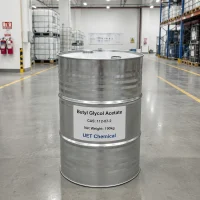
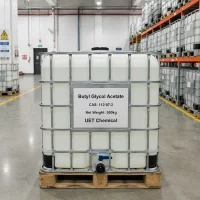
Butyl Glycol Acetate CAS 112-07-2
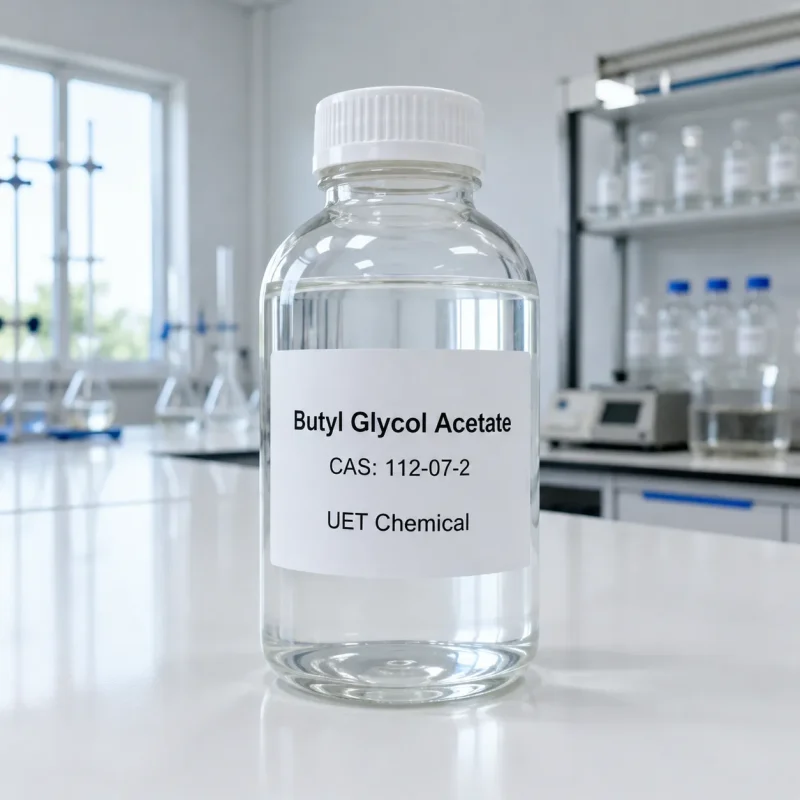
Butyl Glycol Acetate (BGA) is a slow-evaporating ester solvent featuring dual polarity, solving resin dissolution, film leveling, and screen-clogging challenges in surface coatings. Paint and ink manufacturers rely on it for coil coatings, baking enamels, and screen printing inks. UETChem supplies this product with strict distillation control and low moisture content, ensuring high gloss and zero blushing in humid environments. Each shipment includes COA, TDS, SDS.
- CAS No: 112-07-2
- Synonyms: BGA; 2-Butoxyethyl acetate; Ethylene glycol monobutyl ether acetate; EGBEA
- EINECS: 203-934-9
- Molecular Formula: C8H16O3
- Molecular Weight: 160.21 g/mol (160.21 lb/lbmol)
- Appearance: Colorless transparent liquid
- Purity: 99.0% min (GC)
- Water Content: 0.1% max
- Acidity: 0.01% max (as acetic acid)
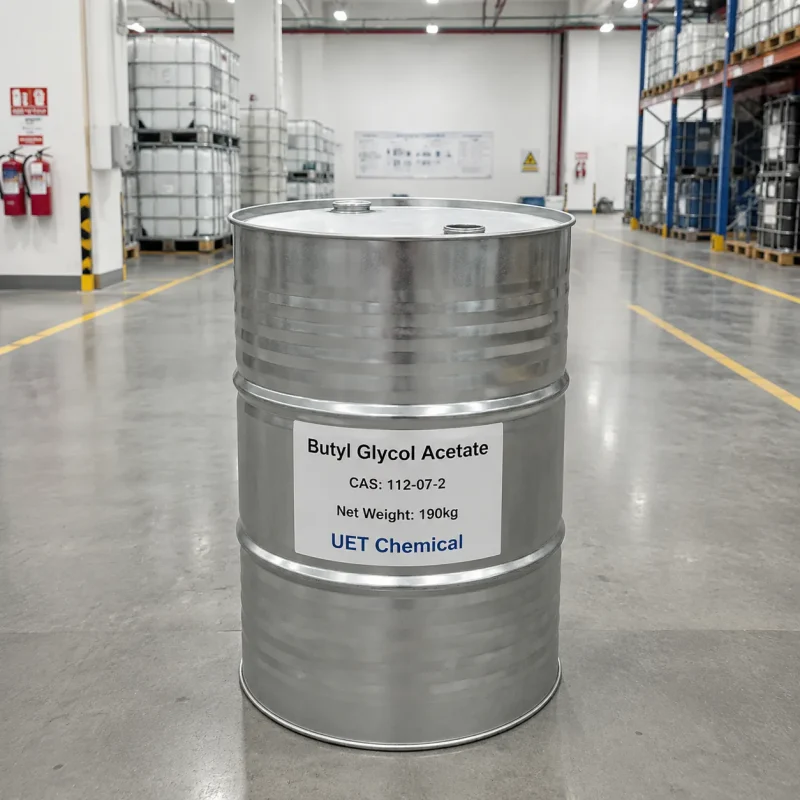
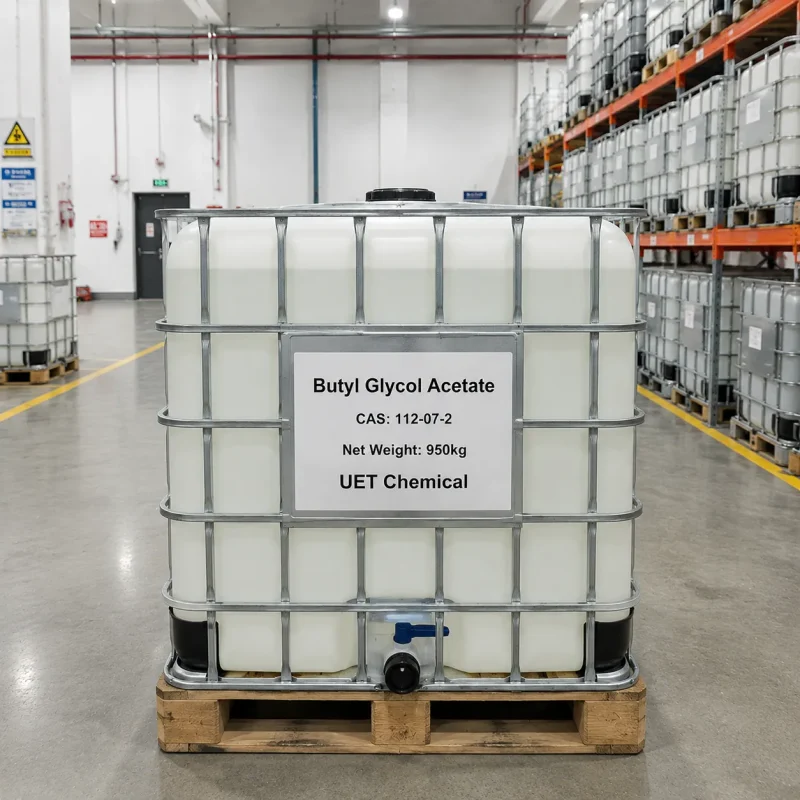
- Packaging: 190 kg (419 lb) HDPE drum, 1000 kg (2205 lb) IBC. Custom packaging available upon request.
- Main Applications: Coil coatings, baking enamels, screen printing inks, industrial metal cleaners
Introduction to Butyl Glycol Acetate
Butyl Glycol Acetate (BGA) is an organic ester solvent derived from the esterification of ethylene glycol monobutyl ether with acetic acid. The molecular structure contains both a hydrophobic butyl chain and a polar acetate group. This dual polarity allows the liquid to dissolve a wide range of non-polar and polar resins.
In industrial formulations, the solvent acts as a coalescing aid and flow modifier. It remains in the liquid film during the initial stages of drying and evaporates slowly at elevated temperatures. Paint manufacturers and ink formulators utilize BGA to control the evaporation gradient, ensuring uniform film formation and preventing surface defects.
Key Features of BGA
- Dual polarity structure: Dissolves alkyd, acrylic, and epoxy resins while maintaining compatibility with aromatic and aliphatic hydrocarbons.
- Slow evaporation rate: Boils at 192 °C (378 °F), keeping the coating film wet longer to promote leveling and eliminate brush marks.
- Low hygroscopicity: Resists moisture absorption from the air, preventing water entrapment and blushing in high-humidity application environments.
BGA Chemical & Physical Properties
| Property | Value |
|---|---|
| Molecular Formula | C8H16O3 |
| Molecular Weight | 160.21 g/mol (160.21 lb/lbmol) |
| Boiling Point | 192 °C (378 °F) |
| Density | 0.94 g/cm³ (7.84 lb/gal) at 20 °C (68 °F) |
| Flash Point | 65 °C (149 °F) closed cup |
| Evaporation Rate | 0.2 (Butyl Acetate = 1.0) |
| Purity | 99.0% min |
| Water Content | 0.1% max |
Applications of BGA
Coil coatings and baking enamels: Dosed at 5-15% in solvent-borne paints. The slow evaporation profile allows the resin to flow out smoothly before crosslinking. Formulators often dissolve Bisphenol A Epoxy Resin in BGA to create high-gloss, chemical-resistant industrial finishes.
Screen printing inks: Acts as a retarder solvent. It prevents the ink from drying on the mesh during print pauses, eliminating screen clogging and ensuring sharp image transfer on plastics and metals.
Industrial metal cleaners: Blended with aliphatic hydrocarbons to dissolve heavy machining oils and greases. The ester group breaks down polar contaminants, while the butyl chain lifts non-polar soils.
Storage & Safety Precautions for BGA
- Flammability and storage: Store in tightly sealed steel or HDPE drums in a cool, well-ventilated warehouse below 30 °C (86 °F). BGA is a combustible liquid (Flash point 65 °C / 149 °F). Keep away from heat, sparks, and open flames.
- Moisture control: Although less hygroscopic than unesterified glycol ethers, prolonged exposure to humid air can increase water content. Facilities often use Calcium Chloride Anhydrous in warehouse dehumidifiers to maintain dry ambient conditions.
- Handling and PPE: Wear chemical splash goggles and nitrile gloves. The vapor can cause mild respiratory and eye irritation in unventilated spaces. Use local exhaust ventilation during drum decanting.
- Field note: When dispersing heavy pigments like Anatase Titanium Dioxide, pre-mix the powder with BGA before adding the main resin. The solvent’s low surface tension helps wet the pigment agglomerates, reducing milling time and improving gloss.
BGA FAQ
Q: Why does Butyl Glycol Acetate improve coating flow?
A: BGA has a slow evaporation rate and high boiling point. It keeps the coating film open longer during baking, allowing the resin to level out and release trapped air bubbles before the surface skins over, preventing craters and orange peel defects.
Q: Is Butyl Glycol Acetate miscible with water?
A: BGA is only partially miscible with water at room temperature. It dissolves well in most organic solvents. Formulators use it in solvent-borne systems. For waterborne emulsions, other glycol ethers like PM or DPM are typically preferred over Butyl Glycol Acetate.
Q: How should I store Butyl Glycol Acetate safely?
A: Store BGA in tightly sealed HDPE or steel drums in a cool, ventilated warehouse away from ignition sources. It is a combustible liquid with a flash point around 65 °C. Keep it away from strong oxidizers to prevent exothermic reactions and degradation.
Related products
Manufacturer & Exporter Since 2006
Get Tailored Chemical Raw Material Solutions — Reply Within 1 Hour
Factory-direct pricing, stable high-purity supply and complete compliance documentation for your industrial formulations.
- 1000+Products
- 200+QC Protocols
- 7–15Days Delivery
- Factory-Direct Pricing
- COA / TDS / SDS Included
- Free Samples for Testing
- 40+ Export Countries
Request a Free Quote
Our engineers reply within 1 hour during GMT+8 business hours.
Please include in your inquiry:
- Product name or CAS number
- Required quantity
- Destination country or port
- Preferred packaging