
Diisodecyl Phthalate (DIDP) CAS 26761-40-0
Diisodecyl Phthalate (DIDP) is a high-molecular-weight phthalate plasticizer that solves volatility loss and long-term flexibility degradation in high-temperature PVC formulations. Wire and automotive manufacturers rely on it for 105°C wire insulation, automotive dashboard skins, and synthetic leather. UETChem supplies this product with strict control over acid value, moisture, and color, ensuring extremely low fogging and excellent electrical insulation properties. Each shipment includes COA, TDS, SDS.
- CAS No: 26761-40-0
- Synonyms: DIDP; Diisodecyl phthalate; 1,2-Benzenedicarboxylic acid, di-C9-11-branched alkyl esters, C10-rich
- EINECS: 247-977-2
- Molecular Formula: C28H46O4
- Molecular Weight: 446.66 g/mol (446.66 lb/lbmol)
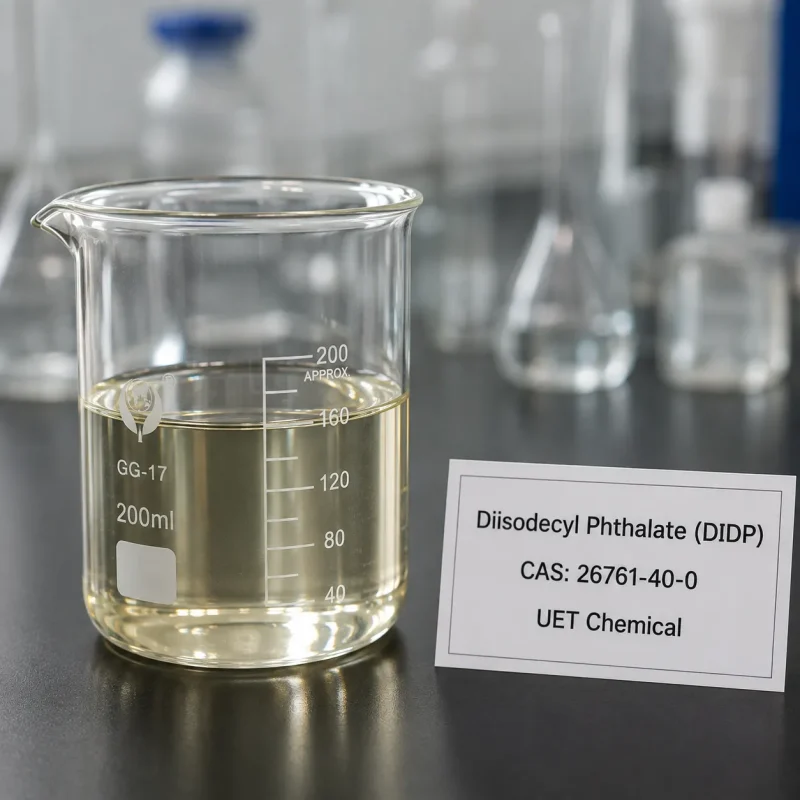
- Appearance: Colorless to pale yellow transparent oily liquid
- Ester Content: 99.5% min
- Acid Value: 0.1 mg KOH/g max
- Flash Point: 215 °C (419 °F) min
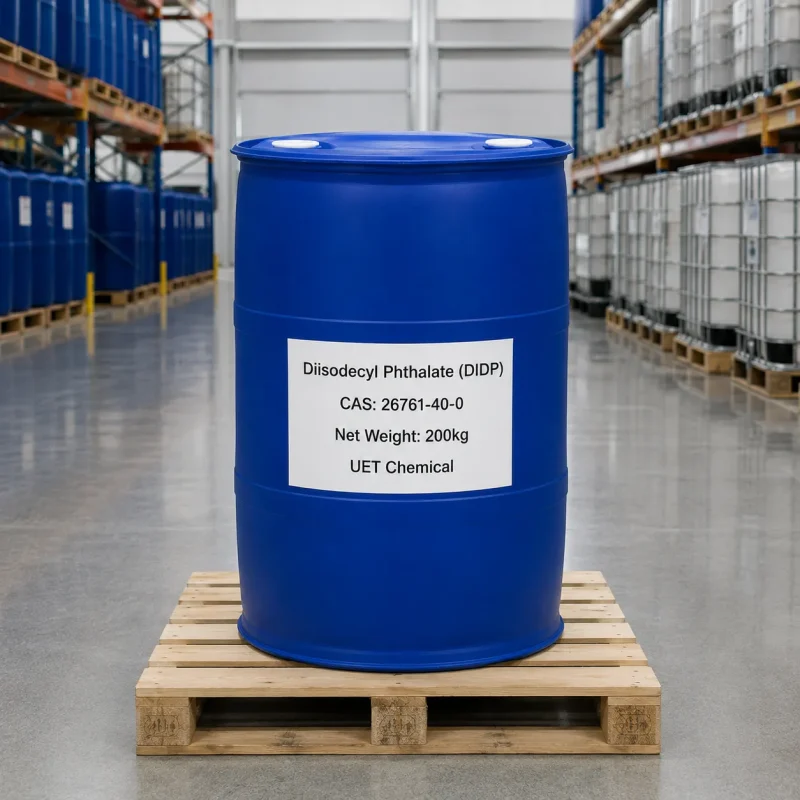
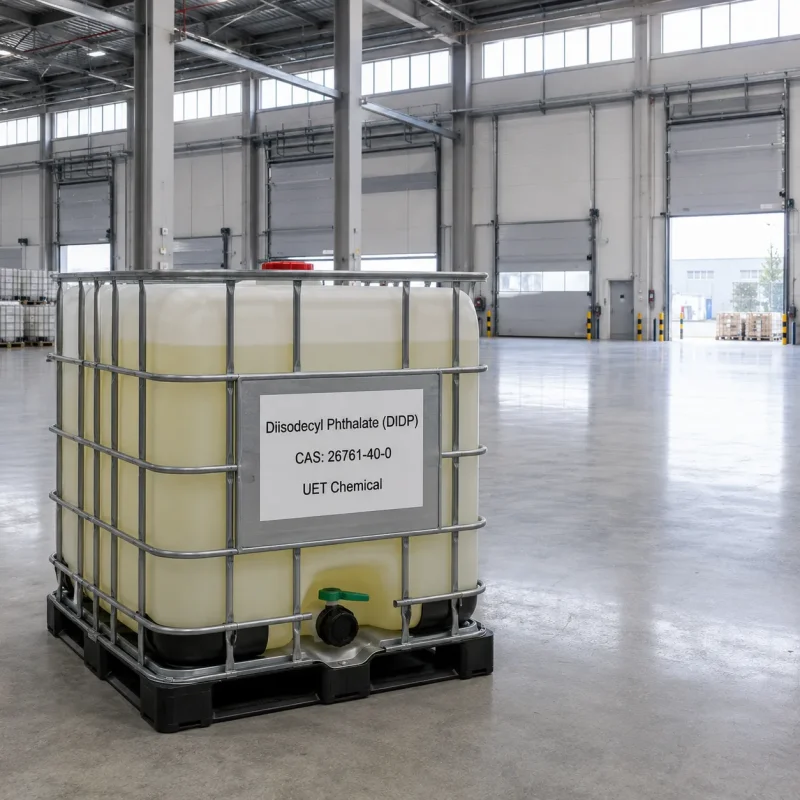
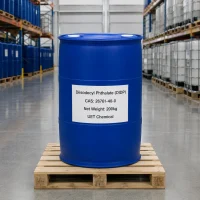
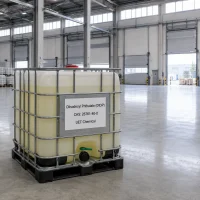
- Packaging: 200 kg (441 lb) HDPE drum, 1000 kg (2205 lb) IBC. Custom packaging available upon request.
- Main Applications: High-temperature wire & cable, automotive interiors, synthetic leather, waterproof membranes
Introduction to Diisodecyl Phthalate
Diisodecyl Phthalate is a high-molecular-weight phthalate plasticizer consisting of a benzene-1,2-dicarboxylate core esterified with branched isodecyl alcohol chains. The bulky C10 alkyl branches create significant steric hindrance around the ester linkages. In polymer matrices, the long aliphatic chains insert themselves between polyvinyl chloride (PVC) macromolecules, increasing the free volume and lowering the glass transition temperature.
The material presents as a viscous, colorless to pale yellow oily liquid with extremely low volatility. It remains chemically inert in most aqueous environments and exhibits high compatibility with polar resins. The high molecular mass restricts molecular migration, keeping the plasticizer locked within the polymer matrix during prolonged thermal aging and preventing weight loss in demanding industrial applications.
Key Features of DIDP
- Branched C10 alkyl chains: The steric bulk restricts molecular migration, preventing the plasticizer from exuding to the surface of the finished PVC product.
- Aromatic ester core: Provides strong dipole-dipole interactions with the carbon-chlorine bonds of PVC, ensuring rapid gelation and fusion during extrusion.
- High molecular weight: Lowers the vapor pressure significantly, preventing fogging on automotive windshields and maintaining dielectric strength in wire insulation.
DIDP Chemical & Physical Properties
| Property | Value |
|---|---|
| Molecular Formula | C28H46O4 |
| Molecular Weight | 446.66 g/mol (446.66 lb/lbmol) |
| Appearance | Colorless to pale yellow transparent liquid |
| Ester Content | 99.5% min |
| Acid Value | 0.1 mg KOH/g max |
| Density | 0.96 – 0.97 g/cm³ (8.0 – 8.1 lb/gal) at 20 °C (68 °F) |
| Flash Point | > 215 °C (419 °F) closed cup |
| Viscosity | 70 – 90 mPa·s at 25 °C (77 °F) |
Applications of DIDP
High-temperature wire and cable insulation: Dosed at 30-50 phr in PVC compounds for 105°C rated electrical wires. The low volatility prevents insulation shrinkage and cracking over decades of thermal cycling. Compounders often blend it with Stearic Acid to optimize the melt flow and lubricity during high-speed wire extrusion.
Automotive interiors and synthetic leather: Used in slush molding and calendering processes for dashboard skins and seat covers. The high molecular weight prevents fogging on the inside of windshields. Formulators disperse pigments like Anatase Titanium Dioxide into the plastisol to achieve bright, opaque colors without solvent migration.
Waterproof membranes and roofing: Incorporated into PVC geomembranes for exposed roofing applications. The chemical structure resists water extraction and UV degradation when paired with appropriate stabilizers.
Storage & Safety Precautions for DIDP
- Temperature and contamination: Store in tightly sealed HDPE or stainless steel tanks between 5 °C and 35 °C (41 °F – 95 °F). Water ingress causes hydrolysis at high processing temperatures, releasing isodecanol and phthalic acid, which corrodes extruder barrels and degrades the polymer.
- Handling and PPE: The liquid is non-hazardous for transport but can cause mild skin defatting. Wear nitrile gloves and safety glasses during drum decanting. Clean spills with absorbent clay; the oily residue creates a severe slip hazard on concrete floors.
- Field note: When blending DIDP into dry PVC resin, maintain the high-speed mixer temperature above 80 °C (176 °F). This ensures the viscous liquid fully penetrates the porous resin grains, preventing “wet” spots and ensuring uniform gelation in the extruder.
DIDP FAQ
Q: Why is DIDP preferred for 105°C wire insulation?
A: DIDP possesses a high molecular weight and bulky C10 branched chains that drastically lower vapor pressure. This prevents the plasticizer from volatilizing during prolonged thermal aging, maintaining the flexibility and dielectric strength of 105°C rated PVC wire insulation.
Q: Does Diisodecyl Phthalate cause windshield fogging?
A: Diisodecyl Phthalate exhibits extremely low volatility due to its high molecular mass. When used in automotive PVC dashboard skins, it remains locked in the matrix at high cabin temperatures, preventing the condensation of plasticizer vapors on the interior windshield surface.
Q: How should I store DIDP to prevent degradation?
A: Store DIDP in tightly sealed, dry containers away from direct sunlight. Moisture contamination can lead to hydrolysis during high-temperature PVC extrusion, generating acidic byproducts that corrode metal equipment and degrade the thermal stability of the final compound.
Related products
Manufacturer & Exporter Since 2006
Get Tailored Chemical Raw Material Solutions — Reply Within 1 Hour
Factory-direct pricing, stable high-purity supply and complete compliance documentation for your industrial formulations.
- 1000+Products
- 200+QC Protocols
- 7–15Days Delivery
- Factory-Direct Pricing
- COA / TDS / SDS Included
- Free Samples for Testing
- 40+ Export Countries
Request a Free Quote
Our engineers reply within 1 hour during GMT+8 business hours.
Please include in your inquiry:
- Product name or CAS number
- Required quantity
- Destination country or port
- Preferred packaging