
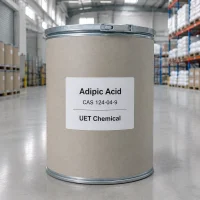
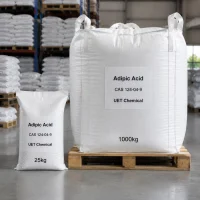
Adipic Acid CAS 124-04-9
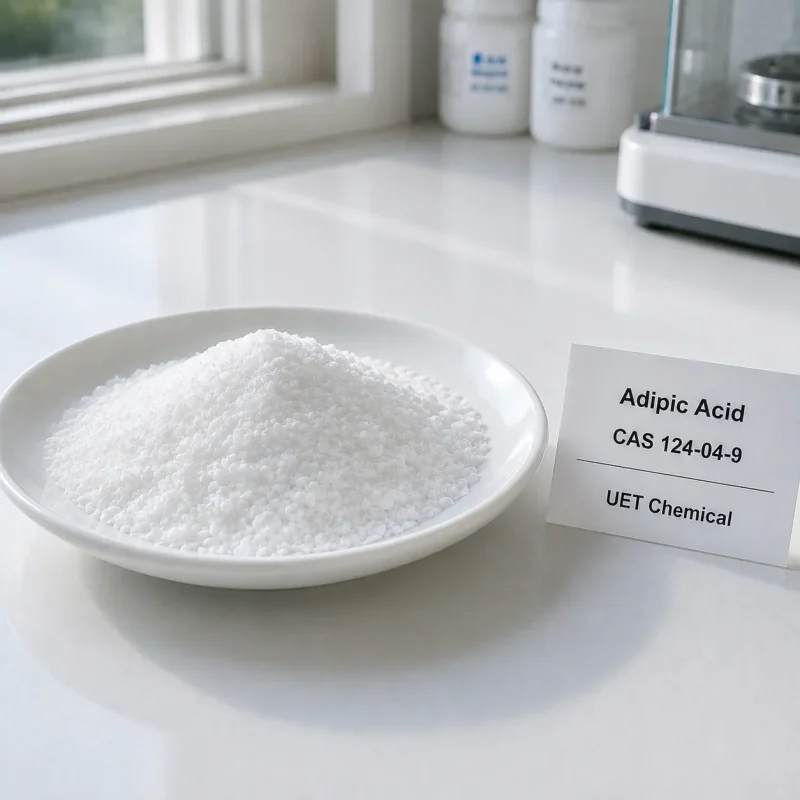
Adipic Acid is a straight-chain aliphatic dicarboxylic acid featuring six carbon atoms with terminal carboxyl groups. Supplied as a white crystalline powder (≥99.5% purity), it serves as the foundational monomer for Nylon 66 engineering plastics, polyester polyols for polyurethanes, and a slow-acting acidulant in food leavening systems. The linear C6 backbone imparts exceptional toughness and hydrolytic stability to downstream polymers. Each shipment includes COA, TDS, and SDS.
- CAS No.: 124-04-9
- Synonyms: Hexanedioic acid; 1,4-Butanedicarboxylic acid; Acifilox
- EINECS: 204-673-3
- Molecular Formula: C₆H₁₀O₄
- Molecular Weight: 146.14 g/mol
- Appearance: White crystalline powder or needles
- Assay: ≥99.5%
- Melting Point: 152–154 °C
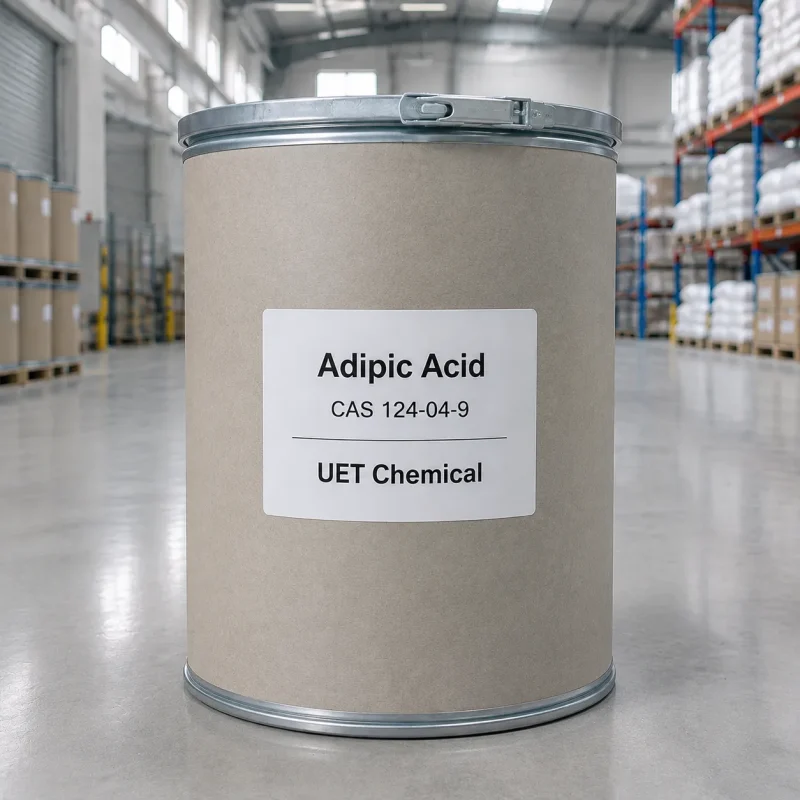
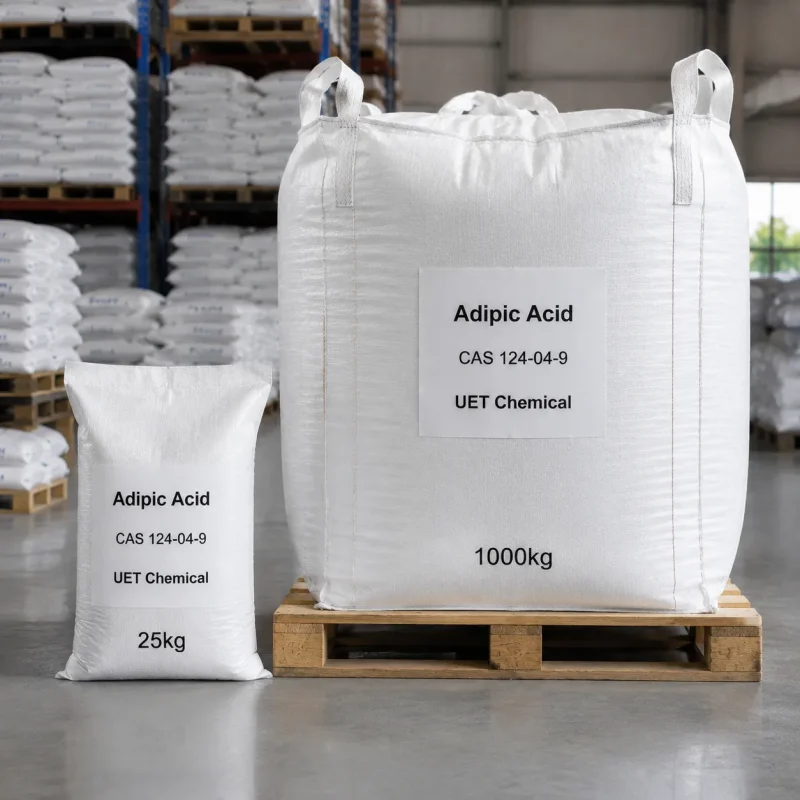
- Packaging: 25 kg multi-wall kraft bag / 1000 kg FIBC bulk bag. Custom packaging available upon request.
- Main Applications: Nylon 66 salt; polyester polyols; food acidulant (E355); plasticizer synthesis
Introduction to Adipic Acid
Adipic Acid is a white crystalline powder, a linear aliphatic dicarboxylic acid with a six-carbon backbone terminating in two carboxyl groups. This symmetrical C6 structure makes it the indispensable dicarboxylic acid for manufacturing Nylon 66 (via hexamethylenediamine salt formation) and flexible polyester polyols for polyurethane elastomers. Food technologists also value this compound as a slow-dissolving leavening acid in baking powders.
The straight-chain geometry yields polymers with high tensile strength and superior abrasion resistance. One practical caution: the powder sublimes slightly when heated above 150 °C and can form cyclic anhydrides or decarboxylate if exposed to prolonged thermal stress above 200 °C. Formulators must control reactor temperatures precisely during polycondensation to avoid yield loss and yellowing.
Key Features of Adipic Acid
- Linear C6 polymer backbone. The even-numbered carbon chain promotes tight hydrogen bonding in polyamides, delivering the high melting point and mechanical toughness characteristic of Nylon 66 fibers and engineering resins.
- Hydrolysis-resistant polyols. When condensed with diols to form polyester polyols, the adipate linkage provides superior hydrolytic stability and low-temperature flexibility compared to aromatic dicarboxylic acids.
- Slow-acting food acidulant. Unlike fast-acting acids that release gas immediately upon wetting, the moderate water solubility (~1.4 g/100 mL at 15 °C) delays the reaction with sodium bicarbonate, ensuring maximum oven spring in baked goods.
- High thermal purity. ≥99.5% assay with minimal glutaric or succinic acid homologues prevents side-reactions and ensures consistent molecular weight buildup during step-growth polymerization.
- Excellent flowability. The crystalline habit produces a free-flowing powder that feeds smoothly into pneumatic conveyors and automated dosing hoppers without bridging or rat-holing.
Adipic Acid Chemical & Physical Properties
| Property | Value |
|---|---|
| Molecular Formula | C₆H₁₀O₄ |
| Molecular Weight | 146.14 g/mol |
| Melting Point | 152–154 °C |
| Boiling Point | 338 °C (decomposes/sublimes) |
| Density (solid, 20 °C) | ~1.36 g/cm³ |
| Solubility in Water | ~1.4 g/100 mL (15 °C); ~160 g/100 mL (100 °C) |
| Acid Value | 765–775 mg KOH/g |
| Moisture Content | ≤0.2% |
| Heavy Metals (as Pb) | ≤10 ppm |
| Iron (Fe) | ≤2 ppm |
Applications of Adipic Acid
Nylon 66 and engineering plastics: Reacted with hexamethylenediamine in a 1:1 molar ratio to form Nylon 66 salt (AH salt). Subsequent polycondensation at 270–280 °C yields high-strength fibers for textiles, tire cords, and tough engineering resins for automotive under-hood components.
Polyester polyols for polyurethanes: Condensed with ethylene glycol or butanediol to produce adipate-based polyols. These polyols impart exceptional low-temperature flexibility, abrasion resistance, and UV stability to PU coatings, adhesives, sealants, and shoe-sole elastomers.
Food and beverage acidulant (E355): Dosed at 0.1–0.5% in baking powders and cake mixes. The delayed solubility profile ensures carbon dioxide releases exactly when the batter hits oven temperatures, maximizing volume and crumb structure. Also used to impart a tart, clean flavor in gelatin desserts and fruit juices.
Plasticizers and lubricants: Esterified with 2-ethylhexanol or isononanol to produce dialkyl adipates. These low-viscosity ester fluids serve as low-temperature plasticizers for PVC and synthetic base oils for aviation and automotive lubricants.
Storage & Safety Precautions for Adipic Acid
Storage conditions. Store in sealed, multi-wall kraft bags or FIBCs on pallets at 5–30 °C, in a dry warehouse. The powder is mildly hygroscopic; prolonged exposure to >70% RH causes caking and slows down dissolution rates in reactor feeds. Keep away from strong oxidizing agents and alkaline dusts.
Safety and PPE. GHS: Eye Irrit. 2 (H319); STOT SE 3 (H335). Mild dust irritant. Wear an N95 dust mask and safety goggles during bag emptying to prevent inhalation of fine acidic dust and eye contact. Spills are non-toxic; sweep up dry material and wash the floor with water.
Transport classification. Non-DG. Not regulated under IMDG, IATA, or ADR. Ship as standard general cargo. Ensure container liners are intact to prevent ocean moisture ingress.
Practitioner note: When verifying incoming QC via Acid Value titration, dissolve the sample in neutralised boiling ethanol, as the powder dissolves very slowly in cold water or room-temperature alcohol. A cloudy titration flask indicates incomplete dissolution and yields falsely low acid values. Keep the flask warm until the phenolphthalein endpoint is reached.
Adipic Acid FAQ
Q: How do I prevent Nylon 66 salt discoloration during Adipic Acid (CAS 124-04-9) processing?
A: Discoloration usually stems from trace iron impurities or thermal degradation. Ensure the incoming lot shows Iron (Fe) ≤2 ppm on the COA. During AH salt preparation, maintain an inert nitrogen blanket and keep the neutralization temperature below 100 °C. Avoid localized hot spots in the reactor, as temperatures exceeding 200 °C trigger decarboxylation and cyclopentanone formation, turning the salt yellow.
Q: Why does my baking powder release gas too early when using this acidulant?
A: Check the particle size distribution. Standard crystalline adipic acid dissolves slowly, providing delayed action. If the batch was milled to a fine micronised powder, the increased surface area accelerates water penetration and premature gas release in the mixing bowl. Specify a granular or coarse-crystal cut (e.g., 20–60 mesh) for delayed-leavening applications.
Q: Can Adipic Acid replace phthalic anhydride in PVC plasticizers?
A: Yes, for specific performance targets. Diisononyl adipate (DINA) or di(2-ethylhexyl) adipate (DEHA) offer vastly superior low-temperature flexibility and lower volatility compared to phthalate equivalents. Formulators use adipate esters in automotive interior skins, cold-weather cables, and synthetic leather where phthalates would stiffen and crack below -20 °C.
Related products
Manufacturer & Exporter Since 2006
Get Tailored Chemical Raw Material Solutions — Reply Within 1 Hour
Factory-direct pricing, stable high-purity supply and complete compliance documentation for your industrial formulations.
- 1000+Products
- 200+QC Protocols
- 7–15Days Delivery
- Factory-Direct Pricing
- COA / TDS / SDS Included
- Free Samples for Testing
- 40+ Export Countries
Request a Free Quote
Our engineers reply within 1 hour during GMT+8 business hours.
Please include in your inquiry:
- Product name or CAS number
- Required quantity
- Destination country or port
- Preferred packaging