
Glyoxylic Acid CAS 298-12-4
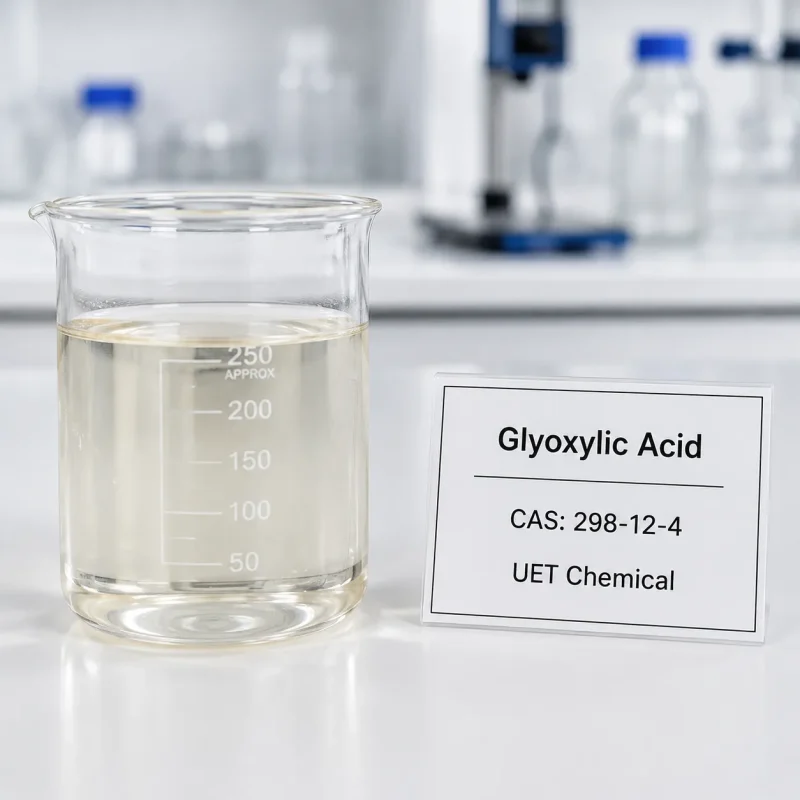
Glyoxylic Acid (GA) is a dicarbonyl carboxylic acid containing both an aldehyde and a carboxyl group on a two-carbon skeleton. Supplied primarily as a 50% aqueous solution, it solves complex heterocyclic synthesis and mild chelation challenges. Formulators rely on GA for vanillin production, pharmaceutical intermediates, and cosmetic peeling agents. UETChem supplies this product with strict control over oxalic acid and glyoxal impurities to ensure high yields in downstream condensation reactions. Each shipment includes COA, TDS, SDS.
- CAS No: 298-12-4
- Synonyms: GA; Oxoacetic acid; Formylformic acid
- EINECS: 206-058-5
- Molecular Formula: C2H2O3
- Molecular Weight: 74.04 g/mol (74.04 lb/lbmol)
- Appearance: Colorless to pale yellow liquid (50% solution)
- Assay (GC/Titration): 50.0% min
- Oxalic Acid: 0.5% max
- Glyoxal: 0.1% max
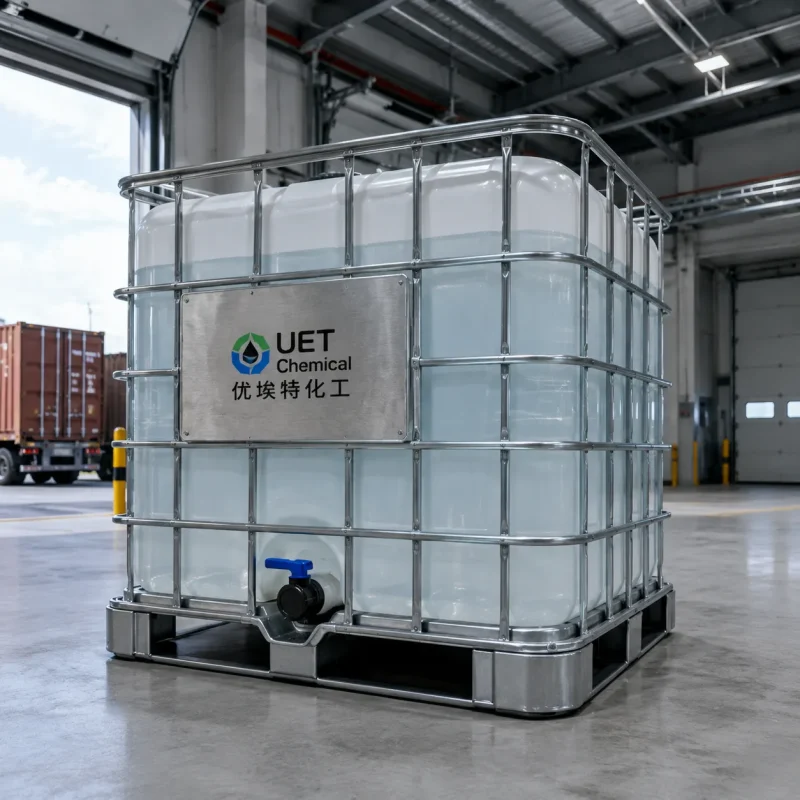
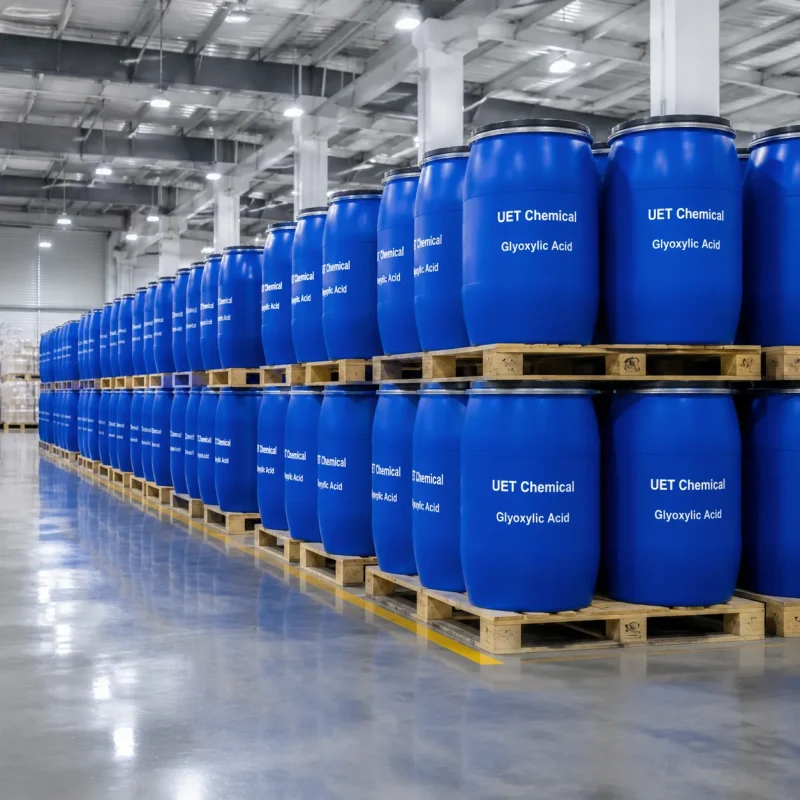
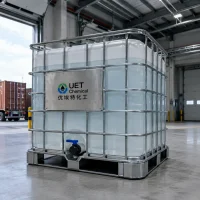
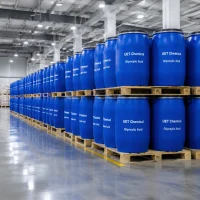
- Packaging: 200 kg (441 lb) drum, 1000 kg (2205 lb) IBC. Custom packaging available upon request.
- Main Applications: Vanillin synthesis, allantoin precursor, hair straightening crosslinker, electroplating complexant
Introduction to Glyoxylic Acid
Glyoxylic Acid exists predominantly as a hydrate in aqueous solutions due to the high reactivity of the adjacent aldehyde and carboxyl groups. Chemical plants use the 50% liquid grade as a versatile building block for synthesizing vanillin, D-p-hydroxyphenylglycine, and allantoin.
The main processing advantage is dual-site reactivity: the aldehyde undergoes nucleophilic addition while the carboxyl group provides water solubility and salt-forming capacity. Thermal stability is the primary handling risk. Heating GA above 60 °C (140 °F) triggers decarboxylation and Cannizzaro disproportionation, generating formaldehyde, formic acid, and glycolic acid. Always store drums in a climate-controlled warehouse and avoid steam tracing during winter pumping.
Key Features of Glyoxylic Acid
- Dual functional groups: The C2 backbone carries both an electrophilic aldehyde and an acidic carboxyl, enabling one-step condensation with phenols and urea.
- Low oxalic acid limit: Keeping oxalic impurities below 0.5% prevents co-crystallization issues during the purification of pharmaceutical intermediates like cephalosporin side chains.
- Mild keratolytic action: GA disrupts corneocyte desmosomes with significantly less stinging than equivalent concentrations of glycolic acid, making it ideal for sensitive skin formulations.
- Low-VOC crosslinking: Replaces formaldehyde in keratin hair treatments and textile resins, reacting with amine groups while eliminating toxic off-gassing.
Glyoxylic Acid Chemical & Physical Properties
| Property | Value |
|---|---|
| Molecular Formula | C2H2O3 |
| Molecular Weight | 74.04 g/mol (74.04 lb/lbmol) |
| Assay | 50.0% min (Aqueous solution) |
| Density | 1.24 – 1.27 g/cm³ (10.3 – 10.6 lb/gal) at 20 °C |
| pH (10% aqueous) | < 1.0 |
| Boiling Point | Decomposes before boiling |
| Oxalic Acid Content | 0.5% max |
| Glyoxal Content | 0.1% max |
Applications of Glyoxylic Acid
Flavor and fragrance synthesis: Condenses with guaiacol under alkaline conditions to produce vanillin. The high aldehyde titer of UETChem’s 50% solution drives the reaction to completion, minimizing unreacted phenol recovery. Formulators often cross-reference Cashmeran for blending synthetic musk profiles.
Cosmetic active and peeling agent: Used at 2–8% in anti-aging serums and chemical peels. GA stimulates cell turnover without severe erythema. It pairs well with stable vitamin C derivatives like Ascorbyl Glucoside (AA2G) to brighten skin tone while maintaining a safe pH buffer.
Electroplating and metal cleaning: Acts as a complexing agent for copper and nickel baths, preventing hydroxide precipitation at high pH. In industrial descaling, it is blended with Citric Acid to dissolve rust layers on precision machined parts without attacking the base metal.
Storage & Safety Precautions for Glyoxylic Acid
- Thermal degradation and storage: Store 50% GA drums in a shaded, ventilated warehouse between 5–25 °C (41–77 °F). Prolonged exposure to heat or direct sunlight accelerates oxidative degradation, turning the liquid dark yellow and dropping the aldehyde titer. Never use high-pressure steam to thaw frozen IBCs; use warm air or ambient thawing.
- Corrosion and PPE: The 50% solution is highly acidic (pH < 1) and corrosive to skin and eyes. Wear rubber aprons, face shields, and butyl gloves during drum decanting. Neutralize minor spills with sodium bicarbonate before washing down the drain.
- Material compatibility: Use HDPE, PTFE-lined, or 316L stainless steel for storage tanks and transfer pumps. Carbon steel and standard 304 stainless steel will suffer rapid pitting corrosion from the low pH and chloride traces.
- Field note: When QC testing the aldehyde content via hydroxylamine hydrochloride titration, perform the analysis immediately after sampling. Leaving the sample bottle on the lab bench over the weekend allows slow Cannizzaro disproportionation, yielding falsely low assay results.
Glyoxylic Acid FAQ
Q: Why does Glyoxylic Acid (GA) turn yellow in storage?
A: GA undergoes slow oxidative degradation and Cannizzaro reactions at room temperature, generating glycolic and oxalic acid impurities that cause yellowing. Store 50% GA solutions below 20 °C (68 °F), away from light and alkali metals, to maintain water-white clarity and aldehyde titer.
Q: How should I dose Glyoxylic Acid in cosmetic peels?
A: GA provides keratolytic action with less stinging than glycolic acid. Formulators use 2-5% GA at pH 3.5-4.0 for daily serums. Always neutralize the free acid partially with sodium hydroxide before blending with sensitive actives like Ascorbyl Glucoside to prevent epidermal irritation.
Q: Can Glyoxylic Acid replace formaldehyde in resins?
A: Yes, GA acts as a low-VOC crosslinker for hair straightening and textile resins. The aldehyde group reacts with keratin or cellulose amines, while the carboxyl group improves water solubility. Replace formaldehyde mole-for-mole, but increase catalyst loading to drive the slower condensation.
Related products
Manufacturer & Exporter Since 2006
Get Tailored Chemical Raw Material Solutions — Reply Within 1 Hour
Factory-direct pricing, stable high-purity supply and complete compliance documentation for your industrial formulations.
- 1000+Products
- 200+QC Protocols
- 7–15Days Delivery
- Factory-Direct Pricing
- COA / TDS / SDS Included
- Free Samples for Testing
- 40+ Export Countries
Request a Free Quote
Our engineers reply within 1 hour during GMT+8 business hours.
Please include in your inquiry:
- Product name or CAS number
- Required quantity
- Destination country or port
- Preferred packaging