
Vinyl Acetate Monomer (VAM) CAS 108-05-4
Vinyl Acetate Monomer (VAM) is a highly reactive aliphatic ester monomer that solves poor emulsion stability, weak substrate adhesion and inconsistent polymerization in downstream resin manufacturing. It serves as the core building block for polyvinyl acetate (PVAc), polyvinyl alcohol (PVA) and EVA copolymer production. UETChem supplies VAM with strict control over inhibitor levels, aldehyde impurities and moisture, ensuring predictable reaction kinetics and exceptional final polymer clarity. Each shipment includes COA, TDS, SDS.
- CAS No: 108-05-4
- Synonyms: VAM; Acetic acid vinyl ester; Vinyl acetate monomer
- EINECS: 203-545-4
- Molecular Formula: C₄H₆O₂
- Molecular Weight: 86.09 g/mol
- Appearance: Colorless transparent liquid
- Purity (GC): 99.8% min
- Moisture: 0.05% max
- Acetaldehyde: 0.01% max
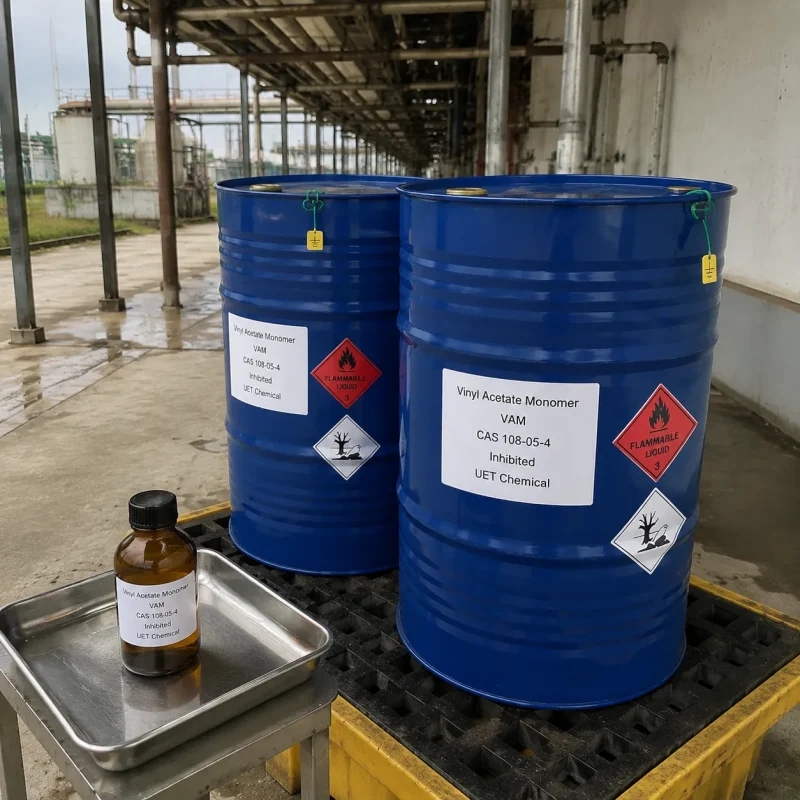
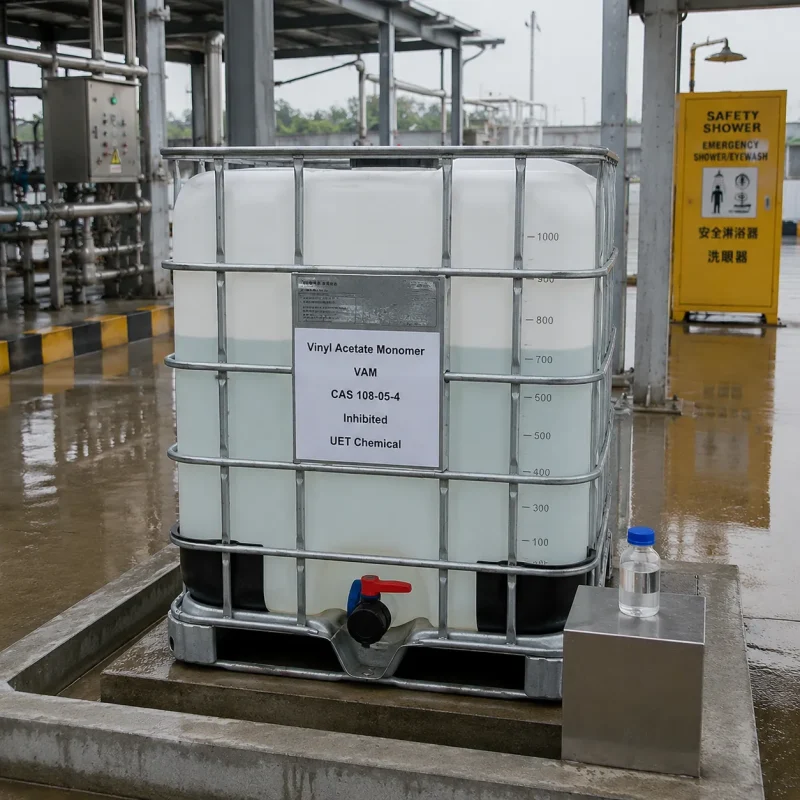
- Packaging: 150 kg steel drum, ISO tank. Custom packaging available upon request.
- Main Applications: PVAc adhesives, PVA fibers/films, EVA resins, VAE emulsions, textile sizing agents
Introduction to Vinyl Acetate Monomer
Vinyl Acetate Monomer is an unsaturated aliphatic ester with a vinyl group directly bonded to an acetate moiety. Its molecular architecture combines a highly polymerizable carbon-carbon double bond with a polar ester functional group. At room temperature, it appears as a colorless, transparent, highly volatile liquid with a distinct sweet fruity odor. It is slightly soluble in water and fully miscible with most organic solvents, alcohols and other acrylic/vinyl monomers.
Trace amounts of hydroquinone or p-benzoquinone are added as inhibitors to prevent spontaneous exothermic self-polymerization during transit and storage. The monomer’s balanced reactivity and polarity make it a versatile industrial intermediate for emulsion polymers, functional resins and specialty fiber materials.
VAM Chemical & Physical Properties
| Property | Value |
|---|---|
| Molecular Formula | C₄H₆O₂ |
| Molecular Weight | 86.09 g/mol |
| Appearance | Colorless transparent liquid |
| Boiling Point | 72.7 °C |
| Freezing Point | -100 °C |
| Density (20 °C) | 0.93 g/cm³ |
| Flash Point (Closed Cup) | -8 °C |
| Purity (GC) | 99.8% min |
Applications of Vinyl Acetate Monomer
Polyvinyl acetate (PVAc) adhesives: Polymerized to produce PVAc homopolymers, widely known as white glue or wood glue. The resulting emulsion delivers rapid setting, strong initial tack and durable bonding to cellulose-based substrates including wood, paper and cardboard.
Polyvinyl alcohol (PVA) production: Serves as the exclusive precursor for PVA. The monomer is polymerized then hydrolyzed to remove acetate groups, producing high-strength PVA for textile fibers, water-soluble packaging films and paper coating binders.
EVA and VAE copolymers: Copolymerized with ethylene to produce ethylene-vinyl acetate (EVA) resins and vinyl acetate-ethylene (VAE) emulsions. EVA resins are used for solar panel encapsulation films, hot-melt adhesives and flexible footwear; VAE emulsions for construction mortars and interior wall paints.
Textile sizing agents: Derived polymers act as film-forming sizing agents for yarns, improving abrasion resistance and weaving efficiency while maintaining good flexibility and easy desizing properties.
Storage & Safety Precautions for VAM
- Store in tightly sealed, grounded stainless steel drums or ISO tanks below 30 °C. The material is extremely flammable and prone to explosive self-polymerization if inhibitor depletes. Do not blanket tanks with pure nitrogen, as the inhibitor requires dissolved oxygen to function.
- In case of uncontrolled polymerization, the reaction generates massive heat and rapid volumetric expansion. Inject a radical inhibitor kill shot immediately and apply external water cooling. Do not open the container, as oxygen ingress can accelerate the reaction.
- Wear chemical splash goggles, heavy-duty nitrile gloves and organic vapor respirators during drum decanting. VAM is a severe eye irritant and known respiratory sensitizer. Handle only in explosion-proof ventilated areas.
VAM FAQ
Q: How does VAM function in adhesive manufacturing?
A: It undergoes free-radical polymerization to form polyvinyl acetate (PVAc), which delivers excellent tack, fast setting and strong bonding to porous substrates like wood and paper, making it the core ingredient in white glues.
Q: Why must VAM be stored with chemical inhibitors?
A: VAM is highly reactive and prone to spontaneous exothermic self-polymerization. Trace inhibitors like hydroquinone scavenge free radicals. Drums must be kept cool, sealed and periodically tested to maintain active inhibitor levels.
Q: What is the primary industrial use of VAM?
A: It is the foundational building block for polyvinyl alcohol (PVA) and ethylene-vinyl acetate (EVA) copolymers, which are essential for textile fibers, construction adhesives and solar panel encapsulation films.
Related products
Manufacturer & Exporter Since 2006
Get Tailored Chemical Raw Material Solutions — Reply Within 1 Hour
Factory-direct pricing, stable high-purity supply and complete compliance documentation for your industrial formulations.
- 1000+Products
- 200+QC Protocols
- 7–15Days Delivery
- Factory-Direct Pricing
- COA / TDS / SDS Included
- Free Samples for Testing
- 40+ Export Countries
Request a Free Quote
Our engineers reply within 1 hour during GMT+8 business hours.
Please include in your inquiry:
- Product name or CAS number
- Required quantity
- Destination country or port
- Preferred packaging