
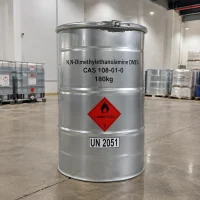
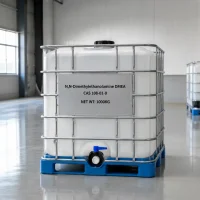
N,N-Dimethylethanolamine (DMEA) CAS 108-01-0
N,N-Dimethylethanolamine (DMEA) is a tertiary amino alcohol solvent that solves poor resin solubility, high VOC emissions, and uncontrolled polyurethane foaming challenges in modern chemical formulations. Coating and polymer manufacturers rely on it for waterborne paint neutralizers, polyurethane catalysts, and boiler water treatment. UETChem supplies this product with strict control over moisture, color, and purity, ensuring exceptional pH buffering capacity and zero formulation degradation. Each shipment includes COA, TDS, SDS.
- CAS No: 108-01-0
- Synonyms: DMEA; 2-(Dimethylamino)ethanol; N,N-Dimethylethanolamine
- EINECS: 203-542-8
- Molecular Formula: C4H11NO
- Molecular Weight: 89.14 g/mol
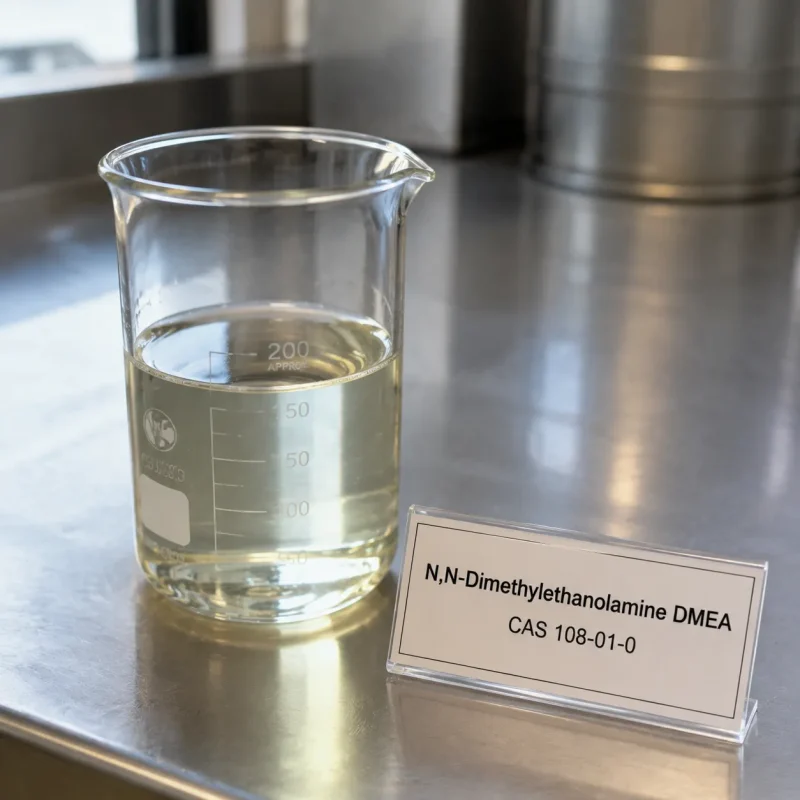
- Appearance: Colorless to pale yellow clear liquid
- Purity: 99.0% min (GC)
- Moisture: 0.1% max
- Flash Point: 41 °C (106 °F) closed cup
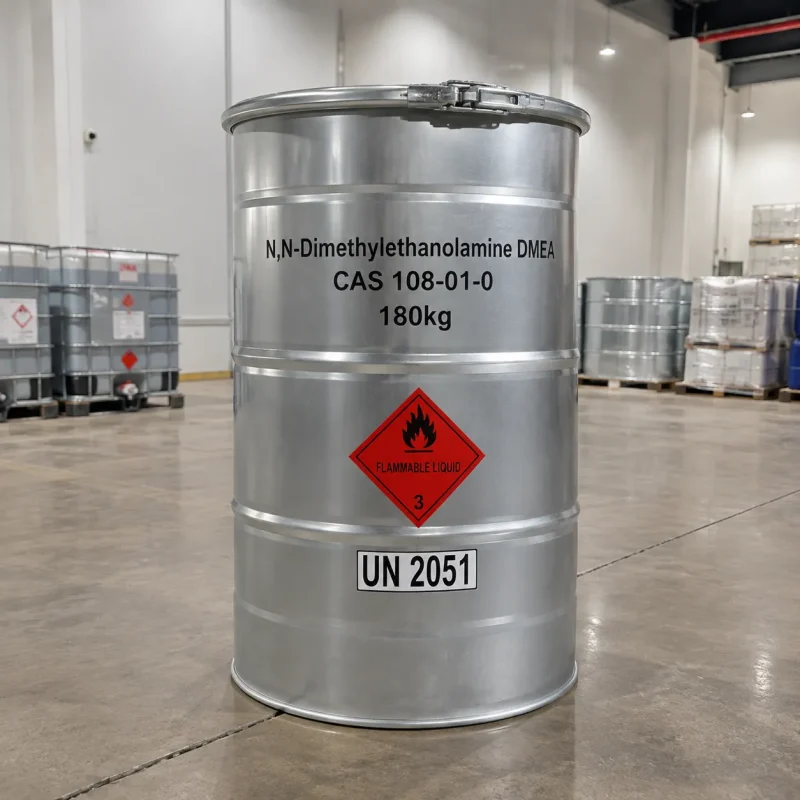
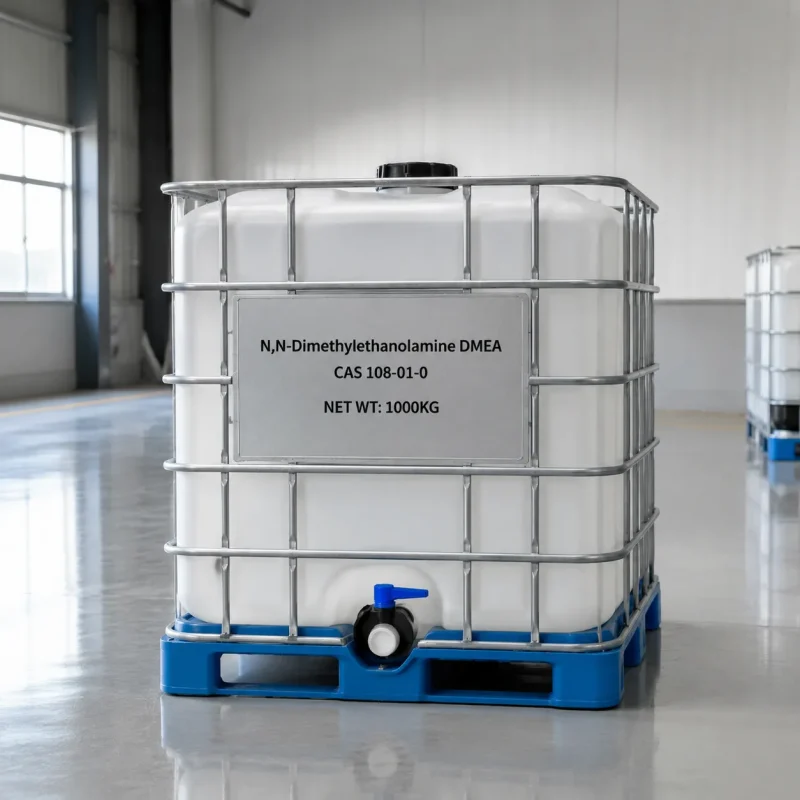
- Packaging: 160 kg (353 lb) HDPE drum, ISO Tank. Custom packaging available upon request.
- Main Applications: Waterborne coatings, polyurethane catalysts, boiler water treatment, surfactant intermediates
Introduction to N,N-Dimethylethanolamine
N,N-Dimethylethanolamine is an aliphatic amino alcohol featuring a tertiary amine group and a primary hydroxyl group attached to a two-carbon ethyl backbone. The molecular architecture provides a unique dual-functional profile. The amine nitrogen acts as a strong base, while the hydroxyl group imparts high water solubility and hydrogen-bonding capability. At room temperature, the compound presents as a colorless to pale yellow clear liquid with a strong, characteristic fishy amine odor.
Industrial facilities consume this intermediate to neutralize acidic polymer chains, catalyze isocyanate reactions, and scavenge dissolved carbon dioxide in high-pressure steam systems. The liquid mixes completely with water, alcohols, and most polar organic solvents.
Key Features of DMEA
- Dual-functional architecture: The tertiary amine provides strong basicity for neutralization, while the hydroxyl group ensures complete water miscibility and resin compatibility.
- VOC compliance: Offers a lower vapor pressure compared to traditional volatile amines like ammonia or triethylamine, reducing atmospheric emissions in waterborne coatings.
- Reactive hydroxyl group: Participates in polyurethane crosslinking, becoming chemically bound to the polymer matrix rather than migrating to the surface.
DMEA Chemical & Physical Properties
| Property | Value |
|---|---|
| Molecular Formula | C4H11NO |
| Molecular Weight | 89.14 g/mol |
| Appearance | Colorless to pale yellow clear liquid |
| Boiling Point | 135 °C (275 °F) |
| Density | 0.89 g/cm³ (7.42 lb/gal) at 20 °C |
| Flash Point | 41 °C (106 °F) closed cup |
| pH (10% aqueous) | 10.0 – 11.5 |
Applications of N,N-Dimethylethanolamine
Waterborne coatings and inks: Dosed at 1-5% to neutralize acidic carboxyl groups on acrylic and alkyd resins. The amine deprotonates the polymer, forcing the hydrophobic chains to collapse and form stable aqueous dispersions. Formulators synthesize these base resins using monomers like Glacial Acrylic Acid (GAA) and rely on DMEA to adjust the final pH without introducing excessive volatile organic compounds.
Polyurethane catalysts: Functions as a reactive blowing and gelling catalyst in flexible and rigid foam production. The tertiary amine accelerates the reaction between polyols and isocyanates, while the hydroxyl group chemically bonds into the growing Polyurethane network, preventing long-term odor emission and amine migration.
Boiler water treatment: Injected into high-pressure steam cycles to neutralize carbonic acid formed by dissolved CO2. The alkaline amine elevates the condensate pH, preventing severe acidic corrosion in steam traps and return lines. Plant operators often blend it with scale inhibitors like Polyepoxysuccinic Acid (PESA) to maintain comprehensive boiler water chemistry.
Storage & Safety Precautions for DMEA
- CO2 absorption: Store in tightly sealed HDPE or stainless steel drums under a nitrogen blanket. The tertiary amine rapidly absorbs atmospheric carbon dioxide, forming insoluble carbonate salts that cloud the liquid and reduce neutralizing efficiency.
- Corrosivity and handling: The concentrated liquid is highly alkaline and corrosive to skin, eyes, and copper alloys. Wear chemical splash goggles, a face shield, and butyl rubber gloves during drum decanting.
- Field note: When neutralizing waterborne resins, add the amine slowly under high-shear mixing. Dumping the liquid into a highly viscous resin base causes localized high-pH hot spots, triggering premature crosslinking or resin shock.
DMEA FAQ
Q: How does N,N-Dimethylethanolamine (DMEA) function in waterborne coatings?
A: N,N-Dimethylethanolamine (DMEA) neutralizes acidic carboxyl groups on resins, converting them into water-soluble salts. This forces hydrophobic polymer chains to form stable aqueous dispersions. The amine provides excellent pH buffering while maintaining low volatile organic compound emissions.
Q: Why is N,N-Dimethylethanolamine (DMEA) used as a polyurethane catalyst?
A: N,N-Dimethylethanolamine (DMEA) acts as a reactive catalyst in polyurethane foams. The tertiary amine accelerates the isocyanate reaction, while the hydroxyl group chemically bonds into the polymer matrix. This reactive structure prevents amine migration, eliminating long-term odor and fogging issues.
Q: What causes N,N-Dimethylethanolamine (DMEA) to degrade in storage?
A: N,N-Dimethylethanolamine (DMEA) rapidly absorbs atmospheric carbon dioxide when exposed to air, forming insoluble carbonate salts. This reaction clouds the liquid and drastically reduces its neutralizing capacity. Manufacturers must store the chemical in tightly sealed, nitrogen-blanked drums.
Related products
Manufacturer & Exporter Since 2006
Get Tailored Chemical Raw Material Solutions — Reply Within 1 Hour
Factory-direct pricing, stable high-purity supply and complete compliance documentation for your industrial formulations.
- 1000+Products
- 200+QC Protocols
- 7–15Days Delivery
- Factory-Direct Pricing
- COA / TDS / SDS Included
- Free Samples for Testing
- 40+ Export Countries
Request a Free Quote
Our engineers reply within 1 hour during GMT+8 business hours.
Please include in your inquiry:
- Product name or CAS number
- Required quantity
- Destination country or port
- Preferred packaging