
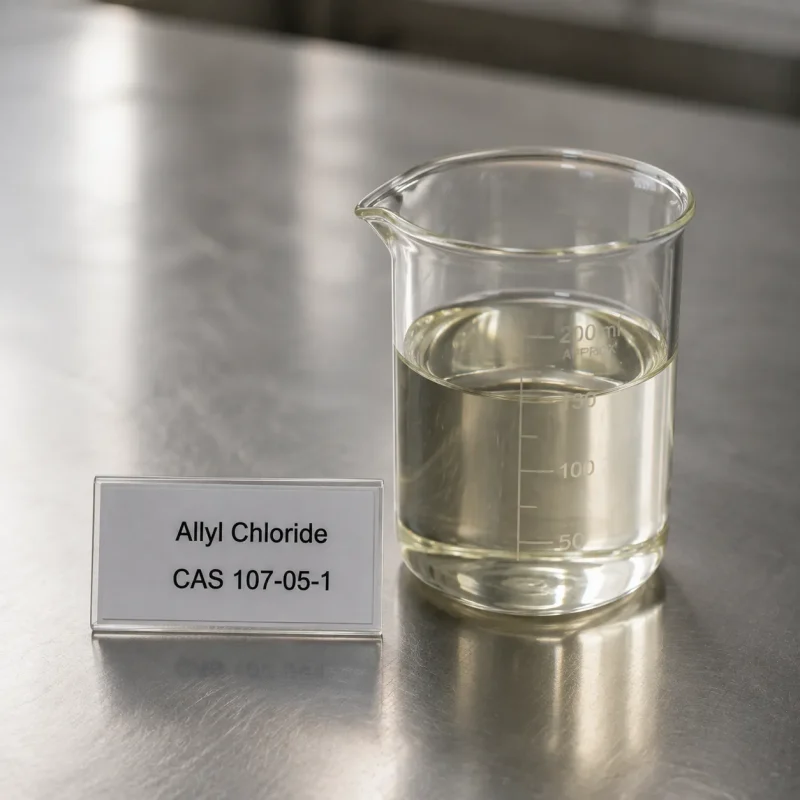
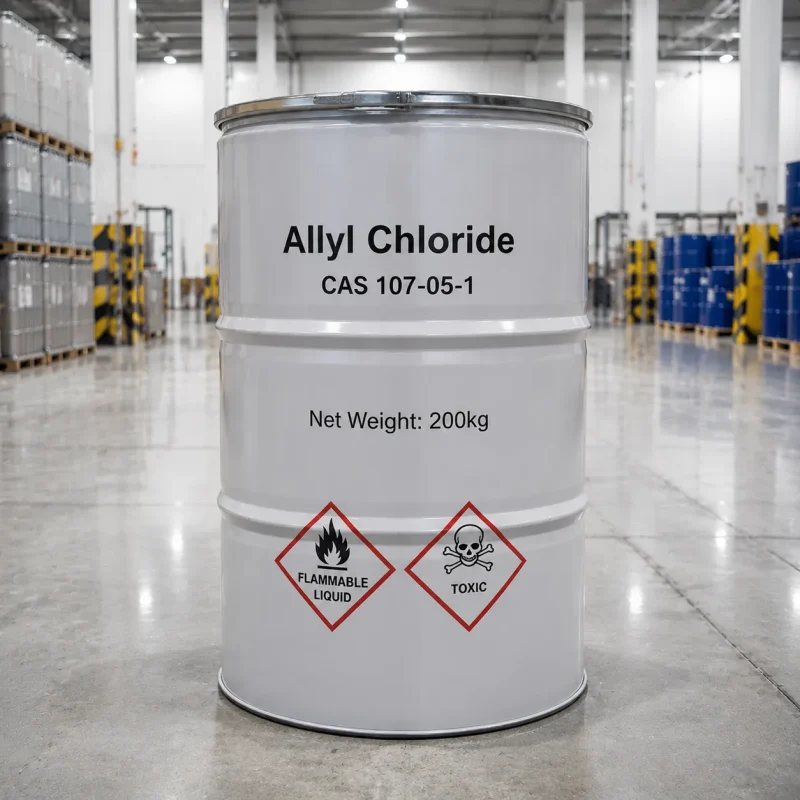
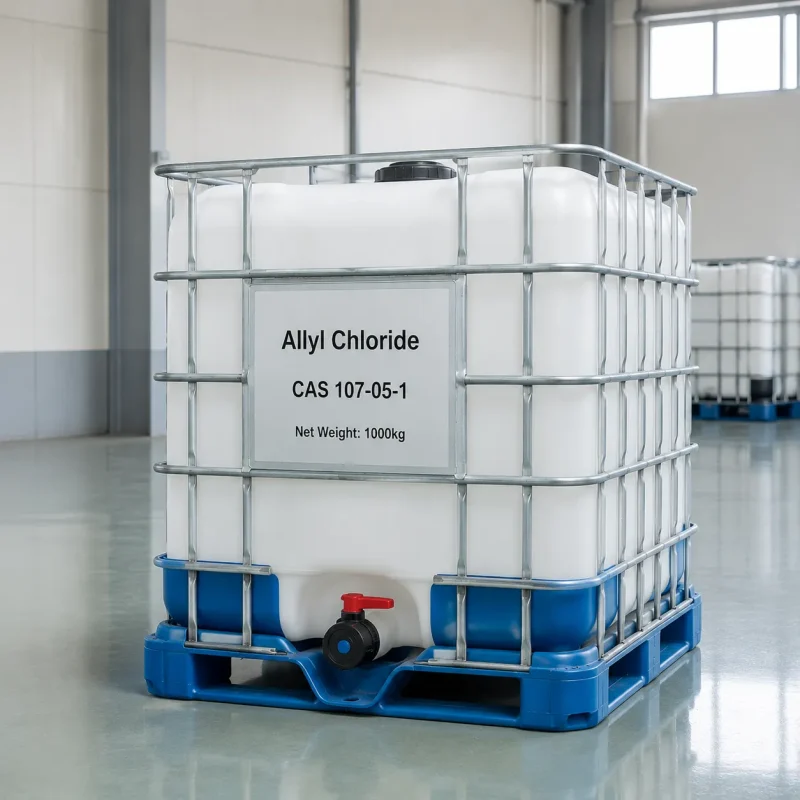
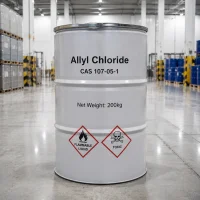
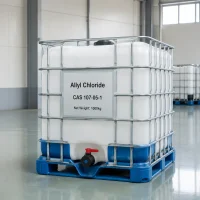
Allyl Chloride CAS 107-05-1
Allyl Chloride is a highly reactive organochlorine intermediate that solves complex synthetic bottlenecks in epoxy resin, silane coupling agent, and pharmaceutical manufacturing. Chemical and polymer producers rely on it for synthesizing epichlorohydrin, glycerol, allyl alcohol, and specialty monomers. UETChem supplies this product with rigorous distillation control, strict moisture limits, and precise inhibitor dosing, ensuring maximum downstream reaction yields and safe transit stability. Each shipment includes COA, TDS, SDS.
- CAS No: 107-05-1
- Synonyms: 3-Chloropropene; 3-Chloro-1-propene
- EINECS: 203-456-0
- Molecular Formula: C3H5Cl
- Molecular Weight: 76.52 g/mol (76.52 lb/lbmol)
- Appearance: Colorless transparent liquid
- Purity: 99.0% min (GC)
- Moisture: 0.05% max
- Flash Point: -32 °C (-26 °F)
- Packaging: 150 kg (331 lb) steel drum, ISO Tank. Custom packaging available upon request.
- Main Applications: Epichlorohydrin synthesis, silane coupling agents, allyl resins, pharmaceutical intermediates
Introduction to Allyl Chloride
Allyl Chloride is an organochlorine compound featuring a three-carbon chain with a terminal carbon-carbon double bond and a chlorine atom attached to the adjacent saturated carbon. The molecular architecture combines the electrophilic reactivity of the allylic halide with the polymerizable nature of the vinyl group. At room temperature, the material presents as a colorless, highly volatile liquid with a sharp, pungent, and irritating odor.
Industrial chemical plants consume this intermediate as a foundational building block for synthesizing a vast array of downstream derivatives. The compound remains insoluble in water but mixes completely with most organic solvents. It undergoes rapid nucleophilic substitution and free-radical addition reactions, making it indispensable for manufacturing complex resins and agricultural chemicals.
Key Features of Allyl Chloride
- Allylic reactivity: The chlorine atom is highly susceptible to nucleophilic displacement, enabling smooth synthesis of alcohols, ethers, and amines.
- Vinyl functionality: The terminal double bond participates in free-radical copolymerization to form crosslinked allyl resins and thermoset networks.
- High volatility: Boils at a low temperature, facilitating easy recovery and purification via distillation in continuous manufacturing processes.
Allyl Chloride Chemical & Physical Properties
| Property | Value |
|---|---|
| Molecular Formula | C3H5Cl |
| Molecular Weight | 76.52 g/mol (76.52 lb/lbmol) |
| Appearance | Colorless transparent liquid |
| Boiling Point | 45 °C (113 °F) |
| Density | 0.94 g/cm³ (7.84 lb/gal) at 20 °C |
| Flash Point | -32 °C (-26 °F) closed cup |
Applications of Allyl Chloride
Epichlorohydrin and Epoxy Resins: Reacted with chlorine and calcium hydroxide to produce epichlorohydrin. This intermediate is subsequently polycondensed with bisphenols to manufacture high-performance networks. Formulators utilize the resulting Bisphenol A Epoxy Resin for marine coatings, electronic encapsulation, and structural adhesives.
Silane Coupling Agents: Undergoes hydrosilylation with trichlorosilane to produce allyltrichlorosilane, which is further esterified to create silane coupling agents. These agents bridge inorganic fillers and organic polymers, enhancing the mechanical strength of composite materials.
Polymer and Resin Synthesis: Copolymerized with other unsaturated monomers like Methyl Acrylate (MA) to produce specialty thermoplastic elastomers and impact modifiers. It also reacts with phthalic anhydride to form diallyl phthalate, a vital prepolymer for molding compounds.
Pharmaceutical and Agrochemical Intermediates: Serves as an alkylating agent to introduce the allyl group into active pharmaceutical ingredients and crop protection molecules. It is often handled alongside other dicarboxylic acids like Adipic Acid in complex multi-step organic syntheses.
Storage & Safety Precautions for Allyl Chloride
- Flammability and static control: Store in tightly sealed, grounded stainless steel or HDPE drums in a cool, explosion-proof warehouse. Allyl Chloride is extremely flammable with a flash point of -32 °C. Keep away from heat, sparks, and open flames.
- Toxicity and PPE: The liquid and vapor are severe respiratory, skin, and eye irritants, and a known lachrymator. Wear a full-face respirator with organic vapor cartridges, heavy-duty chemical gloves, and an impermeable apron during drum decanting.
- Field note: When transferring the liquid, maintain the temperature below 25 °C (77 °F). Excessive heat accelerates the vaporization rate, increasing the pressure inside closed containers and creating a severe inhalation hazard upon opening.
Allyl Chloride FAQ
Q: How does Allyl Chloride function in epoxy resin production?
A: Allyl Chloride serves as the primary feedstock for manufacturing epichlorohydrin through chlorination and dehydrochlorination. The resulting epichlorohydrin reacts with bisphenols to form epoxy resins. This pathway ensures high purity and optimal crosslink density for industrial coatings.
Q: Why is Allyl Chloride highly reactive in organic synthesis?
A: Allyl Chloride features an allylic carbon-chlorine bond susceptible to nucleophilic substitution. The adjacent double bond stabilizes the transition state, allowing rapid displacement by alcohols and amines to synthesize diverse pharmaceutical and agrochemical intermediates efficiently.
Q: What safety measures are required when handling Allyl Chloride?
A: Allyl Chloride is extremely flammable and a severe lachrymator. Store it in grounded, explosion-proof cabinets away from ignition sources. Operators must wear full-face organic vapor respirators and chemical-resistant gloves to prevent severe eye irritation, respiratory damage, and skin burns.
Related products
Manufacturer & Exporter Since 2006
Get Tailored Chemical Raw Material Solutions — Reply Within 1 Hour
Factory-direct pricing, stable high-purity supply and complete compliance documentation for your industrial formulations.
- 1000+Products
- 200+QC Protocols
- 7–15Days Delivery
- Factory-Direct Pricing
- COA / TDS / SDS Included
- Free Samples for Testing
- 40+ Export Countries
Request a Free Quote
Our engineers reply within 1 hour during GMT+8 business hours.
Please include in your inquiry:
- Product name or CAS number
- Required quantity
- Destination country or port
- Preferred packaging