
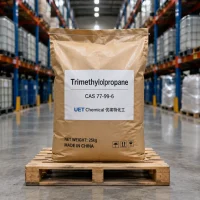
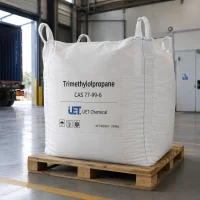
Trimethylolpropane (TMP) CAS 77-99-6
Trimethylolpropane (TMP) is a trifunctional aliphatic polyol that solves low crosslink density, poor chemical resistance, and thermal degradation challenges in advanced polymer formulations. Coating and lubricant manufacturers rely on it for alkyd resins, polyurethane coatings, synthetic lubricants, and UV-curable monomers. UETChem supplies this product with strict control over hydroxyl value, moisture, and color, ensuring exceptional branching efficiency and crystal-clear optical grades. Each shipment includes COA, TDS, SDS.
- CAS No: 77-99-6
- Synonyms: TMP; 2-Ethyl-2-(hydroxymethyl)-1,3-propanediol
- EINECS: 201-072-8
- Molecular Formula: C6H14O3
- Molecular Weight: 134.17 g/mol
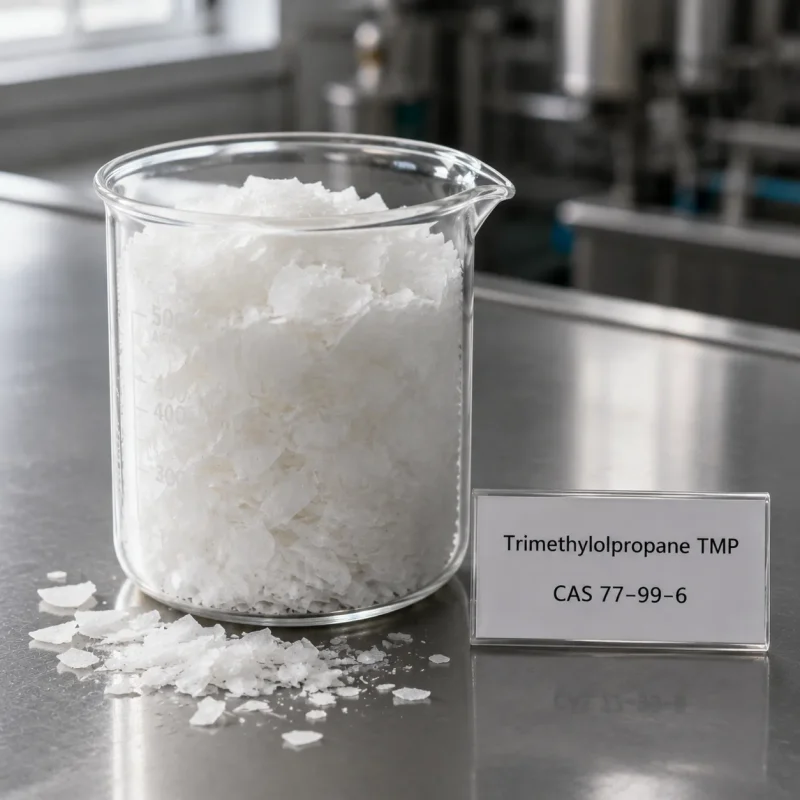
- Appearance: White crystalline powder or flakes
- Hydroxyl Value: 1230 – 1270 mg KOH/g
- Moisture: 0.1% max
- Melting Point: 58 – 62 °C (136 – 144 °F)
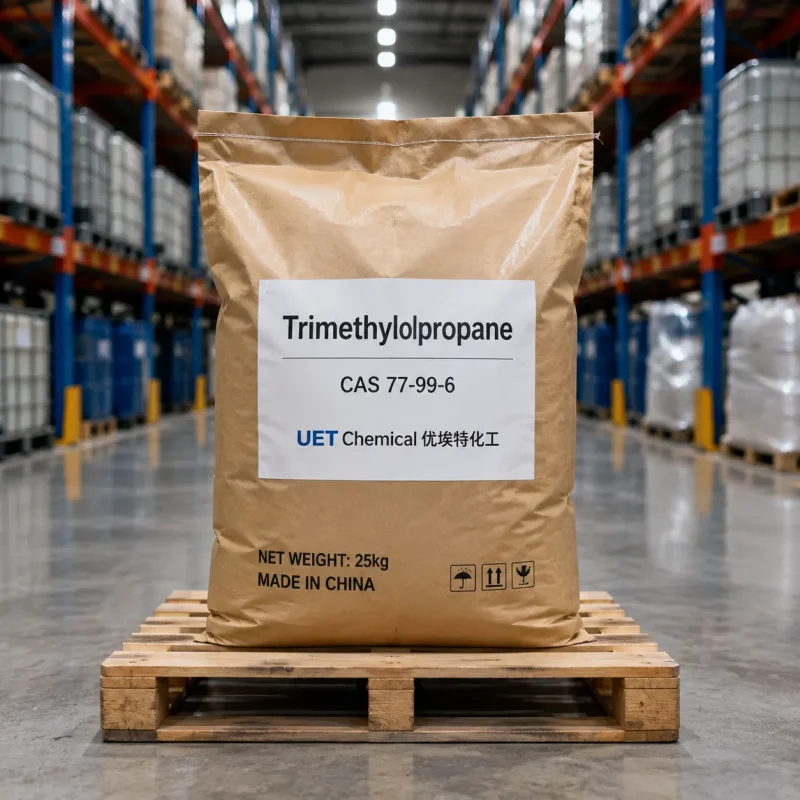
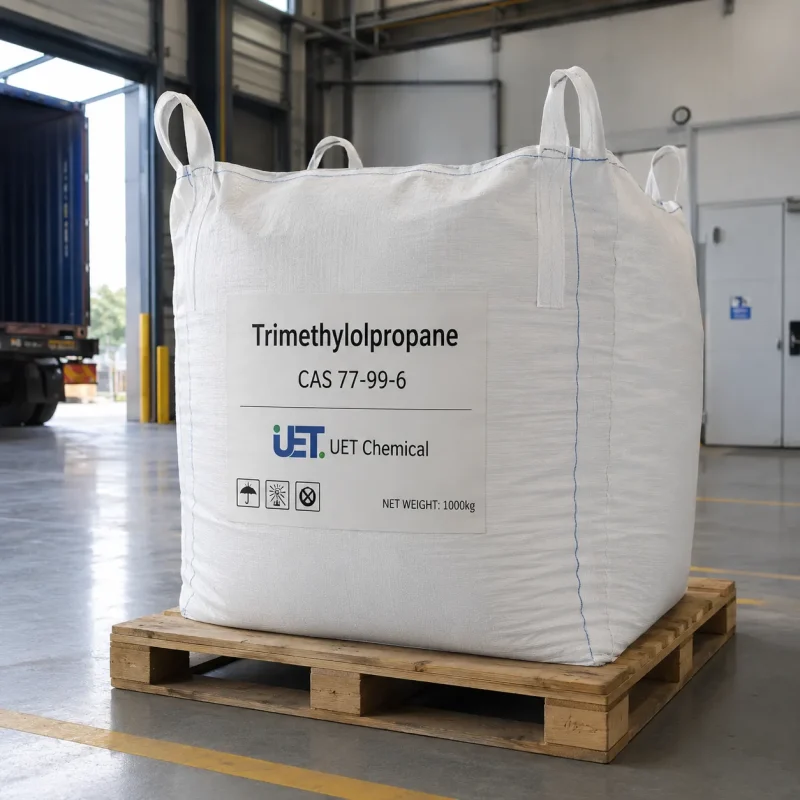
- Packaging: 25 kg (55 lb) kraft bag, 500 kg (1102 lb) pallet. Custom packaging available upon request.
- Main Applications: Alkyd resins, polyurethane coatings, synthetic lubricants, rosin esters, UV-curable monomers
Introduction to Trimethylolpropane
Trimethylolpropane is a branched aliphatic triol featuring a central neopentyl carbon bonded to three primary hydroxymethyl groups. The molecular architecture provides three highly reactive primary hydroxyl sites while introducing significant steric hindrance around the central carbon. At room temperature, the compound presents as a white, odorless crystalline powder or flake. It dissolves readily in water, alcohols, and polar organic solvents, remaining stable under standard processing temperatures.
Key Features of TMP
- Trifunctional architecture: The three primary hydroxyl groups enable dense, three-dimensional crosslinking when reacted with polyisocyanates, anhydrides, or acrylic acids.
- Neopentyl steric protection: The absence of beta-hydrogens adjacent to the ester linkages prevents thermal and oxidative degradation in high-temperature environments.
- High branching efficiency: Introduces structural branching into linear polymer chains, disrupting crystallization and improving flexibility and solubility.
TMP Chemical & Physical Properties
| Property | Value |
|---|---|
| Molecular Formula | C6H14O3 |
| Molecular Weight | 134.17 g/mol |
| Appearance | White crystalline powder or flakes |
| Melting Point | 58 – 62 °C (136 – 144 °F) |
| Hydroxyl Value | 1230 – 1270 mg KOH/g |
| Boiling Point | 295 °C (563 °F) at 760 mmHg |
| Solubility | Soluble in water, alcohols, and polar solvents |
Applications of Trimethylolpropane
Alkyd and polyester resins: Acts as a core branching agent in the synthesis of alkyd resins and powder coating polyesters. The triol structure promotes the formation of highly branched polymer networks, enhancing the hardness, gloss retention, and outdoor weatherability of the final coating film.
Polyurethane coatings and elastomers: Reacts with diisocyanates to produce high-crosslink-density polyurethane networks. Formulators incorporate TMP into coating and elastomer formulations to boost solvent resistance, abrasion tolerance, and overall mechanical strength.
Synthetic lubricants and hydraulic fluids: Esterified with linear fatty acids to manufacture TMP triesters. The neopentyl structure imparts exceptional thermal and oxidative stability to the synthetic esters, making them ideal base oils for aviation engine lubricants and high-temperature industrial greases.
Storage & Safety Precautions for TMP
- Moisture and caking control: Store in tightly sealed, multi-wall kraft bags or fiber drums in a climate-controlled warehouse below 25 °C (77 °F). The crystalline powder is highly hygroscopic. Moisture ingress causes the powder to clump and hinders flowability in automated dosing systems.
- Dust management: The fine dust poses a mild nuisance hazard. Use local exhaust ventilation and wear N95 respirators during bag slitting and dry blending operations.
- Field note: When melting TMP for resin polycondensation, maintain the reactor temperature strictly between 90 °C (194 °F) and 110 °C (230 °F). Excessive heating dehydrates the polyol and forms unwanted cyclic ether byproducts.
TMP FAQ
Q: How does Trimethylolpropane (TMP) improve alkyd resin performance?
A: Trimethylolpropane (TMP) provides three primary hydroxyl groups that create dense, highly branched crosslinked networks in alkyd resins. This trifunctional structure drastically improves the chemical resistance, gloss retention, and outdoor weatherability of industrial coatings and architectural paints.
Q: Why is Trimethylolpropane (TMP) preferred for synthetic lubricants?
A: Trimethylolpropane (TMP) reacts with fatty acids to form polyol esters with exceptional thermal stability. The neopentyl structure lacks beta-hydrogens, preventing thermal degradation at high temperatures. This makes TMP esters ideal for aviation and high-performance industrial synthetic lubricants.
Q: What causes Trimethylolpropane (TMP) to cake during storage?
A: Trimethylolpropane (TMP) is highly hygroscopic and rapidly absorbs ambient moisture, causing the crystalline powder to clump. Manufacturers must store TMP in tightly sealed bags or drums in a climate-controlled warehouse. Using dehumidifiers prevents moisture ingress and preserves powder flowability.
Related products
Manufacturer & Exporter Since 2006
Get Tailored Chemical Raw Material Solutions — Reply Within 1 Hour
Factory-direct pricing, stable high-purity supply and complete compliance documentation for your industrial formulations.
- 1000+Products
- 200+QC Protocols
- 7–15Days Delivery
- Factory-Direct Pricing
- COA / TDS / SDS Included
- Free Samples for Testing
- 40+ Export Countries
Request a Free Quote
Our engineers reply within 1 hour during GMT+8 business hours.
Please include in your inquiry:
- Product name or CAS number
- Required quantity
- Destination country or port
- Preferred packaging