
Dimethyl Adipate (DMA) CAS 627-93-0
Dimethyl Adipate (DMA) is a colorless to pale yellow liquid aliphatic diester with two terminal methyl ester groups, used mainly as a slow-evaporating solvent, coalescing aid and plasticizing intermediate in coatings, adhesives and flexible PVC. The flexible -(CH2)4- spacer helps soften polymer films while maintaining low volatility. Each lot ships with COA, TDS and SDS.
- CAS No: 627-93-0
- Synonyms: Dimethyl hexanedioate, adipic acid dimethyl ester, hexanedioic acid dimethyl ester
- EINECS: 211-017-7
- Molecular Formula: C8H14O4
- Molecular Weight: 174.20 g/mol
- Appearance: Colorless to pale yellow liquid
- Purity: ≥99.0%
- Boiling Point: 226-229 °C (439-444 °F)
- Water Content: ≤0.20% typical
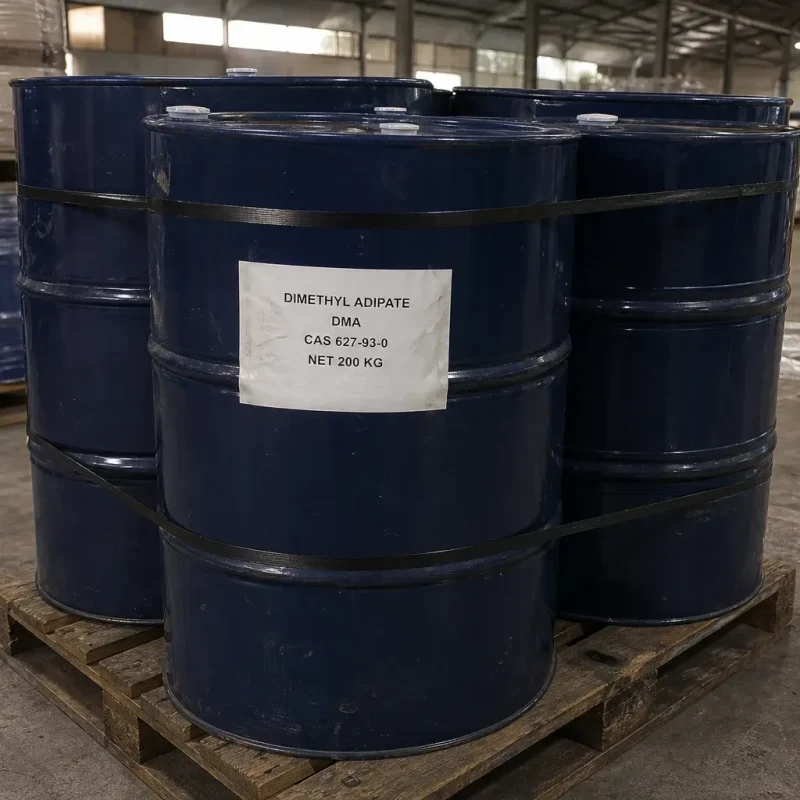
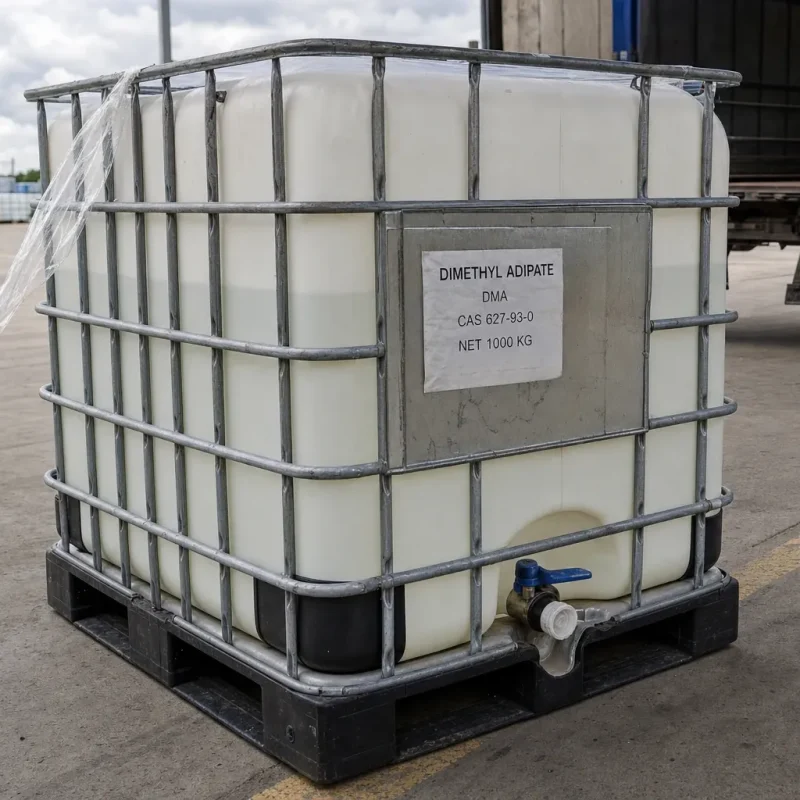
- Packaging: 25 kg (55 lb) pail, 200 kg (441 lb) drum, IBC; Custom packaging available upon request.
- Main Applications: Paint removers, waterborne coatings, PU adhesives, flexible PVC, chemical intermediate
Introduction to DMA
Dimethyl adipate (DMA) is a colorless to pale yellow liquid diester with the structure CH3OOC-(CH2)4-COOCH3. The two methyl ester groups provide polar carbonyl sites for resin solvation, while the four-methylene spacer gives chain flexibility and a relatively low evaporation rate. It is used as a solvent, coalescing aid and plasticizing intermediate in coatings, paint removers, adhesives and flexible PVC.
DMA boils near 226-229 °C (439-444 °F), which helps maintain wet edge in film-forming systems and reduces rapid flash-off during application. In moisture-cure polyurethane or acid-catalyzed systems, water and acidity must be checked because ester hydrolysis can generate methanol and acid species over time. Store sealed at 5-35 °C (41-95 °F); verify incoming water by Karl Fischer (ISO 760) and acidity by ASTM D1613, since batch acid value can drift after partial use if humid air enters the container.
Key Features of DMA
- Two terminal methyl ester groups: CH3OOC-(CH2)4-COOCH3 provides polar carbonyl solvation and reactive ester sites for hydrolysis, transesterification or aminolysis.
- Four-methylene spacer: The -(CH2)4- chain adds flexibility to polymer films and supports plasticization of polar resins.
- High boiling range: 226-229 °C (439-444 °F) supports slow evaporation, longer open time and improved film formation.
- Limited water miscibility: Slight water solubility allows use in waterborne latex coalescence, but moisture can raise acid value during storage.
- Aliphatic ester profile: Mild ester odor and balanced solvency make DMA suitable for coating, adhesive and cleaning formulations.
- QC-sensitive purity: Water content and acid value affect moisture-cure polyurethane performance; Karl Fischer and ASTM D1613 checks are recommended.
DMA Chemical & Physical Properties
| Property | Value |
|---|---|
| Molecular Formula | C8H14O4 |
| Molecular Weight | 174.20 g/mol |
| Structural Formula | CH3OOC-(CH2)4-COOCH3 |
| Boiling Point | 226-229 °C (439-444 °F) |
| Density | 1.05-1.07 g/mL at 20 °C (68 °F) |
| Flash Point | ~113 °C (235 °F) closed cup |
| Solubility | Slightly soluble in water; miscible with alcohols, ketones, esters and aromatic hydrocarbons |
| Refractive Index | n20/D ~1.426 |
| Acid Value | ≤0.5 mg KOH/g typical |
| Water Content | ≤0.20% typical |
| Assay | ≥99.0% |
Applications of DMA
Paint and coating removers: DMA penetrates and swells dried binder films, helping soften alkyd, acrylic or polyurethane coatings. The high boiling range supports longer wet time. Typical loading is 10-40 wt%, depending on film thickness and resin type.
Waterborne coating coalescence: DMA temporarily softens acrylic or polyurethane latex particles, helping particles merge into a continuous film. Typical loading is 1-5 wt% on total formulation; adjust by MFFT, drying time and film gloss tests.
PU adhesives and sealants: The ester carbonyls solvate polyurethane chains, reduce viscosity and improve substrate wetting. Typical use is 5-25 wt% in solvent blends. Check water content before use, because moisture can react with isocyanate groups and cause foaming or cure delay.
Flexible PVC articles: DMA ester groups interact with PVC chains and act as a co-plasticizer, improving flexibility and processability. Typical levels are 5-20 phr in films, cable compounds, synthetic leather and soft profiles.
Chemical intermediate: Both methyl ester groups can hydrolyze to adipic acid, transesterify with diols or react with amines. DMA is used in polyester, polyurethane and specialty ester synthesis where controlled ester functionality is needed.
Storage & Safety Precautions for DMA
- Storage: Keep sealed and dry at 5-35 °C (41-95 °F). DMA can absorb moisture and slowly hydrolyze, raising acid value; reseal partial drums and purge with dry nitrogen if possible.
- Incompatibles: Keep away from strong oxidizers, strong acids and strong bases; acid/base-catalyzed hydrolysis can form methanol and adipic acid species.
- Safety: Use ventilation, nitrile gloves and goggles. Avoid vapor or mist inhalation; treat DMA as a combustible liquid with flash point ~113 °C (235 °F). Follow the current SDS for GHS classification.
- Transport: Non-DG in most cases; verify by current SDS. Use leak-free drums or IBCs and check seals, bungs and pallets before loading.
DMA FAQ
Q: What should be checked before using DMA CAS 627-93-0 in polyurethane adhesives?
A: Check water content by Karl Fischer and acidity by ASTM D1613. Water reacts with isocyanates, and acid drift can affect catalyst balance. DMA gives slow-evaporating ester solvency, but high moisture or acid value can cause foaming, viscosity change or cure delay. Reseal drums after opening.
Q: Why is DMA suitable for paint removers and waterborne film formation?
A: DMA has two ester groups and a boiling range near 226-229 °C (439-444 °F). It swells and softens polymer films in removers, maintaining wet edge. In waterborne latex, it temporarily softens particles to aid coalescence. Typical loading is 1-5 wt% in coatings and 10-40 wt% in removers.
Q: How should DMA be stored to control hydrolysis?
A: Keep containers sealed at 5-35 °C (41-95 °F), away from water, strong acids and strong bases. Ester hydrolysis can generate methanol and acid species, increasing acid value. Use dry equipment, reseal partial containers, and retest acid value before use in moisture-sensitive systems.
Related products
Manufacturer & Exporter Since 2006
Get Tailored Chemical Raw Material Solutions — Reply Within 1 Hour
Factory-direct pricing, stable high-purity supply and complete compliance documentation for your industrial formulations.
- 1000+Products
- 200+QC Protocols
- 7–15Days Delivery
- Factory-Direct Pricing
- COA / TDS / SDS Included
- Free Samples for Testing
- 40+ Export Countries
Request a Free Quote
Our engineers reply within 1 hour during GMT+8 business hours.
Please include in your inquiry:
- Product name or CAS number
- Required quantity
- Destination country or port
- Preferred packaging