
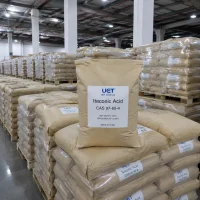
Itaconic Acid (IA) CAS 97-65-4
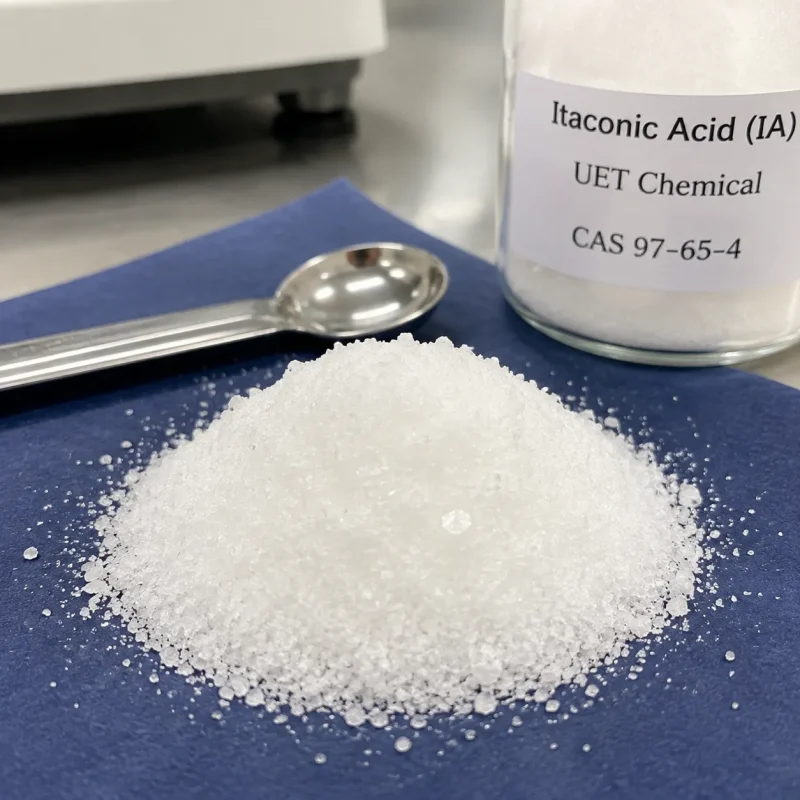
Itaconic Acid is a bio-based unsaturated dicarboxylic acid featuring two carboxyl groups and one terminal methylene double bond. Supplied as a white crystalline powder (≥99.5% purity), it acts as a crosslinking monomer and chelating builder in superabsorbent polymers (SAP), scale inhibitors, and SBR latex. Unlike traditional unsaturated acids, IA offers 100% bio-carbon content with near-zero vapor pressure and odor. Each shipment includes COA, TDS, and SDS.
- CAS No.: 97-65-4
- Synonyms: Itaconic acid; 2-Methylidenebutanedioic acid; Methylenesuccinic acid; IA
- EINECS: 202-598-0
- Molecular Formula: C₅H₆O₄
- Molecular Weight: 130.10 g/mol
- Appearance: White crystalline powder
- Purity: ≥99.5%
- Melting Point: 165–168 °C (with decomposition)
- Acid Value: 840–860 mg KOH/g
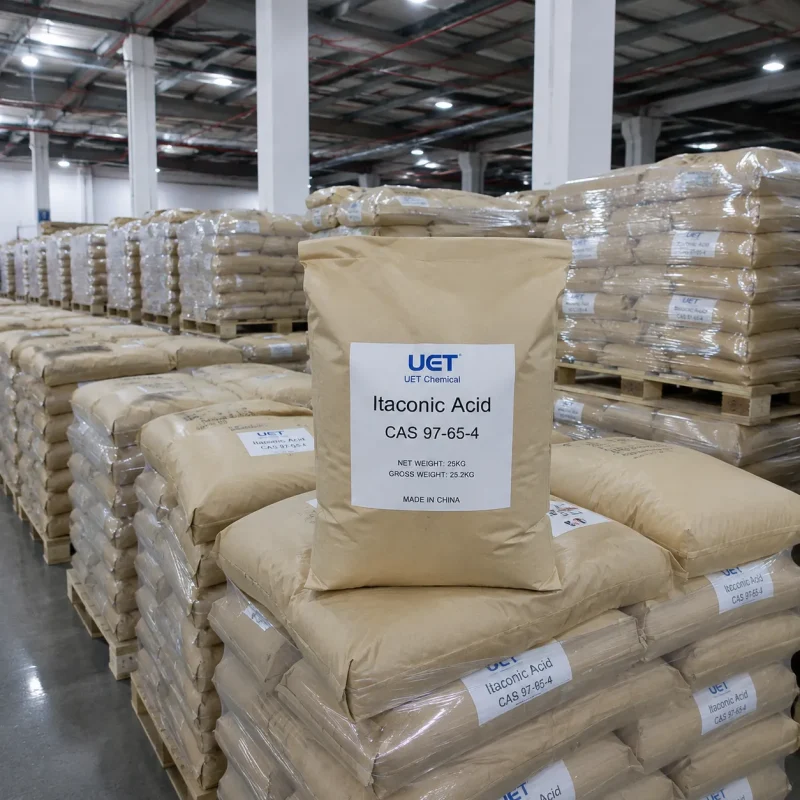
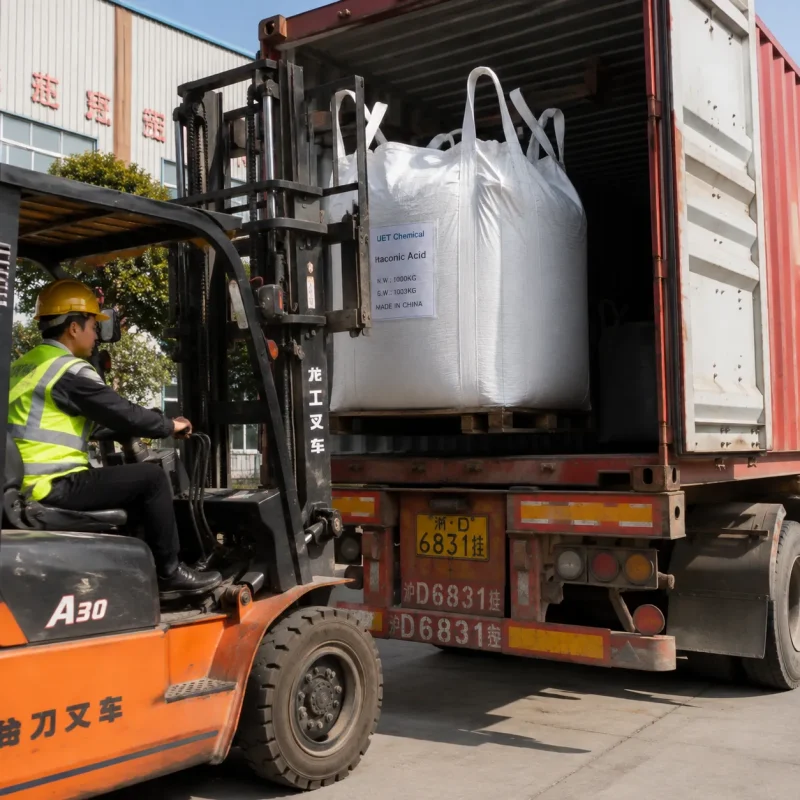
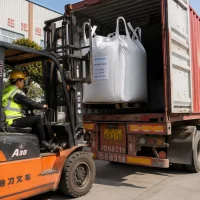
- Packaging: 25 kg multi-wall paper bag / 500 kg bulk bag. Custom packaging available upon request.
- Main Applications: Superabsorbent polymers; water treatment scale inhibitors; carboxylated SBR latex; bio-based alkyd resins
Introduction to Itaconic Acid
Itaconic Acid is a white crystalline powder, an unsaturated dicarboxylic acid featuring a reactive terminal methylene double bond flanked by two carboxyl groups. Produced via Aspergillus terreus fermentation, it functions as a bio-based crosslinking monomer and heavy-metal chelating builder in superabsorbent polymers (SAP) and industrial scale inhibitors.
The molecule delivers 100% bio-carbon content with negligible vapor pressure at 25 °C, eliminating the pungent, lachrymatory fumes typical of traditional unsaturated acids during open-vessel reactor charging. One practical caution: the bulky alpha-methylene group creates steric hindrance, slowing down free-radical propagation. Formulators must increase initiator load by 10–15% or extend reaction time to achieve target molecular weights in copolymerization.
Key Features of Itaconic Acid
- 100% renewable bio-carbon. Synthesised via microbial fermentation rather than petrochemical cracking. It qualifies for USDA BioPreferred and EU Ecolabel certifications, reducing the carbon footprint of downstream polymers.
- Dual-functionality architecture. The C=C bond participates in radical copolymerization, while the two -COOH groups provide strong metal ion chelation (Ca²⁺, Mg²⁺) and pH buffering in aqueous systems.
- Low odor and safe handling. Vapor pressure at 25 °C is negligible. It does not emit lachrymatory vapors, making reactor charging and open-vessel blending significantly safer for operators.
- Steric disruption in polymers. The bulky methylene branch disrupts polymer chain crystallinity. When copolymerized with acrylates, it lowers the glass transition temperature (Tg) and increases the flexibility of the final film.
Itaconic Acid Chemical & Physical Properties
| Property | Value |
|---|---|
| Molecular Formula | C₅H₆O₄ |
| Molecular Weight | 130.10 g/mol |
| Melting Point | 165–168 °C (decomposes before boiling) |
| Density (solid, 20 °C) | ~1.63 g/cm³ |
| Solubility in Water | 8.4 g/100 mL at 20 °C; highly soluble at >40 °C |
| pH (1% aqueous solution) | ~2.0 |
| Acid Value | 840–860 mg KOH/g |
| Heavy Metals | ≤10 ppm |
Applications of Itaconic Acid
Superabsorbent Polymers (SAP): Copolymerized at 1–5 mol%. The bulky itaconate units disrupt polyacrylate crystallinity, increasing the swelling capacity in 0.9% NaCl solution by 10–15% compared to pure homopolymer networks.
Scale Inhibitors and Detergent Builders: Copolymerized with maleic anhydride. The two carboxyl groups chelate calcium and magnesium ions in hard water, preventing calcium carbonate precipitation. Typical dose: 5–15 ppm in cooling water towers or 1–3% in liquid detergents.
Carboxylated SBR Latex (Paper & Textile): Used at 1–3% as a functional monomer. The -COOH groups provide adhesion to cellulose fibers and create crosslinking sites for metal ions (e.g., zinc or zirconium) during thermal curing.
Bio-based Alkyd and Powder Coatings: Esterified with polyols to introduce unsaturation into the resin backbone. The C=C bond allows subsequent oxidative or UV curing, while the bio-origin lowers the VOC footprint of the final coating.
Storage & Safety Precautions for Itaconic Acid
Storage conditions. Store in sealed bags on pallets at 5–30 °C, in a dry environment. Itaconic Acid is moderately hygroscopic. If warehouse relative humidity exceeds 65%, the powder absorbs moisture and cakes into hard blocks. Keep away from strong oxidisers and amines.
Safety and PPE. GHS: Skin Corr. 1B, Eye Dam. 1. It is a strong organic acid. Wear a dust mask (N95 or P2), chemical-splash goggles, and nitrile gloves during bag emptying to prevent inhalation of acid dust and severe eye irritation. Spills: sweep up dry, then wash the floor with water and neutralise with sodium bicarbonate.
Transport classification. Non-DG. Not regulated under IMDG, IATA, or ADR. Ship as standard general cargo. Ensure container is dry to prevent bag degradation during ocean freight.
Practitioner note: When dissolving Itaconic Acid in water for reactor charging, heat the water to 40–50 °C. At 20 °C, solubility is only 8.4 g/100 mL. Dumping cold IA powder into a cold reactor leads to undissolved crystals settling at the bottom, causing localized high-acid spots and erratic polymerization kinetics.
Itaconic Acid FAQ
Q: Can Itaconic Acid (CAS 97-65-4) directly replace traditional unsaturated acids in SAP?
A: Not 1:1 by weight. IA has a higher MW (130) and lower double-bond reactivity due to steric hindrance. Replace 1–5 mol% to disrupt crystallinity and boost saline swelling. Expect 10–15% longer reaction times or slightly higher initiator loads to compensate for the slower propagation rate.
Q: Why did my IA powder form hard clumps in the warehouse?
A: Moisture uptake. IA is moderately hygroscopic. If warehouse relative humidity exceeds 65%, the powder absorbs water and cakes. Store bags on pallets, keep RH below 60%. Clumped IA is chemically intact; crush or mill it before reactor charging. It will dissolve normally once heated.
Q: How does IA perform as a scale inhibitor compared to pure polyacrylates?
A: IA provides two free carboxyl groups immediately for calcium and magnesium chelation. IA-based copolymers also show superior biodegradation (OECD 301B) compared to pure polyacrylates, making IA the preferred builder for EU Ecolabel dish and laundry detergents.
Related products
Manufacturer & Exporter Since 2006
Get Tailored Chemical Raw Material Solutions — Reply Within 1 Hour
Factory-direct pricing, stable high-purity supply and complete compliance documentation for your industrial formulations.
- 1000+Products
- 200+QC Protocols
- 7–15Days Delivery
- Factory-Direct Pricing
- COA / TDS / SDS Included
- Free Samples for Testing
- 40+ Export Countries
Request a Free Quote
Our engineers reply within 1 hour during GMT+8 business hours.
Please include in your inquiry:
- Product name or CAS number
- Required quantity
- Destination country or port
- Preferred packaging