
Isobutyl Acrylate (IBA) CAS 106-63-8
Isobutyl Acrylate (IBA) is a branched-chain acrylic ester monomer supplied as colorless transparent liquid with characteristic acrylate odor. As the isobutyl ester of acrylic acid, it delivers ultra-low glass-transition temperature (Tg ≈ –60 °C) and superior hydrophobicity to homopolymers and copolymers. Core uses include architectural latex paint emulsions, pressure-sensitive adhesive formulation, textile finishing binders, and paper coating systems. Each shipment includes COA, TDS, and SDS.
- CAS No: 106-63-8
- Synonyms: 2-Methylpropyl 2-propenoate, Acrylic acid isobutyl ester, IBA, Prop-2-enoic acid 2-methylpropyl ester
- EC Number: 203-416-3
- Molecular Formula: C7H12O2
- Molecular Weight: 128.17 g/mol
- Appearance: Colorless transparent liquid
- Purity (GC): ≥ 99.0%
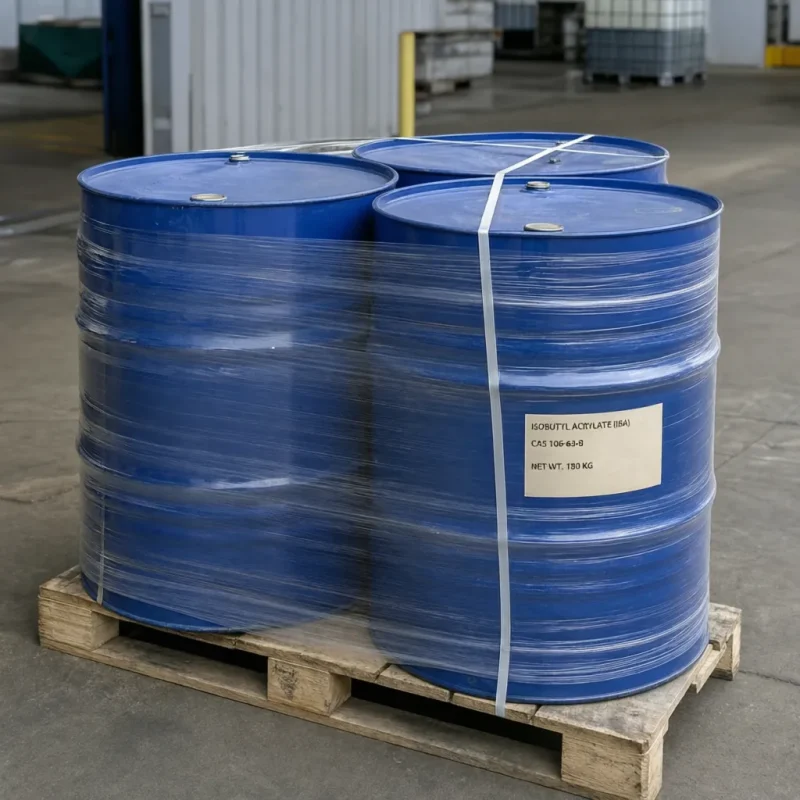
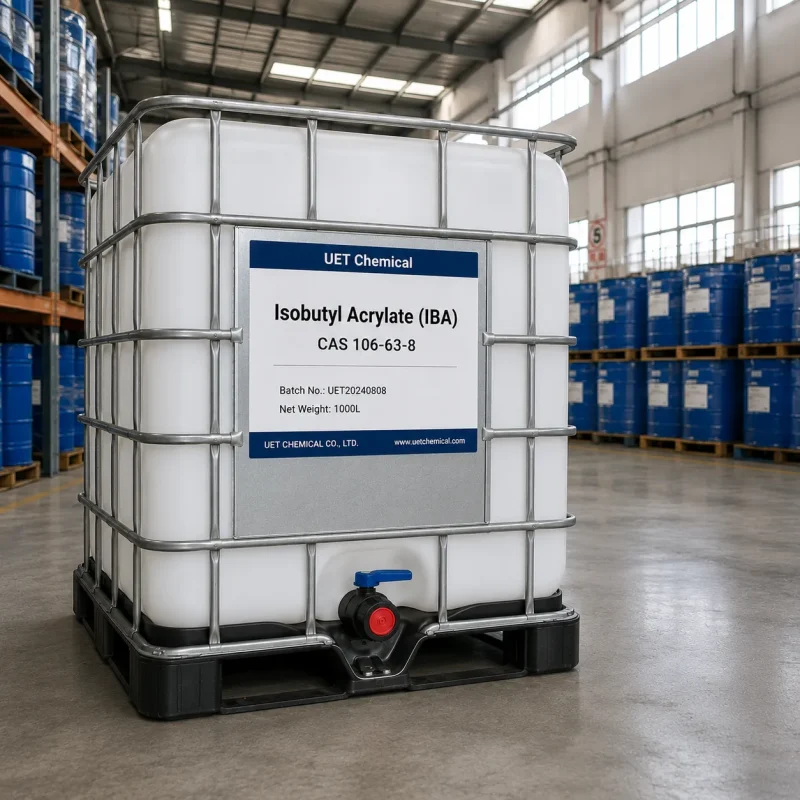
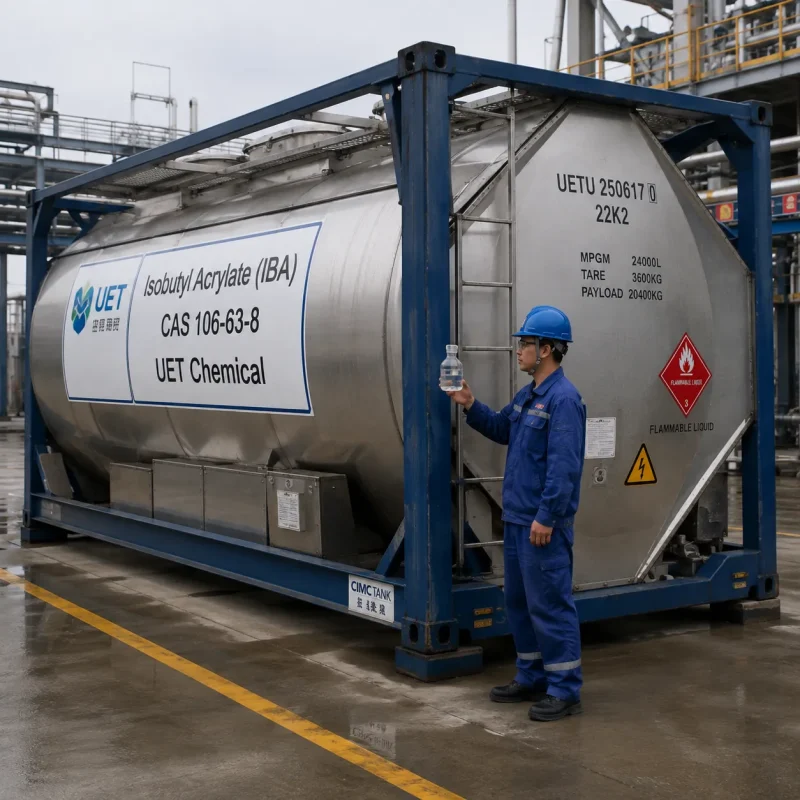
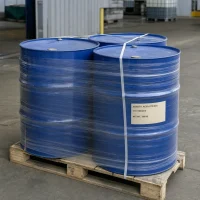
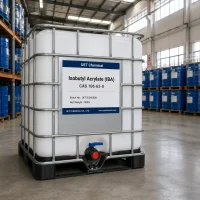
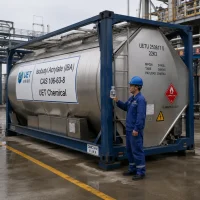
- Packaging: 200 kg (440 lb) galvanized steel drum; 1000 kg (2200 lb) IBC tote; ISO tank bulk. Custom packaging available upon request.
- Main Applications: Acrylic latex emulsions for coatings, pressure-sensitive adhesives (PSA), textile finishing agents, paper coating binders, plastic impact modification
Introduction to Isobutyl Acrylate (IBA)
Isobutyl Acrylate (IBA) is a branched-chain acrylate ester monomer produced by direct esterification of acrylic acid with isobutanol over acid ion-exchange catalyst. The 2-methylpropyl (isobutyl) side chain introduces greater free volume and steric bulk compared to linear n-butyl acrylate, yielding homopolymers with a lower Tg of approximately –60 °C (–76 °F) and enhanced hydrophobic character. In copolymer design, IBA functions as the primary “soft segment” contributor, imparting low-temperature flexibility, film elasticity, and water resistance to the final polymer matrix.
IBA occupies a strategic position between butyl acrylate (BA) and 2-ethylhexyl acrylate (2-EHA) in formulation flexibility. Compared to BA, the branched isobutyl group provides marginally lower Tg, better hydrolytic stability, and reduced chain crystallization tendency at sub-ambient temperatures. Compared to 2-EHA, IBA offers lower viscosity, faster polymerization kinetics, and less steric interference with crosslinking sites. These attributes make IBA a preferred soft monomer for high-solids emulsion systems, UV-curable acrylate oligomers, and outdoor-exposed coating formulations where long-term water resistance is critical.
Key Features of Isobutyl Acrylate (IBA)
- Ultra-low Tg for maximum film flexibility. IBA homopolymer Tg of –60 °C (–76 °F) produces exceptionally soft, elastomeric films at ambient and sub-zero temperatures, outperforming n-butyl acrylate (–54 °C) in low-temperature crack resistance for exterior coatings.
- Enhanced hydrophobicity and hydrolytic stability. The branched isobutyl group shields the ester linkage from nucleophilic water attack, providing 20–30% lower water absorption in latex films compared to linear BA copolymers of equivalent Tg.
- Favorable polymerization kinetics. Lower steric hindrance than 2-EHA enables propagation rates 15–20% faster in emulsion polymerization, reducing residual monomer levels and shortening batch cycle times at 70–85 °C (158–185 °F).
- Excellent compatibility with hard monomers. Miscible and copolymerizable with MMA, styrene, vinyl acetate, acrylic acid, and acrylamide across all ratios, enabling Tg tuning from –60 °C to +80 °C (–76 °F to 176 °F) in a single emulsion system.
- Low inherent viscosity for high-solids formulation. Liquid viscosity of 0.9 mPa·s at 25 °C (77 °F) allows direct metering into semi-continuous reactor feeds without pre-dilution, supporting emulsion solids up to 55–60%.
Isobutyl Acrylate Chemical & Physical Properties
| Property | Value |
|---|---|
| Molecular Formula | C7H12O2 |
| Molecular Weight | 128.17 g/mol |
| Boiling Point | 136 °C (277 °F) at 101.3 kPa |
| Melting Point | –75 °C (–103 °F) |
| Density | 0.891 g/cm³ (55.6 lb/ft³) at 20 °C (68 °F) |
| Flash Point | 29 °C (84 °F) closed cup |
| Autoignition Temperature | 371 °C (700 °F) |
| Solubility in Water | 1.4 g/L at 20 °C (68 °F); miscible with most organic solvents |
| Viscosity | 0.9 mPa·s at 25 °C (77 °F) |
| Refractive Index | n²⁰_D = 1.4040 – 1.4070 |
| Inhibitor (MEHQ) | 15 – 20 ppm (standard); inhibitor-free grade available on request |
| Water Content | ≤ 0.10% (Karl Fischer) |
| Acidity (as acrylic acid) | ≤ 0.02% |
Applications of Isobutyl Acrylate (IBA)
Architectural and industrial latex coatings: Copolymerized with MMA, styrene, or vinyl acetate at 40–70% IBA loading in semi-continuous emulsion polymerization at 75–85 °C (167–185 °F). Produces exterior wall paints with superior low-temperature crack bridging, dirt pick-up resistance, and water repellency. Typical polymerization: ammonium persulfate initiator, 48–55% solids, particle size 120–280 nm.
Pressure-sensitive adhesives (PSA): IBA serves as the primary soft monomer in acrylic PSA triaxial formulations. At 70–85% IBA with 2–5% acrylic acid (functional) and 10–25% MMA or VAc (hard), produces packaging tapes and labels with peel strength 8–14 N/25mm, tack > #16 steel ball, and shear holding > 10,000 hours. The branched chain provides better low-temperature tack than BA.
Textile finishing and nonwoven binders: IBA-acrylic latex applied at 5–20% add-on to polyester, cotton, and nonwoven substrates for soft hand feel, wash durability, and dimensional stability. Cured at 140–160 °C (284–320 °F) for 60–90 seconds on tenter frames. The hydrophobic isobutyl segment improves wet-rub fastness versus BA-based binders.
Paper coating and packaging adhesives: IBA-based acrylic emulsions used as binder in paper coating colors (5–12 parts per 100 parts pigment) for improved gloss, ink holdout, and wet-strength. In packaging, IBA copolymers provide heat-sealable adhesive layers for flexible packaging laminates.
UV-curable acrylate oligomers: IBA esterified onto polyester or polyether backbones to produce low-viscosity, flexible UV-curable acrylate oligomers for wood coatings, plastic coatings, and overprint varnishes requiring high elongation and adhesion.
Storage & Safety Precautions for Isobutyl Acrylate (IBA)
- Storage: Store in tightly sealed, grounded steel drums or IBC totes in a cool, well-ventilated warehouse below 25 °C (77 °F), away from heat, sparks, open flame, and direct sunlight. Do NOT store above 35 °C (95 °F). IBA is stabilized with 15–20 ppm MEHQ inhibitor which requires dissolved oxygen to remain effective—maintain 5–10% air headspace in bulk tanks. Keep away from oxidizers, strong acids, strong bases, peroxides, and free-radical initiators. Shelf life 12 months unopened; 30 days after opening with proper headspace.
- Safety: IBA is a flammable liquid (Flash point 29 °C / 84 °F) and harmful by inhalation and skin contact. Causes skin and eye irritation; suspected skin sensitizer. Wear butyl rubber gloves, chemical splash goggles, and organic vapor respirator during handling. Use explosion-proof electrical equipment and bonding/grounding for all transfer operations. Ensure ventilation to keep airborne concentration below 10 ppm (TWA). In case of spill, contain with inert absorbent—do NOT use sawdust or combustible materials.
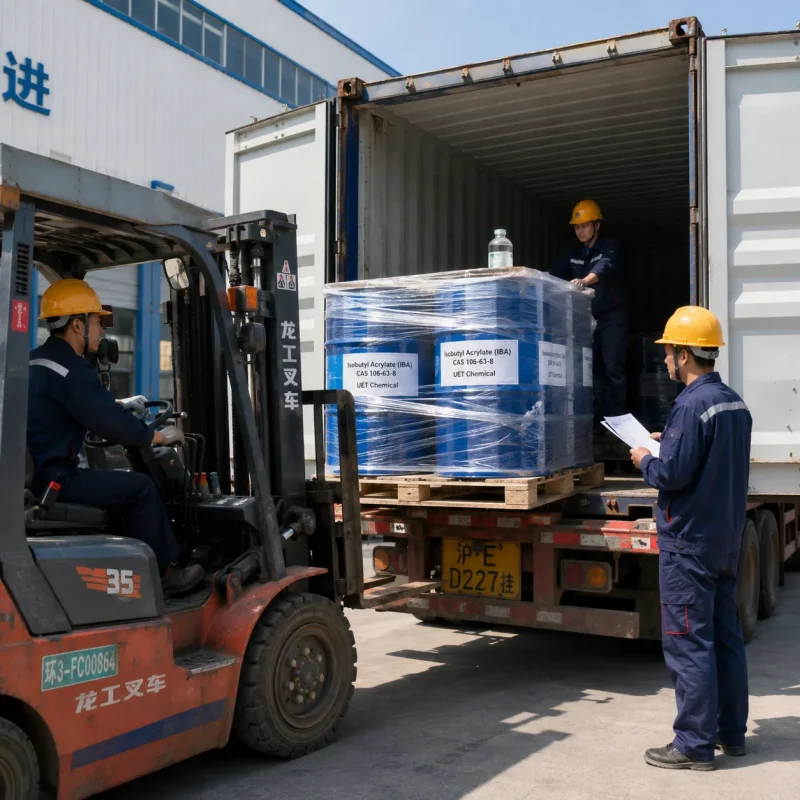
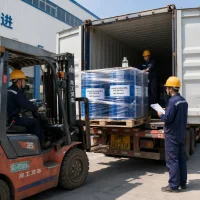
- Transport: Isobutyl Acrylate is classified as UN 2527, Class 3 (Flammable Liquid), Packing Group III under IATA/IMDG/ADR. DG documentation, placarding, and trained handler certification required. Do not co-load with oxidizers, peroxides, strong acids, or amines. Ensure drums are upright, secured, and protected from temperature extremes above 35 °C (95 °F). Summer shipments in tropical regions may require insulated containers. If bulk temperature exceeds 40 °C (104 °F) during transit, verify inhibitor level upon arrival.
- QC note: On receipt, verify GC purity (≥ 99.0%), water content (≤ 0.10%), and MEHQ inhibitor level (15–20 ppm). Check for premature polymerization: presence of gel particles, cloudiness, or viscosity increase above 1.2 mPa·s indicates inhibitor depletion or thermal exposure—reject the lot. Do NOT open drums that are warm to touch—cool to below 25 °C (77 °F) first. Confirm drum integrity and pressure relief vent functionality before opening.
Isobutyl Acrylate (IBA) FAQ
Q: How does Isobutyl Acrylate compare to n-Butyl Acrylate (BA) in exterior latex paint formulations?
A: IBA homopolymer Tg is –60 °C (–76 °F) versus –54 °C (–65 °F) for BA. The branched isobutyl group provides marginally better low-temperature flexibility, 20–30% lower water absorption, and superior hydrolytic stability in exterior exposure. BA polymerizes slightly faster and is more cost-effective. For premium exterior coatings requiring crack bridging at –10 °C (14 °F) and below, IBA is the preferred soft monomer.
Q: Why does my IBA drum show slight viscosity increase after summer transit?
A: This indicates partial thermal polymerization caused by inhibitor depletion at sustained temperatures above 35 °C (95 °F). MEHQ requires dissolved oxygen; in sealed drums at high temperature with insufficient headspace, inhibitor consumption accelerates. If gel content is below 0.1% and viscosity remains under 1.2 mPa·s, the material is usable after filtration through 200-mesh screen. Specify drums with 5–10% air headspace for summer shipments.
Q: Can IBA replace 2-Ethylhexyl Acrylate (2-EHA) in PSA formulations?
A: Partially. IBA provides lower Tg (–60 °C vs –85 °C for 2-EHA) and faster polymerization, but 2-EHA delivers superior low-temperature tack and peel due to its longer, more flexible side chain. For general-purpose packaging tapes, IBA performs adequately. For cryogenic or freezer-grade labels requiring tack below –20 °C (–4 °F), 2-EHA remains necessary. Blending 50/50 IBA with 2-EHA is a common cost-optimization strategy.
Related products
Manufacturer & Exporter Since 2006
Get Tailored Chemical Raw Material Solutions — Reply Within 1 Hour
Factory-direct pricing, stable high-purity supply and complete compliance documentation for your industrial formulations.
- 1000+Products
- 200+QC Protocols
- 7–15Days Delivery
- Factory-Direct Pricing
- COA / TDS / SDS Included
- Free Samples for Testing
- 40+ Export Countries
Request a Free Quote
Our engineers reply within 1 hour during GMT+8 business hours.
Please include in your inquiry:
- Product name or CAS number
- Required quantity
- Destination country or port
- Preferred packaging