
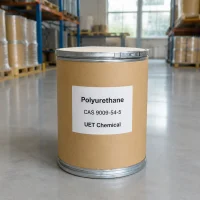
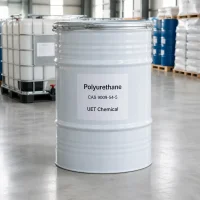
Polyurethane CAS 9009-54-5
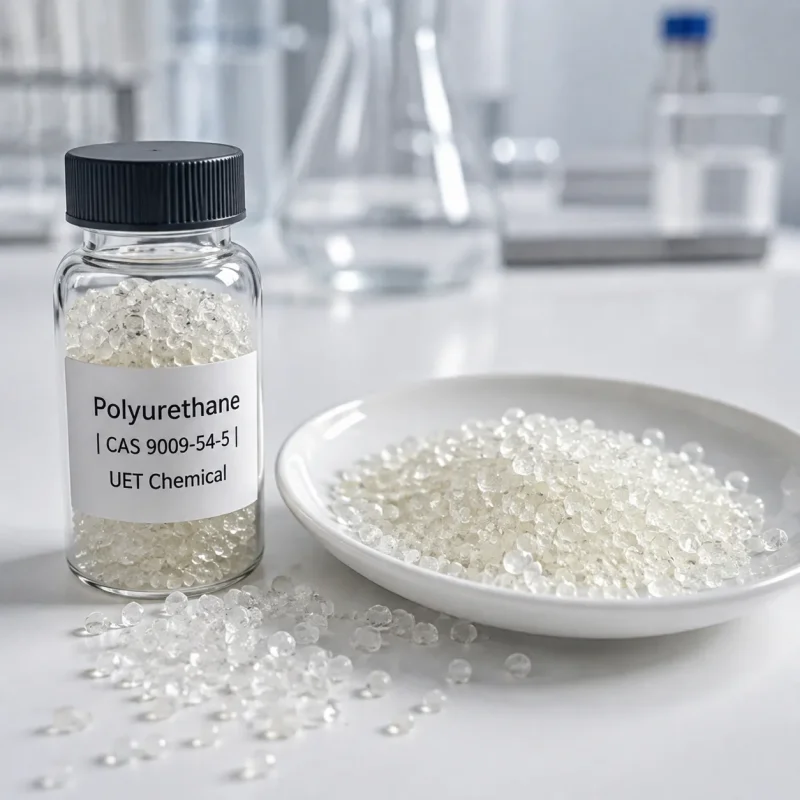
Polyurethane (PU) is a block copolymer containing alternating hard and soft segments linked by carbamate (-NH-COO-) bonds. Supplied as transparent to amber granules, it delivers high abrasion resistance and elasticity, making it essential for footwear soles, cable jacketing, and industrial films. UETChem also supplies this product with strict control over moisture and NCO content to ensure stable extrusion. Each shipment includes COA, TDS, SDS.
- CAS No: 9009-54-5
- Synonyms: PU; TPU; Polyurethane resin; Thermoplastic polyurethane
- EINECS: N/A (Polymer exemption)
- Molecular Formula: Block Copolymer
- Molecular Weight: 50,000 – 200,000 g/mol
- Appearance: Transparent to slightly yellowish granules
- Hardness: 85A – 95A (Shore A)
- Specific Gravity: 1.10 – 1.25 g/cm³ (9.18 – 10.43 lb/gal)
- Moisture Content: 0.05% max
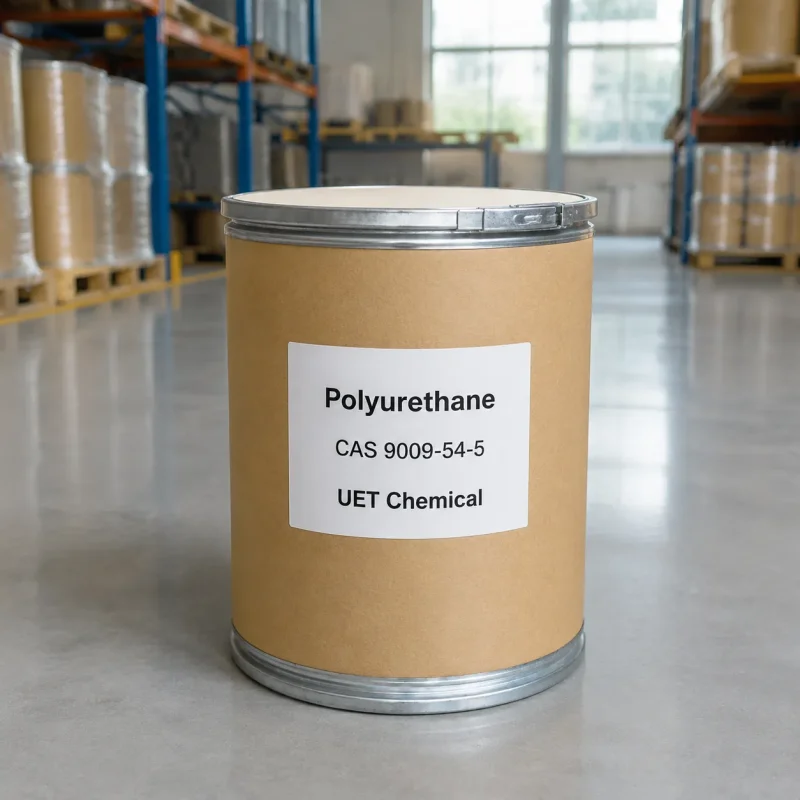
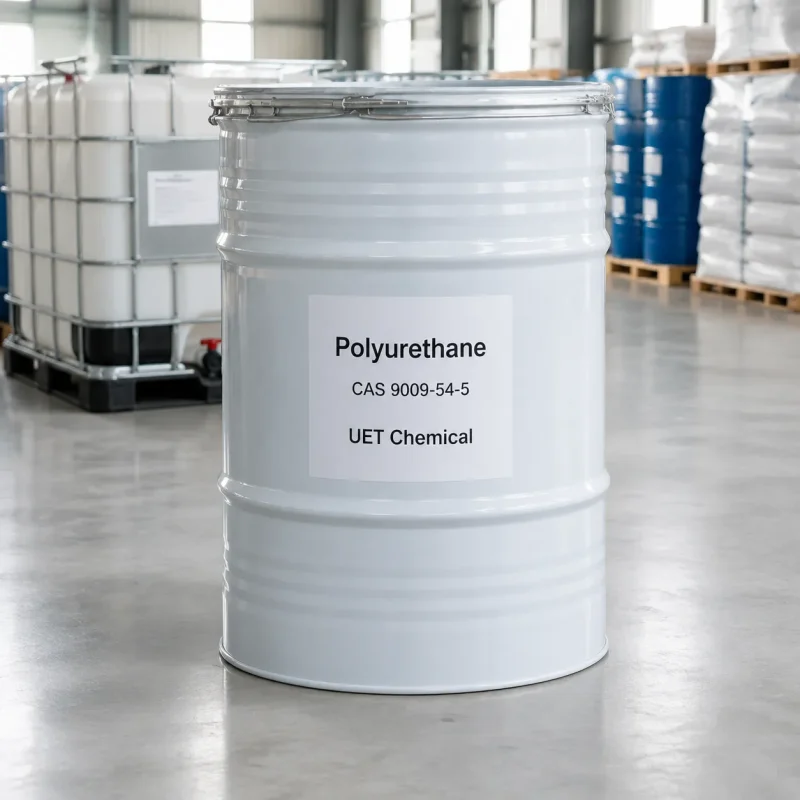
- Packaging: 25 kg (55 lb) bag, 500 kg (1102 lb) pallet. Custom packaging available upon request.
- Main Applications: Injection molding, extrusion, blown film, 3D printing filaments
Introduction to Polyurethane
Polyurethane (PU) is a linear block copolymer consisting of hard segments formed by diisocyanates and chain extenders, and soft segments derived from polyols. This microphase separation gives the material rubber-like elasticity combined with thermoplastic processability. Cable manufacturers and shoe factories use it for high-wear components.
The biggest processing advantage is the absence of chemical cross-linking in thermoplastic grades; scrap can be reground and remelted. The primary handling risk is moisture absorption. PU granules act like sponges in humid air. If wet Polyurethane enters a hot extruder, the water boils and hydrolyzes the carbamate bonds, causing severe bubbling and surface splay. Always use a desiccant dryer before melting.
Key Features of Polyurethane
- Microphase separation: Hard domains act as physical cross-links at room temperature, providing high tensile strength, while soft domains deliver flexibility.
- Carbamate bond stability: The -NH-COO- linkage resists oil, grease, and oxygen degradation far better than standard polyolefins.
- Wide hardness range: Formulators can select grades from soft 80A to rigid 74D without changing the base polymer chemistry.
- Low-temperature flexibility: Maintains impact resistance and elongation down to -40 °C (-40 °F), outperforming plasticized PVC.
Polyurethane Chemical & Physical Properties
| Property | Value |
|---|---|
| Chemical Structure | Linear block copolymer (Hard/Soft segments) |
| Hardness | 85A – 95A (Shore A) |
| Specific Gravity | 1.10 – 1.25 g/cm³ (9.18 – 10.43 lb/gal) |
| Melting Point | 160 – 210 °C (320 – 410 °F) |
| Tensile Strength | 30 – 50 MPa (4350 – 7250 psi) |
| Elongation at Break | 400 – 600% |
| Moisture Content | 0.05% max (as shipped) |
Applications of Polyurethane
Cable jacketing and tubing: Extruded at 180-210 °C (356-410 °F), PU provides a tough, abrasion-resistant outer layer for robotics and medical cables. It resists oil and flex fatigue. Formulators sometimes add Anatase Titanium Dioxide masterbatch to achieve bright white or opaque colors without sacrificing flexibility.
Footwear and sports equipment: Injection molded into midsoles and cleats. The high rebound resilience reduces energy loss during running. Typical processing temperatures range from 190-220 °C (374-428 °F) with moderate screw speeds to prevent shear heating.
Industrial films and sheets: Blown or cast into 0.05-0.5 mm films for waterproof breathable textiles and inflatable boats. The continuous film structure blocks liquid water while allowing vapor transmission.
Storage & Safety Precautions for Polyurethane
- Moisture and drying: Store bags in a dry, climate-controlled warehouse below 30 °C (86 °F). Once a bag is opened, PU absorbs ambient moisture rapidly. Processors must dry the granules at 80-90 °C (176-194 °F) for 2-4 hours in a desiccant hopper dryer before extrusion. Facilities often use Calcium Chloride Anhydrous in warehouse dehumidification systems to protect bulk inventory.
- Thermal degradation: Do not leave PU in a hot extruder barrel during shutdowns. Prolonged exposure above 230 °C (446 °F) breaks the polymer chains, causing yellowing, cross-linking, and die buildup. Purge the barrel with HDPE or PP if stopping for more than 15 minutes.
- Handling and PPE: Solid granules are non-hazardous (Non-DG) for transport. Wear safety glasses and heat-resistant gloves when operating near the extruder die and hot runner systems. Molten PU sticks to skin and causes severe burns.
- Field note: When testing Melt Flow Index (MFI), pre-dry the sample thoroughly. A wet sample will foam inside the MFI barrel, giving falsely high flow rates and leading to incorrect processing parameters on the factory floor.
Polyurethane FAQ
Q: Why does Polyurethane (PU) bubble during extrusion?
A: PU is highly hygroscopic. Moisture reacts with carbamate bonds at high temperatures, releasing CO2 gas. Dry Polyurethane granules at 80-90 °C for 2-4 hours using a desiccant hopper dryer before extrusion to prevent surface defects.
Q: How does hardness affect PU processing?
A: Higher Shore A hardness increases melt viscosity. 85A PU flows easily for thin films, while 95A requires higher barrel temperatures for thick molded parts. Adjust the screw speed and cooling time based on the specific Polyurethane grade.
Q: Can Polyurethane be blended with PVC?
A: PU blends well with PVC to improve low-temperature flexibility and abrasion resistance. Add 10-30% Polyurethane to rigid PVC compounds. Ensure both resins are thoroughly dried to avoid hydrolysis during the compounding process.
Related products
Manufacturer & Exporter Since 2006
Get Tailored Chemical Raw Material Solutions — Reply Within 1 Hour
Factory-direct pricing, stable high-purity supply and complete compliance documentation for your industrial formulations.
- 1000+Products
- 200+QC Protocols
- 7–15Days Delivery
- Factory-Direct Pricing
- COA / TDS / SDS Included
- Free Samples for Testing
- 40+ Export Countries
Request a Free Quote
Our engineers reply within 1 hour during GMT+8 business hours.
Please include in your inquiry:
- Product name or CAS number
- Required quantity
- Destination country or port
- Preferred packaging