


Methyl Hydroxyethyl Cellulose (MHEC) CAS 9032-42-2
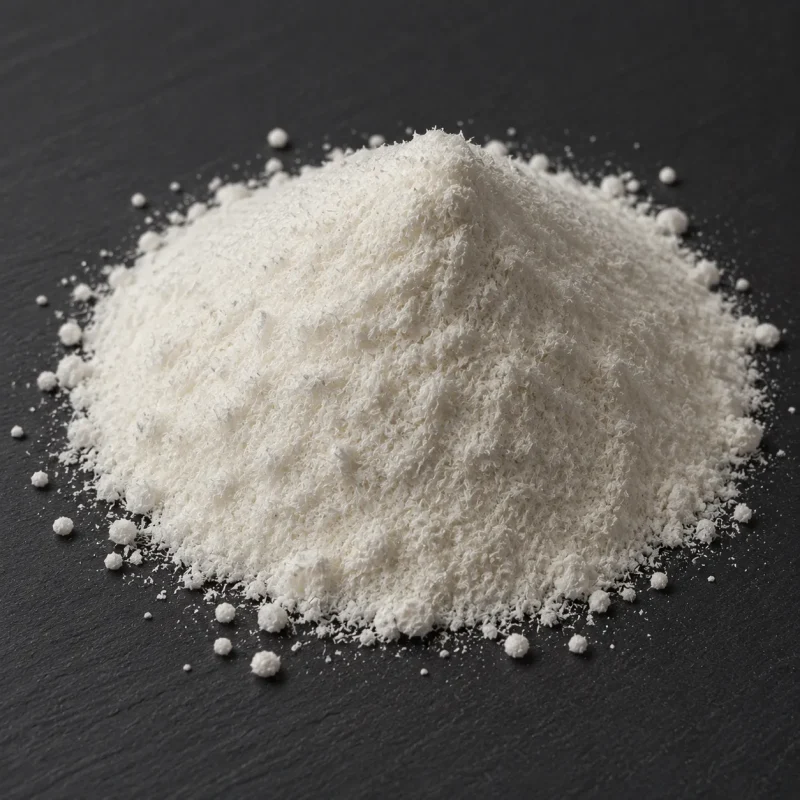
MHEC is a nonionic cellulose ether with methoxy and hydroxyethyl groups. It is a white powder used as a thickener and water-retention agent in dry-mix mortars and coatings. Hydroxyethyl groups hydrate in cold water; methyl groups maintain viscosity in electrolyte mixes. We provide COA, TDS and SDS.
- CAS No.: 9032-42-2
- Synonyms: MHEC; hydroxyethyl methyl cellulose
- EINECS: 232-726-2
- Formula: [C6H7O2(OH)3-x-y(OCH3)x(OCH2CH2OH)y]n
- Weight: Polymeric
- Appearance: White powder
- Purity: Loss on drying ≤10%; ash ≤5%
- Viscosity: 400–100,000 mPa·s, 2% solution, 20 °C (68 °F)
- Substitution: Methoxy 19–30%; hydroxyethyl 5–20%
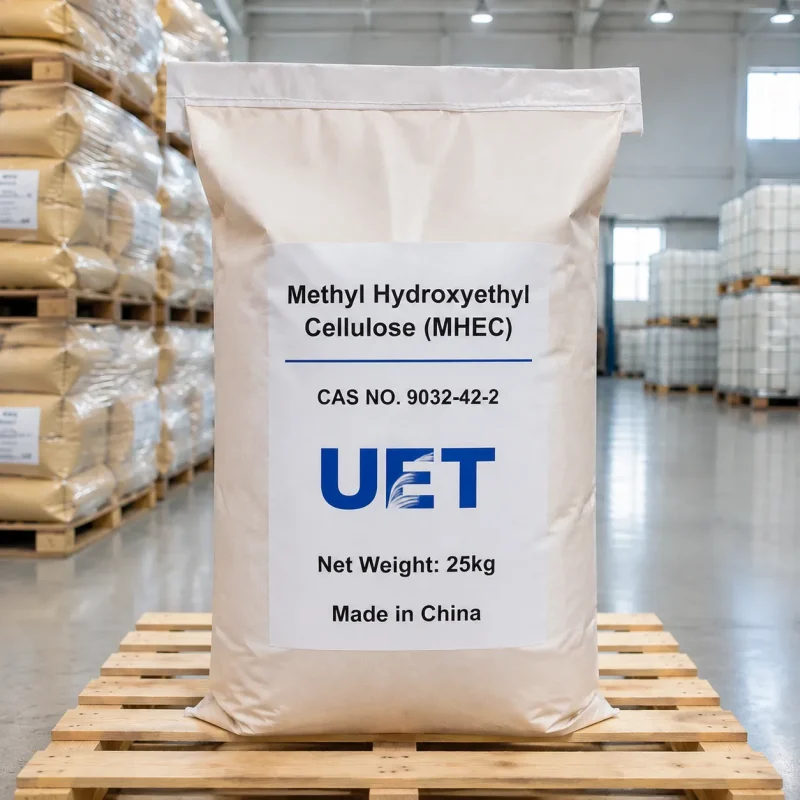
- Packaging: 25 kg (55 lbs) bag. Custom packaging available upon request.
- Applications: Mortar, tile adhesive, putty, coatings, cleaners
Introduction to MHEC
Methyl Hydroxyethyl Cellulose is a white to off-white, nonionic cellulose ether powder. Its cellulose backbone carries methoxy and hydroxyethyl groups, which hydrate in cold water and thicken the aqueous phase. In dry-mix mortars and waterborne coatings, MHEC controls rheology, reduces vertical sag and retains water long enough for proper cement hydration or polymer film formation.
Compared with anionic CMC, MHEC remains thickened in calcium-rich cement pore water, where CMC can form insoluble calcium salts and lose viscosity above roughly 1,000 ppm Ca²⁺. The main practical pitfall is hydration: adding MHEC powder too fast to warm water can form fish-eye gels, so always disperse it under high shear in cold water or premix it thoroughly with dry cement solids. Expect minor lot-to-lot viscosity shifts.
Key Features of MHEC
- Nonionic electrolyte tolerance: Methoxy/hydroxyethyl substitution keeps MHEC compatible with cement Ca²⁺, sulfate salts and many surfactants, so viscosity is less likely to drop sharply in mineral-rich mixes.
- Cold-water hydration: Hydroxyethyl groups allow the powder to swell and dissolve in cold water, forming smooth viscous solutions without an added gelatinization step.
- Water-retention mechanism: Ether oxygens and hydroxyls bind free water in the paste, slowing water loss into porous tiles, aerated concrete or gypsum boards.
- Heat-assisted anti-sag: Methyl-substituted chains can associate on heating, which may reduce slump in thick wet mortars applied at 30–40 °C (86–104 °F).
- Coating rheology control: Dissolved MHEC raises low-shear viscosity in waterborne acrylic or VAE systems, improving anti-spatter and pigment suspension without crosslinking the resin.
MHEC Chemical & Physical Properties
| Property | Value |
|---|---|
| Molecular Formula | [C6H7O2(OH)3-x-y(OCH3)x(OCH2CH2OH)y]n |
| Molecular Weight | Polymeric; controlled by viscosity grade, not a single value |
| Boiling Point | Not applicable; polymer decomposes before boiling |
| Density | Bulk density about 0.35–0.70 g/cm³ (21.8–43.7 lb/ft³); particle density approx. 1.5 g/cm³ (93.6 lb/ft³) |
| Flash Point | Not determined; combustible dust as powder |
| Solubility | Soluble in cold water, forming viscous colloidal solutions; insoluble in hydrocarbons, ethers and most organic solvents |
| Viscosity | 400–100,000 mPa·s, 2% aqueous solution, 20 °C (68 °F), per ASTM D2363 or equivalent Brookfield method |
| pH | 5.0–8.0, 2% aqueous solution |
| Substitution | Methoxy 19–30%; hydroxyethyl 5–20%, grade dependent |
| Thermal behavior | Decomposition/charring typically above 200 °C (392 °F); avoid prolonged heating |
Applications of MHEC
Dry-mix cement mortar and tile adhesive: MHEC hydrates in the mix water and raises pore-solution viscosity, slowing water migration into tiles and substrates. This supports cement hydration, open time and anti-slip. Typical dosage is 0.10–0.50% of dry mix.
Wall putty and gypsum skim coat: The polymer holds free water at the application surface, improving workability, trowel glide and binder film formation. It also reduces suction on porous walls. Typical dosage is 0.15–0.40% of dry powder.
Waterborne coatings: Dissolved MHEC thickens the aqueous phase by chain entanglement and water association, controlling sag, spatter and pigment settling in acrylic or VAE paints. Typical dosage is 0.20–1.00% of total formula.
Household and industrial cleaners: In surfactant systems, MHEC increases continuous-phase viscosity and helps stabilize foam without reacting with anionic or nonionic surfactants. Typical dosage is 0.50–3.00%.
Textile printing pastes: MHEC forms a clear, shear-thinning paste that carries dyes or pigments and limits wicking into fabric. It can be washed out after fixation. Typical paste addition is 1.0–5.0%.
Storage & Safety Precautions for MHEC
Store MHEC in sealed, dry bags below 30 °C (86 °F), away from moisture, direct sunlight, strong oxidizers, concentrated acids and strong alkalis. The powder is hygroscopic; opened bags can absorb water, cake and form hard-to-disperse lumps. On site, keep the inner PE liner rolled closed after each use and use opened bags within a few days in humid weather. Aqueous MHEC solutions can lose viscosity through microbial or enzymatic attack; add a suitable biocide for stock solutions stored longer than 24–48 hours.
MHEC powder is not classified as hazardous under GHS based on typical supplier data, but dust can mechanically irritate eyes and airways. Use a P2/N95 dust mask, safety goggles and gloves. For spills, stop dust generation, sweep or vacuum without creating clouds, and keep product out of drains because hydrated powder creates slippery gel. Transport classification: Non-DG. For dispatch, pallets are stretch-wrapped and kept off wet floors to prevent bottom-bag moisture uptake.
MHEC FAQ
Q: Is CAS 9032-42-2 MHEC the right ether for high-calcium cement systems?
A: Yes. MHEC is nonionic, tolerating Ca²⁺ in cement pore water better than CMC, which forms insoluble calcium salts. Pick 40k–100k mPa·s at 0.1–0.5% and test open time.
Q: How should MHEC be dispersed to avoid fish-eye lumps?
A: Add dry MHEC to fast-stirred cold water. Sieve into the vortex at 500–800 rpm, mix 15–20 min, or pre-blend with cement. Let it hydrate 30–60 min before QC testing.
Q: Why does MHEC solution viscosity drift during storage?
A: Drift usually means microbial attack, oxidation or incomplete hydration. Keep tanks clean, add biocide for >24h stock, keep pH 5–9, and test fresh 2% solution per ASTM D2363.
Related products
Manufacturer & Exporter Since 2006
Get Tailored Chemical Raw Material Solutions — Reply Within 1 Hour
Factory-direct pricing, stable high-purity supply and complete compliance documentation for your industrial formulations.
- 1000+Products
- 200+QC Protocols
- 7–15Days Delivery
- Factory-Direct Pricing
- COA / TDS / SDS Included
- Free Samples for Testing
- 40+ Export Countries
Request a Free Quote
Our engineers reply within 1 hour during GMT+8 business hours.
Please include in your inquiry:
- Product name or CAS number
- Required quantity
- Destination country or port
- Preferred packaging