
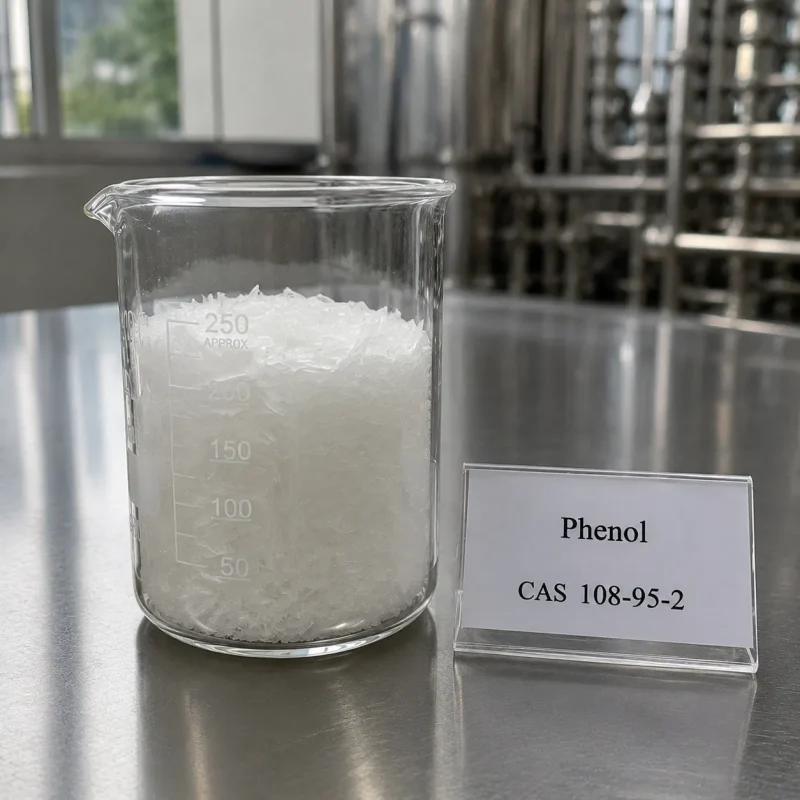
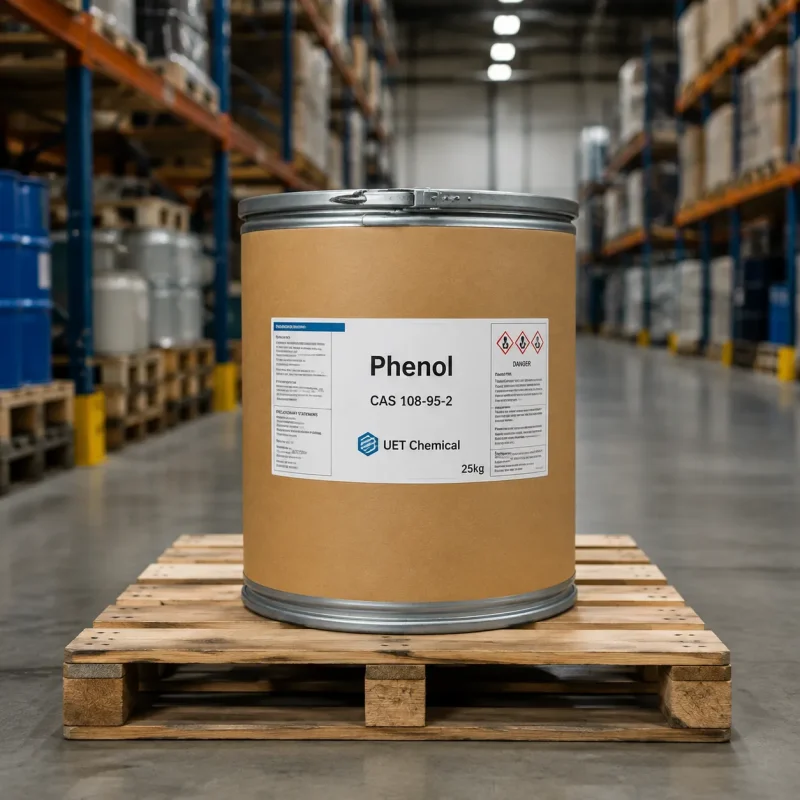
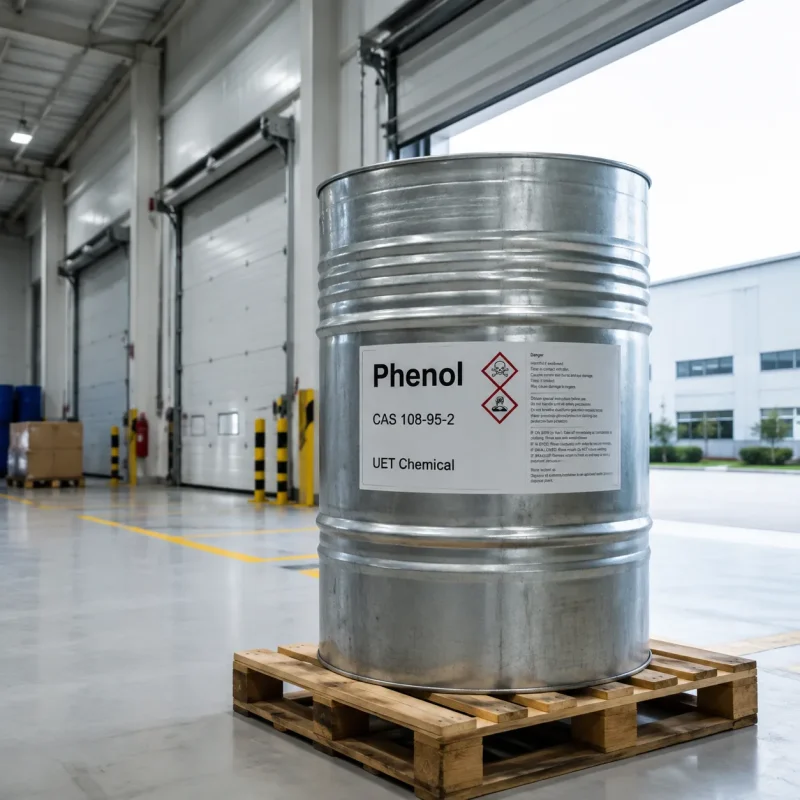
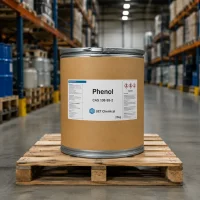
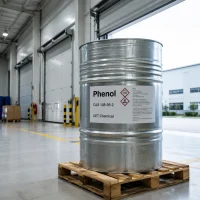
Phenol CAS 108-95-2
Phenol is an essential aromatic hydroxy compound that solves low crosslink density, poor optical clarity, and weak thermal stability challenges in advanced polymer and fine chemical manufacturing. Petrochemical and resin producers rely on it for bisphenol-A synthesis, phenolic resins, caprolactam production, and agrochemical intermediates. UETChem supplies this product with strict control over moisture, color, and crystallization point, ensuring maximum condensation yields and exceptional downstream polymer performance. Each shipment includes COA, TDS, SDS.
- CAS No: 108-95-2
- Synonyms: Carbolic acid; Hydroxybenzene; Phenylic acid
- EINECS: 203-632-7
- Molecular Formula: C6H6O
- Molecular Weight: 94.11 g/mol (94.11 lb/lbmol)
- Appearance: Colorless to pale pink crystals or clear liquid (when heated)
- Purity: 99.9% min
- Crystallization Point: 39.5 °C min
- Moisture: 0.05% max
- Packaging: 200 kg (441 lb) steel drum, ISO Tank. Custom packaging available upon request.
- Main Applications: Bisphenol-A (BPA), phenolic resins, caprolactam, pharmaceutical intermediates, herbicides
Introduction to Phenol
Phenol is an aromatic organic compound consisting of a hydroxyl group directly bonded to a benzene ring. The molecular architecture imparts unique weak acidity and extremely high electrophilic substitution reactivity. At room temperature, the pure material presents as colorless or faintly pink needle-like crystals with a distinct, pungent medicinal odor. Upon exposure to air and light, the surface gradually oxidizes and turns red. The compound is slightly soluble in water but mixes completely with ethanol, diethyl ether, chloroform, and most other organic solvents.
Industrial chemical plants consume this foundational raw material to synthesize a vast network of downstream derivatives. The lone pair electrons on the hydroxyl oxygen atom undergo p-π conjugation with the large π-bond of the benzene ring, highly activating the aromatic system for halogenation, nitration, sulfonation, and alkylation reactions. The substance maintains chemical stability under standard storage conditions but rapidly converts into highly reactive phenoxide ions in alkaline environments.
Key Features of Phenol
- Activated aromatic ring: The electron-donating hydroxyl group drastically accelerates electrophilic aromatic substitution, facilitating rapid condensation and alkylation.
- Weak acidic nature: Readily donates a proton to strong bases, forming water-soluble phenoxide salts utilized in specific extraction and synthesis pathways.
- Hydrogen bonding capacity: The hydroxyl moiety forms strong intermolecular hydrogen bonds, dictating the relatively high melting point and aqueous solubility compared to pure hydrocarbons.
Phenol Chemical & Physical Properties
| Property | Value |
|---|---|
| Molecular Formula | C6H6O |
| Molecular Weight | 94.11 g/mol (94.11 lb/lbmol) |
| Appearance | Colorless to pale pink crystals or clear liquid |
| Boiling Point | 181.7 °C (359 °F) |
| Melting Point | 40.5 °C (105 °F) |
| Density | 1.07 g/cm³ (8.92 lb/gal) at 20 °C |
| Flash Point | 79 °C (174 °F) closed cup |
Applications of Phenol
Bisphenol-A and epoxy resins: Condenses with acetone in the presence of an acid catalyst to manufacture bisphenol-A. This crucial intermediate is subsequently polymerized to produce polycarbonate plastics and high-performance epoxy resins used in electronic encapsulation and marine coatings.
Phenolic resins and molding compounds: Reacts with formaldehyde to synthesize novolac and resole resins. These thermosetting networks provide exceptional thermal resistance and mechanical strength, making them indispensable for brake linings, foundry sand binders, and wood adhesives.
Caprolactam and nylon fibers: Serves as a starting material for producing cyclohexanone, which is further converted into caprolactam. The resulting polyamide polymers are extruded into high-tenacity nylon fibers and engineering plastics for automotive components.
Agrochemical and pharmaceutical intermediates: Functions as a core building block for synthesizing herbicides, fungicides, and active pharmaceutical ingredients. The aromatic ring undergoes selective functionalization to construct complex bioactive molecules.
Storage & Safety Precautions for Phenol
- Oxidation and moisture control: Store in tightly sealed, opaque steel drums or nitrogen-blanked tanks below 30 °C (86 °F). Exposure to air, light, and trace metal impurities triggers oxidation, forming quinones that turn the crystals pink or red and degrade reactivity.
- Skin absorption hazard: The liquid and molten crystals are highly toxic, corrosive, and rapidly absorbed through intact skin, causing severe chemical burns and systemic central nervous system depression. Immediate decontamination with polyethylene glycol (PEG) is mandatory for skin contact.
- Handling and PPE: Wear a full-face respirator with organic vapor cartridges, heavy-duty butyl rubber gloves, and an impermeable chemical suit during drum decanting and reactor charging.
- Field note: When melting solid drums for reactor transfer, apply gentle steam or warm water heating. Localized high-temperature heating coils cause thermal degradation and darkening of the molten phenol batch.
Phenol FAQ
Q: How does Phenol function in bisphenol-A (BPA) production?
A: Phenol undergoes condensation with acetone in the presence of an acid catalyst to produce bisphenol-A. This intermediate is essential for manufacturing polycarbonate plastics and epoxy resins. The high purity of Phenol ensures excellent optical clarity and thermal stability in the final polymer.
Q: Why does Phenol turn pink or red during storage?
A: Phenol oxidizes when exposed to air, light, and trace metal impurities, forming quinones that turn the crystals pink or red. To prevent discoloration and preserve reactivity, manufacturers must store Phenol in tightly sealed, opaque drums under a nitrogen blanket in a cool warehouse.
Q: What safety precautions are required when handling Phenol?
A: Phenol is highly toxic, corrosive, and rapidly absorbed through the skin, causing severe chemical burns and systemic poisoning. Operators must wear full-face respirators, heavy-duty butyl rubber gloves, and chemical splash suits. Immediate washing with polyethylene glycol is required for skin contact.
Related products
Manufacturer & Exporter Since 2006
Get Tailored Chemical Raw Material Solutions — Reply Within 1 Hour
Factory-direct pricing, stable high-purity supply and complete compliance documentation for your industrial formulations.
- 1000+Products
- 200+QC Protocols
- 7–15Days Delivery
- Factory-Direct Pricing
- COA / TDS / SDS Included
- Free Samples for Testing
- 40+ Export Countries
Request a Free Quote
Our engineers reply within 1 hour during GMT+8 business hours.
Please include in your inquiry:
- Product name or CAS number
- Required quantity
- Destination country or port
- Preferred packaging