
Chloroacetamide CAS 79-07-2
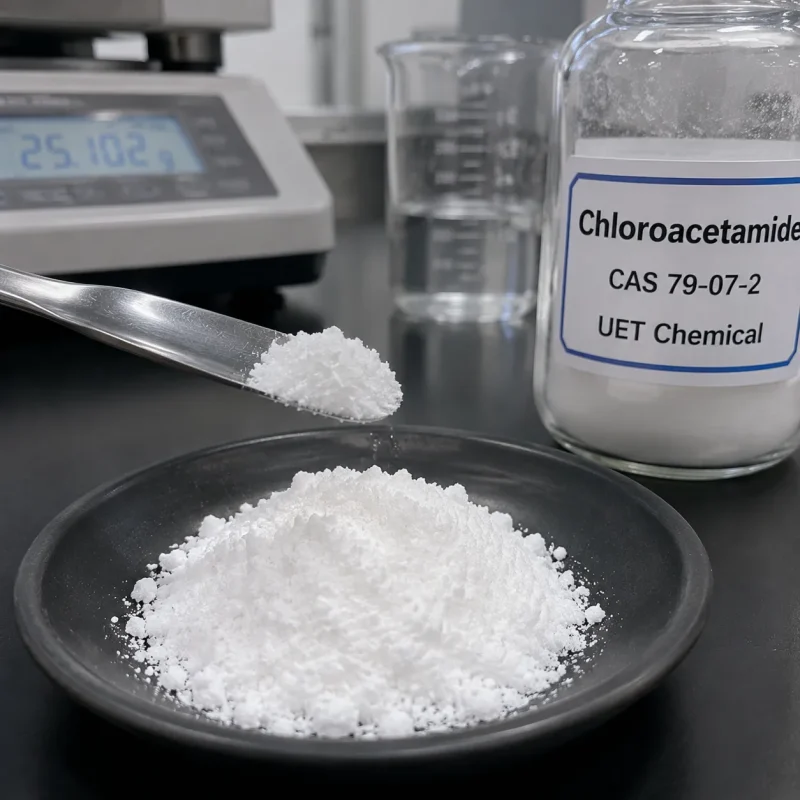
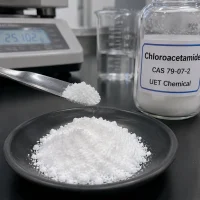
Chloroacetamide is an α-chlorinated amide in which a chlorine atom activates the C–Cl bond at the carbonyl α-position. White to off-white crystalline powder, ≥97.0% purity. Serves as a high-reactivity alkylating intermediate in pharmaceutical synthesis, agrochemical intermediates, and industrial biocides. The α-chloro substitution enables nucleophilic displacement at 60–80 °C without metal catalysts. Each shipment includes COA, TDS, and SDS.
- CAS No.: 79-07-2
- Synonyms: Chloroacetamide; 2-Chloroacetamide; α-Chloroacetamide; Monochloroacetamide
- EINECS: 201-175-8
- Molecular Formula: C₂H₄ClNO
- Molecular Weight: 93.51 g/mol
- Appearance: White to off-white crystalline powder
- Purity: ≥97.0%
- Melting Point: 98–101 °C
- Water Solubility: ~200 g/L at 20 °C
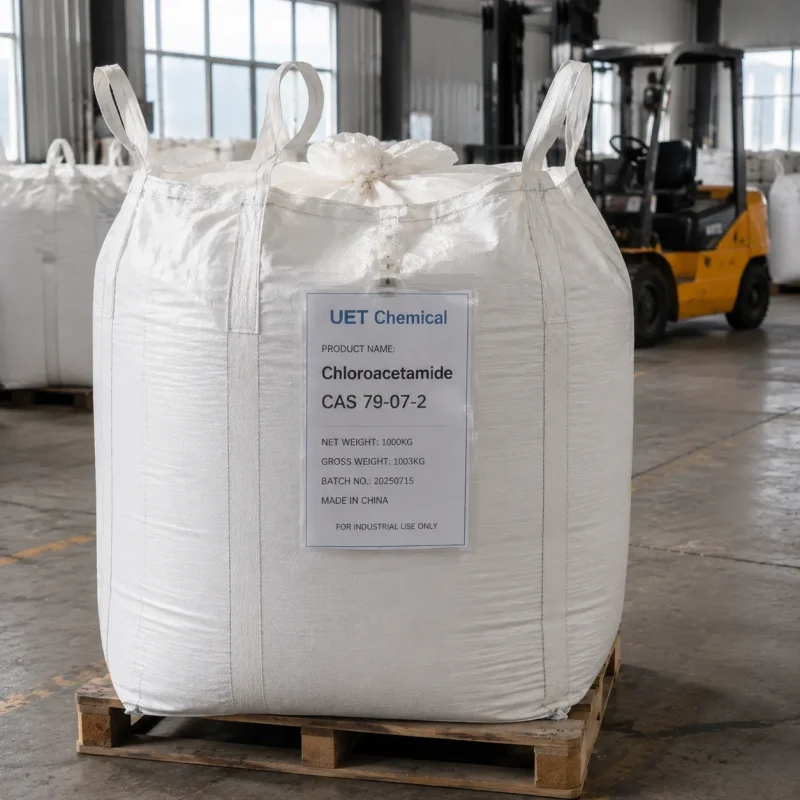
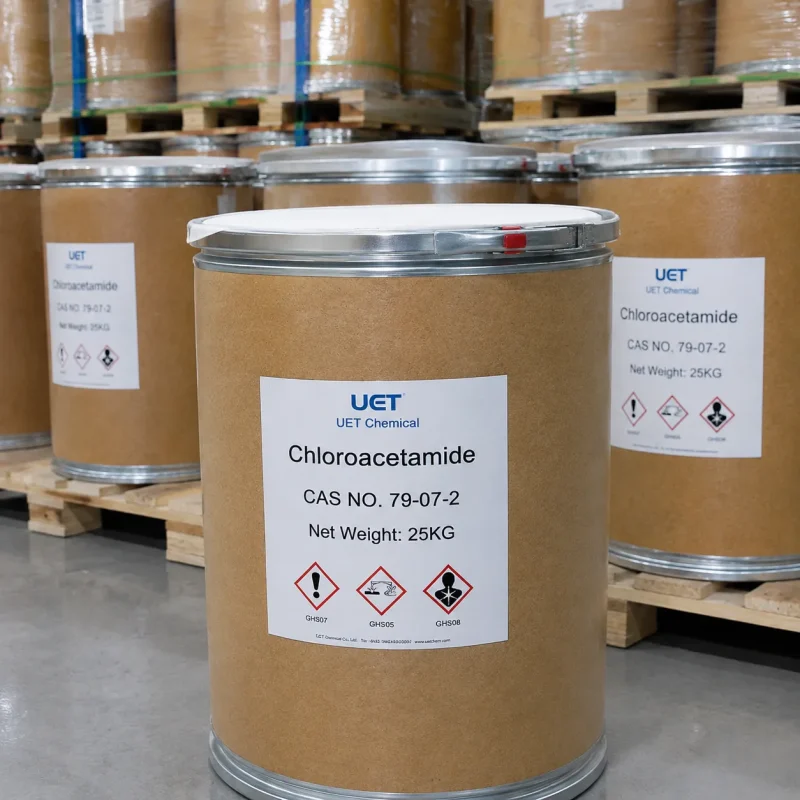
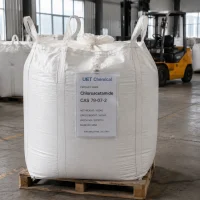
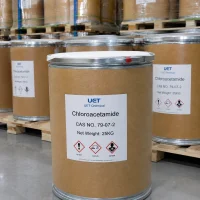
- Packaging: 25 kg fibre drum with PE liner / 500 kg bulk bag. Custom packaging available upon request.
- Main Applications: Pharmaceutical intermediates; agrochemical synthesis; industrial biocides; organic alkylation reagent
Introduction to Chloroacetamide
Chloroacetamide is a white to off-white crystalline powder, an α-chlorinated amide where a chlorine atom sits directly adjacent to the carbonyl group. This α-position activates the C–Cl bond through the electron-withdrawing effect of the amide carbonyl. The molecule is water-soluble (~200 g/L at 20 °C) and functions as a reactive alkylating building block in pharmaceutical and agrochemical synthesis, and as a broad-spectrum biocide in industrial water treatment.
The α-chloro arrangement lowers C–Cl bond dissociation energy by roughly 25–30% versus simple chloroalkanes, enabling clean nucleophilic substitution with thiols, amines, and phenols at 60–80 °C without copper or palladium catalysts. One practical caution: at pH above 8, chloroacetamide hydrolyses to glycine and hydrochloric acid within hours, destroying alkylating activity. All reaction and storage must stay at pH 5–7.
Key Features of Chloroacetamide
- α-Chloro activation. The carbonyl group withdraws electron density from the adjacent C–Cl bond, making it 10–50× more reactive toward nucleophilic displacement than a primary alkyl chloride. Substitution proceeds cleanly at 60–80 °C.
- High water solubility for an alkylating agent. The amide group provides hydrogen-bond capacity, dissolving at ~200 g/L in water at 20 °C. This allows homogeneous aqueous-phase reactions without organic co-solvents.
- Dual-function synthon. The chlorine serves as a leaving group for C–C, C–N, or C–S bond formation, while the amide nitrogen can be further acylated or reduced to an amine in subsequent steps.
- Broad-spectrum biocidal action. Alkylates thiol (-SH) groups on microbial cell-membrane proteins, disrupting enzyme function. Effective against bacteria, fungi, and algae at 50–200 ppm in recirculating water systems.
Chloroacetamide Chemical & Physical Properties
| Property | Value |
|---|---|
| Molecular Formula | C₂H₄ClNO |
| Molecular Weight | 93.51 g/mol |
| Melting Point | 98–101 °C (Ph. Eur. 2.2.14) |
| Decomposition | ~220 °C |
| Density (solid) | ~1.40 g/cm³ |
| Solubility | ~200 g/L in water (20 °C); soluble in ethanol, acetone |
| Flash Point | >110 °C |
| pH (10% aq.) | 5.0–7.0 |
| Free Acid (as HCl) | ≤0.5% |
Applications of Chloroacetamide
Pharmaceutical intermediate synthesis: Reacts with thiols, amines, or phenols via SN2 displacement of the α-chlorine. Typical conditions: 1.0–1.2 molar equivalents of nucleophile, 60–80 °C, pH 6–7 buffer. Products include glycine derivatives, 2-aminoacetamides, and thioacetamide building blocks for API synthesis.
Agrochemical intermediate: Serves as a C2 alkylating fragment in herbicide and fungicide synthesis. The amide group directs regioselectivity in subsequent cyclisation steps. Typical charge: 5–15% w/w of total reaction mass. Reaction temperature: 70–90 °C under nitrogen blanket.
Industrial biocide for recirculating water and metalworking fluids: Dosed at 50–200 ppm. Alkylates microbial membrane proteins, killing bacteria, fungi, and algae. Compatible with anionic and non-ionic surfactants. Avoid simultaneous dosing with strong alkaline biocides (pH >9), which destroy the active molecule.
Dye and pigment intermediate: Condenses with aromatic amines to form N-substituted acetamide linkages in azo dye synthesis. Reaction proceeds at 80–100 °C in aqueous media. Typical molar ratio: chloroacetamide to aromatic amine = 1.0 : 1.1.
Storage & Safety Precautions for Chloroacetamide
Storage conditions. Store in tightly sealed, PE-lined fibre drums at 5–25 °C, in a dry and well-ventilated area. Chloroacetamide is hygroscopic and hydrolyses slowly in humid air, releasing HCl and glycine. Keep away from alkalis (NaOH, KOH, amines) and strong oxidisers. Once opened, use within 30 days or re-seal under nitrogen.
Safety and PPE. GHS: Acute Tox. 3 (oral, dermal, inhalation – H301/H311/H331); Skin Sens. 1 (H317); Eye Dam. 1 (H318). Toxic. Wear chemical-resistant gloves (butyl rubber), full-face shield, and P3 dust mask. Work only in fume hood or with local exhaust. In case of skin contact, wash immediately with soap and water for 15 minutes. Seek medical attention if inhaled.
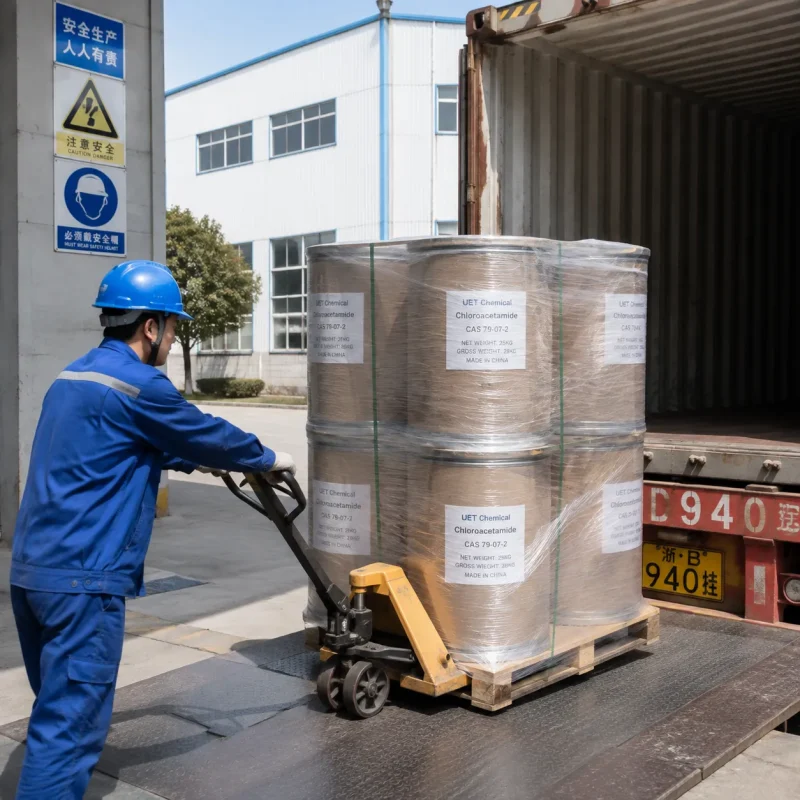
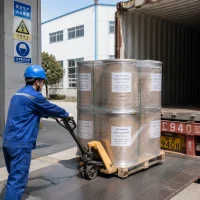
Transport classification. Class 6.1, Packing Group II. UN 2811 (Toxic solid, organic, n.o.s.). Ship in UN-approved packaging. Do not consolidate with foodstuffs or oxidising agents. Requires DG declaration for ocean and air freight.
Practitioner note: When verifying incoming QC, run a melting-point check (98–101 °C per Ph. Eur. 2.2.14). If the melting point reads below 96 °C with a broad range, the batch has absorbed moisture and partially hydrolysed. Confirm with Karl Fischer water content (should be ≤0.5%) and free-acid titration. Do not charge hydrolysed material into synthesis—it will give low yields and glycine impurities.
Chloroacetamide FAQ
Q: Why does Chloroacetamide lose reactivity in alkaline conditions?
A: At pH >8, hydroxide attacks the carbonyl carbon, hydrolysing the amide bond. This produces glycine and chloride ion within 2–4 hours, permanently destroying the alkylating site. All reactions and storage must stay at pH 5–7. If your process requires alkaline conditions, add chloroacetamide last and keep residence time below 30 minutes.
Q: How do I detect hydrolysis degradation in a stored drum of Chloroacetamide (CAS 79-07-2)?
A: Three field checks: (1) Melting point drops below 96 °C; (2) free-acid titration shows HCl >0.5%; (3) a faint ammonia-like odour at the drum bung. If all three appear, hydrolysis has progressed. Isolate the drum, run HPLC assay, and reject if purity falls below 95%.
Q: What is the biocidal mechanism of Chloroacetamide in cooling water?
A: The α-chlorine alkylates thiol (-SH) groups on bacterial and fungal cell-membrane enzymes. This irreversibly blocks respiration and cell division. Effective at 50–200 ppm against aerobic bacteria, sulfate-reducing bacteria, and filamentous fungi. Do not combine with thiol-based corrosion inhibitors—they will consume the biocide.
Related products
Manufacturer & Exporter Since 2006
Get Tailored Chemical Raw Material Solutions — Reply Within 1 Hour
Factory-direct pricing, stable high-purity supply and complete compliance documentation for your industrial formulations.
- 1000+Products
- 200+QC Protocols
- 7–15Days Delivery
- Factory-Direct Pricing
- COA / TDS / SDS Included
- Free Samples for Testing
- 40+ Export Countries
Request a Free Quote
Our engineers reply within 1 hour during GMT+8 business hours.
Please include in your inquiry:
- Product name or CAS number
- Required quantity
- Destination country or port
- Preferred packaging