
Chloroprene Rubber CAS 9010-98-4
Chloroprene Rubber (CR) is a synthetic elastomer valued for its balanced weather, ozone, heat and oil resistance plus inherent flame retardancy. Widely known as Neoprene, it serves as a base polymer for industrial hoses, conveyor belts, wire cable jacketing and solvent-based contact adhesives. UETChem supplies standard and specialty grades with consistent Mooney viscosity and stable processing performance. Every shipment includes full COA, TDS and SDS documentation.
- CAS No: 9010-98-4
- Synonyms: Neoprene; Polychloroprene; 2-Chloro-1,3-butadiene polymer; CR rubber; Chloroprene elastomer
- EC Number: 618-457-5
- Molecular Formula: (C₄H₅Cl)ₙ
- Molecular Weight: 100,000 – 300,000 g/mol (approx.)
- Appearance: White to light-yellow solid blocks, chips or flakes
- Mooney Viscosity: 45 – 55 (ML 1+4 at 100 °C)
- Specific Gravity: 1.23 – 1.25
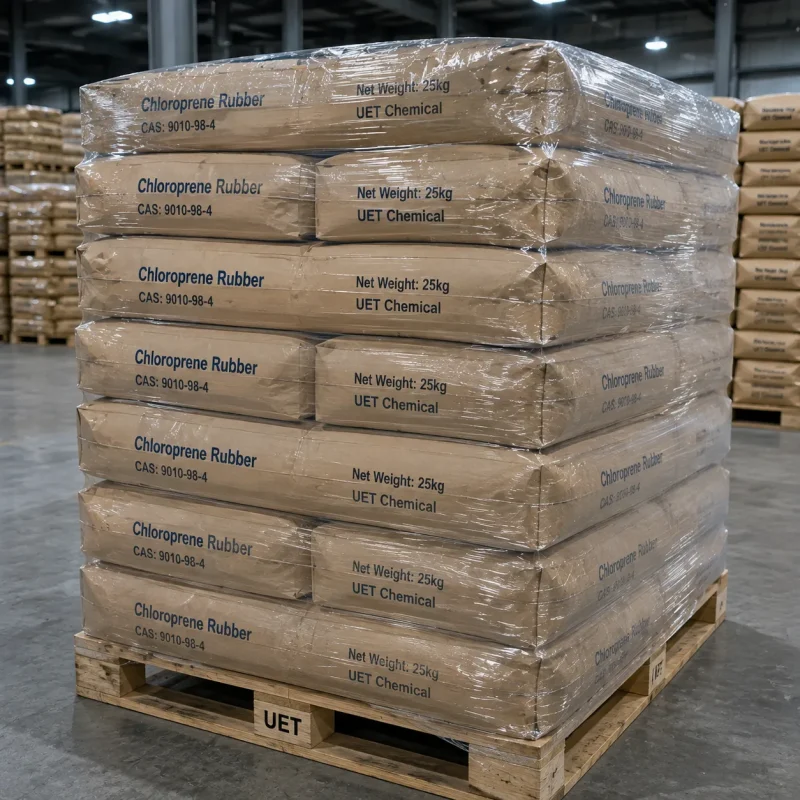
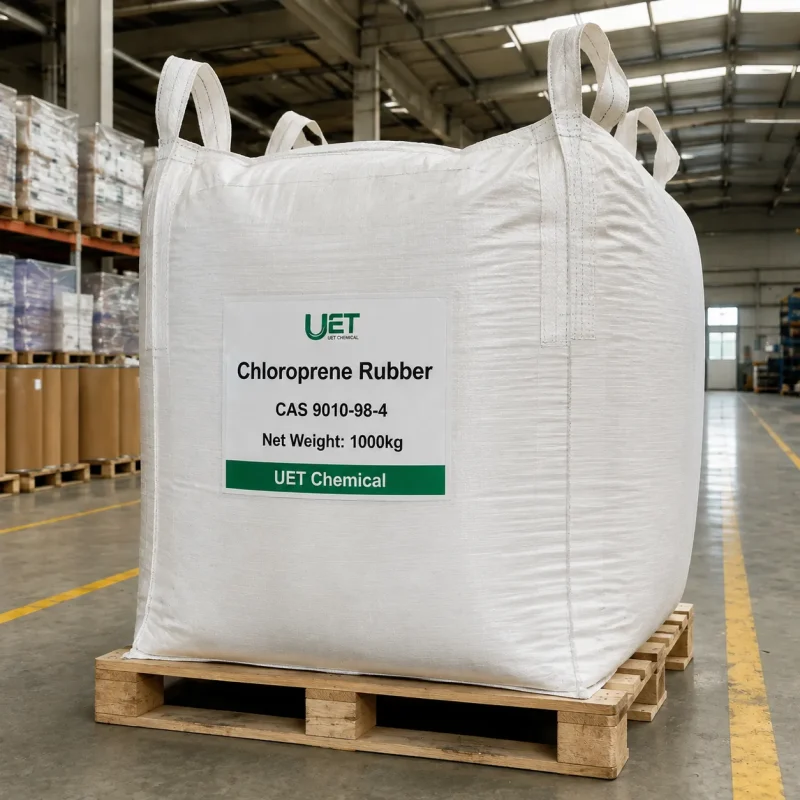
- Packaging: 25 kg kraft bag; 250 kg carton; 1000 kg jumbo bag. Custom packaging available upon request.
- Main Applications: Industrial hoses, conveyor belts, cable jacketing, automotive seals, contact adhesives
Introduction to Chloroprene Rubber
Chloroprene Rubber is produced via emulsion polymerization of 2-chloro-1,3-butadiene. Chlorine atoms along the polymer backbone deliver a unique property set that sits between general-purpose diene rubbers and high-performance polar elastomers. The material carries inherent self-extinguishing properties, strong outdoor durability and reliable adhesion to metals and fabrics.
Solid CR undergoes cold crystallization when stored below 10 °C, leading to temporary stiffening. The effect reverses fully when the material returns to room temperature with no permanent loss of flexibility or mechanical properties. Optimal storage conditions preserve consistent viscosity and processing behavior over the full shelf life.
Chemical & Physical Properties of Chloroprene Rubber
| Property | Value |
|---|---|
| Molecular Formula | (C₄H₅Cl)ₙ |
| Specific Gravity | 1.23 – 1.25 |
| Glass Transition Temperature | -45 °C |
| Decomposition Temperature | > 250 °C |
| Mooney Viscosity (ML 1+4, 100 °C) | 45 – 55 |
| Tensile Strength (vulcanized) | 20 – 30 MPa |
| Elongation at Break (vulcanized) | 300% – 600% |
| Solubility | Soluble in toluene, xylene, MEK; insoluble in water and aliphatic hydrocarbons |
Applications of Chloroprene Rubber
Automotive & Industrial Rubber Goods
Extruded and molded into timing belts, radiator hoses and heavy-duty conveyor belts for mining and material handling. Its heat resistance and inherent flame retardancy support long service life in high-temperature engine compartments and harsh industrial environments.
Wire & Cable Jacketing
Used as the outer sheath for power cables, marine cables and mining cables. It delivers abrasion resistance, weatherproofing and self-extinguishing performance that meets strict electrical safety codes for infrastructure and underground installations.
Solvent-Based Contact Adhesives
Dissolved in aromatic and chlorinated solvent blends with tackifying resins to produce heavy-duty contact cements. It bonds strongly to rubber, metal, wood and fabric, serving footwear, furniture laminate and automotive interior assembly markets.
Construction & Civil Engineering
Formulated into bridge bearing pads, architectural expansion joint seals and roofing membranes. Its long-term weatherability and resistance to environmental stress cracking deliver decades of reliable structural performance in exterior applications.
Storage & Safety Precautions for Chloroprene Rubber
- Store in a dry, well-ventilated warehouse at 15–25 °C. Avoid prolonged exposure below 10 °C to prevent cold crystallization, and keep away from direct sunlight to prevent surface degradation. Shelf life reaches 12–18 months under proper conditions.
- Ensure adequate local exhaust ventilation during compounding, milling and extrusion operations to control rubber dust and processing fumes. Wear standard safety gloves and eye protection during all handling activities.
- Transport in standard dry van or sea containers. Use heated containers for winter shipments to destinations with sub-freezing temperatures. Verify Mooney viscosity upon receipt to confirm grade specification.
Chloroprene Rubber FAQ
Q: How does Chloroprene Rubber compare to NBR for oil service?
A: NBR handles aromatic and heavy oils better for fuel seals. CR offers moderate oil resistance but far superior ozone, weather and flame performance for outdoor and fire-safe applications.
Q: Why do CR blocks harden during cold winter transit?
A: Cold crystallization occurs below 10 °C. The effect is fully reversible. Warm blocks to 25 °C for 48 hours before processing to restore original flexibility and viscosity.
Q: What makes Chloroprene Rubber suitable for cable jacketing?
A: It combines inherent flame retardancy, abrasion resistance and weather stability. These properties meet strict electrical safety codes for power, mining and marine cable outer sheaths.
Related products
Manufacturer & Exporter Since 2006
Get Tailored Chemical Raw Material Solutions — Reply Within 1 Hour
Factory-direct pricing, stable high-purity supply and complete compliance documentation for your industrial formulations.
- 1000+Products
- 200+QC Protocols
- 7–15Days Delivery
- Factory-Direct Pricing
- COA / TDS / SDS Included
- Free Samples for Testing
- 40+ Export Countries
Request a Free Quote
Our engineers reply within 1 hour during GMT+8 business hours.
Please include in your inquiry:
- Product name or CAS number
- Required quantity
- Destination country or port
- Preferred packaging