
Rubber Accelerator MBTS (DM) CAS 120-78-5
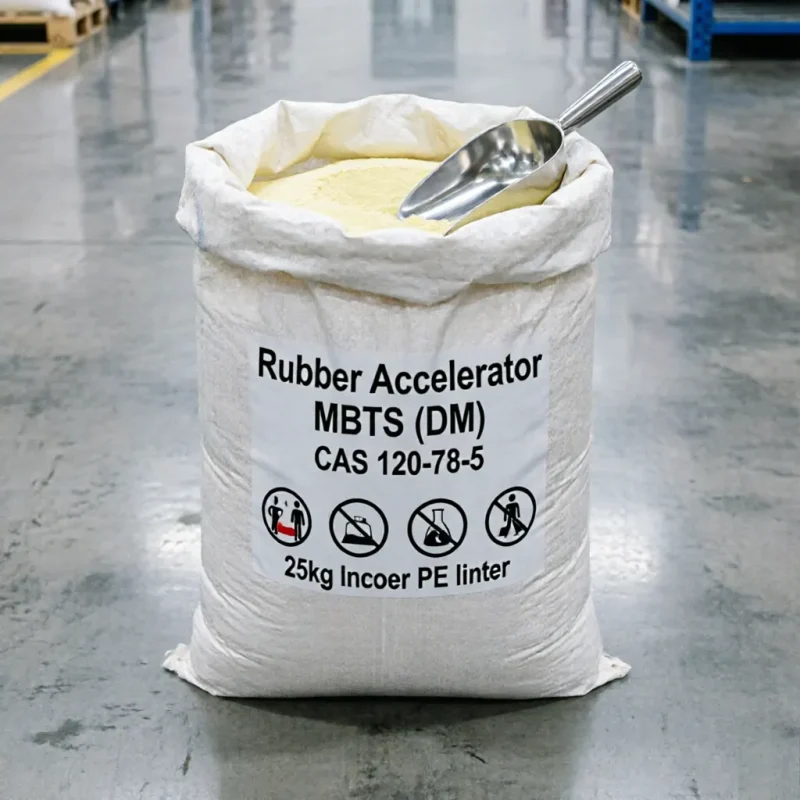
Rubber Accelerator MBTS (DM) is a medium-fast thiazole vulcanization accelerator supplied as white to light yellow powder or granules. It provides a longer scorch time and flatter cure curve than MBT, making it ideal for tire treads, conveyor belts, and industrial rubber goods. Each shipment includes COA, TDS, and SDS.
- CAS No: 120-78-5
- Synonyms: Dibenzothiazole disulfide, MBTS, Rubber Accelerator DM
- EC Number: 204-424-8
- Molecular Formula: C14H8N2S4
- Molecular Weight: 332.50 g/mol
- Appearance: White to light yellow powder or granules
- Purity: ≥ 95.0%
- Melting Point: ≥ 165.0 °C (329 °F)
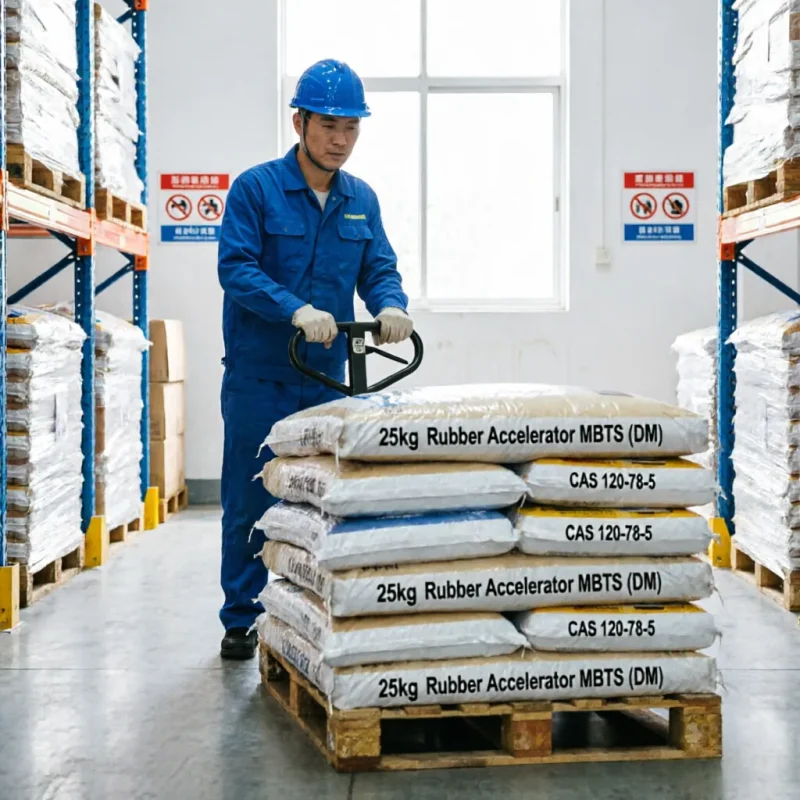
- Packaging: 25 kg (55 lb) woven PP bag with PE liner; 25 kg (55 lb) kraft paper bag. Custom packaging available upon request.
- Main Applications: NR/SR vulcanization, tire treads, conveyor belts, footwear
Introduction to Rubber Accelerator MBTS (DM)
Rubber Accelerator MBTS (DM) is a disulfide derivative of 2-mercaptobenzothiazole (MBT). During vulcanization, the disulfide bond cleaves to generate the active benzothiazole sulfenamide intermediates, which crosslink sulfur with rubber polymer chains. Compared to MBT, MBTS offers a significantly longer scorch safety window and a flatter cure curve, making it the standard choice for compounds requiring extended processing safety without sacrificing cure speed.
The main processing advantage is its delayed activation onset. MBTS remains relatively inert below 135 °C (275 °F), preventing premature crosslinking during mixing and extrusion. The critical storage risk is oxidation and moisture absorption; prolonged exposure to humid air can lower the active melting point and reduce cure efficiency. Store bags in a climate-controlled warehouse below 25 °C (77 °F) and keep the PE liner sealed between withdrawals.
Key Features of Rubber Accelerator MBTS (DM)
- Extended scorch safety. The disulfide structure delays the onset of vulcanization, providing a longer processing window than MBT for safe mixing, calendaring, and extrusion operations.
- Flat cure plateau. Maintains a stable state of cure over a broad temperature range, reducing the risk of over-cure and reversion in thick-section rubber products.
- Broad polymer compatibility. Works effectively in natural rubber (NR), SBR, NBR, and EPDM blends, often combined with secondary accelerators like TMTD or CBS for optimized cure profiles.
- No nitrosamine formation. Unlike thiuram or dithiocarbamate accelerators, MBTS does not generate carcinogenic nitrosamines during curing, ensuring compliance with occupational health regulations.
Rubber Accelerator MBTS Chemical & Physical Properties
| Property | Value |
|---|---|
| Molecular Formula | C14H8N2S4 |
| Molecular Weight | 332.50 g/mol |
| Melting Point | ≥ 165.0 °C (329 °F) |
| Heating Loss | ≤ 0.5% |
| Ash Content | ≤ 0.5% |
| Residue on 150 µm Sieve | ≤ 0.1% |
| Specific Gravity | 1.50 g/cm³ (93.6 lb/ft³) |
| Solubility | Soluble in chloroform, benzene, and carbon disulfide; insoluble in water and gasoline. |
Applications of Rubber Accelerator MBTS (DM)
Tire and conveyor belt manufacturing: Dosed at 0.5–2.0 phr in tread and carcass compounds. The delayed activation prevents scorch during hot milling, while the flat cure curve ensures uniform crosslink density in thick belt sections.
Industrial rubber goods and footwear: Used in hoses, gaskets, and shoe soles where processing safety and cure uniformity are critical. Often blended with CBS (CZ) to achieve a balance between fast cure and long scorch time.
Latex and dipped goods: Employed in latex thread and balloon formulations where a controlled, moderate cure rate is required to prevent blistering during the dipping process.
Storage & Safety Precautions for Rubber Accelerator MBTS (DM)
- Storage: Keep tightly sealed in original woven PP bags or kraft paper bags in a dry, well-ventilated warehouse below 25 °C (77 °F). Protect from direct sunlight and moisture. High humidity can cause caking and reduce the active melting point.
- Safety: Classified as non-hazardous, but fine powder may cause respiratory and eye irritation. Operators must wear N95/P2 dust masks and safety goggles during weighing and blending.
- Transport: Rubber Accelerator MBTS (DM) is Non-DG under IATA/IMDG/ADR. Standard 25 kg (55 lb) bags ship in dry containers. Avoid extreme heat during ocean transit to prevent caking.
- QC note: Verify melting point (≥ 165.0 °C) upon receipt. A melting point below 160 °C indicates significant oxidation or contamination; reject such lots.
Rubber Accelerator MBTS (DM) FAQ
Q: How does MBTS differ from MBT in processing safety?
A: MBTS has a disulfide bond that requires higher activation energy than the thiol group in MBT. This provides a longer scorch time and reduces the risk of premature vulcanization during mixing.
Q: Can MBTS be used as the sole accelerator?
A: Yes, it can be used alone for moderate-speed cures. However, it is most commonly combined with secondary accelerators like TMTD or CBS to achieve faster, more efficient vulcanization in tire and industrial compounds.
Q: Does MBTS form nitrosamines?
A: No. Unlike thiuram and dithiocarbamate accelerators, MBTS does not contain the nitrogen-carbon structures required for nitrosamine formation, making it a safer choice for regulatory compliance.
Related products

Manufacturer & Exporter Since 2006
Get Tailored Chemical Raw Material Solutions — Reply Within 1 Hour
Factory-direct pricing, stable high-purity supply and complete compliance documentation for your industrial formulations.
- 1000+Products
- 200+QC Protocols
- 7–15Days Delivery
- Factory-Direct Pricing
- COA / TDS / SDS Included
- Free Samples for Testing
- 40+ Export Countries
Request a Free Quote
Our engineers reply within 1 hour during GMT+8 business hours.
Please include in your inquiry:
- Product name or CAS number
- Required quantity
- Destination country or port
- Preferred packaging