
Citicoline Sodium CAS 33818-15-4
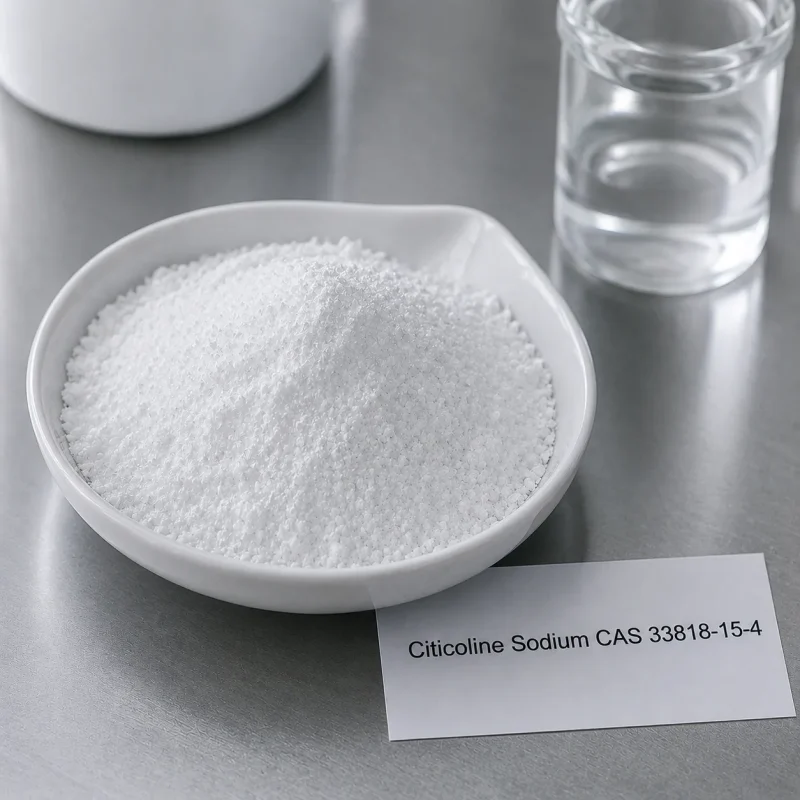
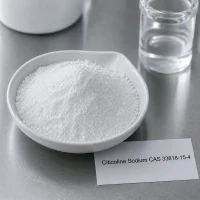
Citicoline Sodium is the sodium salt of cytidine-5′-diphosphocholine, a nucleotide with a cytidine head joined to phosphocholine via a pyrophosphate bridge. White crystalline powder, ≥99.0% HPLC purity. Acts as a phosphatidylcholine precursor in nootropic supplements, neuroprotective pharmaceuticals, and ophthalmic preparations. Fully water-soluble (>500 g/L). Each shipment includes COA, TDS, and SDS.
- CAS No.: 33818-15-4
- Synonyms: CDP-Choline Sodium; Cytidine 5′-diphosphocholine sodium salt
- EINECS: 251-640-5
- Molecular Formula: C₁₄H₂₅N₄NaO₁₁P₂
- Molecular Weight: 510.31 g/mol
- Appearance: White to off-white crystalline powder
- Assay (HPLC, dried basis): ≥99.0%
- Specific Rotation [α]D20: +19.0° to +22.0°
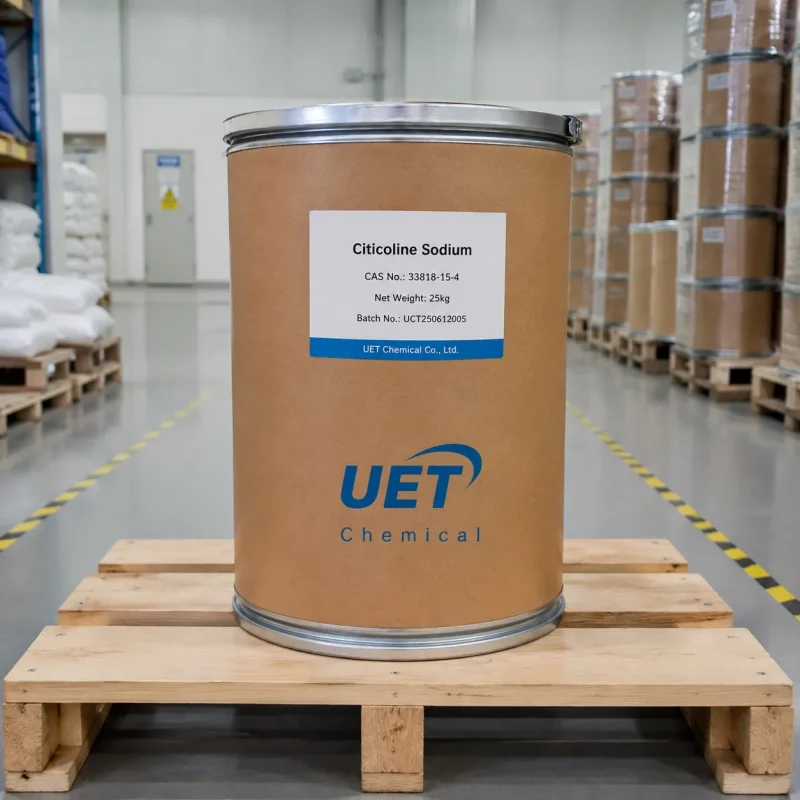
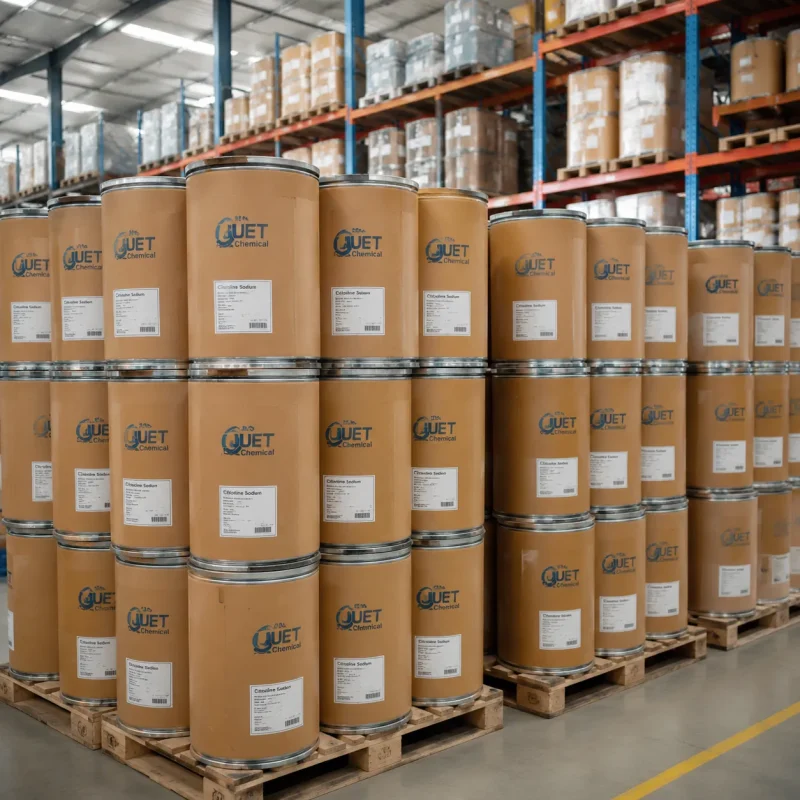
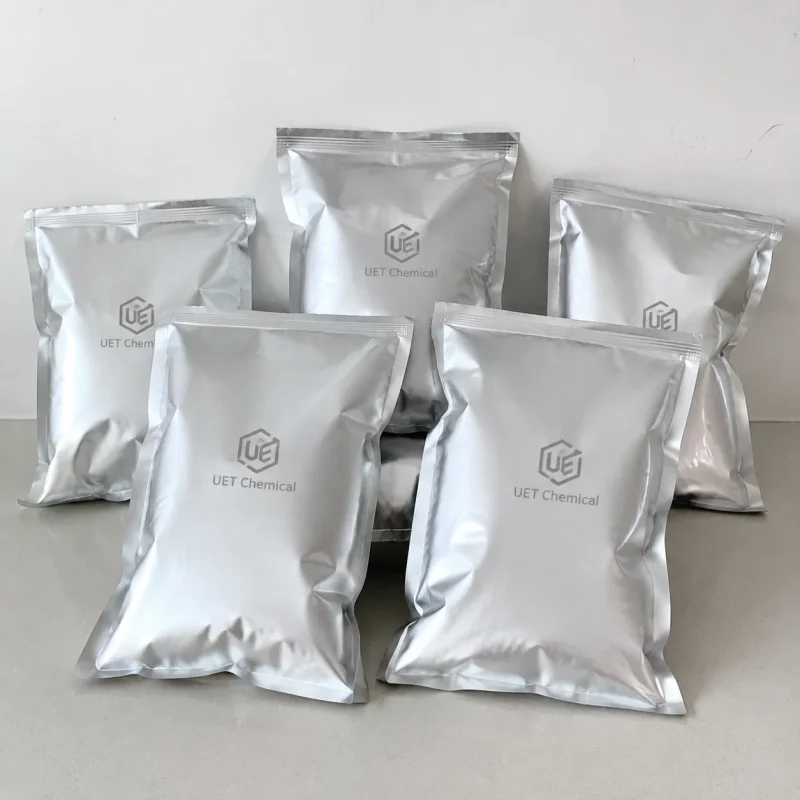
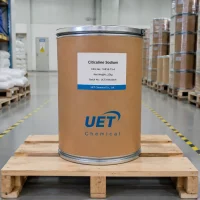
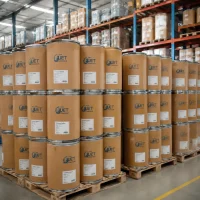
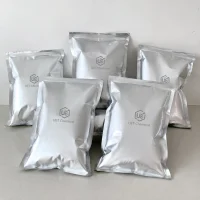
- Packaging: 1 kg aluminium foil bag / 25 kg fibre drum. Custom packaging available upon request.
- Main Applications: Nootropic supplements; neuroprotective APIs; ophthalmic preparations
Introduction to Citicoline Sodium
Citicoline Sodium is a white crystalline powder, the sodium salt of cytidine-5′-diphosphocholine. The molecule joins a cytidine nucleotide to phosphocholine through a pyrophosphate bridge, supplying both substrates for phosphatidylcholine synthesis via the Kennedy pathway. Formulators use it as the active in nootropic capsules, neuroprotective oral solutions, and ophthalmic drops.
In the sodium salt form it dissolves above 500 g/L in water at 20 °C, allowing clear oral solutions and high-load capsule fills without solubility-limited bioavailability. One practical caution: the powder is strongly hygroscopic. An open bag in a >60% RH room gains 1–2% moisture within one hour, caking the powder and shifting loss-on-drying readings. Weigh in a dehumidified room and reseal with desiccant immediately.
Key Features of Citicoline Sodium
- Dual-precursor architecture. One molecule delivers cytidine and choline simultaneously, feeding both the Kennedy pathway and the acetylcholine pool—two targets that single choline salts reach only partially.
- Pyrophosphate bridge stable at neutral pH. The diphosphate bond stays intact between pH 6 and 8; hydrolysis accelerates only below pH 3 or above pH 10, giving formulators a clear buffer window.
- High aqueous solubility. >500 g/L at 20 °C supports clear syrups, eye drops, and injection-grade solutions without co-solvents or solubilisers.
- Sodium salt handling advantage. Unlike the free acid, the sodium salt flows as a crystalline powder, enabling direct capsule filling and tablet granulation without granulation aids.
- Optical purity control. Specific rotation of +19.0° to +22.0° gives a fast polarimetric identity check that screens out degraded or adulterated lots before HPLC confirmation.
Citicoline Sodium Chemical & Physical Properties
| Property | Value |
|---|---|
| Molecular Formula | C₁₄H₂₅N₄NaO₁₁P₂ |
| Molecular Weight | 510.31 g/mol |
| Appearance | White to off-white crystalline powder |
| Assay (HPLC, dried basis) | 99.0–101.0% |
| Specific Rotation [α]D20 | +19.0° to +22.0° (Ph. Eur. 2.2.7) |
| pH (5% aq. solution) | 6.0–8.0 |
| Solubility | Freely soluble in water (>500 g/L); practically insoluble in ethanol, acetone |
| Loss on Drying | ≤5.0% (105 °C, vacuum) |
| Cytidine (related substance) | ≤0.5% (HPLC) |
| Heavy Metals | ≤10 ppm |
Applications of Citicoline Sodium
Nootropic and cognitive-support supplements: Dosed at 250–500 mg per serving in capsules. Cytidine and choline enter phosphatidylcholine synthesis together, maintaining neuronal membrane fluidity. Commonly stacked with uridine monophosphate and DHA in cognitive formulas.
Neuroprotective pharmaceutical formulations: Used at 500–1000 mg daily doses in oral solutions and tablets. Supplies the substrate for membrane phospholipid repair after ischemic events—the typical dose range in registered neuroprotective products.
Ophthalmic preparations: Formulated at 0.5–2.0% in eye drops. Protects retinal ganglion cells and supports corneal epithelium recovery in glaucoma adjuvant therapy; the high water solubility allows clear, isotonic drops without viscosity modifiers.
Functional beverages and energy shots: Added at 100–250 mg per serving. Fully soluble and stable at pH 6–7, it fits clear cognitive-support drinks without haze, sediment, or bitter off-notes at these doses.
Storage & Safety Precautions for Citicoline Sodium
Storage conditions. Store in sealed aluminium foil bags or PE-lined fibre drums at 2–25 °C, relative humidity below 40%. The powder pulls moisture aggressively; once caked, loss on drying rises and capsule-fill weights drift. Keep away from strong acids and strong alkalis—the pyrophosphate bond cleaves rapidly below pH 3 or above pH 10. Reseal opened bags with desiccant sachets.
Safety and PPE. GHS: Not classified as hazardous. Non-toxic and non-irritating at handling levels. Wear an N95 dust mask and safety glasses during dispensing to avoid inhaling fine powder. Spills are non-toxic; sweep up dry and wash the floor with water.
Transport classification. Non-DG. Not regulated under IMDG, IATA, or ADR. Ship as standard general cargo. Ensure container liners are intact to prevent ocean moisture ingress.
Practitioner note: When running the HPLC assay, detect at 280 nm—the cytidine ring absorbs there while free choline does not, so the main-peak purity directly reflects the nucleotide fraction. Run a cytidine reference for system suitability: on a C18 column cytidine elutes at roughly 0.4× the retention time of citicoline; a lot showing cytidine >0.5% has begun hydrolytic degradation.
Citicoline Sodium FAQ
Q: How do I verify identity and assay of Citicoline Sodium (CAS 33818-15-4) at incoming QC?
A: Run three checks: HPLC-UV at 280 nm against a citicoline reference (assay 99.0–101.0% on dried basis), specific rotation +19.0° to +22.0°, and IR match. Integrate the cytidine and choline peaks—cytidine above 0.5% signals hydrolysis. If your lab lacks the reference, polarimetry plus loss on drying gives a fast first screen.
Q: My Citicoline Sodium caked after the foil bag sat open for a week. Is it still usable?
A: Usually yes. Caking is physical moisture uptake, not degradation. Spread the powder, vacuum-dry at ≤40 °C for 2–4 h, then retest loss on drying (≤5.0%) and assay. If both pass, use normally. Reject only if the cytidine peak also rises, which means hydrolysis. From then on, dispense in a dehumidified room and store with desiccant.
Q: How do I convert the dose when labelling as “Citicoline”?
A: Multiply by 0.957. Citicoline (free form) has MW 488.32; the sodium salt has MW 510.31, giving 488.32/510.31 ≈ 0.957. So 500 mg citicoline sodium equals ~478 mg citicoline. State the salt form and conversion factor on export labels and registration files to avoid dosing disputes.
Related products
Manufacturer & Exporter Since 2006
Get Tailored Chemical Raw Material Solutions — Reply Within 1 Hour
Factory-direct pricing, stable high-purity supply and complete compliance documentation for your industrial formulations.
- 1000+Products
- 200+QC Protocols
- 7–15Days Delivery
- Factory-Direct Pricing
- COA / TDS / SDS Included
- Free Samples for Testing
- 40+ Export Countries
Request a Free Quote
Our engineers reply within 1 hour during GMT+8 business hours.
Please include in your inquiry:
- Product name or CAS number
- Required quantity
- Destination country or port
- Preferred packaging