
Dipropylene Glycol Monomethyl Ether (DPM) CAS 34590-94-8
Dipropylene Glycol Monomethyl Ether (DPM) is a slow-evaporating glycol ether solvent supplied as colorless transparent liquid. Its balanced hydrophilic-lipophilic structure provides full water miscibility, excellent flow and leveling, and strong coupling power for waterborne resins. Core uses include architectural coatings, industrial cleaners, brake fluids, and agrochemical formulations. Each shipment includes COA, TDS, and SDS.
- CAS No: 34590-94-8
- Synonyms: DPM, Methyldipropasol, 1-(2-Methoxy-1-methylethoxy)-2-propanol
- EC Number: 252-104-2
- Molecular Formula: C7H16O3
- Molecular Weight: 148.20 g/mol
- Appearance: Colorless transparent liquid
- Purity (GC): ≥ 99.0%
- Water Content: ≤ 0.2%
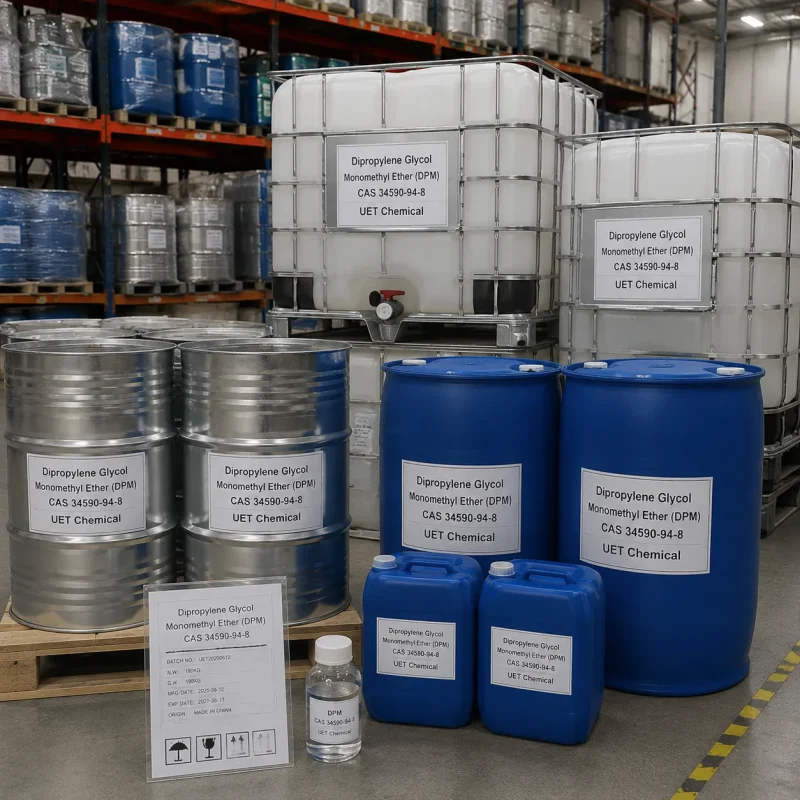
- Packaging: 200 kg (440 lb) galvanized iron drum; 200 kg (440 lb) HDPE drum; 1000 kg (2200 lb) IBC tote. Custom packaging available upon request.
- Main Applications: Waterborne coatings coalescent, industrial cleaners, brake fluid component, textile dye carrier
Introduction to Dipropylene Glycol Monomethyl Ether (DPM)
Dipropylene Glycol Monomethyl Ether is a pure glycol ether featuring a methoxy group and a terminal hydroxyl on a dipropylene glycol backbone. The dual ether-hydroxyl functionality grants complete miscibility with water, alcohols, ketones, and aromatic hydrocarbons while maintaining a slow evaporation rate (approx. 0.01 relative to butyl acetate). This combination makes DPM the standard coalescing agent and coupling solvent for waterborne acrylic, vinyl, and alkyd systems.
The primary formulation advantage is its ability to lower the minimum film formation temperature (MFFT) of latex paints without causing excessive open-time loss or surfactant migration. The critical storage risk is hygroscopic moisture uptake. Once exposed to humid air, DPM absorbs water rapidly, raising cloud point and causing film haze in clear coatings. Store drums in a sealed, dry warehouse at 15–35 °C (59–95 °F). Keep bung seals tight and use nitrogen padding for long-term storage if possible.
Key Features of DPM
- Slow, controlled evaporation. Boiling point of 190 °C (374 °F) extends open time, allowing latex particles to coalesce fully before film locking, which eliminates mud-cracking and improves brush-out in architectural coatings.
- Full water and solvent miscibility. Miscible with water in all proportions and compatible with alcohols, ketones, esters, and aromatics, enabling single-solvent simplification in complex cleaner and coating formulations.
- High coupling power for resins. Effectively bridges polar latex binders and non-polar coalescing domains, preventing grit formation and improving gloss retention in semi-gloss and high-gloss waterborne topcoats.
- Low odor and mild toxicity profile. Significantly lower vapor toxicity and odor intensity compared to ethylene glycol ethers such as 2-butoxyethanol, improving workplace safety for indoor coating applicators and cleaning crews.
Dipropylene Glycol Monomethyl Ether Chemical & Physical Properties
| Property | Value |
|---|---|
| Molecular Formula | C7H16O3 |
| Molecular Weight | 148.20 g/mol |
| Boiling Point | 190 °C (374 °F) at 760 mmHg |
| Flash Point (Closed Cup) | 85 °C (185 °F) |
| Evaporation Rate (BuAc = 1) | Approx. 0.01 (very slow) |
| Vapor Pressure | 0.03 mmHg at 25 °C (77 °F) |
| Specific Gravity | 0.95 g/cm³ at 25 °C (77 °F) |
| Solubility in Water | Fully miscible in all proportions at 20 °C (68 °F) |
| Hydroxyl Value | 370 mg KOH/g |
| Color (APHA) | ≤ 25 |
| Water Content | ≤ 0.2% (Karl Fischer) |
Applications of Dipropylene Glycol Monomethyl Ether (DPM)
Architectural and industrial waterborne coatings: Dosed at 2–8% on total formulation in interior/exterior latex paints and primers. Lowers MFFT of acrylic and vinyl-acrylic emulsions, improves film continuity, and reduces spatter during roller application. Slow evaporation maintains wet edge on large wall surfaces.
Industrial and institutional cleaners: Blended at 5–20% in alkaline and neutral cleaning concentrates. Couples water with oily soils and greases, preventing phase separation in high-electrolyte systems. Used in degreasers, hard-surface cleaners, and automotive wash formulations.
Brake fluid formulations: Incorporated at 10–30% in DOT 3 and DOT 4 hydraulic brake fluids. Provides high boiling point, low-temperature fluidity, and compatibility with polyglycol base stocks, preventing vapor lock under high braking temperatures.
Textile dyeing and finishing: Applied at 2–10% as a dye carrier and leveling agent for disperse and acid dyes on polyester and nylon. Improves dye migration and reduces unlevelness during high-temperature jet dyeing.
Storage & Safety Precautions for DPM
- Storage: Keep tightly sealed in original galvanized iron drums, HDPE drums, or IBC totes at 15–35 °C (59–95 °F). The product is hygroscopic; an opened drum left in humid conditions will absorb water and develop cloudiness within days, causing film haze in clear coatings. Use nitrogen padding or desiccant breathers for long-term storage.
- Safety: Classified as a combustible liquid (Flash Point 85 °C / 185 °F), but not a flammable liquid under most transport regulations. Mild eye irritant; causes slight skin defatting on prolonged contact. Operators must wear safety goggles, chemical-resistant gloves, and standard vapor masks during transfer operations.
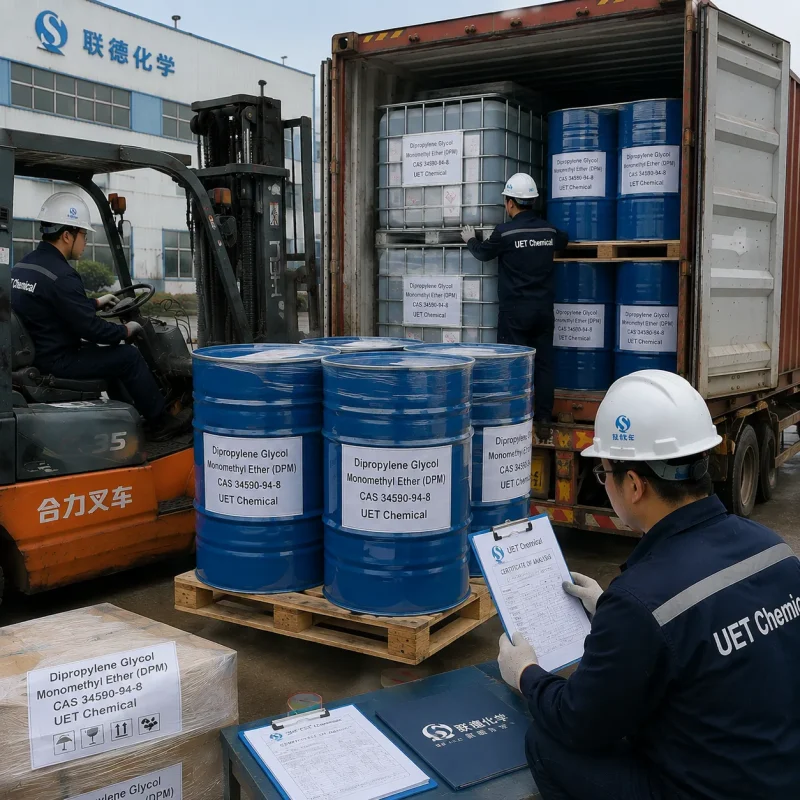
- Transport: DPM is Non-DG under IATA/IMDG/ADR (flash point > 60 °C). Not a marine pollutant. Standard 200 kg (440 lb) drums and IBC totes ship in dry containers. Avoid extreme heat to prevent drum expansion.
- QC note: Verify GC purity (≥ 99.0%) and water content (≤ 0.2% by Karl Fischer) upon receipt. Inspect for clarity. Cloudiness or phase separation indicates moisture ingress during transit; reject the lot if water content exceeds 0.5% or if the liquid fails to clear after gentle warming.
Dipropylene Glycol Monomethyl Ether FAQ
Q: How does DPM differ from PMA (Propylene Glycol Methyl Ether Acetate) in coating formulations?
A: DPM is the alcohol form with a slower evaporation rate and higher boiling point, preferred for flow and leveling in waterborne coatings. PMA is the acetate ester with faster evaporation and stronger solvency for acrylics. DPM is chosen when extended open time and reduced mud-cracking are required.
Q: The liquid arrived slightly cloudy. Is it ruined?
A: DPM is hygroscopic. Cloudiness indicates moisture absorption during transit. Test water content by Karl Fischer. If water content exceeds 0.5%, it may cause film haze in clear coatings. Reject the lot if specifications require ≤ 0.2% water.
Q: Can I replace Dowanol DPM or Arkema DPM with your product in my existing formulation?
A: Yes. CAS 34590-94-8 is the exact same chemical structure. Verify GC purity, water content, and color (APHA ≤ 25) against your original specification sheet. Run a small-batch compatibility test before full-scale substitution.
Related products
Manufacturer & Exporter Since 2006
Get Tailored Chemical Raw Material Solutions — Reply Within 1 Hour
Factory-direct pricing, stable high-purity supply and complete compliance documentation for your industrial formulations.
- 1000+Products
- 200+QC Protocols
- 7–15Days Delivery
- Factory-Direct Pricing
- COA / TDS / SDS Included
- Free Samples for Testing
- 40+ Export Countries
Request a Free Quote
Our engineers reply within 1 hour during GMT+8 business hours.
Please include in your inquiry:
- Product name or CAS number
- Required quantity
- Destination country or port
- Preferred packaging