
High-Purity Manganese Carbonate Powder (CAS 598-62-9) | Agriculture & Industry Grade
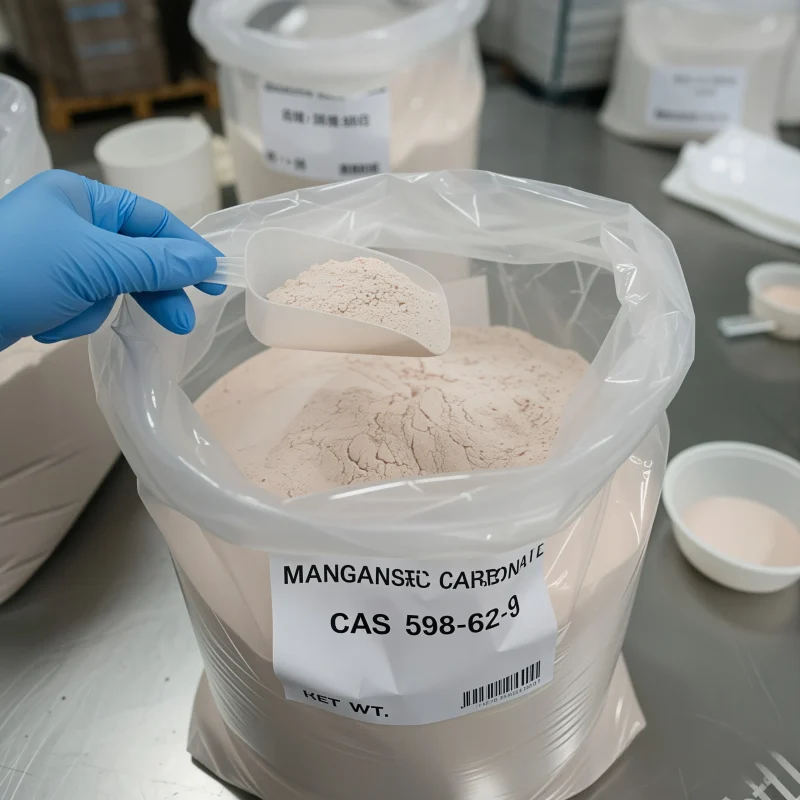
High-Purity Manganese Carbonate is a versatile inorganic manganese source supplied as a pink to light-brown crystalline powder. Offering a high elemental manganese content (≥ 43%) and excellent reactivity, it serves as a critical precursor for both biological supplementation and advanced material synthesis. Core uses include agricultural trace element fertilizers, animal feed additives, and soft magnetic ferrite manufacturing. Each shipment includes COA, TDS, and SDS.
- CAS No: 598-62-9
- Synonyms: Manganese(II) carbonate, Manganous carbonate, Carbonic acid manganese(2+) salt
- EC Number: 209-942-9
- Molecular Formula: MnCO3
- Molecular Weight: 114.95 g/mol
- Appearance: Pink to light-brown or greyish crystalline powder
- Purity: ≥ 98.0% (Mn content ≥ 43.0%)
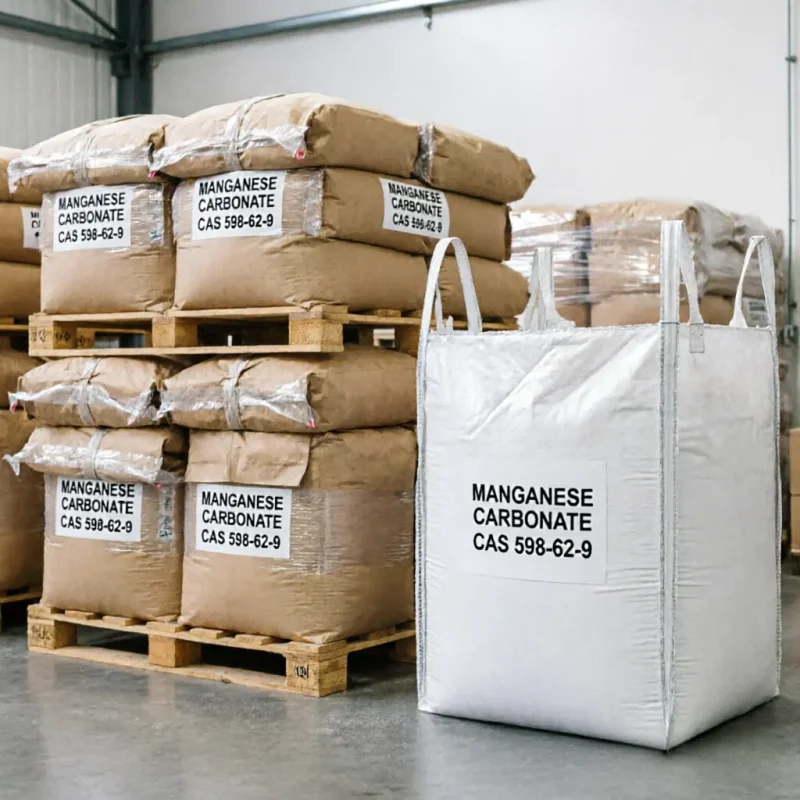
- Packaging: 25 kg (55 lb) PP woven bag with PE liner; 1000 kg (2200 lb) jumbo bag on pallet. Custom packaging available upon request.
- Main Applications: Agricultural foliar fertilizers, animal feed premixes, soft magnetic ferrite precursors, catalyst supports, ceramic pigments, manganese salt synthesis
Introduction to Manganese Carbonate
Manganese Carbonate (MnCO3) is an essential inorganic compound widely utilized across the agricultural, nutritional, and advanced materials sectors. In its natural mineral form, it is known as rhodochrosite, but commercial grades are synthetically produced via the precipitation of manganese sulfate with sodium carbonate or bicarbonate to ensure high purity and controlled particle size. Upon thermal decomposition (calcination) above 300 °C (572 °F), it readily converts into high-purity manganese oxides (MnO, Mn2O3, or MnO2), making it an indispensable precursor for battery-grade materials and electronic ceramics.
For agricultural and feed applications, its moderate solubility in weak organic acids ensures excellent bioavailability without causing the severe phytotoxicity associated with highly soluble inorganic salts like manganese sulfate. Store in a dry, well-ventilated warehouse; exposure to strong acids will cause rapid decomposition and carbon dioxide gas release. Keep sealed in moisture-proof packaging to prevent surface oxidation and caking.
Key Features of Manganese Carbonate
- High elemental manganese yield. Delivers a minimum of 43.0% elemental Mn by weight, providing a highly concentrated and cost-effective manganese source for bulk blending and premix formulations.
- Controlled thermal decomposition. Calcines cleanly into active manganese oxides without leaving alkali metal residues (unlike permanganate or nitrate routes), making it ideal for lithium-manganese oxide (LMO) battery cathode precursors and soft magnetic ferrites.
- Superior bioavailability with low burn risk. In foliar sprays and soil applications, its mild reactivity prevents leaf burn and root damage while effectively correcting manganese deficiencies in crops like soybeans, wheat, and citrus.
- Low heavy metal profile. Synthetically precipitated grades maintain strict limits on lead (Pb), arsenic (As), and cadmium (Cd), meeting rigorous safety standards for feed-grade and food-chain agricultural inputs.
- Excellent flowability and dispersibility. Milled to a consistent mesh size (typically 95% passing 325 mesh), ensuring dust-free handling, uniform blending in feed premixes, and rapid suspension in liquid fertilizer tanks.
Manganese Carbonate Chemical & Physical Properties
| Property | Value |
|---|---|
| Molecular Formula | MnCO3 |
| Molecular Weight | 114.95 g/mol |
| Decomposition Temperature | Starts at 200 °C (392 °F); fully decomposes to MnO and CO2 at 300–500 °C (572–932 °F) in an inert atmosphere. |
| Density | Approx. 3.12 g/cm³ (194.8 lb/ft³) crystal density; bulk powder density 1.20–1.50 g/cm³ (74.9–93.6 lb/ft³). |
| Solubility in Water | Practically insoluble in water (approx. 0.006 g/100 mL at 20 °C / 68 °F); soluble in dilute mineral acids with effervescence. |
| Manganese (Mn) Content | ≥ 43.0% |
| Heavy Metals (as Pb) | ≤ 10 ppm (Feed/Agriculture Grade) |
| Arsenic (As) | ≤ 3 ppm |
| Chloride (Cl) | ≤ 0.05% |
| Sulfate (SO4) | ≤ 0.2% |
| Particle Size | 95% passing 325 mesh (45 µm) |
Applications of Manganese Carbonate
Agricultural trace element fertilizers: Used as a primary manganese source in NPK compound fertilizers, foliar sprays, and soil conditioners. Its low water solubility prevents nutrient leaching in heavy soils and avoids leaf scorch in foliar applications, ensuring sustained manganese release for chlorophyll synthesis and enzyme activation in crops.
Animal feed premixes: Incorporated into poultry, swine, and ruminant feed blends at precise ppm levels to prevent perosis (slipped tendon) in chickens and support bone development and reproductive health. Its neutral pH and low hygroscopicity extend the shelf life of vitamin-mineral premixes.
Electronic ceramics and battery materials: Calcined at high temperatures to produce battery-grade manganese oxides for lithium-manganese oxide (LMO) and NCM cathode materials. Also serves as the foundational raw material for manufacturing manganese-zinc (Mn-Zn) and nickel-zinc (Ni-Zn) soft magnetic ferrite cores used in transformers and inductors.
Chemical synthesis and catalysts: Acts as a neutralizing agent and precursor for synthesizing other manganese salts (e.g., manganese acetate, manganese gluconate) and serves as a catalyst support in organic oxidation reactions and drying agents for alkyd resins.
Storage & Safety Precautions for Manganese Carbonate
- Storage: Keep tightly sealed in original PP woven bags or jumbo bags in a cool, dry, and well-ventilated warehouse below 30 °C (86 °F). Protect from moisture and incompatible materials, particularly strong acids (which cause violent CO2 gas evolution) and strong oxidizing agents. Shelf life is virtually indefinite if kept dry.
- Safety: Not classified as highly hazardous, but prolonged inhalation of manganese dust can cause neurological issues (manganism). Wear N95/N100 respirators, safety goggles, and heavy-duty gloves during bulk handling and bag emptying. Ensure adequate local exhaust ventilation in milling and blending facilities.
- Transport: Manganese Carbonate is Non-DG under IATA/IMDG/ADR. No UN number, no packing group. Standard dry container shipping is acceptable. Ensure containers are lined with moisture-proof tarps to prevent water ingress during ocean transit, which can cause bag degradation.
- QC note: Upon receipt, verify Mn content via EDTA complexometric titration (target ≥ 43.0%) and check for insoluble matter in dilute HCl. A noticeable shift from pink/brown to black indicates surface oxidation to higher-valence manganese oxides due to moisture exposure—request a replacement if out of spec.
Manganese Carbonate FAQ
Q: How does Manganese Carbonate (CAS 598-62-9) compare to Manganese Sulfate for agricultural use?
A: Manganese Sulfate is highly water-soluble, making it ideal for immediate correction of severe deficiencies via fertigation, but it carries a high risk of leaf burn in foliar sprays and rapid leaching in sandy soils. Manganese Carbonate is less soluble, providing a slow-release, long-lasting manganese source with a much lower risk of phytotoxicity and soil acidification, making it preferred for base fertilizers and sensitive crops.
Q: Can this material be used directly for lithium-ion battery cathode production?
A: Not directly. Manganese Carbonate must first undergo controlled calcination (roasting) at specific temperatures and atmospheres to convert it into high-purity Manganese Dioxide (MnO2) or Trimanganese Tetroxide (Mn3O4), which are then used as precursors for LMO or NCM cathode active materials.
Q: Why did my Manganese Carbonate powder turn dark brown/black on the surface?
A: This color change indicates surface oxidation from Mn²⁺ (pink/light brown) to Mn⁴⁺ (black MnO2) caused by prolonged exposure to high humidity and air. While the bulk material may still be usable for industrial applications, it may not meet strict feed-grade or electronic-grade color and purity specifications. Store in dry, sealed packaging to prevent this.
Related products
Manufacturer & Exporter Since 2006
Get Tailored Chemical Raw Material Solutions — Reply Within 1 Hour
Factory-direct pricing, stable high-purity supply and complete compliance documentation for your industrial formulations.
- 1000+Products
- 200+QC Protocols
- 7–15Days Delivery
- Factory-Direct Pricing
- COA / TDS / SDS Included
- Free Samples for Testing
- 40+ Export Countries
Request a Free Quote
Our engineers reply within 1 hour during GMT+8 business hours.
Please include in your inquiry:
- Product name or CAS number
- Required quantity
- Destination country or port
- Preferred packaging