
Potassium Thiocyanate (KSCN) CAS 333-20-0
Potassium Thiocyanate (KSCN) is an inorganic pseudo-halide salt with thiocyanate anions. It serves as a core reagent for analytical iron detection, thiourea synthesis, precious metal extraction and photographic fixing, addressing low reaction yields in synthesis and weak sensitivity in colorimetric testing. UETChem supplies high-purity KSCN with strict heavy metal limits and controlled moisture for consistent batch performance. Each shipment includes COA, TDS, SDS.
- CAS No: 333-20-0
- Synonyms: Potassium rhodanide; Potassium sulfocyanate; KSCN; Thiocyanic acid, potassium salt; Potassium thiocyanate
- EINECS: 206-372-2
- Molecular Formula: KSCN
- Molecular Weight: 97.18 g/mol
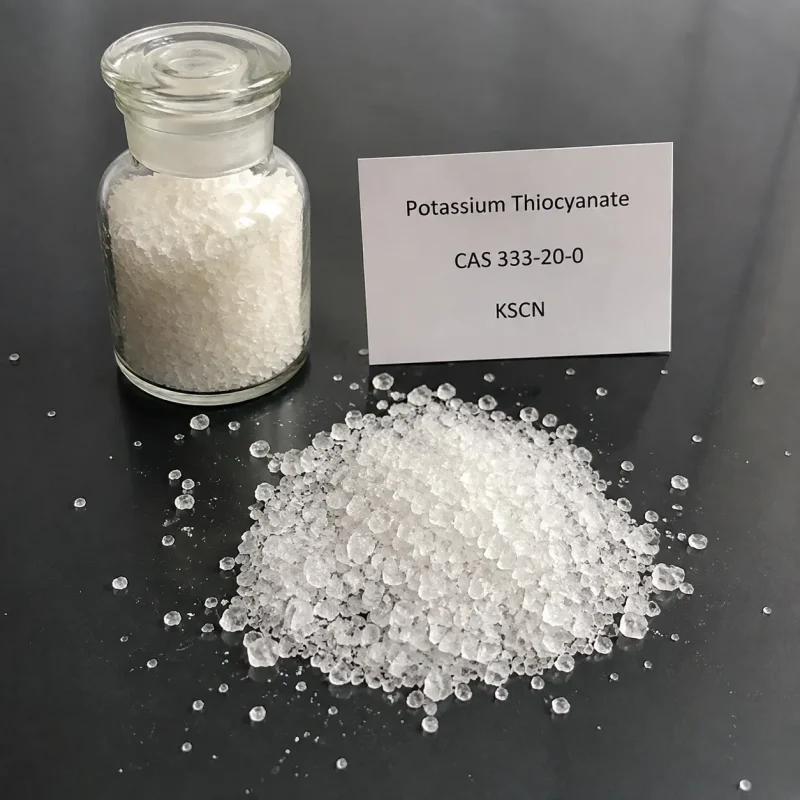
- Appearance: Colorless to white crystals or powder
- Purity: 99.0% min
- Moisture: 0.5% max
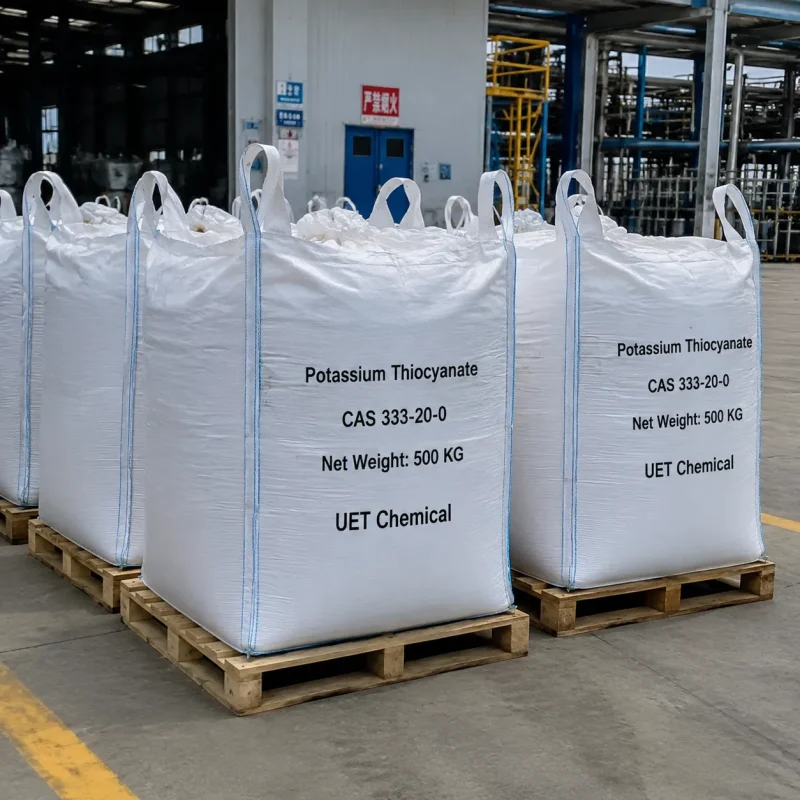
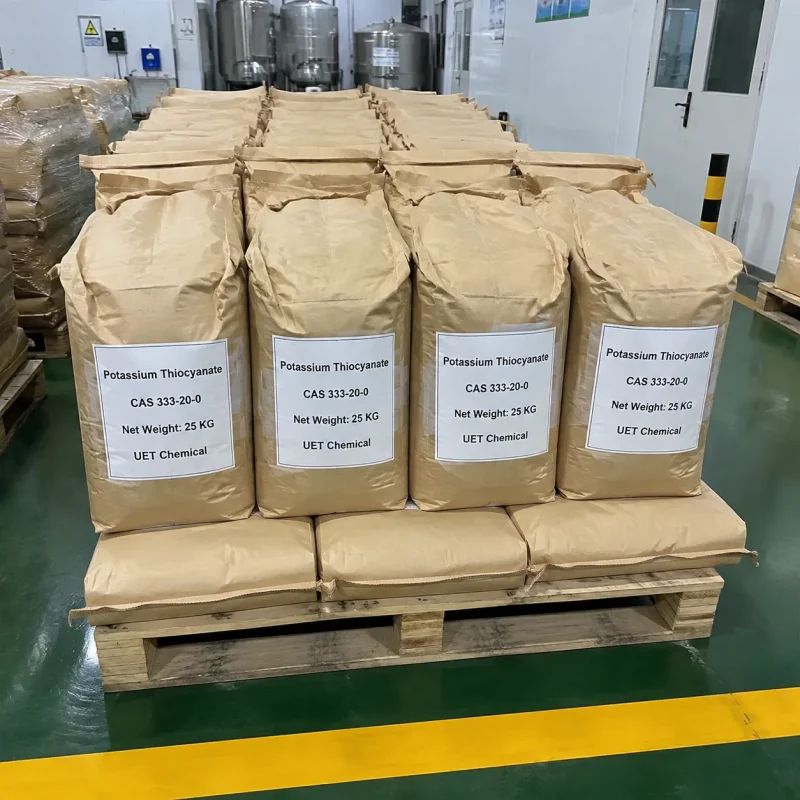
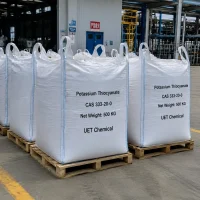
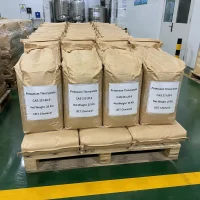
- Packaging: 25 kg kraft bag with PE liner, 500 kg pallet. Custom packaging available upon request.
- Main Applications: Analytical reagents, thiourea synthesis, metal extraction, photography fixing baths
Introduction to Potassium Thiocyanate
Potassium Thiocyanate is an inorganic salt composed of potassium cations and thiocyanate anions. The pseudo-halide character of the SCN⁻ group supports nucleophilic substitution and complexation reactions. It appears as colorless, odorless, deliquescent crystals at room temperature, and dissolves rapidly in water via a strongly endothermic process.
The compound is also soluble in ethanol. Industrial production uses controlled crystallization to deliver uniform crystal size and low heavy metal profiles. It reacts with ferric ions to form highly colored complexes, and decomposes in strong acidic conditions to release toxic gases.
Potassium Thiocyanate Chemical & Physical Properties
| Property | Value |
|---|---|
| Molecular Formula | KSCN |
| Molecular Weight | 97.18 g/mol |
| Melting Point | 173 °C |
| Density | 1.89 g/cm³ |
| Solubility | Highly soluble in water and ethanol |
| Purity | 99.0% min |
| Moisture | 0.5% max |
Applications of Potassium Thiocyanate
Analytical iron detection: Prepared as standard reagent solutions for laboratory testing. The thiocyanate anion forms deeply colored complexes with ferric ions, enabling sensitive detection of trace iron impurities in water samples, pharmaceutical intermediates and food additives.
Thiourea and agrochemical synthesis: Used as a key building block for manufacturing thiourea, thiocarbamates and specialty herbicides. The nucleophilic sulfur drives condensation and substitution reactions in organic synthesis processes.
Precious metal extraction: Employed as a mild leaching agent to extract silver and other precious metals from complex ores. It also functions in photographic fixing baths to dissolve unexposed silver halides and stabilize final images.
Storage & Safety Precautions for Potassium Thiocyanate
- Store in tightly sealed moisture-proof packaging in dry warehouses. The material is highly deliquescent and absorbs atmospheric moisture rapidly, causing solid liquefaction and disrupting stoichiometric accuracy.
- Never mix with strong acids or acidic waste streams. Contact with acids releases highly toxic hydrogen cyanide and carbonyl sulfide gases. Handle in well-ventilated fume hoods where acid contact is possible.
- Wear N95 respirators, safety goggles and nitrile gloves during bulk handling. Dust exposure causes irritation to the respiratory tract and eye tissues.
Potassium Thiocyanate FAQ
Q: How does Potassium Thiocyanate (KSCN) detect trace iron in labs?
A: It forms an intense blood-red complex with ferric ions. This sharp colorimetric shift enables sensitive detection of trace iron in water, pharma intermediates and food additives.
Q: Why is moisture control critical when storing KSCN?
A: KSCN is highly deliquescent and absorbs moisture rapidly, turning solid into liquid. This disrupts synthesis stoichiometry. Store in tightly sealed moisture-proof packaging.
Q: What safety hazards exist when mixing Potassium Thiocyanate (KSCN) with acids?
A: Contact with strong acids releases toxic hydrogen cyanide and carbonyl sulfide gases. Never mix with acidic waste. Handle in fume hoods with respiratory protection.
Related products
Manufacturer & Exporter Since 2006
Get Tailored Chemical Raw Material Solutions — Reply Within 1 Hour
Factory-direct pricing, stable high-purity supply and complete compliance documentation for your industrial formulations.
- 1000+Products
- 200+QC Protocols
- 7–15Days Delivery
- Factory-Direct Pricing
- COA / TDS / SDS Included
- Free Samples for Testing
- 40+ Export Countries
Request a Free Quote
Our engineers reply within 1 hour during GMT+8 business hours.
Please include in your inquiry:
- Product name or CAS number
- Required quantity
- Destination country or port
- Preferred packaging