
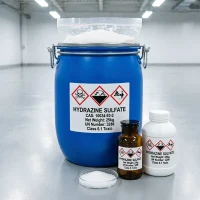
Hydrazine Sulfate (CAS 10034-93-2)
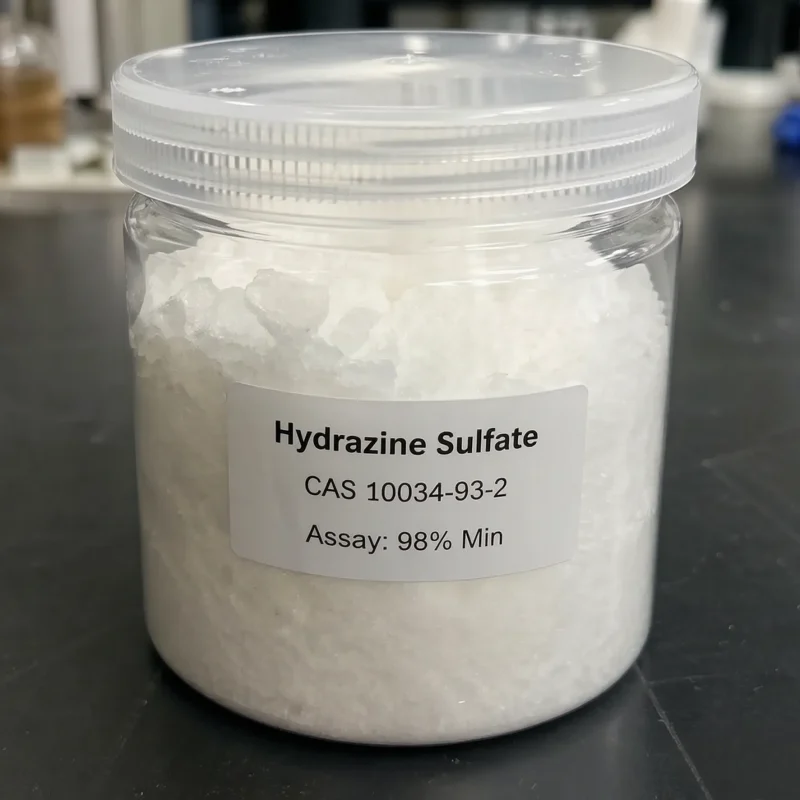
Hydrazine Sulfate is a white orthorhombic crystalline solid composed of hydrazine cations and sulfate anions, acting as a strong reducing agent and chemical intermediate to supply active hydrazine groups in acidic environments. The inherent sulfate buffer prevents metal hydroxide precipitation during reduction reactions. Each shipment includes COA, TDS and SDS.
- CAS No: 10034-93-2
- Synonyms: Hydrazinium sulfate, Hydrazine sulphate, Diamine sulfate
- EINECS: 233-103-5
- Molecular Formula: N2H6SO4
- Molecular Weight: 130.12 g/mol
- Appearance: White orthorhombic crystals or powder
- Purity: ≥99.0% by titration; trace chloride and iron strictly controlled
- Melting Point: 254°C (489°F) with decomposition
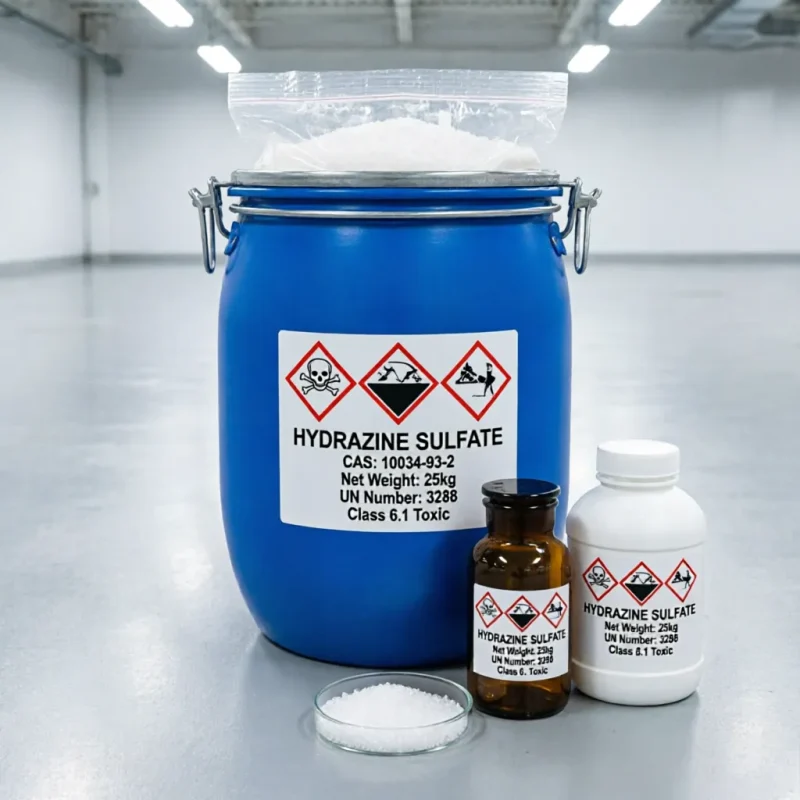
- Packaging: 25 kg (55 lb) fiber drum or 50 kg (110 lb) woven bag; Custom packaging available upon request.
- Main Applications: Pharmaceutical intermediates, electroless plating, polymer foaming, analytical reagents
Introduction to Hydrazine Sulfate
Hydrazine Sulfate is a white orthorhombic crystalline solid composed of hydrazine cations and sulfate anions. The compound acts as a strong reducing agent and chemical intermediate, delivering active hydrazine groups in an acidic environment. Main applications cover pharmaceutical synthesis, electroless metal plating, polymer foaming and analytical chemistry.
The main processing challenge lies in temperature-dependent solubility and strong acidity. The powder dissolves slowly in cold water but rapidly in hot water. Aqueous solutions are highly acidic and degrade over time. Operators must prepare solutions fresh, use glass or corrosion-resistant tanks, and strictly avoid contact with alkaline materials or strong oxidizers to prevent violent reactions or rapid decomposition. Record the exact water temperature and mixing time to ensure complete dissolution before adding other bath chemicals.
Key Features of Hydrazine Sulfate
- Stable reducing potential: The hydrazine cation provides controlled electron transfer for reducing metal ions in electroless plating baths.
- Inherent acidic buffer: Sulfate anions maintain a low pH in aqueous solutions, preventing unwanted precipitation of metal hydroxides during reduction processes.
- Temperature-sensitive solubility: The crystals show low solubility in cold water and high solubility in hot water, allowing easy purification through recrystallization.
- Thermal gas release: Heating the solid above 254°C (489°F) triggers decomposition, releasing nitrogen and sulfur oxides for specific foaming or oxygen-scavenging systems.
Hydrazine Sulfate Chemical & Physical Properties
| Property | Value |
|---|---|
| Molecular Formula | N2H6SO4 |
| Molecular Weight | 130.12 g/mol |
| Appearance | White orthorhombic crystals or powder |
| Melting Point | 254°C (489°F) with decomposition |
| Boiling Point | Decomposes before boiling; no normal boiling point |
| Density | 1.37 g/cm³ (85.5 lb/ft³) |
| Flash Point | Non-combustible solid; no flash point |
| Solubility | 3 g/100 mL cold water; soluble in hot water; insoluble in ethanol |
| pH (10% aqueous solution) | 1.0–2.0 (strongly acidic) |
| Assay | ≥99.0% |
| Chloride (Cl) | ≤0.005% |
| Iron (Fe) | ≤0.001% |
Applications of Hydrazine Sulfate
Pharmaceutical and agrochemical intermediates: Hydrazine Sulfate supplies the hydrazine group for nucleophilic substitution and condensation reactions. The material is a key raw material for synthesizing isoniazid (anti-tuberculosis drug) and maleic hydrazide (plant growth regulator). Dosage follows strict stoichiometric ratios based on the target molecular weight.
Electroless plating and metal recovery: The compound reduces metal ions to elemental metals in acidic baths. Operators use it in electroless nickel plating and precious metal recovery. Typical bath concentration ranges from 0.5 to 5 g/L. The acidic nature prevents metal hydroxide precipitation and ensures a smooth metal deposit on the substrate.
Polymer foaming agents: The material serves as a precursor for azodicarbonamide (ADC) blowing agents. In specific resin systems, it decomposes under heat to release nitrogen gas, creating cellular structures. Addition rates typically fall between 2 and 10 phr, depending on the desired foam density and polymer matrix.
Analytical reagents and water treatment: Laboratories use it as a standard reducing agent to titrate heavy metals like iron and cobalt. In high-pressure boiler systems, it acts as an oxygen scavenger to remove dissolved oxygen, dosed at ppm levels to prevent pipe corrosion and maintain heat transfer efficiency.
Storage & Safety Precautions for Hydrazine Sulfate
Storage conditions: Keep Hydrazine Sulfate in tightly sealed, light-resistant containers in a cool, dry warehouse below 25°C (77°F). The material is a suspected carcinogen and strong reducer. Store strictly away from oxidizers, alkaline substances, and foodstuffs. Use dedicated pallets and inspect bags for moisture ingress.
Safety and PPE: The powder is highly toxic by inhalation and skin absorption. Check the batch SDS for regional GHS classifications. Wear a full-face respirator with appropriate cartridges, heavy-duty nitrile gloves, and chemical splash goggles during weighing. Wash hands and shower immediately after handling.
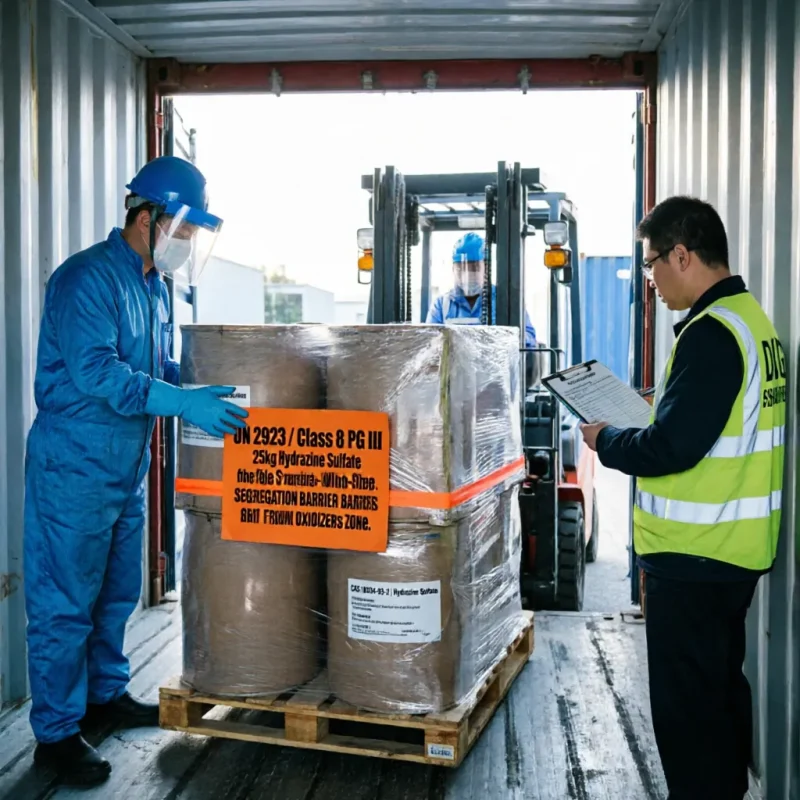
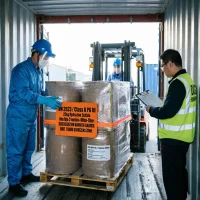
Spill and transport: Sweep dry spills carefully into sealed plastic drums. Avoid generating dust. Do not use combustible sweepers. Hydrazine Sulfate is typically classified under UN 3288 (Toxic solid, inorganic, n.o.s., Class 6.1) for transport. Verify the exact UN number and packing group with the latest IATA/IMDG regulations before booking.
Operator note: When preparing aqueous solutions, always add the powder to water, never water to the powder, to control the exothermic dissolution. The resulting solution is highly acidic (pH 1-2) and unstable. Prepare batches fresh daily and use glass or lined tanks. Never mix the solution with alkaline cleaners.
Hydrazine Sulfate FAQ
Q: How to dissolve Hydrazine Sulfate CAS 10034-93-2 for plating baths?
A: CAS 10034-93-2 dissolves poorly in cold water. Heat the water to 60–80°C (140–176°F), add the powder slowly while stirring, then cool the solution. The liquid is highly acidic and degrades over time. Prepare the bath fresh daily. Use glass or corrosion-resistant tanks, and never add alkaline materials directly to the concentrated stock. Always test the final bath pH and temperature before starting the plating process.
Q: Why does Hydrazine Sulfate turn yellow during storage?
A: Yellowing indicates oxidation or moisture ingress. The material is a strong reducer and reacts with air or trace metal impurities over time. Store the drums tightly sealed below 25°C (77°F) in the dark. If the powder turns dark yellow or brown, assay the active content by titration before use, as reducing power will be lower than the labeled 99%. Discard heavily degraded batches to avoid plating defects.
Related products
Manufacturer & Exporter Since 2006
Get Tailored Chemical Raw Material Solutions — Reply Within 1 Hour
Factory-direct pricing, stable high-purity supply and complete compliance documentation for your industrial formulations.
- 1000+Products
- 200+QC Protocols
- 7–15Days Delivery
- Factory-Direct Pricing
- COA / TDS / SDS Included
- Free Samples for Testing
- 40+ Export Countries
Request a Free Quote
Our engineers reply within 1 hour during GMT+8 business hours.
Please include in your inquiry:
- Product name or CAS number
- Required quantity
- Destination country or port
- Preferred packaging