
1,2-Hexanediol CAS 6920-22-5
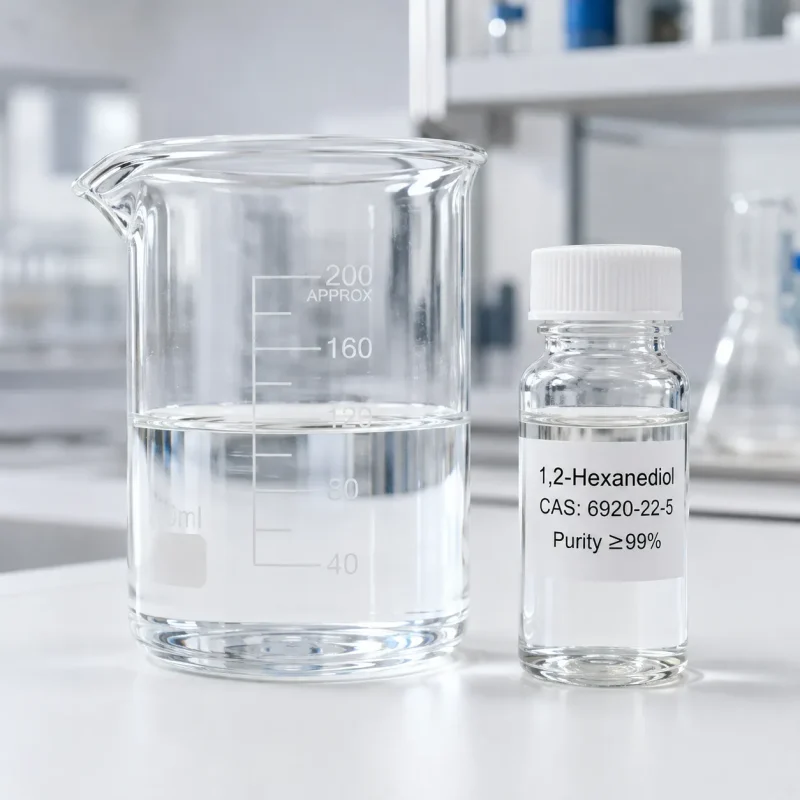
1,2-Hexanediol is an aliphatic vicinal diol featuring a six-carbon straight chain with adjacent hydroxyl groups at the C1 and C2 positions. Supplied as a colorless, clear liquid (≥99.0% GC purity), it acts as a dual-function humectant and antimicrobial booster in preservative-free cosmetics, sensitive-skin serums, and wet wipes. The C6 chain length delivers optimal hydrophilic-lipophilic balance for membrane disruption without skin stinging. Each shipment includes COA, TDS, and SDS.
- CAS No.: 6920-22-5
- Synonyms: 1,2-Dihydroxyhexane; Hexane-1,2-diol; 1,2-Hexanediol
- EINECS: 230-029-6
- Molecular Formula: C₆H₁₄O₂
- Molecular Weight: 118.17 g/mol
- Appearance: Colorless to pale yellow clear liquid
- Purity (GC): ≥99.0%
- Boiling Point: ~208 °C (atmospheric)
- Density (20 °C): 0.945–0.955 g/cm³
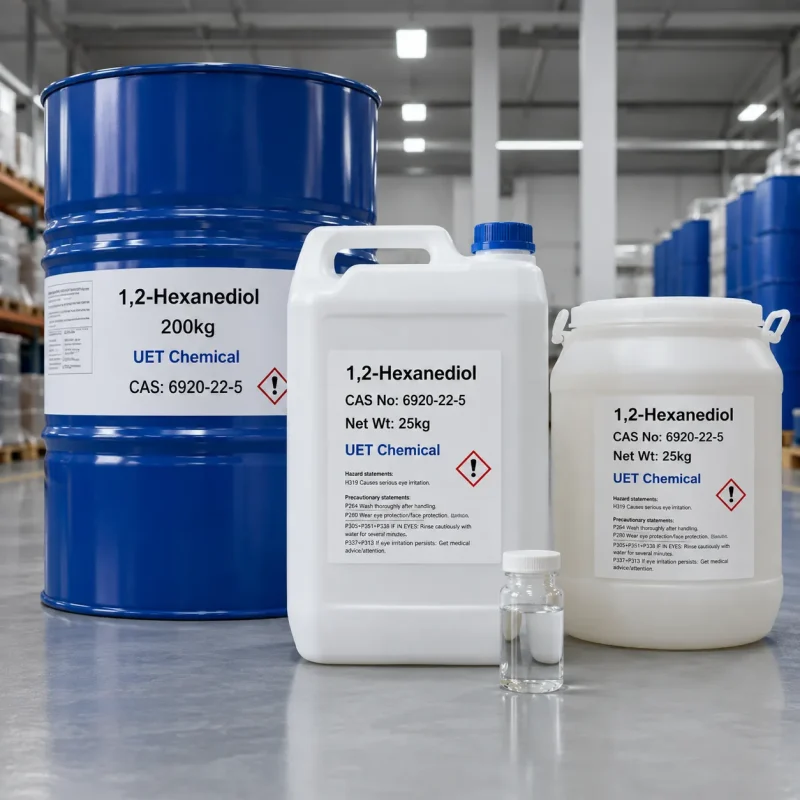
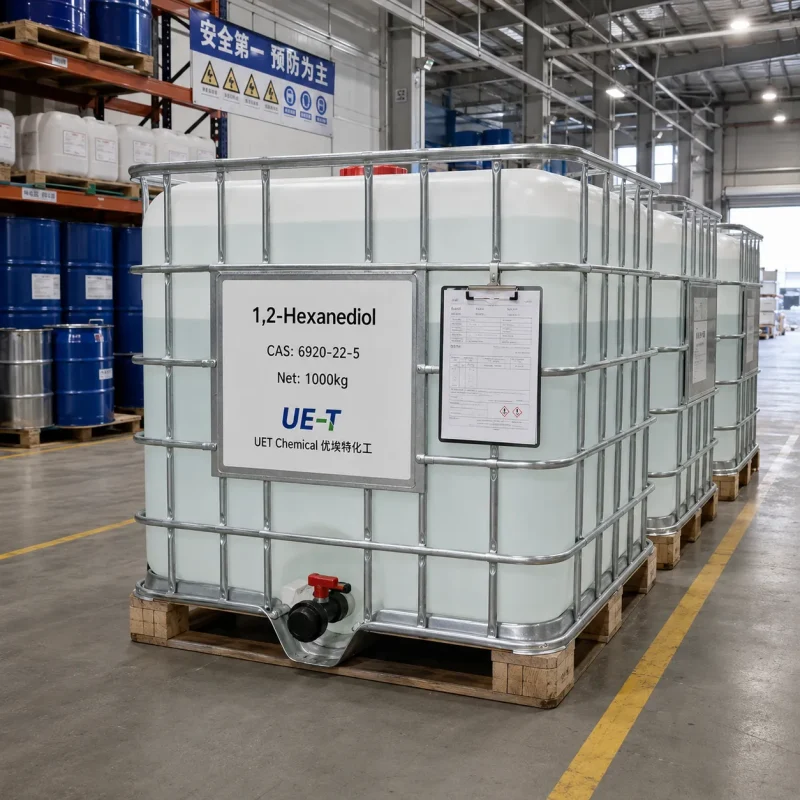
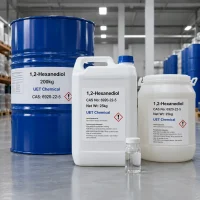
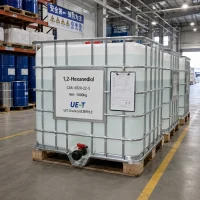
- Packaging: 25 kg HDPE drum / 200 kg HDPE drum. Custom packaging available upon request.
- Main Applications: Preservative-free skincare; wet wipes; scalp treatments; color cosmetics
Introduction to 1,2-Hexanediol
1,2-Hexanediol is a colorless, clear liquid belonging to the aliphatic vicinal diol family. The molecule features a six-carbon straight chain with two adjacent hydroxyl groups at the C1 and C2 positions. This specific C6 chain length provides an optimal hydrophilic-lipophilic balance, allowing the molecule to act simultaneously as a deep-penetrating humectant and a potent antimicrobial booster in modern preservative-free cosmetics and sensitive-skin formulations.
The vicinal diol structure disrupts microbial cell membranes by inserting the lipophilic C6 tail into the lipid bilayer while the C1-C2 hydroxyls anchor to the aqueous phase, yielding broad-spectrum efficacy at 1–3% use levels. One practical caution: high concentrations of 1,2-hexanediol can solvate and collapse the swollen network of anionic polymeric thickeners. When formulating with carbomers or acrylates, add the diol slowly during the neutralization phase to prevent sudden viscosity drops.
Key Features of 1,2-Hexanediol
- Optimal C6 chain length. Shorter diols cause skin stinging, while longer ones suffer poor water solubility. The C6 chain hits the exact sweet spot for high aqueous solubility and zero sensory irritation.
- Membrane-active antimicrobial boost. The vicinal hydroxyls and lipophilic tail physically disrupt microbial cell walls rather than relying on specific biochemical pathways, preventing microbial resistance buildup.
- High thermal and chemical stability. Lacking ester or amide bonds, the pure diol structure resists hydrolysis across a wide pH range (3.0–10.0) and withstands high-temperature emulsification processes without degrading.
- Excellent solvent for actives. The dual-polarity structure effectively dissolves poorly water-soluble botanical extracts and salicylic acid, eliminating the need for high loads of ethanol or harsh co-solvents.
1,2-Hexanediol Chemical & Physical Properties
| Property | Value |
|---|---|
| Molecular Formula | C₆H₁₄O₂ |
| Molecular Weight | 118.17 g/mol |
| Boiling Point | ~208 °C (atmospheric) |
| Density (20 °C) | 0.945–0.955 g/cm³ |
| Flash Point | ~107 °C (closed cup, ASTM D93) |
| Solubility | Miscible with water, ethanol, glycols, and most cosmetic oils |
| Refractive Index (20 °C) | 1.438–1.442 |
| Water Content | ≤0.1% (Karl Fischer) |
Applications of 1,2-Hexanediol
Preservative-free serums and toners: Dosed at 1.5–3.0%. The C6 tail penetrates bacterial cell walls, lowering the required concentration of primary organic acid preservatives by up to 50%. It simultaneously binds water in the stratum corneum without the sticky residue typical of glycerol.
Baby wet wipes and cleansing waters: Used at 1.0–2.0%. Provides mild antimicrobial protection in high-water systems while acting as a co-solvent for solubilizing trace fragrance oils or lipophilic soothing agents without stinging infant skin.
Color cosmetics and liquid foundations: Added at 2–5%. Lowers the freezing point of the aqueous phase and prevents the formula from drying out at the nozzle tip. It also improves the slip and blendability of pigment dispersions.
Scalp treatments and leave-on conditioners: Formulated at 1–2%. The diol structure helps dissolve sebum and active ingredients, driving them into the hair follicle without causing scalp tightness or flaking.
Storage & Safety Precautions for 1,2-Hexanediol
Storage conditions. Store in tightly sealed HDPE drums at 10–30 °C. Below 0 °C, the liquid may turn cloudy or form crystalline solids due to the high freezing point of pure vicinal diols. If this occurs, gently warm the drum to 25–35 °C in a water bath and agitate until clear. Do not use open flames or high-heat steam.
Safety and PPE. GHS: Not classified as hazardous. Mild eye irritant. Wear standard nitrile gloves and safety goggles during drum transfers. Spills are non-toxic but slippery; contain with inert absorbent and wash with water.
Transport classification. Non-DG. Not regulated under IMDG, IATA, or ADR. Ship as standard general cargo.
Practitioner note: When checking incoming QC via GC, ensure the injection port temperature is set correctly. 1,2-Hexanediol can undergo partial thermal dehydration to form hexanal or cyclic ethers if the GC inlet exceeds 250 °C, leading to false impurity peaks on the chromatogram.
1,2-Hexanediol FAQ
Q: How does 1,2-Hexanediol (CAS 6920-22-5) boost preservative efficacy without being registered as a preservative?
A: It acts via physical membrane disruption rather than biochemical poisoning. The C6 lipophilic tail inserts into the microbial lipid bilayer, while the vicinal hydroxyls alter membrane permeability, causing cell leakage. This physical mechanism bypasses traditional resistance pathways. Because it is not listed in Annex V of the EU Cosmetics Regulation, formulators use it to lower the dose of registered preservatives while marketing the product as “preservative-free”.
Q: Why did my carbomer gel lose viscosity after adding 1,2-Hexanediol?
A: High concentrations of short-to-medium chain diols act as co-solvents that dehydrate and collapse the swollen polymer network of anionic thickeners like carbomers. To prevent this, pre-mix the diol with the water phase before adding the polymer, or add it very slowly after neutralization. If viscosity drops, increase the carbomer dose by 0.1–0.2% or switch to a non-ionic thickener like hydroxyethyl cellulose.
Q: What is the best way to dissolve salicylic acid using 1,2-Hexanediol?
A: 1,2-Hexanediol is an excellent co-solvent for salicylic acid. Pre-dissolve the salicylic acid in the diol at a 1:3 to 1:4 ratio with gentle heating (40–50 °C) before adding it to the main aqueous phase. This prevents the salicylic acid from recrystallizing when the formula pH is adjusted above 4.0. Always check final clarity after 48 hours at 4 °C to ensure no micro-precipitation occurs.
Related products
Manufacturer & Exporter Since 2006
Get Tailored Chemical Raw Material Solutions — Reply Within 1 Hour
Factory-direct pricing, stable high-purity supply and complete compliance documentation for your industrial formulations.
- 1000+Products
- 200+QC Protocols
- 7–15Days Delivery
- Factory-Direct Pricing
- COA / TDS / SDS Included
- Free Samples for Testing
- 40+ Export Countries
Request a Free Quote
Our engineers reply within 1 hour during GMT+8 business hours.
Please include in your inquiry:
- Product name or CAS number
- Required quantity
- Destination country or port
- Preferred packaging